_PDP 2027 Benue Gov Candidate Advocates Private Sector-Led Ranching, Backs State Police With Safeguards_
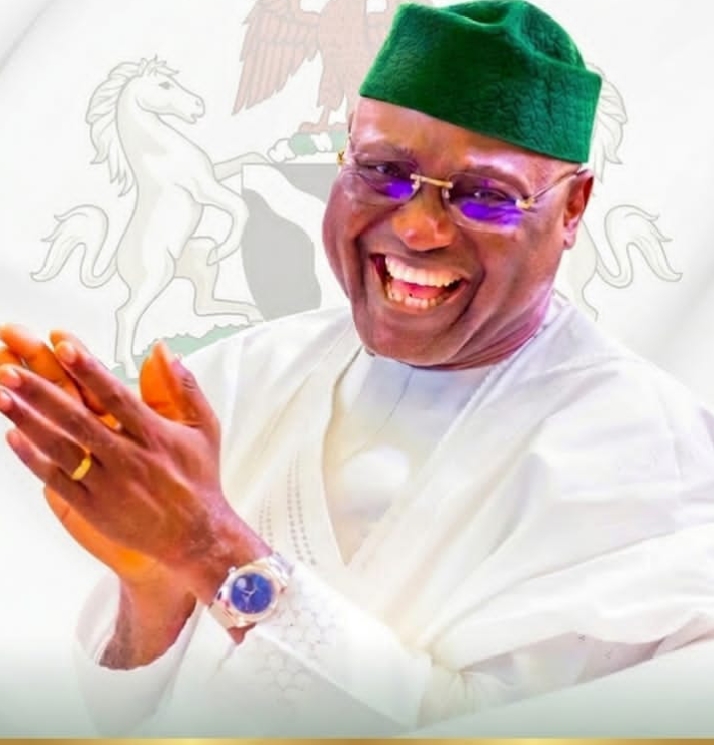
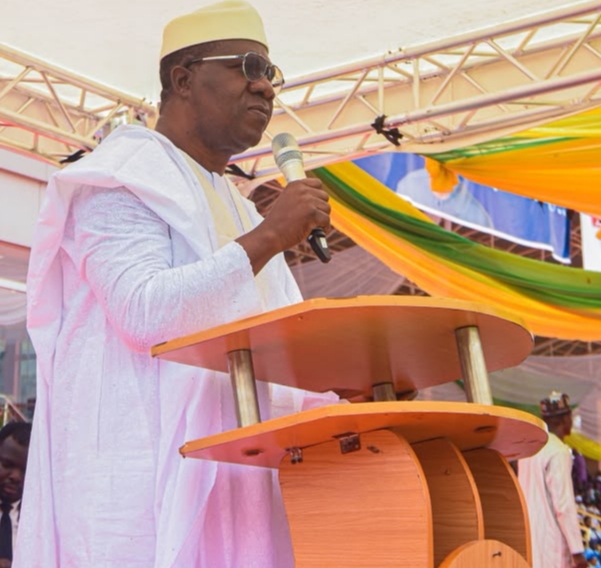
The 2027 Governorship Candidate of the Peoples Democratic Party, PDP, in Benue State, Chief Michael Kaase Aondoakaa, SAN, has urged the Federal Government to adopt a private sector-driven approach to ranching, saying its role should be to provide an enabling environment rather than directly own and operate ranches.
Speaking on Monday during an interview on _Arise News_, the former Attorney General of the Federation and Minister of Justice also endorsed the establishment of State Police, while calling for strong legal and institutional safeguards to prevent political abuse.
Aondoakaa argued that treating livestock production as a government-run venture would create confusion and deepen suspicion between farmers and communities.
“Livestock owners are private businessmen engaging in farming activities. There will be a disconnect and there will be confusion because the ranches are established by government and then they are to service private sector holders of cattle,” he said.
He proposed that government should focus on supporting the value chain through improved cattle breeds, affordable financing, fodder production, irrigation, and rural infrastructure, in the same way it stimulated investment in rice and wheat production.
“My understanding is that ranching should be done the way the rice and wheat value chain was created. Government should create the environment and allow private investors to drive the business,” he stated.
The senior lawyer emphasized that genetic improvement of Nigeria’s cattle breeds is critical to making ranching commercially viable. He also called for access to single-digit loans for livestock entrepreneurs.
“First, let us crossbreed the cattle that we have now so that they can give sufficient milk for commercial trading. Then allow them to borrow at interest rates below five percent and approach ranching as a private sector business,” he said.
According to him, private sector-led ranching could foster new economic partnerships, with crop farmers producing specialized grass and feed for ranches, thereby creating additional income streams while ensuring a stable supply of fodder.
He further noted that the model would help address fears around land grabbing linked to government ranching proposals, by encouraging voluntary commercial agreements between livestock owners and host communities.
“If a private individual comes and says, give me 100 hectares of land, I want to put my cows there, and can you help me farm for it? That can be a mutual understanding between farmers and the owner of the cows,” he explained.
“Livestock is only one component of Nigeria’s agricultural economy. If we now decide to take one aspect of farming and make it a public sector issue, then there will be more agitation by farmers across the country,” he cautioned.
On security, Aondoakaa described State Police as a timely and necessary reform to address Nigeria’s policing challenges. He recalled that the concept was first introduced during the 2009 constitutional reforms under the late President Umaru Musa Yar’Adua.
He commended President Bola Tinubu’s administration for moving the initiative forward, calling it “a very good thing.”
However, he stressed that recruitment into State Police must be shielded from political interference.
“The issue of recruitment must be handled in a manner that politicians are not allowed to bring in people who are not worthy to be police officers,” he said.
He also warned against decentralized arms procurement, saying it could create chaos if all 36 states were allowed to import weapons independently.
“There should be a level of control. It will be a lot of confusion if the entire 36 states go to the market and import arms for their state police,” he said, recommending a federal regulatory framework, possibly under the Office of the National Security Adviser.
Despite the potential risks, Aondoakaa described State Police as “a laudable project” that can strengthen security nationwide if properly structured. He further called for stronger judicial oversight at the local level to ensure magistrates can effectively check the operations of State Police formations.