Connect with us

Opinion

The Validity Of Lawan’s ‘Correctness’ On Harmony Between The Executive And Legislature

Published

on

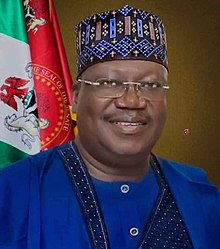
Senate President Ahmad Lawan
Senate President, Ahmad Lawan
Share

By Dr. Ezrel Tabiowo

 
Before he ventured to contest the Senate Presidency, Senator Ahmad Lawan, had a clear-cut vision in his legislative agenda which some at the time considered a rather tall order.

One of the most ambitious of them was his bid to restore the nation’s deformed budget cycle to the January to December timeline.

The country for twenty years between 1999 and 2019 had operated an irregular budget cycle from the  administration of Olusegun Obasanjo all through to the first tenure of President Muhammadu Buhari’s government.

Determined to correct the anomaly which for long had weighed down the Nigerian economy from making steady progress, Lawan understood he needed to come up with a leadership model or, if you like, a stopgap that would  adequately address the bureaucratic setbacks that hitherto frustrated the nation’s budgetary processes in the past.

In coming up with his unique leadership model, the Senate President, one of Nigeria’s seasoned and longest serving legislators, understudied the leadership style and outcomes of past Assemblies and how the persistent clamor for exclusive authority and supremacy between the arms of government had staggeringly hindered the evolvement of the country’s democracy.

He  also weighed these outcomes against the attendant impact which they had in general on the economy and other facets of our national existence.

To him, the associated fallouts of legislative-executive feuds under the guise of ensuring ‘checks and balances’ was nothing short of an albatross on legislative undertakings that would ultimately continue to make Nigerians the overall losers in the scheme of things. He felt this had to stop, as it was too much of a baggage working against the nation’s advancement.

Giving a new flare to the role of the National Assembly, Lawan devised a model which now accommodates robust legislative engagements across frontiers that nevertheless adheres to the principle of ‘Separation of Powers’ in Parliament’s dealings with the Executive arm of government.

No doubt, this new thinking and approach attracted its fair share of public criticism from some Nigerians who were already addicted to the screaming headlines on covers of national dailies from internecine conflicts between the executive and legislature under past assemblies.

To them, a parliament not at war with the executive has to be in bed with it and is nothing short of a “rubber stamp” in their exact words.

They however fail to see that Lawan’s leadership model has become the great reset which altered the dynamics of the nation’s governance architecture in a way that underscores and distributes shared responsibilities between the arms of government, so as to guarantee  collective effectiveness in leadership roles.

In other words, it drew the curtains on the mediocre way of scoring cheap political points by those opposed to government policies through unnecessary and avoidable face-offs which, in  my considered view, is grossly counterproductive and does nothing but reduce the quality of governance as events have shown.
 
Validating Lawan’s Advocacy for Harmony In Governance 
 
The consistent clamour for harmony in Executive-Legislature relations by the Senate President, no doubt finds footing from his leadership model which relies on a flexible approach to outlining the limits of the principle of ‘Separation of Powers’ as provided for in the 1999 Constitution of the Federal Republic of Nigeria (as amended).

In Public Law, the principle of Separation of Powers in the Constitutional System are along two paths; the Strict Approach and Flexible Approach.

Montesquieu, a French Jurist and Political Philosopher, advocated the Strict Approach amidst his view that no organ of state should encroach on another, either in terms of function or personnel. He was instrumental to the division of government powers along three functions: law-making – Parliament; Implementation of the law – Executive; and Interpretation – Judiciary.

However, Luigi Giussani, a Theologian and Public Intellectual, while referring to a number of writers, viewed such system of Strict Separation of Powers as “unworkable”.

According to Cheryl Saunders, a specialist in Comparative Public Law and President Emeritus of the International Association of Constitutional Law,  “every constitutional system that purport to be based on a separation of powers in fact provides, deliberately, for a system of checks and balances under which each Institution impinges upon another and in turn is impinged upon.”

She explained further that, “a lack of cooperation between limbs would result in constitutional deadlock.”

Kent H. Barnett, an Author and world renowned Professor of Law, who resonated this view posited that a system of government founded on the strict separation of powers could result in legal and constitutional deadlock if the branches of state disagree.  By implication, such disagreement between the arms of government could also manifest in non-assent to bills passed by Parliament and non-approval to executive money bills by the legislature.

Flowing from the above, it becomes obvious as to why a lot of legislations passed under the Eighth National Assembly were refused assent, and why most passed by the Ninth Assembly were signed into law by President Muhammadu Buhari.

It also explains why the National Assembly under Lawan’s leadership was able to effortlessly restore the Budget Cycle to the January to December timeline with the support of the Executive arm of government, as well as get assent to other critical legislations which before now defied passage such as the Finance Act and Petroleum Industry Act, among others.

The national budget was passed by the Ninth Assembly and signed by President Buhari in record time three years in a row since 2019, a feat never once achieved by previous assemblies or any administration since Nigeria’s return to democracy in 1999.

As a result of the restoration of the nation’s budget cycle to the January – December timeline, the Nigerian economy has become insulated against recession threatening other developing countries, in spite of the country’s reduced revenue earnings from a crash in crude oil price caused by the attendant effect of the global lockdown, following the COVID-19 pandemic last year.

Lawan’s leadership model – which fosters Inter-governmental collaboration and inclusion – if replicated by Ministries, Departments and Agencies of government – would no doubt address some of the challenges faced by Nigeria as a result of the lingering insecurity.

It is however noteworthy to point out that insisting on a harmonious and mutual working relationship between the arms of government and its agencies does not in any way strip them off their independence neither does it weaken or make one arm or agency a subject of the other.

Lawan’s leadership model demonstrated this a couple of months back when the Senate bared its fangs on errant MDAs that refused to defend projects proposed to be funded by the external borrowings of the Federal Government.

The upper chamber under the leadership of the Senate President also frowned at wasteful spendings by refusing to approve monies running into hundreds of millions for the procurement of mosquito nets never minding the cordial working relationship it has with the executive.

Against this backdrop, security agencies such as the Military, Police, Department of State Services (DSS), the Office of the National Security Adviser (NSA), the National Intelligence Agency (NIA) and others not mentioned, must begin to think along the lines of ensuring Inter-agency cooperation in the fight against terrorism, insurgency and all forms of criminality across the country. It is time to stop the jostle for supremacy and put on the garb of patriotism in the discharge of duties.

The urgency of the situation makes it expedient for the hierarchy across these agencies to adopt a workable leadership model that encourages mutual engagement, as well as prioritises the security and welfare of Nigerians in accordance with duly enshrined constitutional provisions.

On the much anticipated Electoral Act Amendment Bill not signed into law by President Buhari, Lawan’s poise radiates an unwavering confidence in the power of engagement between the executive arm of government and the National Assembly.

It would be recalled that moments before the Senate adjourned on December 22, 2021, for the Christmas and New Year break, the Senate President, immediately after the chamber rose from a closed session, announced that the Senate would consult the House of Representatives in January to decide what next line of action to take over the Electoral Act (Amendment) Bill 2021.

President Buhari in a letter read by Lawan on the floor a day earlier, had advanced reasons why he decided to withhold assent to the piece of legislation.

He warned that signing the bill into law would have serious adverse legal, financial, economic and security consequences on the country, particularly in view of Nigeria’s peculiarities.

Buhari added that it would also impact negatively on the rights of citizens to participate in the government as constitutionally ensured.

Having made his reasons known, Nigerians should keep in mind that the Senate is bound by obligation to doing only those things that would bring about unity, peace and prosperity for the country.

One of those things, according to Lawan, is “stabilising the polity”, particularly in moments when it is heated up by agitations and anxiety.

The National Assembly is constitutionally required to act only in the interest of Nigerians like it always has,  without due recourse to any other consideration not in tune with their expectations.

As we begin the new year, may the patriotic zeal which has guided their actions be renewed with vigor for the service of humanity and advancement of our fatherland.

Dr. Tabiowo is the Special Assistant (Press) to the President of the Senate and writes from Abuja. 

Continue Reading
Click to comment

Leave a Reply

Your email address will not be published. Required fields are marked *

News

Loyalty Matters in Politics, Omotayo Tells Fubara

Published

on

Share


A political commentator, Akin Mitchel Omotayo, has criticised Siminalayi Fubara over the lingering political crisis in Rivers State, accusing the governor of turning against his political benefactor, Nyesom Wike, shortly after assuming office.


Omotayo, in a post shared on his Facebook page, described Governor Fubara as “the outgoing 001,” alleging that the Rivers governor ignored political advice and embarked on what he termed a “political coup” against Wike barely six months after becoming governor.


According to him, Wike played a major role in supporting and promoting Fubara’s candidacy during the 2023 governorship election, adding that it was politically unwise for the governor to allegedly distance himself from the former Rivers governor after assuming office.


He claimed that President Bola Ahmed Tinubu would naturally align with Wike in the political dispute because of the minister’s loyalty and support for Tinubu during the 2023 presidential election.


Omotayo further stated that Governor Fubara allegedly ignored several opportunities to retrace his steps and reconcile with his political leader despite interventions from stakeholders.


He questioned the whereabouts of those he claimed encouraged the governor to challenge Wike politically, describing the situation as a lesson in loyalty, leadership and political strategy.


The political crisis in Rivers State has continued to generate reactions from political observers and stakeholders across the country, with supporters of Governor Fubara and loyalists of the Minister of the Federal Capital Territory remaining sharply divided.

Continue Reading

Opinion

FROM NIGERIA TO CANADA: Walter Fasan’s Journey of Resilience, Purpose, and Legacy

Published

on

Nigerian-Born Water Fasan Honored with 2025 Canadian Airports Council Award
Share

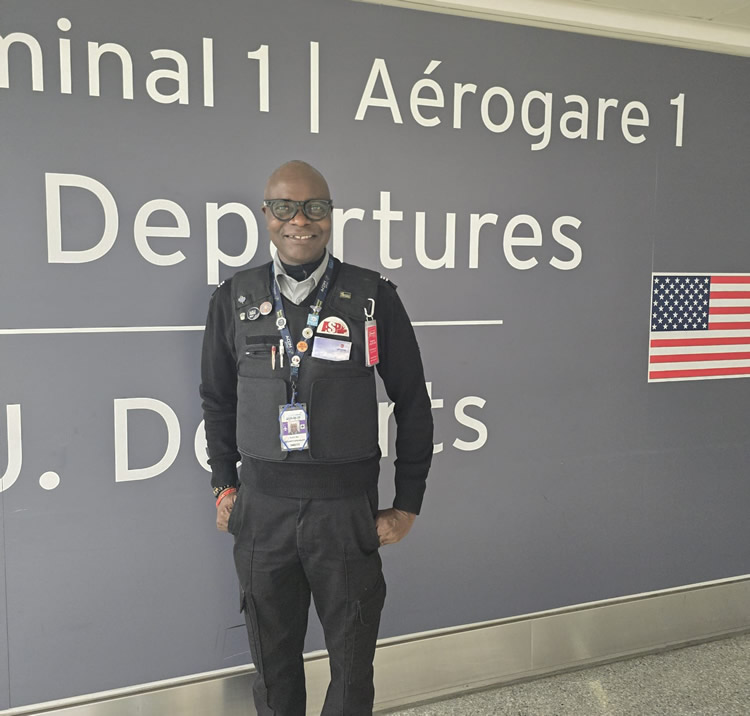
WATER FASAN, a Nigerian Pharmacist turned Security Specialist and Access Control Officer shot to limelight in Canada when he won the 2025 Canadian Airports Council (CAC) National Recognition Award, a feat which gained instant international recognition.

Though Fasan’s rise from humble beginnings in Nigeria to international acclaim sounds like a fairy tale, his has been a long story of courage across, effort, dedicated service, study and the determination to pursue his desire to succeed even if he had to cross continents. His purpose-driven road to success and refusal to be limited by background or borders also led across multiple industries and nations.

Water Fasan is also recognized for his strong customer service skills, particularly in his role at Toronto Pearson International Airport where his calm demeanor and approachability are noted for helping to prevent potential challenges

Fasan began his professional journey in Nigeria as a Pharmacy Technician, at Cosmos Pharmacy under the visionary leadership of Mr. Azubike Okwor in (year).

Mr Okwor, a former President of the Pharmaceutical Society of Nigeria, and the first Black man to receive a Fellowship in the history of the pharmaceutical industry, took the young pharmaceutical technician under his wings for (number of years). The period left an indelible mark on Fasan. By the time he left in search of greener pastures, Mr Okwor’s mentorship was a changed man.

Looking back, Fasan recalled that Mr. Okwor’s mentorship instilled in him the values of excellence, discipline, and service to community.

Now a focused, purpose driven young man filled with dreams and ambitions, his desire to succeed in life first led him to Israel, where he gained life-changing experiences before returning to Nigeria in 2009. In 2010, driven by a higher calling, he immigrated to Canada.

The North American country was quite different from his Nigerian background. But equipped with only faith, determination, and an unshakable belief in hard work, he embraced the challenge of starting over by embracing a new career and pursuing a new path in private security. The change did not come easy as he had to complete numerous certifications and gain hands-on experience in his new field.

“I worked with respected firms like RBG Security Inc., under the direction of Ron Boyko, and advanced to become an Operations Supervisor at one of the historic department stores in the world—Hudson’s Bay and Saks Fifth Avenue,” Fasan said.

It was at Hudson’s Bay and Saks Fifth Avenue that Fasan’s sterling qualities were first noticed in his new found country. There, he received the Best Customer Service of All Time award, a reflection of his commitment to excellence.

In 2019, he entered the aviation industry, beginning at Menzies Aviation. He later rose to lead teams at AAS, serving as Acting Manager at Dexterra. Currently, he is a Security Specialist with ASP Security at Toronto Pearson International Airport, a position he has held since 2022.

Still driven by the burning desire to grow, Fasan returned to the classroom and graduated in 2024 from the Canadian College of Business and Management, earning a Diploma in Human Resources Management. This academic achievement further prepared him for a broader impact in leadership, training, and organizational development.

Over the years, Fasan’s work has earned wide recognition In Canada. His story, face, and contributions are featured across Pearson Airport as a symbol of dedication and pride.

In 2025, he became the first-ever African-Canadian Nigerian to receive the Canadian Airports Council (CAC) National Recognition Award when he and eight others were selected from among 52,000 airport workers and 80 nominees at the 16th Canadian Airport ceremony.

Although Water Fasan’s story is still unfolding, his success reminds us all that with faith, focus, and fearless effort, anything is possible. The honour was more than an award—it was a moment of history For Nigeria, for Africa, and for every immigrant whose story is still being written.

Continue Reading

Opinion

Ode To People’s President

Published

on

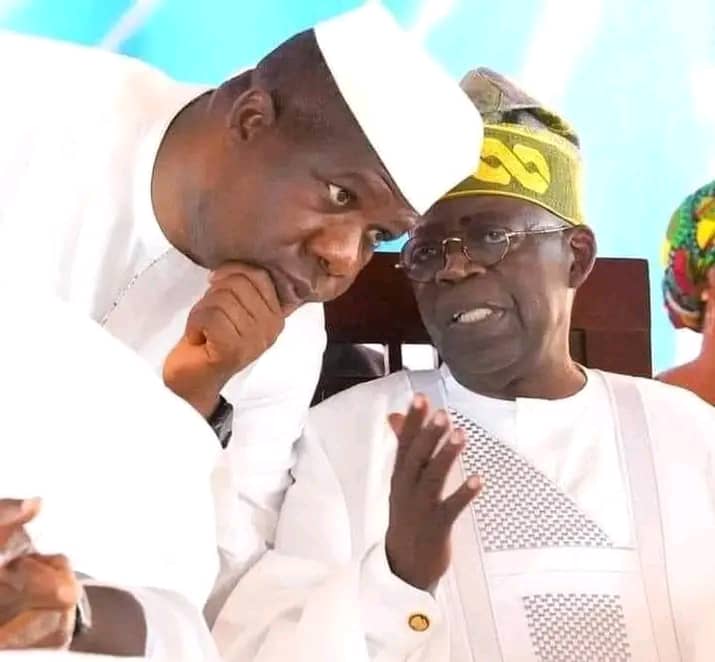
Senator Michael Opeyemi Bamidele and Asiwaju Bola Tinubu
Senate Leader, Sen. Michael Opeyemi Bamidele and President Bola Tinubu
Share

By Senator Opeyemi Bamidele, CON

Today, I celebrate a timeless doyen of democracy and an astute mentor of many leaders, President Bola Ahmed Tinubu, GCFR. By global standards, Asiwaju is truly a man of the people and the visionary of our times, who devoted his life to pursuing the greatest goods to the greatest number of people. This has been the core of his heart and life from when he was a boardroom guru in the 1980s to when he joined partisan politics in the 1990s.

Born on March 29, 1952, Asiwaju’s foray into politics in 1991 was never a mistake, though it came with a huge sacrifice that cost dearly. As a Senator of the Federal Republic of Nigeria, I celebrate how Asiwaju firmly stood with the people rather than dining with the military oligarchy that annulled the outcome of the June 12, 1993 presidential election ostensibly won by Chief M.K.O Abiola (now of blessed memory), an annulment that set our fatherland back to the pre-colonial era.

I also celebrate how Asiwaju teamed up with the progressives to establish the National Democratic Coalition, a movement of likeminds and progressives that fiercely challenged the regime of the late tyrant, General Sani Abacha; mobilised support for the restoration of democracy to our fatherland and campaigned for the recognition of Chief M.K.O Abiola as the winner of the June 12 presidential election. And this conviction and pursuit eventually earned him exile from the land of his birth. Yet, he was undaunted in his quest to see his fatherland liberated from the era of locusts that pitched us against the comity of nations.

I celebrate how Asiwaju returned to Nigeria in 1998 when the darkest era of the late tyrant finally folded into the abyss of extinction after fighting doggedly on the side of the people. The end of the dark era culminated in his election as the third civilian governor of Lagos State in January 1999. Though faced with diverse heinous challenges at the inception, Asiwaju came out strong and victorious, setting Lagos on the path of irreversible progress, reforming the coastal state to a globally competitive smart city and turning it to a constant destination of strategic investment. And the world can no more look away from Nigeria just because of the pro-people reforms he carried out in Lagos.

Asiwaju’s quest for the greatest goods for the greatest number of people pushed him to national politics, the kind of venture that consumed the nationalists and patriots who lived before him. At different times, he challenged the traditional forces that held our fatherland down. He first fought for the soul of our fatherland on the platform of the defunct Action Congress, and it did not entirely produce an enviable outcome. He later switched to the Action Congress of Nigeria, and banished the regressive elements from the six states of the South-west. Full of hope, Asiwaju stressed forth his hands across Benue and Niger, and together, they rescued Nigeria from the hands of the regressives.

At 72, as the President of Nigeria, Asiwaju has brought rare conviction and passion to the business of public governance, courageously daring the forces of regression and tirelessly  pursuing the interests of over 227 million regardless of their faith, ideology and race. The task is truly daunting, but the victory is undoubted. Only within 10 months of Asiwaju’s ascendancy to the presidency, we have started witnessing the dawning of economic restoration and the ray of political renaissance under his watch.

As I nostalgically reflect on the journey so far, I remember his labour and toiling for our fatherland, even when most misunderstood. I remember his undying passion to lead the path to a greater nation, even when the future looks so bleak and always unsure. I remember his utter commitment to a movement of patriots and progressives eternally sworn to rescue our fatherland from the claws of the ageless vultures and the blood-thirst beaks of mindless hawks that always seek to feast on the flesh of Nigeria. Despite their ferocity, he eventually subdued the enemies of our souls, even right in the midst of inferno they set ablaze for us all.

That is the reality in our fatherland today. Asiwaju is at the forefront of that reality. And we are all witnesses to this history, even from its making to its maturation. Now, as he graciously turns 72 on this auspicious day, I cannot, but earnestly pray God grants him longer life and inner strength to steadily paddle the ship of our nation to the coast of endless ecstasy. 

 Heartiest 72nd Birthday, my leader and mentor.

  • Bamidele, Leader of the 10th Senate, writes from Abuja

Continue Reading