Connect with us

Opinion

The Benuenisation of Niger State and the Bandits war.

Published

on

Gun Men
Share

By Owei Lakemfa.

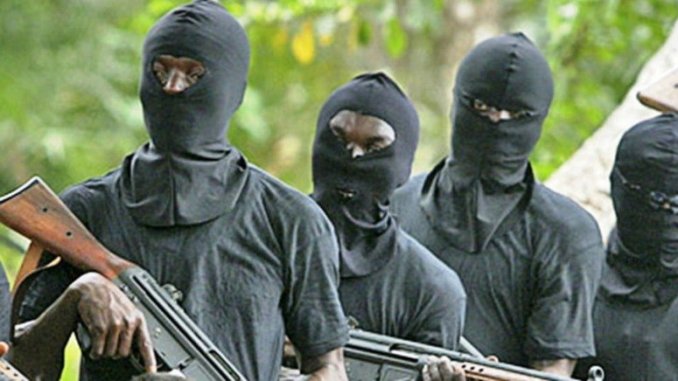
THOSE who think the war against banditry is a joke, need to take a look at the statistics coming out of Kaduna State. The long suffering state continues to bleed. In the first 90 days of 2021, an average of four lives were lost daily to banditry while in every 24 hours, 11 persons were kidnapped.

Yet, excluding the states devastated by Boko Haram terrorists, Kaduna is not the most traumatised. At least the people still retain their villages and towns. Not so in Plateau State where bandits maim, kill, displace the people, take over their villages and towns, rename and settle in them. The June 30, 2018 edition of the Vanguard Newspapers reported that the bandits had seized over 54 villages, renamed and occupied them. These include “Rotchun (Rafin Acha) Dankum, renamed Mahanga, Hywa, renamed Lugere, Fass rechristened Tafawa, and Maseh, renamed Lugel. Three years ago, Plateau State governor, Simon Lalong who is now the Chairman of the Northern Governors Forum vowed that his administration will not allow this land grab to stay. He declared: “those fighting, killing people and destroying their settlements with the intention of taking ownership of such places would not be allowed to do so. If you think you can chase people out and grab their land, we as a government would not allow you to own the land. My administration is working out modalities for prosecuting land grabbers to discourage the act.” But three years down the line, this has not come to pass.

It appears Lalong and the Plateau elite are contented with the new status quo. Perhaps they take the advise of the Presidency to accept the situation, because as the Special Adviser to the President on Media and Publicity, Mr. Femi Adesina said on the African Independent Television: “If you are talking about ancestral attachment, if you are dead, how does the attachment matter? …What will the land be used for if those who own it are dead at the end of the day?”

Also, President Muhammadu Buhari as Commander-in Chief of the Armed Forces, has not sent the gallant Nigeria Army to retake those villages and communities and restore the people to their homes. Without Internally Displaced Peoples’ IDPs camps provided, the victims are simply melting away. To be fair to President Buhari, he had alerted the country in his January, 2019 interview with Arise Television that these bandits are actually the remnants of the multinational forces recruited by former President Muammar Ghaddafi to fight in Libya. He identified them as Malians, Burkinabe, Nigeriens, Chadians and people from the Central African Republic.

However, Benue State would not agree to this forced changing face of demographics and continues to fight. The result is that the state became the killing field of Nigeria resulting in it experiencing what I call the Four Phases of Annihilation. First, there were conflicts euphemistically called ‘herder-farmers clashes.’ Then the victims were forced off their lands which were then occupied by the invading forces. The third stage was their becoming internally displaced persons with camps set up for them. But having so many people in the camps means that in future, they can decide to retake their ancestral homes, so they are being attacked and killed. This is the fourth phase which may see them melting away, as was the case of the Plateau State victims.

Last Tuesday, April 27, 2021 after the IDP camp in Abagena was attacked, a furious Governor Samuel Ortom went there to express his anger that over 70 persons had been murdered within two weeks in the Makurdi Local Government area alone. Ortom fumed: “Go to Guma, the same killings are taking place, go to Gwer-West, the same killings are taking place. This is not fair. The Federal Government has refused to take a proactive step to arrest this ugly situation we are witnessing here today. You recall that I alerted the entire nation when Fulanis from 14 countries met in Yola and declared that except we review the prohibition of open grazing law, Benue will not know peace.” He said of the new attacks: “It means we don’t have a government. You can imagine, this is Abagena IDP camp. The adjoining villages are occupied by IDPs. What else do you want them to do? You send these people away from their villages, they came here to take refuge and today they are being killed in this manner… How do you wake up every day and see your people being killed?”

As usual, Ortom’s comments have led to a spat with the Presidency. The administration while as usual commiserating with the victims of banditry and terrorism said President Buhari takes exception to Ortom’s comments. He accused Ortom of: “making a litany of accusations against his person and his government …”

However, in the last six months, the Nigerian killing field has shifted from bloodied Benue State to Niger State, which by landmass, is the largest state in the country and is host to three hydro-power stations: Shiroro, Kainji and Jebba. As it is in Plateau and Benue states, bandits are invading towns and villages and forcing the populace to flee. However, unlike those two states, the banditry and invasion has been worsened by the mix of Boko Haram terrorism. As the land invasions, mass kidnapping including of school children, and killings escalate, Niger State governor, Sani Bello, warned that the bandits are primarily foreigners who enter the country from the Benin Republic border and come into Niger through Kaduna and Katsina states. He added that: “the bandits are Fulanis that have no one to control them even their parents.”

Governor Bello who also revealed that the invaders were invited into the country said: “We arrested bandits from Sudan and Mali and they were recruited through social media.” After the bandits recent attack of 14 communities in Rafi and Shiroro local government areas, Bello visited some of them in the IDPs camps in Kagara and Pandogari, assuring the victims of a quick return to their communities. The governor also told the country that Boko Haram terrorists have taken over Kaure town, hoisted their flag and forcefully taken the wives of residents. He warned that this invasion threatens the country’s capital, Abuja which is some 140 kilometres away.

The Buhari government has always reacted to the worsening insecurity in the country by claiming that it is “on top” of the situation. However, former Vice President Atiku Abubakar last Tuesday declared: “It is time for us as a nation to face the reality that we have an emergency on our hands. A catastrophe that must be decisively dealt with before it snowballs into an existential crisis.” But who is listening in the Buhari government?


Continue Reading
Click to comment

Leave a Reply

Your email address will not be published. Required fields are marked *

Opinion

FROM NIGERIA TO CANADA: Walter Fasan’s Journey of Resilience, Purpose, and Legacy

Published

on

Nigerian-Born Water Fasan Honored with 2025 Canadian Airports Council Award
Share

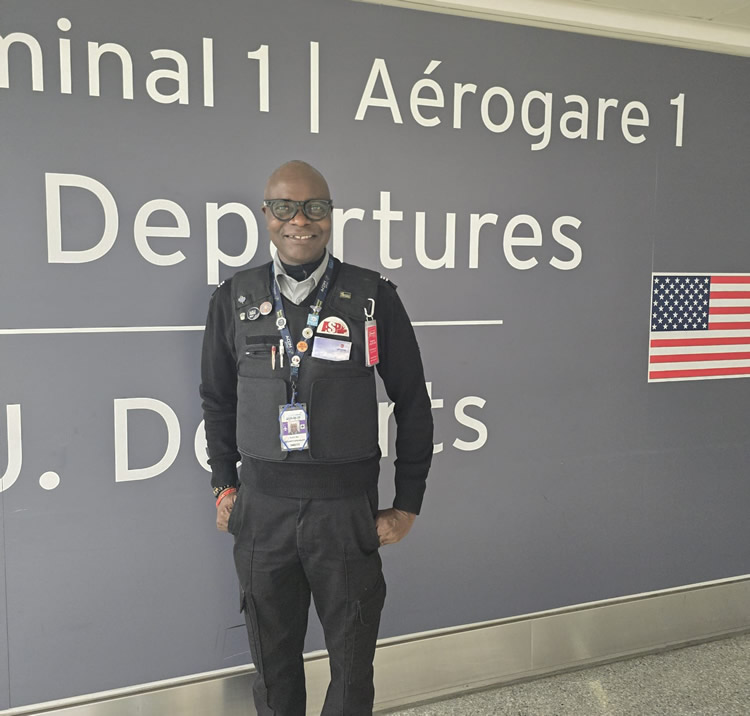
WATER FASAN, a Nigerian Pharmacist turned Security Specialist and Access Control Officer shot to limelight in Canada when he won the 2025 Canadian Airports Council (CAC) National Recognition Award, a feat which gained instant international recognition.

Though Fasan’s rise from humble beginnings in Nigeria to international acclaim sounds like a fairy tale, his has been a long story of courage across, effort, dedicated service, study and the determination to pursue his desire to succeed even if he had to cross continents. His purpose-driven road to success and refusal to be limited by background or borders also led across multiple industries and nations.

Water Fasan is also recognized for his strong customer service skills, particularly in his role at Toronto Pearson International Airport where his calm demeanor and approachability are noted for helping to prevent potential challenges

Fasan began his professional journey in Nigeria as a Pharmacy Technician, at Cosmos Pharmacy under the visionary leadership of Mr. Azubike Okwor in (year).

Mr Okwor, a former President of the Pharmaceutical Society of Nigeria, and the first Black man to receive a Fellowship in the history of the pharmaceutical industry, took the young pharmaceutical technician under his wings for (number of years). The period left an indelible mark on Fasan. By the time he left in search of greener pastures, Mr Okwor’s mentorship was a changed man.

Looking back, Fasan recalled that Mr. Okwor’s mentorship instilled in him the values of excellence, discipline, and service to community.

Now a focused, purpose driven young man filled with dreams and ambitions, his desire to succeed in life first led him to Israel, where he gained life-changing experiences before returning to Nigeria in 2009. In 2010, driven by a higher calling, he immigrated to Canada.

The North American country was quite different from his Nigerian background. But equipped with only faith, determination, and an unshakable belief in hard work, he embraced the challenge of starting over by embracing a new career and pursuing a new path in private security. The change did not come easy as he had to complete numerous certifications and gain hands-on experience in his new field.

“I worked with respected firms like RBG Security Inc., under the direction of Ron Boyko, and advanced to become an Operations Supervisor at one of the historic department stores in the world—Hudson’s Bay and Saks Fifth Avenue,” Fasan said.

It was at Hudson’s Bay and Saks Fifth Avenue that Fasan’s sterling qualities were first noticed in his new found country. There, he received the Best Customer Service of All Time award, a reflection of his commitment to excellence.

In 2019, he entered the aviation industry, beginning at Menzies Aviation. He later rose to lead teams at AAS, serving as Acting Manager at Dexterra. Currently, he is a Security Specialist with ASP Security at Toronto Pearson International Airport, a position he has held since 2022.

Still driven by the burning desire to grow, Fasan returned to the classroom and graduated in 2024 from the Canadian College of Business and Management, earning a Diploma in Human Resources Management. This academic achievement further prepared him for a broader impact in leadership, training, and organizational development.

Over the years, Fasan’s work has earned wide recognition In Canada. His story, face, and contributions are featured across Pearson Airport as a symbol of dedication and pride.

In 2025, he became the first-ever African-Canadian Nigerian to receive the Canadian Airports Council (CAC) National Recognition Award when he and eight others were selected from among 52,000 airport workers and 80 nominees at the 16th Canadian Airport ceremony.

Although Water Fasan’s story is still unfolding, his success reminds us all that with faith, focus, and fearless effort, anything is possible. The honour was more than an award—it was a moment of history For Nigeria, for Africa, and for every immigrant whose story is still being written.

Continue Reading

Opinion

Ode To People’s President

Published

on

Senator Michael Opeyemi Bamidele and Asiwaju Bola Tinubu
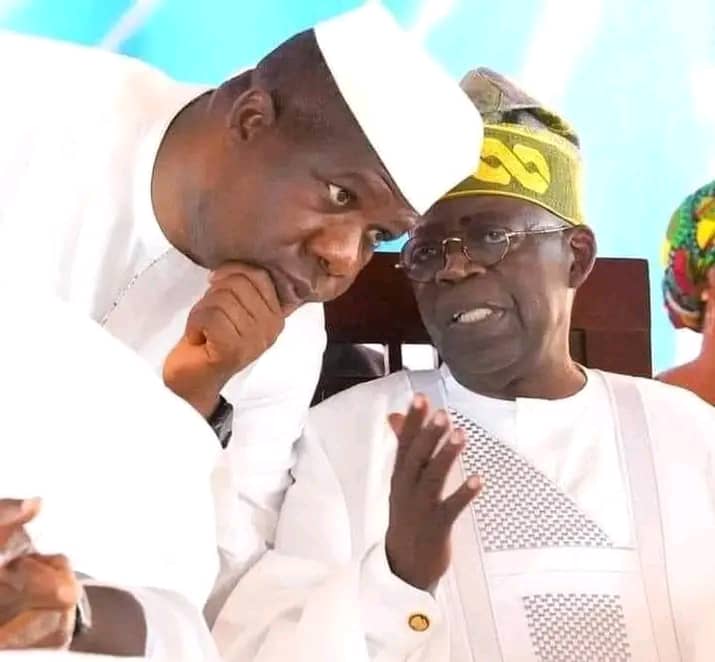
Senate Leader, Sen. Michael Opeyemi Bamidele and President Bola Tinubu
Share

By Senator Opeyemi Bamidele, CON

Today, I celebrate a timeless doyen of democracy and an astute mentor of many leaders, President Bola Ahmed Tinubu, GCFR. By global standards, Asiwaju is truly a man of the people and the visionary of our times, who devoted his life to pursuing the greatest goods to the greatest number of people. This has been the core of his heart and life from when he was a boardroom guru in the 1980s to when he joined partisan politics in the 1990s.

Born on March 29, 1952, Asiwaju’s foray into politics in 1991 was never a mistake, though it came with a huge sacrifice that cost dearly. As a Senator of the Federal Republic of Nigeria, I celebrate how Asiwaju firmly stood with the people rather than dining with the military oligarchy that annulled the outcome of the June 12, 1993 presidential election ostensibly won by Chief M.K.O Abiola (now of blessed memory), an annulment that set our fatherland back to the pre-colonial era.

I also celebrate how Asiwaju teamed up with the progressives to establish the National Democratic Coalition, a movement of likeminds and progressives that fiercely challenged the regime of the late tyrant, General Sani Abacha; mobilised support for the restoration of democracy to our fatherland and campaigned for the recognition of Chief M.K.O Abiola as the winner of the June 12 presidential election. And this conviction and pursuit eventually earned him exile from the land of his birth. Yet, he was undaunted in his quest to see his fatherland liberated from the era of locusts that pitched us against the comity of nations.

I celebrate how Asiwaju returned to Nigeria in 1998 when the darkest era of the late tyrant finally folded into the abyss of extinction after fighting doggedly on the side of the people. The end of the dark era culminated in his election as the third civilian governor of Lagos State in January 1999. Though faced with diverse heinous challenges at the inception, Asiwaju came out strong and victorious, setting Lagos on the path of irreversible progress, reforming the coastal state to a globally competitive smart city and turning it to a constant destination of strategic investment. And the world can no more look away from Nigeria just because of the pro-people reforms he carried out in Lagos.

Asiwaju’s quest for the greatest goods for the greatest number of people pushed him to national politics, the kind of venture that consumed the nationalists and patriots who lived before him. At different times, he challenged the traditional forces that held our fatherland down. He first fought for the soul of our fatherland on the platform of the defunct Action Congress, and it did not entirely produce an enviable outcome. He later switched to the Action Congress of Nigeria, and banished the regressive elements from the six states of the South-west. Full of hope, Asiwaju stressed forth his hands across Benue and Niger, and together, they rescued Nigeria from the hands of the regressives.

At 72, as the President of Nigeria, Asiwaju has brought rare conviction and passion to the business of public governance, courageously daring the forces of regression and tirelessly  pursuing the interests of over 227 million regardless of their faith, ideology and race. The task is truly daunting, but the victory is undoubted. Only within 10 months of Asiwaju’s ascendancy to the presidency, we have started witnessing the dawning of economic restoration and the ray of political renaissance under his watch.

As I nostalgically reflect on the journey so far, I remember his labour and toiling for our fatherland, even when most misunderstood. I remember his undying passion to lead the path to a greater nation, even when the future looks so bleak and always unsure. I remember his utter commitment to a movement of patriots and progressives eternally sworn to rescue our fatherland from the claws of the ageless vultures and the blood-thirst beaks of mindless hawks that always seek to feast on the flesh of Nigeria. Despite their ferocity, he eventually subdued the enemies of our souls, even right in the midst of inferno they set ablaze for us all.

That is the reality in our fatherland today. Asiwaju is at the forefront of that reality. And we are all witnesses to this history, even from its making to its maturation. Now, as he graciously turns 72 on this auspicious day, I cannot, but earnestly pray God grants him longer life and inner strength to steadily paddle the ship of our nation to the coast of endless ecstasy. 

 Heartiest 72nd Birthday, my leader and mentor.

  • Bamidele, Leader of the 10th Senate, writes from Abuja

Continue Reading

Opinion

Chronicling Deputy Senate President Barau’s 100 days of parliamentary excellence

Published

on

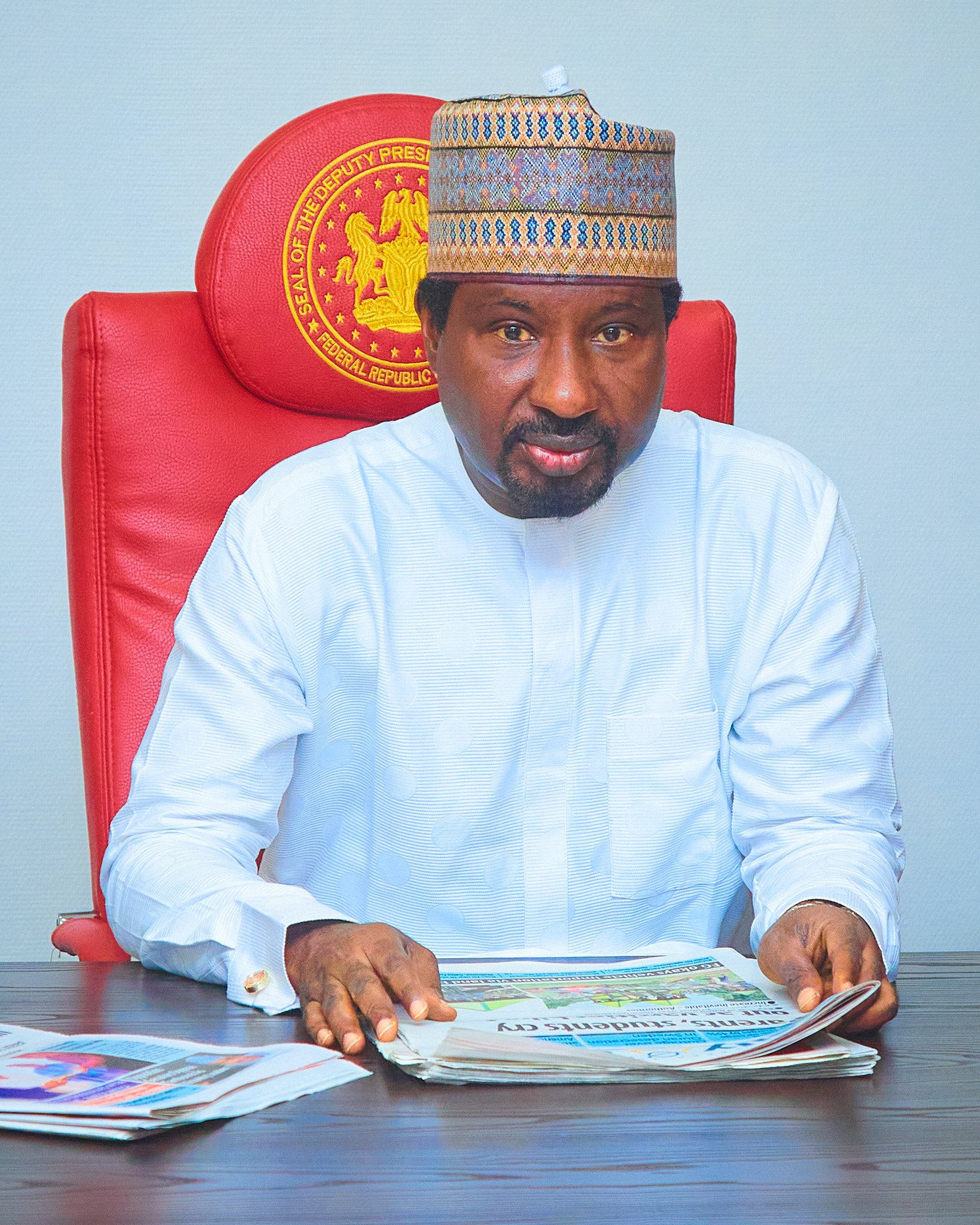
Deputy President of the Senate Barau Jibrin
Share

By Ismail Mudashir

Tomorrow, Wednesday, September 20, 2023, the 10th Senate will mark its first 100 days following its inauguration on June 13, this year.

The inauguration of the parliament followed President Bola Ahmed Tinubu’s proclamation, via a letter to the Clerk to the National Assembly, Sani Magaji Tambawal, in line with Section 64(3) of the 1999 Constitution.

The first duty of the senators was the election of the presiding officers – the President of the Senate and the Deputy Senate President. After a keen contest, Senator Godswill Akpabio, from Akwa Ibom State, emerged as the President of the Senate, defeating Senator Abdulaziz Yari, a former governor of Zamfara State.

Apparently, because of his rare personality traits, Senator Barau I. Jibrin, a fourth timer at the National Assembly (three times in the Senate – 2015 to date and once in the House of Representatives – 1999 -2003) emerged as the Deputy President of the Senate unopposed as all his colleagues threw their weight behind him.

Three weeks after the emergence of the two presiding officers, eight principal officers were named, thus the leadership of the 10th Senate was duly constituted. With the constitution of the leadership, the lawmakers got the parliamentary work started as urged by the President of the Senate, Senator Akpabio, in his speech on July 4, 2023, titled, “Let’s get the work started.”

On July 6, Senator Barau, for the first time, presided over the plenary session. During the session, five motions were moved including the one on Mallam Aminu Kano International Airport, Kano.

After the July 6 session which attracted applause from across the Red Chamber and beyond, Senator Barau had presided over the plenary on other occasions in the absence of the President of the Senate in the last 100 days.

Among the critical motions sponsored by the Deputy President of the Senate during the period under review was the one on the poor state of road infrastructure and the menace of gully erosion in the country. Also to his credit was a motion on the emergence of President Tinubu as the Chairman of the Economic Community of West African States (ECOWAS).

Four bills of the Deputy President of the Senate, including the one on the creation of a development commission to fast-track the development of the country, have been introduced at the Red Chamber.

* Balanced appointments

Recognizing the heterogeneous nature of the country, the Deputy Senate President selected his seven key appointees from across the country – four were drawn from Kano State – two from the southern part of the country – Oyo and Imo states, and one from Kwara State – North Central geopolitical zone.

The appointees who hail from Kano State include the Chief of Staff, Professor Muhammad Ibn Abdullahi; the Special Adviser (Policy & Monitoring), Professor Bashir Muhammad Fagge; the Special Adviser (Political), Yusuf Aliyu Tumfafi and the Special Assistant (Media & Publicity), Shitu Madaki Kunchi.

The Special Adviser (Media & Publicity), Ismail Mudashir, hails from Kwara State; the Special Adviser (Special Duties), Idris Abiola Ajimobi, Oyo State; and the Special Adviser (Administration), Mrs. Ngozi Ndawi Nkemdirim, from Imo State.

Commendations have followed what has been described by lawmakers, media practitioners, civil society organisations, and other stakeholders in the country as balanced appointments.

* Constituents driven representation

For Senator Barau, his representation has been constituents and pro-masses driven. Hence the unfettered access he grants to people from Kano North, Kano State, and beyond; the old, young, rich, and poor; APC members and members of other parties.

For instance, in August, he instituted a scholarship programme through which hundreds of tertiary institution students from Kano North Senatorial District were given N50,000 each. The programme was flagged off at Bayero University Kano (BUK).

Before the scholarship scheme, the Deputy President of the Senate had paid WAEC and NECO fees for hundreds of secondary school students.

To boost agriculture in the state, Senator Barau also distributed fertiliser to farmers across the 44 local government areas of the state.

According to beneficiaries, this initiative would enhance their output and contribute towards attaining food security in the state and country.

On September 6, the people of Rimindako community in Bagwai LGA of Kano State, through a human rights activist, Barrister Muhammad Zubair, lauded the Deputy President of the Senate over the construction of Yasanya bridge and access road in their community.

· Visits Abuja Industrial Park

On the invitation of the Zeberced Group, the Deputy President of the Senate was at the Abuja Industrial Park located in the Idu Industrial District on September 4. Sitting on 245 hectares of land, the park will house 200 factories, a helipad, a train station, a lorry park, a bank, a recycling station and a power plant, among others when completed.

The park is an initiative of the Zeberced Group, jointly founded by Adil Aydin Kurt and Cemal Kurt from Turkey. The company’s Managing Director, Aidl Aydin Kurt, conducted Senator Barau around the project. Kurt told his visitor that the project when completed will provide 40,000 direct jobs to Nigerians.

Moved by the 40,000 jobs to be created , Senator Barau said the parliament would provide the necessary legislative support to the company, saying the project was in line with the commitment of the federal government to address unemployment, boost and diversify the country’s economy.

* Keeping parliament alive during recess

Even with the annual recess embarked upon by the parliament on August 7, the office of the Deputy President of the Senate has been active, five days a week (Mondays – Fridays), with Senator Barau performing official engagements. During the period, he met with ministers, heads of agencies, civil society/pressure groups including the promoters of Tiga and Gari states, clerics, and party leaders, among others.

During their visit, stakeholders of the All Progressives Congress (APC) in Kano North Senatorial District, led by Hon. Sani Mukaddas, hailed Senator Barau, describing him as an exceptional lawmaker and leader.

In the same vein, a forum of former zonal women leaders of the APC has thumped up Senator Barau, saying he is not discriminatory in his dealings with all.

“Continue to support us, we won’t disappoint you, Insha Allah,’’ were the words of the Deputy President of the Senate to those who visited him. He also assured them of the commitment of the parliament to support the executive with the necessary legislation to address the challenges facing the nation.


Mudashir is the Special Adviser on Media and Publicity to the Deputy President of the Senate

Continue Reading