Connect with us

Defence and Security

Terrorism in Nigeria, a global threat – Monguno

Published

on

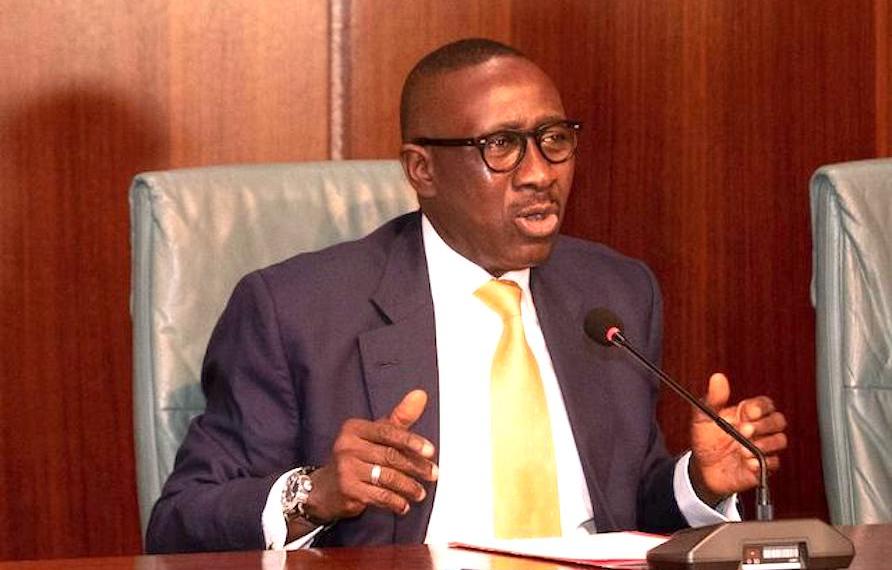
National Security Adviser (NSA), retired Maj.-Gen. Babagana Monguno
Share

The National Security Adviser (NSA), retired Maj.-Gen. Babagana Monguno, has urged international community to see the threat of terrorism in a particular country as a threat to global peace and security.

Monguno made the call at the ongoing United Nations High-Level Conference of Heads of Counter-Terrorism Agencies of member states in New York.

The message is contained in a statement by the Office of the National Security Adviser (ONSA) on Tuesday in Abuja.

He said that the complex nature of terrorism and other transnational organised crimes required international collaboration to be able to deal with it decisively.

Monguno said terrorism had continued to manifest as vicious and relentless global threat, recognising no border, nationality and all religions.

The NSA added that terrorism had become a contemporary weapon of violence for non-state actors in this era of globalisation.

According to him, preventing terrorist attacks, safe-guarding borders, empowering national police, improving the criminal justice system, curbing elicit financial flows and halting the abuse of drugs and hard substances remain extremely daunting challenges for most nations, including Nigeria.

“I can say with total conviction that apart from pandemics, natural disasters and the climate itself, today the greatest threat to the existence of human race is the global scourge of terrorism.

“The fallout of activities associated with terrorists have collectively heightened insecurity in the greater part of Africa with serious economic, social and political implications for its people.

“In the North Eastern part of Nigeria, the activities of Boko Haram terrorists and the so called the Islamic State West Africa Province with known affiliation to other international terror networks such as Daesh and Al-Qaeda, have continued to undermine the security and livelihood of the people.

“They are at the same time overlapping into neighbouring countries of the Lake Chad Basin.

“It was disclosed that over a million persons have been internally displaced in the communities in Borno, Adamawa and Yobe, while more than seven million people remain in need of humanitarians assistance in North Eastern Nigeria,” he said.

The NSA said that social media platforms was being used by terror groups to propagate ideologies, recruit youths, radicalise them, instill fear in targeted community and deflate the morale of defence and security forces.

He stated that the terrorists’ approach was to portray the government as incapable of guaranteeing the protection and well-being of its population.

Monguno said that the Nigerian government had continued to confront the challenges by setting up new structures and national institutions as well as empowering them.

According to him, the federal government has improved the coordination of humanitarian supports for non-government organisations by creating the Ministry of Humanitarians Affairs, Disaster Management and Social Development.

He said that President Muhammadu Buhari had approved the establishment of the National Commission for the Control of Small Arms and Light Weapons as well as National Commission for the Coordination of Cyber Security.

He also said that the government had empowered the National Financial Intelligence Unit (NFIU) to trace the sources of funding of terrorist organisations.

NSA further noted that the funding commitment of the government to the Multinational Joint Task Force (MJTF) had continued to yield results, diffusing tensions and curbing the activities of Boko Haram and ISWAP within the fringes of the Lake Chad Basin.

He expressed Buhari’s commitment in working with all nations, not just those in the sub region and the African continent, but the entire international community. (NAN)

Continue Reading
Click to comment

Leave a Reply

Your email address will not be published. Required fields are marked *

Defence and Security

Tinubu Condemns Killing of Abducted Teacher, Assures Rescue of Oyo Victims

Published

on

President Bola Ahmed Tinubu
Share


President Bola Tinubu has condemned the reported killing of one of the teachers abducted during the attack on schools in Esiele community, Oriire Local Government Area of Oyo State, describing the act as barbaric.

The President gave the assurance on Monday while reacting to the abduction of staff, students and pupils from Community Grammar School, Baptist Nursery and Primary School, and L.A. Primary School after gunmen invaded the community last Friday.

According to a statement issued by presidential spokesman Bayo Onanuga, security agencies are currently working round the clock to rescue the victims and arrest those behind the attack, including their collaborators within the community.

President Tinubu sympathised with Governor Seyi Makinde, the government and people of Oyo State, as well as the families of the kidnapped victims.

The President said the Federal Government is collaborating with the Oyo State Government to ensure the safe rescue of all abducted persons. He also commended the Inspector-General of Police and the Commissioners of Police in Oyo and Kwara States for their swift response and deployment of tactical and Intelligence Response Team personnel for the operation.

Tinubu disclosed that the Inspector-General of Police is personally leading a technology-driven rescue operation following his directive, expressing confidence that security agencies would soon achieve a breakthrough.

He further vowed that the bandits and their local collaborators would be apprehended and made to face the full weight of the law.

The President also reiterated the need for the establishment of state police, saying rising cases of kidnapping across underserved areas of the country have made the reform more urgent. He called on the National Assembly to accelerate the passage of laws that would create state police across Nigeria.

Continue Reading

Defence and Security

Senate Condemns Abduction of Students in Borno, Oyo, Pushes for State Police

Published

on

Senate Logo
Share


The Leader of the Senate, Opeyemi Bamidele, has strongly condemned the abduction of students and teachers in Borno and Oyo states, describing the incidents as a direct attack on Nigeria’s future and a threat to national development.

In a statement released on Sunday through his Directorate of Media and Public Affairs, Bamidele expressed concern over the growing insecurity in schools despite the global attention and over $30 million raised in 2014 to strengthen safety in educational institutions across the country.

The senator, who also serves as Vice Chairman of the Senate Committee on the Review of the 1999 Constitution, said the latest kidnappings further highlighted the urgent need for the establishment of state police to complement Nigeria’s existing security structure.

The attacks occurred within 24 hours in both Oyo and Borno states. In Oyo State, suspected gunmen reportedly abducted 45 students and teachers from Baptist Nursery and Primary School, Yawota Community Grammar School, and L.A Primary School in Esiele, located in Oriire Local Government Area.

Similarly, terrorists suspected to be members of Boko Haram invaded Mussa Primary and Junior Secondary School in Askira/Uba Local Government Area of Borno State, abducting 42 students during the attack.

Reacting to the incidents, Bamidele said the National Assembly was already at an advanced stage in the constitutional amendment process aimed at creating state police across the federation.

According to him, the 10th National Assembly would soon conclude legislative procedures on the proposal before transmitting it to the various State Houses of Assembly for approval.

He explained that the amendment would require the endorsement of at least two-thirds of the state legislatures before state police could officially become operational nationwide.

The Senate Leader urged governors and lawmakers at the state level to treat the proposal as a matter of national importance rather than allowing partisan politics or ethnic and religious sentiments to influence the process.

Bamidele also called on both federal and state governments to fully implement the Safe School Initiative as a temporary solution to rising insecurity in schools and the growing out-of-school children crisis, which he said currently affects over 18.3 million children across Nigeria.

Describing the repeated abduction of students and teachers as a “tragic national concern,” he stressed that the National Assembly remained committed to strengthening laws that would help tackle insecurity and violent crimes.

He added that lawmakers would resume plenary on June 2 to conclude pending legislative efforts targeted at addressing security challenges nationwide.

Among the proposed measures, according to Bamidele, are the establishment of state police and amendments to the Terrorism (Prevention and Prohibition) Act, 2022, which seeks to strengthen the justice system and impose stricter consequences for acts of terrorism and other violent crimes.

Continue Reading

Defence and Security

FG Insists Al-Manuki Operation Was Accurate, Intelligence-Driven

Published

on

Share


The Federal Government has defended the reported killing of a senior commander of the Islamic State West Africa Province (ISWAP), Abu-Bilal Al-Manuki, insisting that the operation was credible, intelligence-driven and free of ambiguity.

In a statement issued by presidential spokesman Bayo Onanuga, the government dismissed growing scepticism surrounding the operation, describing such reactions as premature and not reflective of the full operational context.

Authorities admitted that Al-Manuki’s name had earlier appeared among insurgent commanders reportedly killed in 2024 during military operations in Birnin Gwari, Kaduna State, but clarified that the earlier report was a case of mistaken identity.

According to security sources, the latest operation followed months of Intelligence, Surveillance and Reconnaissance (ISR), including communications tracking and phone intercepts dating back to December 2025.

Officials said security operatives initially planned to capture Al-Manuki alive and had tracked his movements in Abuja and Maiduguri before the final strike.

The government stated that the operation involved multiple layers of verification and target confirmation, making it more precise and reliable than previous reports.

“This time, there is no ambiguity,” the statement said, stressing that the mission was backed by multi-source intelligence and careful validation.

The government also cautioned against using past cases of wrongly reported terrorist deaths to discredit verified military operations, noting that similar challenges had occurred in global counterterrorism efforts involving Abu Bakr al-Baghdadi.

Authorities added that Nigeria’s armed forces operate in a difficult environment where insurgents often use aliases, cross borders and hide among civilians.

Reaffirming its position, the government maintained that the elimination of Al-Manuki was a confirmed success against a key figure in the Islamic State network, declaring that it was “100 per cent certain” of the outcome.

Continue Reading