
Sports Blast
Spain Beat Sweden, Reach First Women’s World Cup Final


Science & Tech
2nd World Humanoid Robot Games Take Off in Beijing: Chinese Robot Breaks Usain Bolt’s World Record

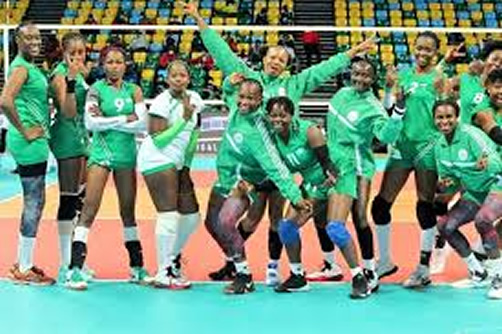
Nigeria’s 12- player squad will depart for Kenya on Saturday to participate at the 2026 Women’s African Nations Volleyball Championship, scheduled for Aug. 23 to Sept. 5 in Nairobi, Kenya.
The News Agency of Nigeria ((NAN) reports that the team of 12 female volleyball players and their coaches were officially sent off by the Nigerian Volleyball Federation on Friday in Abuja.
In his address to the players, DCP Stephen Hasso, Chairman Nigerian Beach volleyball Commission, urged the players to be good ambassadors of the country.
“You were chosen from among many players to represent Nigeria and I believe you will be good ambassadors. You are lucky to be the first Volleyball team of this country to have a foreign technical adviser to train you throughout your three weeks camping,” he said.
“I pray when you go there you will exhibit what he taught you here. Listen to your coaches. Play to your coaches’ instructions. I have watched your training and I am really impressed with what I have seen. I believe you are equal to the task and you will come back successful,” he added.
Speaking on behalf of the players, Captain Ijeoma Ukpabi said the team have worked hard enough to achieve success in Kenya.
“I believe we have worked hard enough to go far in the tournament. We have sacrificed time and energy and I am sure it will not be a waste. As a team, we promise we will stay and stand strong no matter the opponents we face, ” Ukpabi said.
“We have worked together as a team and as a family, so we are going to prove to ourselves that there was no time wasted and no effort lost,” she added.
Head coach Elishama Elam said he and his staff worked very well on the players and that he is confident of getting good results.
“We started with the basic things. We worked on their techniques. We cared about the players physically, and about injuries and technical aspects, which is the most fundamental. And I am happy with what we have going into the tournament. I am sure we will have good results,” the coach said.
Featuring 16 nation, the 2026 Women’s African Nations Volleyball Championship is a qualification pathway for the 2028 Los Angeles Olympic Games and the 2027 FIVB Women’s World Championship.
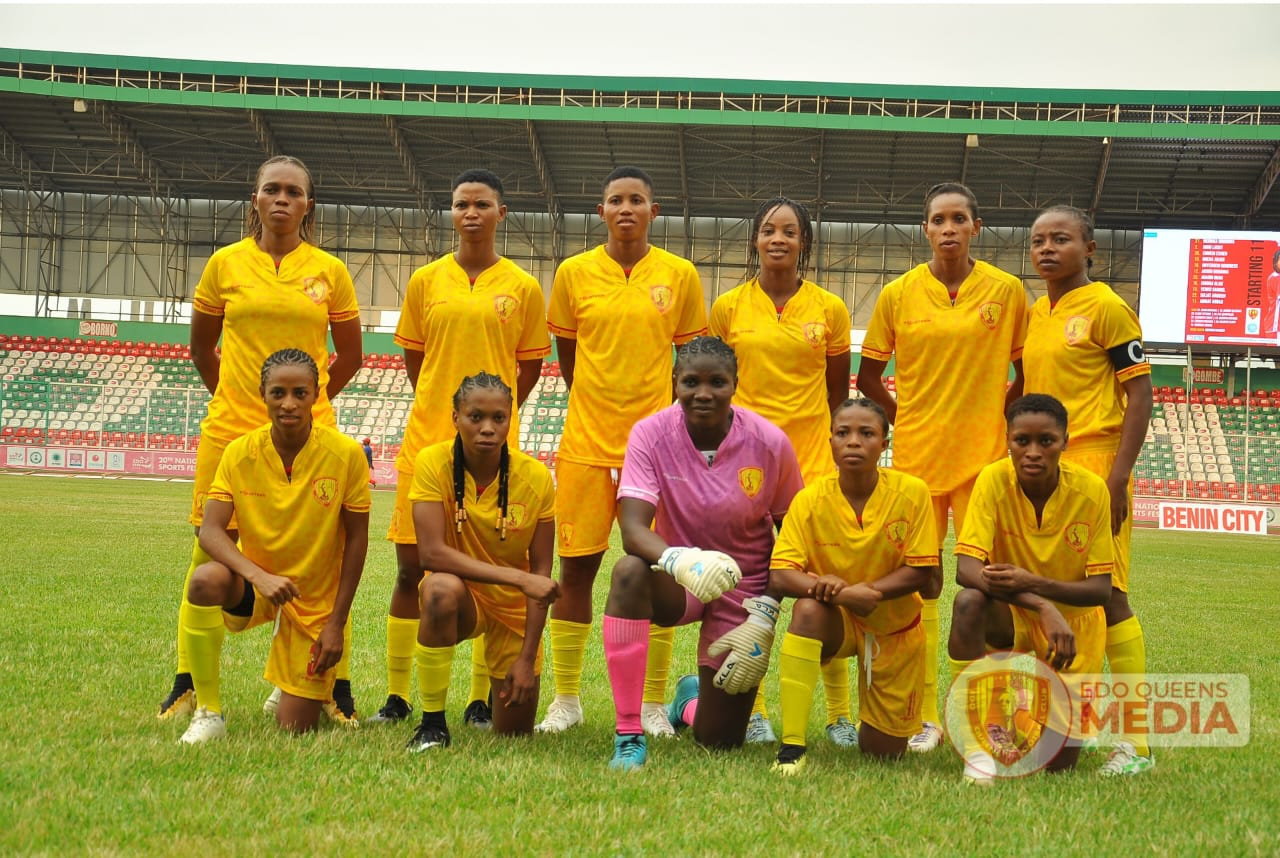
Edo Queens FC are ready to fight for the 2026 CAF Women’s Champions League WAFU-B qualifying ticket in Ouagadougou, Burkina Faso, assistant coach Gabriel Benson has said.
Benson said the players were fully aware of the task ahead and understood the responsibility of representing Nigeria at the regional competition.
“The girls are ready to go. They know the task ahead of them. They know they are representing Nigeria at large and are ready to fight for the trophy,” he said.
“The weather here is a bit hotter than in Nigeria and we try to engage the players on exercises that can help them easily acclimatise,” Benson added.
He said Edo Queens would approach the competition with determination, irrespective of the quality of opposition in their group.
“In this group, we are here to play against anybody. Even though there are former champions in our group, we will take one game at a time,” he noted.
The reigning Nigeria Women’s Football League (NWFL) champions arrived in Ouagadougou at on Thursday and had thier first training session this morning.
Edo Queens are drawn in Group B alongside ASEC Mimosas of Côte d’Ivoire, Ampem Darkoa Ladies FC of Ghana and AS Garde Nationale of Niger.
Meanwhile Group A comprises USFAS of Burkina Faso, Dynamique FC of Benin and ASOK Da-Kara Feminines of Togo.
The Nigerian representative will begin her campaign on Monday against AS Garde Nationale of Niger at Stade 4-A-Oût.
The News Agency of Nigeria (NAN) reports that the WAFU-B qualifiers will determine the team that represents the zone at the 2026 CAF Women’s Champions League.


Yari Predicts Tinubu’s 2027 Victory, APC to Retain Power Beyond 2031
Share Director-General of the All Progressives Congress (APC) Presidential Campaign Council, Abdul’Aziz Yari, has expressed confidence that President Bola Ahmed...


CLE Bans Five Law Students From Bar Final Exam For 10 Years
Share The Council of Legal Education (CLE) has barred five law students from taking the Bar Final Examination for 10...


FG unveils New Reforms to Tackle Almajiri, Out of School Children
ShareThe Federal Government has unveiled new reforms aimed at ensuring every Nigerian child returns to school and acquires relevant knowledge...


How Tracking Helped ICPC Recover N2.06bn From Kaduna Projects
ShareThe tracking of 31 constituency and executive projects across the three senatorial districts of Kaduna State, has enabled the Independent...


JAMB: How Candidates Can Upload Result On Portal Without Visiting CBT Centre
ShareThe Joint Admissions and Matriculation Board has introduced a new way candidates can now verify and upload their O’level results...