Victims of snakebites are flooding treatment centres across the country as the scorching heat forces the reptiles out of their holes into bushes, farms, roads and peoples homes in search of fresh air.
The News Agency of Nigeria (NAN) reports that states worst hit include Gombe, Plateau, Borno, Benue, Taraba, Nasarawa and Bauchi, with herders, farmers and rural dwellers mostly the victims.
Our correspondents, who visited some snake treatment centres, found that most of the patients were on the floor with medics complaining that facilities were being overstretched.
The situation of the victims appeared worsened by the sharp rise in the cost of the usually imported Anti-Snake Venom (ASV), following the high cost of foreign exchange.
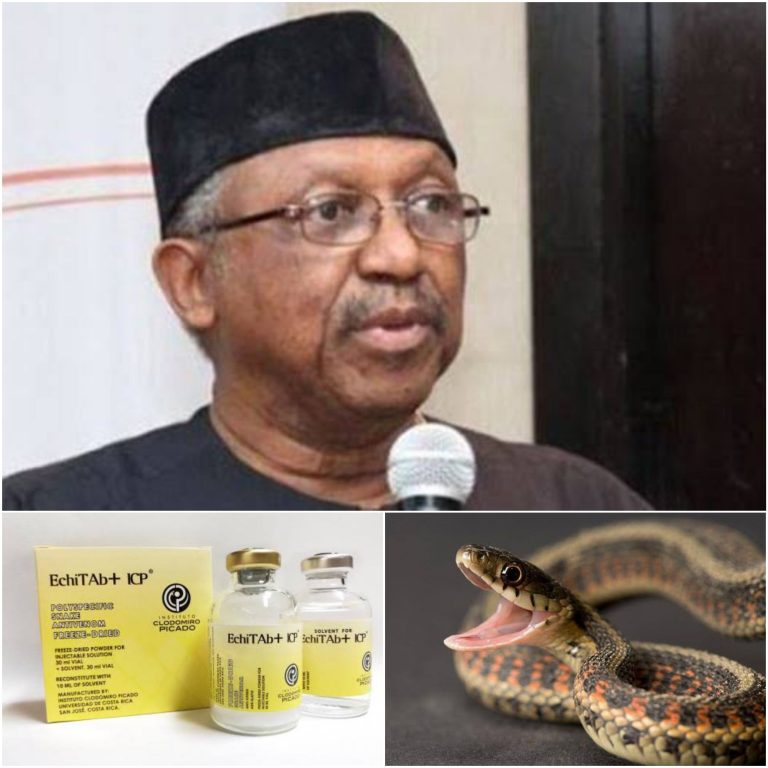
With a vial of the Echitab drugs – the brand of ASV that cures bites from snakes in Nigeria – going for more than 55,000, stakeholders have heightened calls on the Federal Government to support the Echitab Study Group in Nigeria to produce the vaccine locally to lower production cost.
At Snakebites Treatment and Research Centre, Kaltungo in Gombe State, Dr Sulaiman Mohammed, its Principal Medical Officer, told NAN that about 300 patients had been admitted from January to date.
He attributed the sharp rise in the number of cases to the hot weather.
“The heat is at its peak; this period is usually the peak season of snakebites,” he told NAN.
He said that some were treated and discharged while four deaths had been recorded .
Giving a breakdown, he said that 69 patients were admitted in January while 79 came in February.
According to him, more than 135 have been admitted in March with the figures increasing by the day.
“The figures are usually high in March which is the onset of rainy season; on the average, we receive a daily average of nine victims or more.”
He said that the victims were mostly peasant farmers and cattle rearers because “they normally enter bushy areas”.
According to him, most of the patients come from the North-Eastern States to access the treatment.
He explained that most of the victims were bitten by carpet vipers, “the snake that bites without warning; once you are close it, it will strike”.
“Other snakes like puff adder and cobra will show you the sign and will not bite unless provoked. If you are smart, you leave the place quickly,” he explained.
He said the centre currently has some ASV supplied to it by the North East Development Commission (NEDC).
“We received 2,000 vials from NEDC which we give free to patients. It should last for sometime.
“Last year a vial was N40,000. It is far beyond that now,” he said.
He listed some of the challenges the centre was confronted with, to include inadequate manpower as the number of patients far outnumber the staff strength.
Another challenge was the late arrival of patients for medical attention.
“Some victims spend days at home taking herbs and only remember the hospital when the condition becomes critical.
Most times they arrive too late as the venom would have gone deep into the system.
“Such patients take considerable number of ASV vials unlike those that come early that may require just one or two vials.
“Once the patient comes early, especially the very day he was bitten, he will get better within five days and be discharged.
“If a person bitten by a snake, especially carpet viper, decides to stay at home for some days before coming to the hospital, blood will be coming out in all the opening in his body.
“If he comes late, besides the ASV, he will definitely need blood and the cost of taking care of such patients will be much,” he said.
He regretted that herbalists, who know that herbs will not work, still keep the ignorant victims just to exploit them.
He appealed to rural dwellers, especially farmers and herders, to always wear rain boots and hand gloves to protect themselves against snakebites.
“Such precautions will reduce the high incidences of snakebite and save them the cost of medical bills,” he said.
Mohammed emphasised the need for local production of ASV.
“The Echitab drug is produced in England and Costa Rica after the venom is extracted from the snakes here.
We can transfer that technology here and produce the drug locally.
“If we can do that, the drug will be cheaper. We have the raw materials, we can do it,” he said.
At the Zamko Comprehensive Medical Centre, a specialist snakebite treatment centre in Langtang, Plateau State, NAN met a similar situation of rising cases of snakebites.
At the rural medical outfit owned by the Jos University Teaching Hospital (JUTH), Dr Nyam Azi, a medical officer, told NAN that a vial of ASV, which cost between N23,000 and N25,000 in 2021, had risen to N50,000 or even more.
“The price of ASV is almost double its former cost owing to the rise in dollar rates and scarcity.
“Considering that it is peasants that are mostly affected, N50,000 per vial is too heavy.
”It is a hard situation especially coming at a time when a high number of cases are being recorded.”
Azi revealed that the health facility records more than 20 cases per week and attributed the high figure to the heat season usually one of the peak periods of snakebite cases in the area.
He said that victims come from Benue, Taraba and Nasarawa States.
The physician lamented the current scarcity of the Echitab ASV which he said was so far the only proven vaccine for the species of snakes in Nigeria.
He added that the situation was worrisome as patients required four or more doses for standard treatment.
“The standard dose a patient requires is four vials of polyvalent or one vial of monovalent, while some patients require even more,” he said.
Azi urged government to resume subsidising the ASV for victims to ease their sufferings.
He urged government and private organisations to train health workers in the treatment and management of snake bites to minimise mortality or limb loss.
Reacting to the situation, Prof. Abdulsalam Nasidi, Chairman, Echitab Study Group in Nigeria, said that a vial of ASV costs N55,000 and blamed that on the rising cost of foreign exchange.
“This price will keep growing dependent on Naira fluctuations,” he told NAN.
He, however, said that efforts toward local production of ASV had reached an advance stage.
“The Federal Government is fully supportive of the efforts. The Federal Ministries of Health, Industry and Commerce, as well as the Central Bank of Nigeria are working with us on the project.
“The Federal Government is encouraging self-sufficiency to save herders and farmers who are at highest risk,” he said.
He acknowledged receipt of rising cases of snakebites at the treatment centres due to increase in heat, but expressed satisfaction that all the treatment centres were functioning.
“The cases have continued to rise because snakes are invading human habitats due to excessive heat.
“A major good news is that the number of deaths have decreased substantially when the ASV are available.
But deaths do occur when snakebite victims report late or arrived when ASV is not available,” he said.
(NAN)