Connect with us

Business & Economy

Senate sets to screen EFCC, New Petroleum Agencies Board Nominees

Published

on

SENATE-PRESIDENT
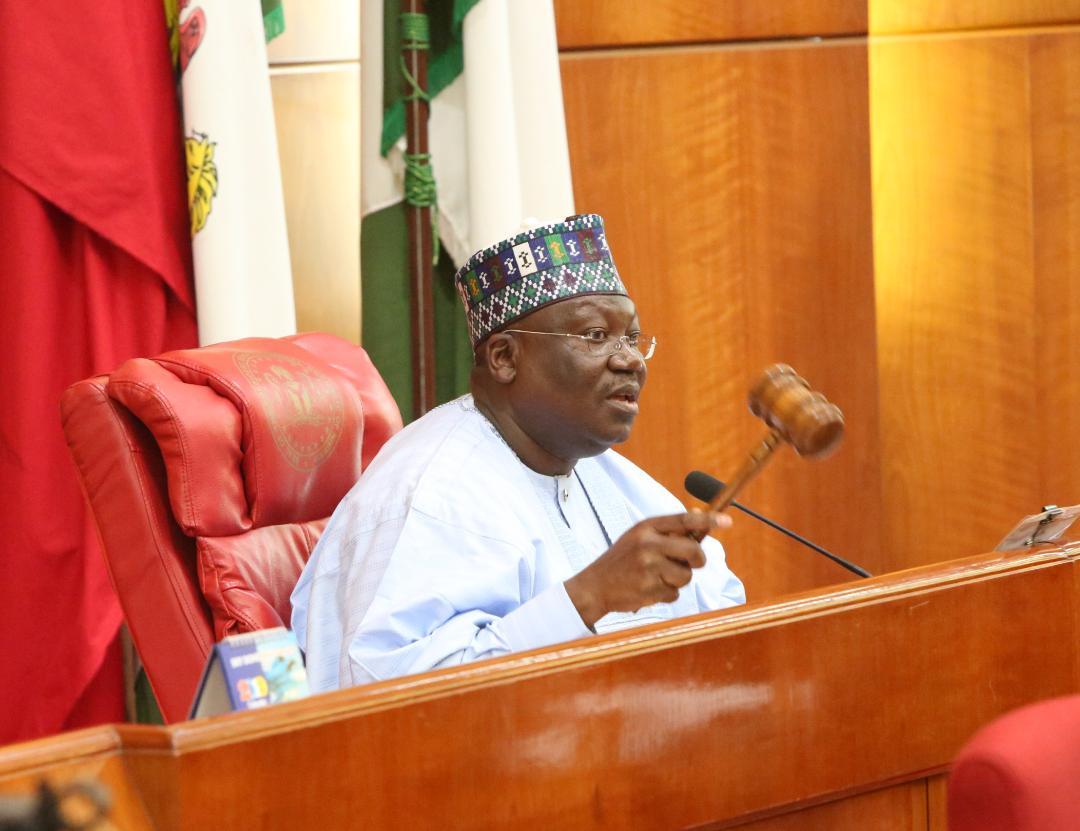
Senate President Ahmad Lawan
Share

President of the Senate, Ahmad Lawan, has forwarded President Muhammadu Buhari’s nominees into the board of the Economic and Financial Crimes Commission (EFCC) to the Committee on Anti-Corruption and Financial Crimes for screening.

Also forwarded were the names of appointees into the newly established Boards of the Nigerian Midstream and Downstream Petroleum Regulatory Authority (NPRA) and Upstream Regulatory Commission (URC) to the Committees on Petroleum (Downstream) and (Upstream), respectively.

The nominees were referred to the relevant committees for legislative action on Wednesday during the start of plenary proceedings, following the receipt of three separate requests from the President  to that effect.

The upper chamber on Tuesday received a request from President Muhammadu Buhari to confirm the nominees as Members of the Board of the Nigerian Midstream and Downstream Petroleum Regulatory Authority.

The President in another letter to the upper chamber also sought the confirmation of the Board of the Upstream Regulatory Commission.

He explained in a letter dated September 16, 2021, that the request to confirm the Chairman, Chief Executive  and Executive Directors for the Nigerian Midstream and Downstream Petroleum Regulatory Authority was made in accordance with the provision of Section 34(3) of the Petroleum Industry Act 2021.

The nominees for confirmation into the Nigerian Petroleum Regulatory Board are: Idaere Gogo Ogan (Chairman); Engr. Sarki Auwalu (Chief Executive); Abiodun A. Adeniji (Executive Director, Finance and Accounts); and Ogbugo Ukoha (Executive Director, Distributions Systems, Storage and Retail Infrastructure).

In a separate letter dated September 16, 2021, President Buhari while relying on the provision of Section 11(3) of the Petroleum Industry Act 2021, requested the Senate to confirm the appointment of four nominees as Chairman, Chief Executive and Executive Commissioners to the Board of the Upstream Regulatory Commission.

The nominees for screening and confirmation are: Isa Ibrahim Modibo (Chairman); Engr. Gbenga Komolafe (Chief Executive); Hassan Gambo (Executive Commissioner, Finance and Accounts); and Ms Rose Ndong (Executive Commissioner, Exploration and Acreage Management).

Buhari in a third request contained in a letter dated September 17, 2021, sought the confirmation of the Secretary and Board members of the Economic and Financial Crimes Commission (EFCC).

President Buhari explained that the request for the confirmation of the nominees was in accordance with the provision of section 2(1) of the Economic and Financial Crimes Commission (Establishment) Act, 2004.

Those to be screened by the Anti-Corruption and Financial Crimes Committee include George Abbah Ekpungu, Secretary (Cross River); Luqman Muhammed (Edo); Anumba Adaeze (Enugu); Alhaji Kola Raheem Adesina (Kwara); and Alhaji Yahaya Muhammad (Yobe).


Continue Reading
Click to comment

Leave a Reply

Your email address will not be published. Required fields are marked *

Business & Economy

Tinubu Tables ₦58.18trn 2026 Budget, Projects Sustained Economic Stability

Published

on

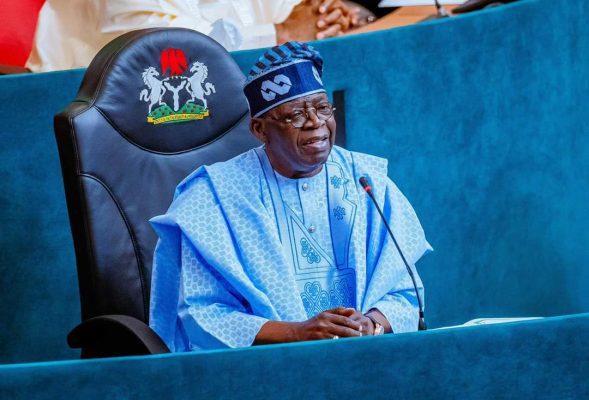
President Bola Ahmed Tinubu
Share

President Bola Tinubu on Friday presented a ₦58.18 trillion 2026 Appropriation Bill to a joint session of the National Assembly of Nigeria, declaring that Nigeria’s economy is showing measurable signs of stabilisation following years of structural pressure.

Tagged “Budget of Consolidation, Renewed Resilience and Shared Prosperity,” the 2026 fiscal plan is aimed at locking in recent macroeconomic gains while translating economic recovery into improved living standards for citizens.

According to the President, Nigeria’s economy expanded by 3.98 per cent in Q3 2025, while inflation moderated significantly, falling to 14.45 per cent in November 2025 from 24.23 per cent in March 2025.

“With stabilising food and energy prices, tighter monetary conditions, and improving supply responses, we expect the disinflationary trend to persist into 2026, barring major supply shocks,” Tinubu said during the presentation on December 19, 2025.

The President highlighted additional positive indicators, including improved crude oil production, rising non-oil revenues, renewed investor confidence, and external reserves climbing to a seven-year high of approximately $47 billion.

Under the proposal, the Federal Government projects ₦34.33 trillion in revenue against planned expenditure of ₦58.18 trillion, resulting in a budget deficit of ₦23.85 trillion, equivalent to 4.28 per cent of GDP. Tinubu emphasised that the fiscal framework is built on realism, prudence, and growth-driven assumptions.

He further assured lawmakers of tighter discipline in budget implementation, stressing that fiscal spending in 2026 would be more outcome-focused.

“Every naira spent or borrowed must deliver measurable public value,” the President said.

Continue Reading

Business & Economy

CBN Governor Reassures U.S. Investors on Nigeria’s Economic Reforms, Stability

Published

on

CBN Governor, Yemi Cardoso
Share

The Governor of the Central Bank of Nigeria (CBN), Mr. Olayemi Cardoso, has reassured United States investors of Nigeria’s commitment to macroeconomic stability and market-driven reforms, amid global economic uncertainty.

Cardoso gave the assurance during high-level engagements with U.S. business leaders and institutional investors in Washington, D.C., including the U.S.–Nigeria Executive Business Roundtable.

Speaking at the forum, the CBN governor said Nigeria remains focused on rules-based economic management, transparent markets, and predictable policy frameworks to restore investor confidence and drive sustainable economic growth.

He highlighted recent reforms in the foreign exchange market, the adoption of orthodox monetary policy measures, ongoing banking sector reforms, and the modernisation of the payments system. According to him, the reforms are aimed at stabilising the economy and supporting private-sector-led development.

The roundtable, convened by the U.S. Chamber of Commerce’s U.S.-Africa Business Center, focused on macroeconomic stabilisation, regulatory clarity, and opportunities to scale bankable projects across key sectors of the Nigerian economy. Discussions also emphasised efforts to deepen commercial and investment ties between Nigeria and the United States.

Commenting on the outcome of the engagement, President of the U.S.-Africa Business Center, Ms. Kendra Gaither, said investors are increasingly prioritising policy credibility and consistency.

She noted that clarity of rules, credible reforms, and disciplined economic management are critical factors driving investor interest, adding that Nigeria’s evolving message of discipline and opportunity is important in a global economy seeking stability and predictability.

Continue Reading

Business & Economy

Tinubu Welcomes Nigeria’s Removal from FATF Grey List, Pledges Continued Financial Reforms

Published

on

President Bola Tinubu
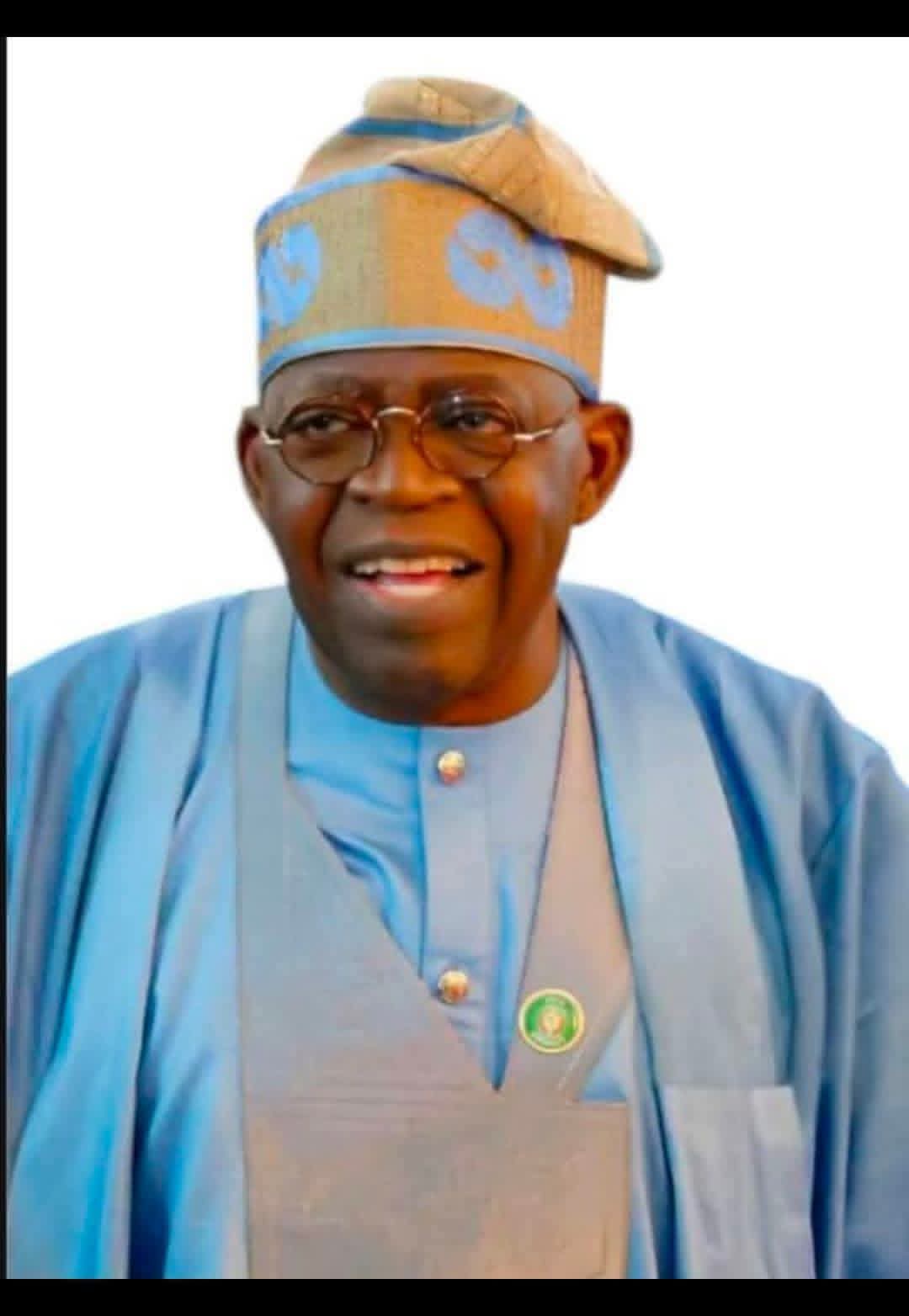
President Bola Ahmed Tinubu
Share

President Bola Ahmed Tinubu has welcomed the removal of Nigeria from the Financial Action Task Force (FATF) grey list, describing it as a major milestone in the nation’s economic reform and global credibility drive.

The FATF, the world’s foremost body for combating money laundering, terrorist financing, and proliferation financing, announced Nigeria’s delisting on Friday at its plenary session in Paris, France.

The decision formally removes Nigeria from the list of countries under increased monitoring, following the nation’s successful completion of its FATF Action Plan after over two years of sustained reforms and inter-agency coordination.

In a statement issued by his Special Adviser on Information and Strategy, Bayo Onanuga, President Tinubu said the development reflects Nigeria’s progress in strengthening its Anti-Money Laundering and Counter-Financing of Terrorism (AML/CFT) framework.

“Rather than treat our placement on the grey list in 2023 as a setback, we saw it as a call to action,” the President said. “This delisting is a strategic victory for our economy and a renewed vote of confidence in Nigeria’s financial governance.”

The President credited the achievement to far-reaching legal, institutional, and operational reforms implemented under his administration through the Nigerian Financial Intelligence Unit (NFIU), in collaboration with the Attorney-General of the Federation, the Minister of Finance and Coordinating Minister of the Economy, and other key ministries.

Tinubu commended the Director/CEO of the NFIU, Ms. Hafsat Abubakar Bakari, and her team for their diligence and professionalism, as well as the contributions of several ministries, agencies, and private sector representatives who participated in the National Task Force on AML/CFT.

He also acknowledged the support of international partners including France, Germany, the United Kingdom, the United States, the United Nations, and the European Commission, for their technical assistance throughout Nigeria’s reform process.

President Tinubu assured that his administration will sustain and deepen the reforms that led to the country’s delisting.

“This is not just a technical accomplishment,” he said. “It marks the beginning of a new chapter in our financial reform agenda as we continue building a system Nigerians and the world can trust.”

Continue Reading