Connect with us

Defence and Security

Senate investigates budget utilisation by army

Published

on

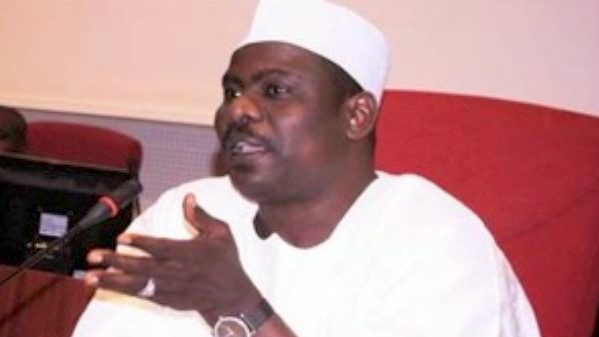
Senator Ali Ndume
Share

The Senate said on Wednesday that it had commenced investigation into the Nigerian Army’s utilisation of its 2019, 2020 and 2021 budgets.

The Chairman, Senate Committee on Army, Sen. Mohammed Ali Ndume, made the disclosure when he led commitee members on oversight of the 6 Division Nigerian Army, Port Harcourt.

Ndume said the investigation would enable the committee to properly make budgetary allocation for the army in 2022.

According to him, the inspection of projects in barracks and interaction with the army hierarchy would enable the committee to make adjustments in the 2022 Appropriation Bill.

“This will enable the committee to know areas that need adjustment, addition and attention, especially now that the 2022 budget is before the National Assembly.

“This oversight function will enable us to allocate what the army will get in 2022 with focus to the security challenges we are facing across the country,” he said.

Ndume said the strength of any nation was determined by the strength of its military and paramilitary agencies, noting that the government would continue to assist them to succeed.

He noted that the army was currently being overstretched due to its engagement in multiple fronts across the country.

“We commend the military and encourage the new guard (service chiefs) to continue with their good works while observing the rules of engagement,” he added.

The senator thanked the Chief of Army Staff (COAS), Lt.-Gen. Farouk Yahaya, for boosting the morale of troops and condoled with the 6 Division over the death of Maj.-Gen. Olu Irefin.

The General Officer Commanding (GOC), 6 Division Nigerian Army, Maj.-Gen. Sani Mohammed, commended the committee for its efforts to address the constraints in the army.

“We are happy that most of the interventions have been done especially in the area of equipment that are coming and efforts to improve army barracks.

“We also appreciate the donation of various types of operational vehicles to the army while the COAS has informed us that many more are coming,” he said.

Meanwhile, the House of Representatives on Wednesday said it would consider better budgetary allocation for the Nigerian Navy in the 2022 Appropriation Bill.

The Chairman, House Committee on Navy, Rep. Yusuf Gadji, gave the assurance whe he led other members of the committee on inspection of projects at the Nigerian Navy Ship (NNS) Pathfinder, Port Harcourt.

According to him, the navy and NNS Pathfinder had recorded milestone achievements in the execution of projects in its formations and units as budgeted in the 2020 fiscal year.

“We are on oversight to seek feedback from the navy that we superintend over, to enable us to address the concerns and seek ways to improve their operations.

“Going by what we have seen from our inspection of NNS Pathfinder base, we can say that they are doing a good job in the area of contract execution.

“We understand the challenges in this base but we will only assist in budgeting for the primary projects that are more significant due to the meagre resources available,” he said.

Gadji said the National Assembly was currently seeking ways to make the nation’s armed forces self-sufficient in the area of funding.

“To this end, we have two bills before the national assembly, including the Armed Forces Support Fund and the Maritime Security Trust Fund.

“These bills when passed will go a long way to solving the problems associated with funding of our military,” he said.

In a presentation, the Commander, NNS Pathfinder, Commodore Abdullahi Ahmed, said the base had destroyed hundreds of illegal refineries, bunkering sites as well as made many arrests in 2021 alone.

He said the successes were recorded with the deployment of swamp buggy machines that completely crushes the illegal refineries, thereby making it impossible for them to be reactivated. (NAN)

Continue Reading
Click to comment

Leave a Reply

Your email address will not be published. Required fields are marked *

Defence and Security

TINUBU SWEARS IN GEN. CHRISTOPHER MUSA AS DEFENCE MINISTER

Published

on

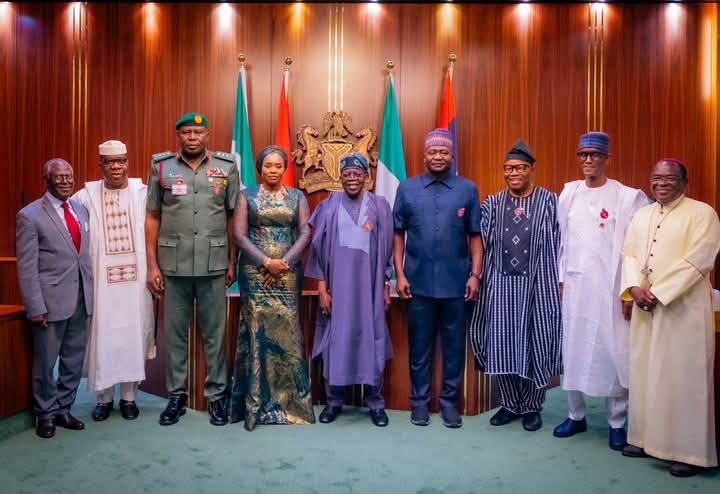
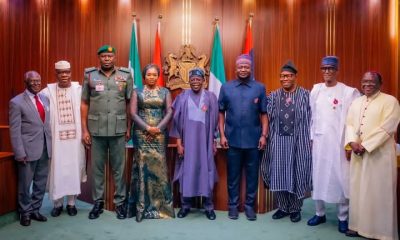
President Bola Ahmed Tinubu, New Minister of Defence, General Christopher Musa and others dignitaries at the Oath taking ceremony in Abuja
Share

President Asiwaju Bola Ahmed Tinubu on Thursday swore in retired General Christopher Gwabin Musa as Nigeria’s Minister of Defence at the Presidential Villa, Abuja.

Musa’s appointment follows the resignation of former Defence Minister Mohammed Badaru Abubakar on December 1. His nomination was sent to the Senate on Tuesday and swiftly confirmed.

Born in Sokoto in 1967, Musa was commissioned into the Nigerian Army in 1991. He served as Chief of Defence Staff from 2023 until his retirement in October 2025, during which he promoted stronger cooperation among the armed forces.

With his swearing-in, Musa is expected to immediately take charge as the Tinubu administration intensifies security reforms and seeks to consolidate recent gains toward lasting peace nationwide.

Dignitaries at the ceremony included Senate President Godswill Akpabio, Senate Leader Opeyemi Bamidele, Information Minister Mohammed Idris, National Security Adviser Nuhu Ribadu, and senior military chiefs. Also present were Musa’s wife, Lilian Oghogho Musa; Bishop Matthew Hassan Kukah; and retired Justice Kumai Bayang Akaahs.

Continue Reading

Defence and Security

Senate Confirms Former Defence Chief Christopher Musa as Minister

Published

on

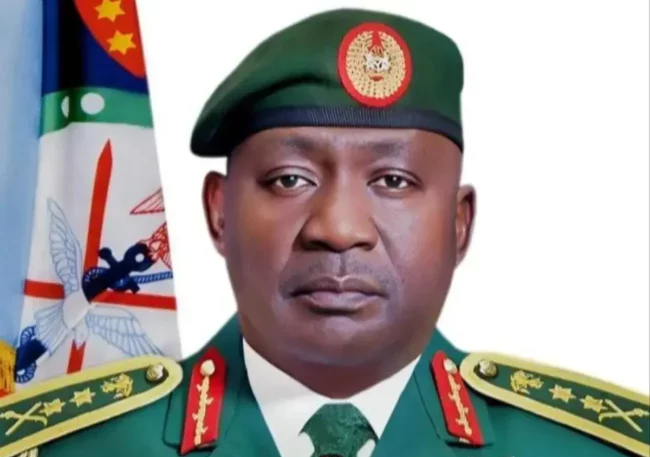
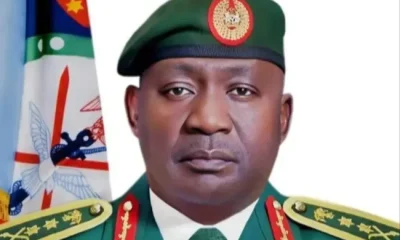
General Christopher Musa Rtd
Share

The Senate has confirmed General Christopher Musa (rtd), the immediate past Chief of Defence Staff, as Nigeria’s new Minister of Defence.

Musa’s nomination was approved on Wednesday after a screening session in which senators examined his military credentials and asked questions on national security challenges.

Addressing the lawmakers, Musa pledged commitment to diligent service and emphasised collaboration in tackling insecurity.

“The challenges we are facing are Nigerian challenges, not just for the armed forces or security agencies,” he said. “We will win if we work together as a team.”

He highlighted gaps in security operations and called for a unified national database to support intelligence gathering. Musa also urged stronger roles for local governments and the judicial system.

Rejecting ransom payments to kidnappers and terrorists, he warned that negotiation only emboldens criminals. “They use the money to buy more arms,” he noted.

Responding to claims of religious targeting in violence across the country, Musa said terrorism affects all citizens. “We must stop the killings. Nigerians should not be killed. We must unite,” he stated.

Senate President Godswill Akpabio praised Musa’s performance during the screening, describing him as the most thorough nominee since 1999. He encouraged the new minister to immediately visit defence industry facilities.

Musa’s nomination was subsequently approved through a unanimous voice vote.

Continue Reading

Defence and Security

Senate Backs Death Penalty for Kidnapping, Moves to Redefine Crime as Terrorism

Published

on

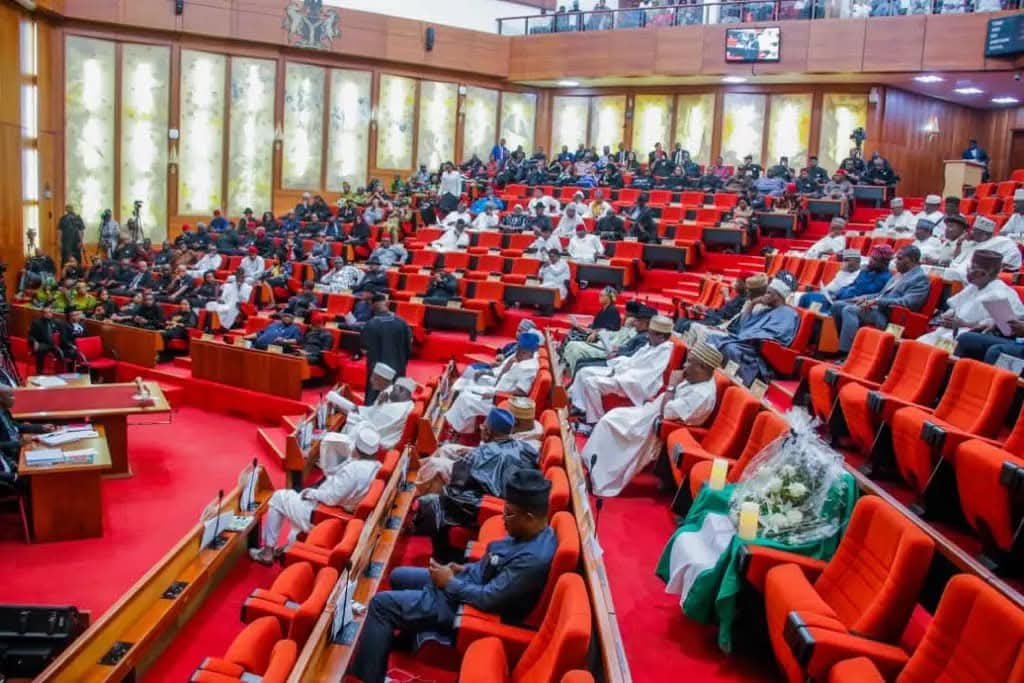
Senate in Session
Senate in Session
Share

In a decisive move to stem rising insecurity, the Senate has approved key amendments to the 2022 Terrorism (Prevention and Prohibition) Act, prescribing the death penalty for kidnappers and anyone who aids kidnapping operations.

During Wednesday’s plenary, senators across political lines overwhelmingly supported the bill sponsored by the Leader of the Senate, Senator Opeyemi Bamidele. The amendment seeks to classify kidnapping, hostage-taking, and related offences as acts of terrorism, granting law enforcement broader powers to dismantle criminal networks.

The bill has now been referred to the Committees on Judiciary, Human Rights and Legal Matters, National Security and Intelligence, and Interior for further scrutiny, with instructions to report back within two weeks.

Presenting the proposal, Bamidele said kidnapping had evolved from sporadic activity into organised violence affecting all regions of the country. He argued that the severity and scale of the crime now bear the hallmarks of terrorism, warranting the strongest punishment.

> “Kidnapping has instilled fear in communities, disrupted economic activities, ruined families, and claimed countless innocent lives,” he declared. “Our legal framework must reflect the magnitude of this threat.”

The amendment prescribes capital punishment not only for perpetrators but also for financiers, informants, logistics suppliers, harbourers, and anyone who knowingly supports kidnapping operations. Attempt, conspiracy, or incitement would attract the same penalty.

The Senate leader explained that reclassification under terrorism laws would enable intelligence-led operations, asset tracing, inter-agency cooperation, and disruption of funding channels.

Backing the proposal, Senator Adams Oshiomhole dismissed existing deradicalisation programmes as ineffective, arguing that some offenders return to crime after release.

> “Even Scriptures acknowledge that those who kill cannot be allowed to continue living,” Oshiomhole said. “If convicted for terrorism, the penalty should be death.”

Senator Orji Uzor Kalu lamented the suffering inflicted on Nigerians, citing cases of widows, traumatised families and victims of sexual assault.

> “Everyone involved in this criminal enterprise must face consequences,” he maintained.

Minority Leader Senator Abba Moro described kidnapping as a business venture for criminals and endorsed the bill as a necessary measure to deter offenders.

Also speaking, Senator Victor Umeh condemned the killing of victims after ransom payment and called for sanctions against facilitators, including complicit financial institutions.

The Senate President, Godswill Akpabio, welcomed the bipartisan support and mandated the lead committee to expedite consultations and present recommendations at a public hearing.

The proposed amendment marks one of the strongest legislative responses to Nigeria’s worsening kidnapping crisis, signalling a toughened stance on national security and criminal justice.

Continue Reading