Connect with us

Business & Economy

Senate Gives NNPC 3 Weeks To Answer The Audit Queries Concerning N210 Trillion

Published

on

Senate Chamber
Senate Chamber
Share

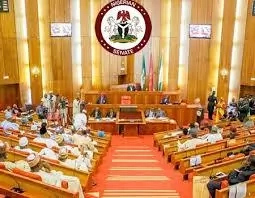
The Senate Committee on Public Accounts has given the Nigerian National Petroleum Company (NNPC) Limited three weeks to respond to queries raised against it.

These queries concern audit reports from 2017 to 2023, alleging unaccountability of N210 trillion naira. The committee, chaired by Senator Ahmed Wadada, emphasized that the amount in question is neither stolen nor missing but has yet to be accounted for.

The three-week deadline for explanations was given to Bayo Ojulari, the Group Chief Executive Officer of NNPC Limited, after he apologized for his previous failure to appear before the committee. Ojulari explained that he needed additional time to thoroughly investigate the issues raised in the 19 queries presented to him, citing the technicalities and perspectives involved.

“I’m just over 100 days into my role as GCEO of NNPCL,” Ojulari stated. “I need more time to understand the issues so that I can respond appropriately. I will assemble a team to reconcile the details properly so we can provide answers to the queries. I also plan to engage with external auditors and other relevant groups.”

Although Ojulari initially requested four weeks, the committee granted him three weeks, which they deemed sufficient for NNPC Limited to prepare its responses.

Senator Wadada outlined the details of the queries to the NNPCL CEO, explaining that the N210 trillion unaccounted for broadly includes two components: N103 trillion in liabilities and N107 trillion in assets, both of which must be accounted for.

Wadada stated, “None of the 18 or 19 questions we have regarding NNPCL originate from the committee, the executive, or the judiciary. They are derived from the audited financial statements of the NNPCL, as reviewed by the auditor-general covering the period from 2017 to 2023.

“Furthermore, the committee has never claimed that the N210 trillion in question was stolen or missing. Our investigation is a necessary inquiry into the queries raised in the report, in line with our constitutional mandate.”

The committee has instructed NNPC Limited to provide written responses to all 19 queries within the three-week timeframe. Afterward, the GCEO and other management staff will be invited to appear in person for further discussion and defense of the issues.

Before the chairman’s ruling, nearly all committee members expressed the seriousness of the issues at stake but remained optimistic that the GCEO would clarify these matters.

Business & Economy

CBN Governor Reassures U.S. Investors on Nigeria’s Economic Reforms, Stability

Published

on

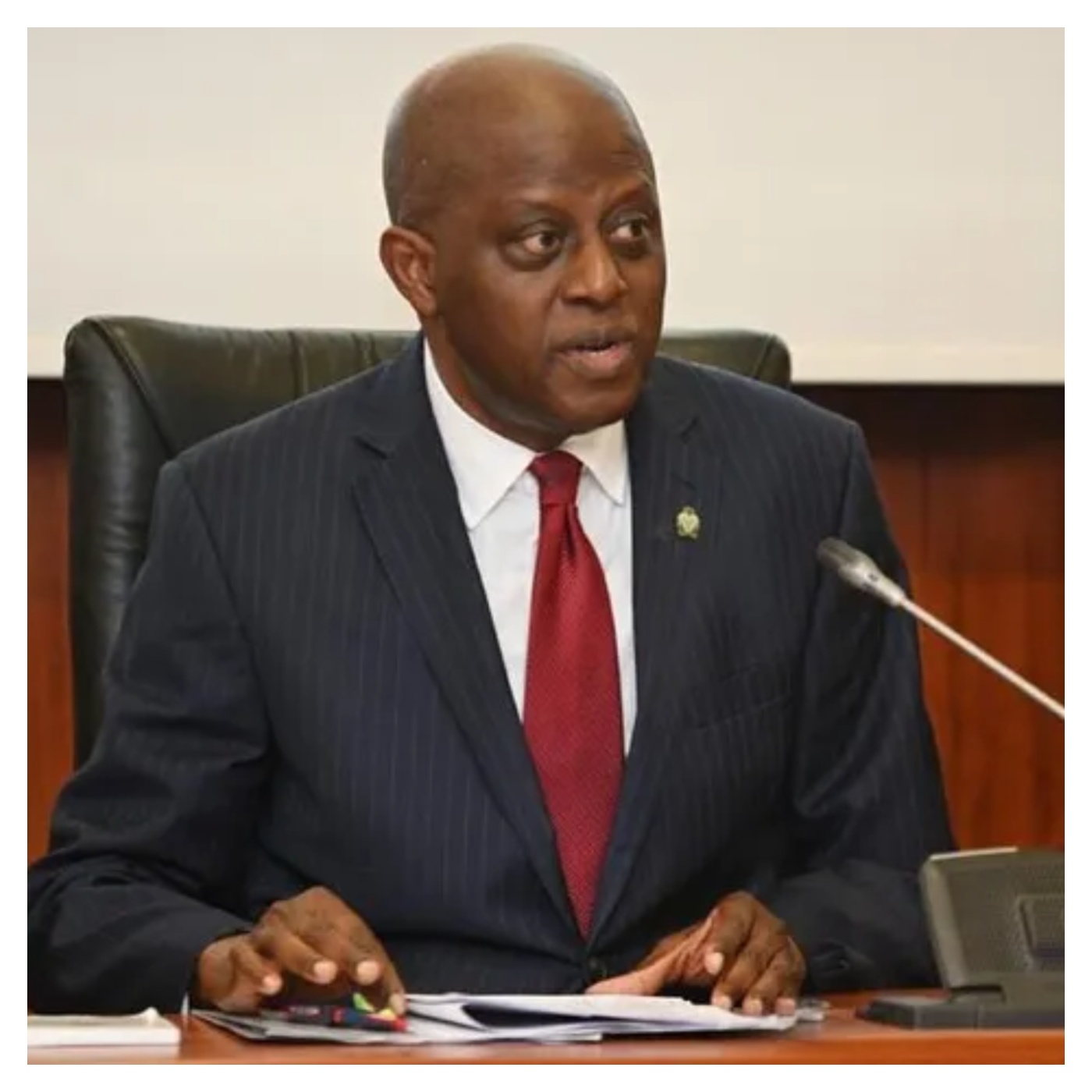
CBN Governor, Yemi Cardoso
Share

The Governor of the Central Bank of Nigeria (CBN), Mr. Olayemi Cardoso, has reassured United States investors of Nigeria’s commitment to macroeconomic stability and market-driven reforms, amid global economic uncertainty.

Cardoso gave the assurance during high-level engagements with U.S. business leaders and institutional investors in Washington, D.C., including the U.S.–Nigeria Executive Business Roundtable.

Speaking at the forum, the CBN governor said Nigeria remains focused on rules-based economic management, transparent markets, and predictable policy frameworks to restore investor confidence and drive sustainable economic growth.

He highlighted recent reforms in the foreign exchange market, the adoption of orthodox monetary policy measures, ongoing banking sector reforms, and the modernisation of the payments system. According to him, the reforms are aimed at stabilising the economy and supporting private-sector-led development.

The roundtable, convened by the U.S. Chamber of Commerce’s U.S.-Africa Business Center, focused on macroeconomic stabilisation, regulatory clarity, and opportunities to scale bankable projects across key sectors of the Nigerian economy. Discussions also emphasised efforts to deepen commercial and investment ties between Nigeria and the United States.

Commenting on the outcome of the engagement, President of the U.S.-Africa Business Center, Ms. Kendra Gaither, said investors are increasingly prioritising policy credibility and consistency.

She noted that clarity of rules, credible reforms, and disciplined economic management are critical factors driving investor interest, adding that Nigeria’s evolving message of discipline and opportunity is important in a global economy seeking stability and predictability.

Continue Reading

Business & Economy

Tinubu Welcomes Nigeria’s Removal from FATF Grey List, Pledges Continued Financial Reforms

Published

on

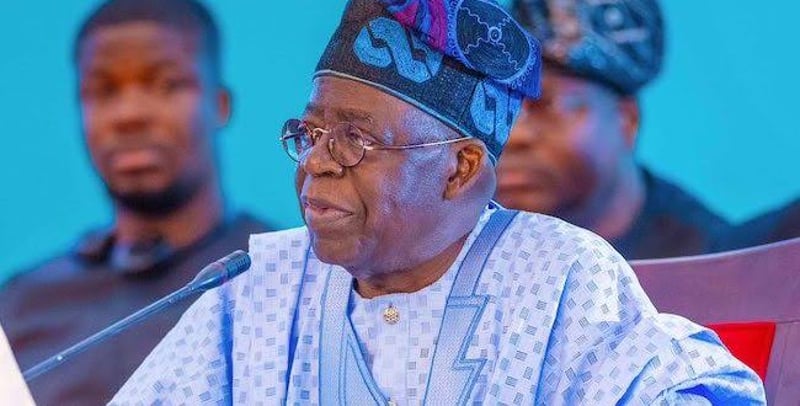
President Bola Tinubu
President Bola Ahmed Tinubu
Share

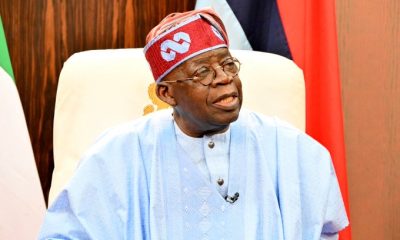
President Bola Ahmed Tinubu has welcomed the removal of Nigeria from the Financial Action Task Force (FATF) grey list, describing it as a major milestone in the nation’s economic reform and global credibility drive.

The FATF, the world’s foremost body for combating money laundering, terrorist financing, and proliferation financing, announced Nigeria’s delisting on Friday at its plenary session in Paris, France.

The decision formally removes Nigeria from the list of countries under increased monitoring, following the nation’s successful completion of its FATF Action Plan after over two years of sustained reforms and inter-agency coordination.

In a statement issued by his Special Adviser on Information and Strategy, Bayo Onanuga, President Tinubu said the development reflects Nigeria’s progress in strengthening its Anti-Money Laundering and Counter-Financing of Terrorism (AML/CFT) framework.

“Rather than treat our placement on the grey list in 2023 as a setback, we saw it as a call to action,” the President said. “This delisting is a strategic victory for our economy and a renewed vote of confidence in Nigeria’s financial governance.”

The President credited the achievement to far-reaching legal, institutional, and operational reforms implemented under his administration through the Nigerian Financial Intelligence Unit (NFIU), in collaboration with the Attorney-General of the Federation, the Minister of Finance and Coordinating Minister of the Economy, and other key ministries.

Tinubu commended the Director/CEO of the NFIU, Ms. Hafsat Abubakar Bakari, and her team for their diligence and professionalism, as well as the contributions of several ministries, agencies, and private sector representatives who participated in the National Task Force on AML/CFT.

He also acknowledged the support of international partners including France, Germany, the United Kingdom, the United States, the United Nations, and the European Commission, for their technical assistance throughout Nigeria’s reform process.

President Tinubu assured that his administration will sustain and deepen the reforms that led to the country’s delisting.

“This is not just a technical accomplishment,” he said. “It marks the beginning of a new chapter in our financial reform agenda as we continue building a system Nigerians and the world can trust.”

Continue Reading

Business & Economy

Lagos Tops 2024 State Revenue Ranking with ₦1.26 Trillion — NBS Report

Published

on

lagos state logo
Lagos State coat of Arms
Share

Lagos State has retained its position as Nigeria’s highest internally generated revenue (IGR) state in 2024, according to a new report released by the National Bureau of Statistics (NBS).

The report, published on Monday via the NBS X handle, revealed that the 36 states and the Federal Capital Territory (FCT) collectively generated ₦3.6 trillion in 2024, marking a 49.7 per cent increase from ₦2.43 trillion recorded in 2023.

Lagos led the chart with ₦1.26 trillion, followed by Rivers with ₦317.3 billion, and the FCT with ₦282.36 billion. Ogun and Enugu States completed the top five with ₦194.93 billion and ₦180.5 billion, respectively.

The bottom five states on the list were Adamawa (₦20.29 billion), Taraba (₦17.46 billion), Kebbi (₦16.97 billion), Ebonyi (₦13.18 billion), and Yobe (₦11.08 billion).

Other states that made the top 10 include Delta (₦157.79 billion), Edo (₦91.15 billion), Akwa Ibom (₦75.77 billion), Kano (₦74.77 billion), and Kaduna (₦71.57 billion).

The NBS noted that the sharp increase in overall IGR reflects growing fiscal efforts by states to boost their internal revenue base amid declining federal allocations.


Continue Reading