Connect with us

News

Senate Cites Empirical Data for Making E-Transmission of Results Discretionary

Published

on

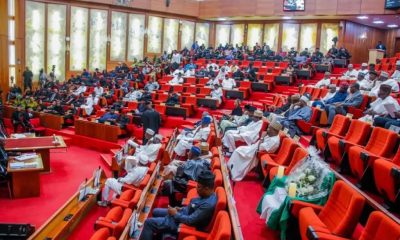
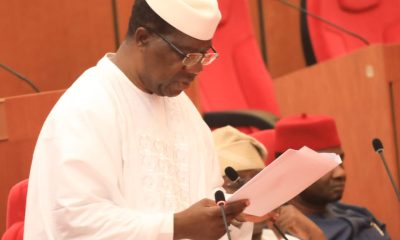
Leader of the Senate, Senator Michael Opeyemi Bamidele
Share

The Senate has defended its decision to make the electronic transmission of election results discretionary rather than mandatory in the ongoing reform of Nigeria’s electoral framework, citing empirical data on the country’s communication and power infrastructure.

The upper chamber said its position on Clause 60(3) of the Electoral Bill, 2026, was informed by consultations with key stakeholders in the communications and power sectors and based on prevailing realities rather than public sentiment.

Senate Leader, Senator Opeyemi Bamidele, clarified the position in a statement issued on Sunday by his Directorate of Media and Public Affairs.

Clause 60(3) of the Electoral Bill, 2026, had proposed that the presiding officer “shall electronically transmit the results from each polling unit to INEC Result Viewing Portal (IReV) in real time.” However, the Senate resolved to review the clause, deleting the words “real time” and introducing a caveat that in the event of internet failure, Form EC8A would serve as the primary means of result collation.

Bamidele noted that while real-time electronic transmission of results could deepen public trust in democratic institutions, including the National Assembly and the Independent National Electoral Commission (INEC), current infrastructure limitations pose significant challenges.

He cited data from the Nigerian Communications Commission (NCC), which indicated that Nigeria achieved about 70 per cent broadband coverage in 2025, while internet user penetration stood at 44.53 per cent of the population within the same period.

Referencing the Speedtest Global Index, Bamidele said Nigeria ranked 85th out of 105 countries in mobile network reliability and 129th out of 150 countries in fixed broadband reliability. According to him, Nigeria’s average mobile network speed was 44.14 megabits per second, compared to 691.76 mbps in the United Arab Emirates, 573.53 mbps in Qatar and 415.67 mbps in Kuwait.

On fixed broadband, he said Nigeria recorded 33.32 mbps, placing 129th globally, far behind countries such as Singapore, the UAE and France.

The Senate Leader also cited data on electricity access, stating that about 85 million Nigerians—approximately 43 per cent of the population—lack access to grid electricity. Although generation capacity ranges between 12,000 and 13,500 megawatts, he noted that transmission and distribution constraints limit actual delivery to about 4,500 megawatts nationwide.

He argued that making real-time electronic transmission mandatory under such conditions could create complications during elections and potentially lead to instability.

Bamidele said the Senate’s decision was guided by Section 62(2) of the Electoral Act, 2022, which established the National Electronic Register of Election Results, adding that lawmakers must enact legislation grounded in factual realities.

He maintained that lawmaking requires balancing public expectations with practical considerations to ensure that enacted provisions are workable and do not undermine the stability of the electoral system.

News

Published

on

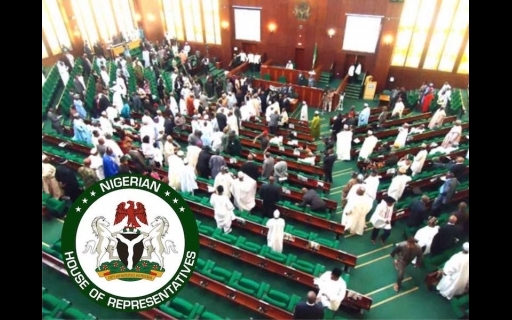
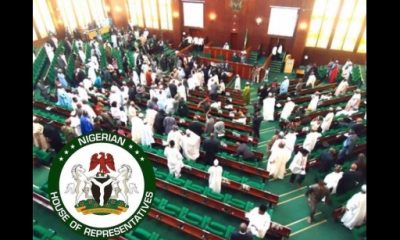
Federal House of Representatives
House of Representatives in Session
Share

The House of Representatives will reconvene for an emergency sitting on Tuesday, February 17, 2026, to deliberate on issues arising from the recently released timetable for the 2027 General Election by the Independent National Electoral Commission (INEC).

The decision was announced in a statement signed by the House spokesperson, Hon. Akin Rotimi, who said members were notified through an internal memorandum issued by the Office of the Speaker late Friday.

According to the statement, the emergency session underscores the constitutional and national significance of the development and the need for prompt legislative attention.

“The emergency sitting demonstrates the House’s resolve to respond swiftly to issues with far-reaching implications for Nigeria’s democratic process,” the statement said.

Lawmakers are expected to focus on legislative matters connected to INEC’s announcement, in line with the constitutional responsibilities of the National Assembly.

“All legislative business relating to the matter is expected to be addressed expeditiously,” the statement added, noting that members have been strongly advised to prioritise attendance due to the importance of the issues under consideration.

The House reaffirmed its commitment to strengthening democratic institutions through responsive lawmaking in the interest of Nigerians.

INEC had on Friday announced that the Presidential and National Assembly elections would be held on February 20, 2027, while governorship and state assembly elections are scheduled for March 6, 2027. The commission also fixed party primaries between May 22 and June 20, 2026.

The announcement has generated concerns among some Nigerians, particularly Muslims, who noted that February 20, 2027, falls within the holy month of Ramadan. They expressed worries that fasting could affect voter turnout as well as the efficiency of electoral officials and observers.

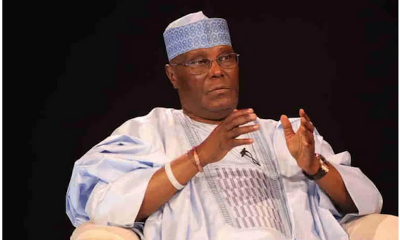
Among those who raised concerns is former Vice President and presidential candidate of the Peoples Democratic Party, Atiku Abubakar, who urged INEC to reconsider the date due to its overlap with Ramadan.

Responding to the concerns, INEC said the timetable was developed in strict compliance with the 1999 Constitution (as amended), the Electoral Act, 2022, and its 2022 Regulations and Guidelines for the Conduct of Elections.

In a statement issued by its National Commissioner and Chairman of the Information and Voter Education Committee, Mohammed Haruna, the commission stated that the regulations, in effect since 2019, guide the scheduling of elections.

He added that the commission is undertaking consultations and may seek legislative intervention where necessary to address the concerns, while ensuring that any adjustment remains consistent with constitutional and statutory provisions.

INEC reiterated its commitment to transparency, inclusivity and the credible conduct of the 2027 General Election, assuring the public that it would provide updates on any further developments.

Continue Reading

News

Tinubu to Attend Argungu Fishing Festival, Commission Projects in Kebbi

Published

on

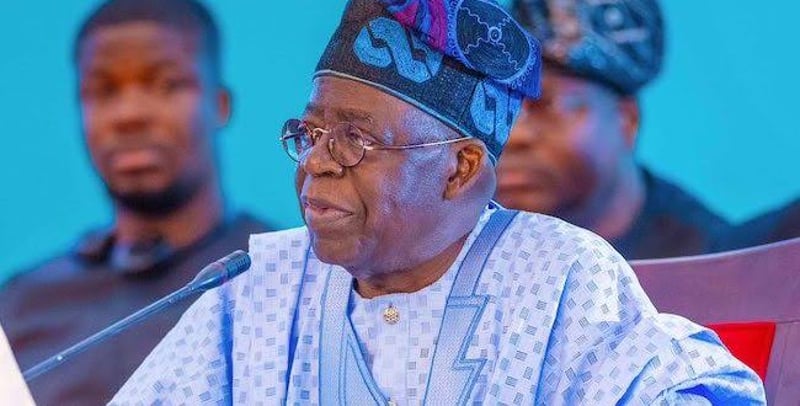
President Bola Tinubu
President Bola Ahmed Tinubu
Share

President Bola Tinubu will pay a one-day official visit to Kebbi State on Saturday, where he is scheduled to inaugurate a number of infrastructure and public service projects completed by the state government.

In a statement from the State House, the visit was described as part of ongoing efforts to strengthen development and enhance service delivery under the administration of Governor Nasir Idris.

A major highlight of the visit will be the President’s role as special guest of honour at the 61st Argungu International Fishing and Cultural Festival, one of Africa’s best-known cultural tourism events.

Held at the historic Matan Fada riverside, the festival features traditional fishing contests, music, dance, and other cultural exhibitions that attract local and international visitors. The event has also received global recognition from UNESCO as an Intangible Cultural Heritage of Humanity.

According to the State House, the President’s participation underscores the federal government’s commitment to promoting Nigeria’s cultural heritage and positioning major festivals as drivers of tourism and local economic growth.

Continue Reading

News

Senate Approves Electronic and Manual Transmission of Election Results

Published

on

Senate Logo
Share

The Senate has approved the adoption of both electronic and manual methods for the transmission of election results from polling units nationwide.

The resolution was reached during plenary in Abuja on Tuesday, February 10, 2026, following sustained public pressure against proposals to restrict electronic transmission in the ongoing amendment of the Electoral Act 2022.

As part of the amendment, lawmakers revised Clause 60 of the Act to mandate presiding officers at polling units to electronically transmit election results to the Independent National Electoral Commission’s (INEC) Result Viewing (IREV) portal.

Announcing the decision, Senate President Godswill Akpabio explained that where electronic transmission is not feasible due to network or communication challenges, the manual result sheet—Form EC8A—will serve as the primary document for collation.

According to him, the dual transmission system is designed to address technical limitations in some areas while ensuring compliance with the provisions of the amended electoral law.

The Senate’s approval comes after days of protests and public outcry at the National Assembly, with civil society organisations and demonstrators calling for the retention of electronic transmission as a safeguard against electoral manipulation and a means of restoring public confidence in Nigeria’s electoral process.

Continue Reading