Connect with us

Business & Economy

Remittance inflows to Nigeria declined by 28% in 2020 – World Bank

Published

on

Share

The World Bank says remittance inflows to Nigeria declined by 28 per cent in 2020 because of COVID-19 pandemic.

The Bank also said remittance flows fell for Sub-Saharan Africa by 12.5 per cent, according to its Migration and Development Brief 33 Phase 11 entitled: “COVID-19 Crisis Through a Migration Lens’’ published on Thursday.

The report said the decline in remittance flows to Nigeria was largely responsible for the fall in remittance flows to Sub-Saharan Africa.

“The decline in flows to Sub-Saharan Africa was almost entirely due to a 28 per cent decline in remittance flows to Nigeria.

“Excluding flows to Nigeria, remittances to Sub-Saharan Africa increased by 2.3 per cent, demonstrating resilience,’’ the report stated.

According to the report, the relatively strong performance of remittance flows during the COVID-19 crisis has also highlighted the importance of timely availability of data.

It stated that given its growing significance as a source of external financing for low- and middle-income countries, there was need for better collection of data on remittances.

It emphasised that there was need for better collection of data on remittances, in terms of frequency, timely reporting, and granularity by corridor and channel.

The report quoted Dilip Ratha, lead author of the report on migration and remittances, as saying “the resilience of remittance flows is remarkable. Remittances are helping to meet families’ increased need for livelihood support.

“They can no longer be treated as small change.

“The World Bank has been monitoring migration and remittance flows for nearly two decades, and we are working with governments and partners to produce timely data and make remittance flows even more productive.”

With global growth expected to rebound further in 2021 and 2022, however, remittance flows to low- and middle- income countries are expected to increase by 2.6 per cent to 553 billion dollars in 2021 and by 2.2 per cent to 565 billion dollars in 2022.

The report stated that global average cost of sending 200 dollars remained high at 6.5 per cent in the fourth quarter of 2020, more than double the Sustainable Development Goal target of three per cent.

It stated that Sub-Saharan Africa continued to have the highest average cost (8.2 per cent) adding, supporting the remittance infrastructure and keeping remittances flowing includes efforts to lower fees.

In addition, it stated that the decline in recorded remittance flows in 2020 was smaller than the one during the 2009 global financial crisis (4.8 per cent).

It was also far lower than the fall in Foreign Direct Investment (FDI) flows to low- and middle-income countries, which, excluding flows to China fell by over 30 per cent in 2020.

As a result, remittance flows to low- and middle-income countries surpassed the sum of FDI (259 dollars billion) and overseas development assistance (179 dollars billion) in 2020.

The main drivers for the steady flow included fiscal stimulus that resulted in better-than-expected economic conditions in host countries, a shift in flows from cash to digital and from informal to formal channels, and cyclical movements in oil prices and currency exchange rates.

The true size of remittances, which includes formal and informal flows, is believed to be larger than officially reported data, though the extent of the impact of COVID-19 on informal flows is unclear.

“As COVID-19 still devastates families around the world, remittances continue to provide a critical lifeline for the poor and vulnerable,” said Michal Rutkowski, Global Director of the Social Protection and Jobs Global Practice at the World Bank.

“Supportive policy responses, together with national social protection systems, should continue to be inclusive of all communities, including migrants.”

In addition, it stated that the relatively strong performance of remittance flows during the COVID-19 crisis had also highlighted the importance of timely availability of data.

“Given its growing significance as a source of external financing for low- and middle-income countries, there is a need for better collection of data on remittances, in terms of frequency, timely reporting, and granularity by corridor and channel’’.

The World Bank is assisting member states in monitoring the flow of remittances through various channels, the costs and convenience of sending money, and regulations to protect financial integrity that affect remittance flows.

It is working with the G20 countries and the global community to reduce remittance costs and improve financial inclusion for the poor. (NAN)



Continue Reading
Click to comment

Leave a Reply

Your email address will not be published. Required fields are marked *

Business & Economy

Tinubu Welcomes Nigeria’s Removal from FATF Grey List, Pledges Continued Financial Reforms

Published

on

President Bola Tinubu
President Bola Ahmed Tinubu
Share

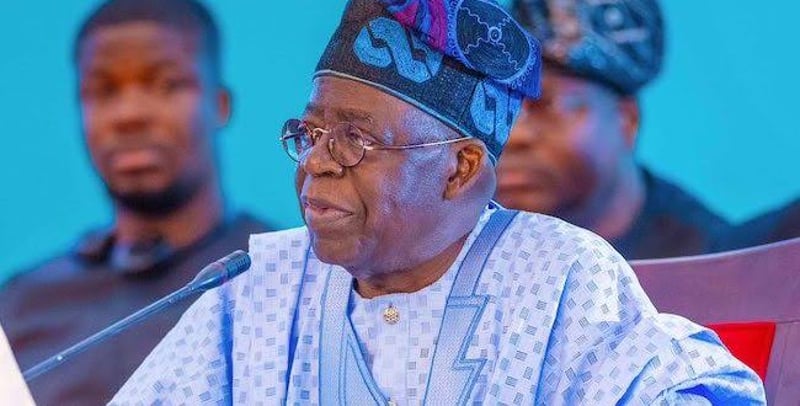
President Bola Ahmed Tinubu has welcomed the removal of Nigeria from the Financial Action Task Force (FATF) grey list, describing it as a major milestone in the nation’s economic reform and global credibility drive.

The FATF, the world’s foremost body for combating money laundering, terrorist financing, and proliferation financing, announced Nigeria’s delisting on Friday at its plenary session in Paris, France.

The decision formally removes Nigeria from the list of countries under increased monitoring, following the nation’s successful completion of its FATF Action Plan after over two years of sustained reforms and inter-agency coordination.

In a statement issued by his Special Adviser on Information and Strategy, Bayo Onanuga, President Tinubu said the development reflects Nigeria’s progress in strengthening its Anti-Money Laundering and Counter-Financing of Terrorism (AML/CFT) framework.

“Rather than treat our placement on the grey list in 2023 as a setback, we saw it as a call to action,” the President said. “This delisting is a strategic victory for our economy and a renewed vote of confidence in Nigeria’s financial governance.”

The President credited the achievement to far-reaching legal, institutional, and operational reforms implemented under his administration through the Nigerian Financial Intelligence Unit (NFIU), in collaboration with the Attorney-General of the Federation, the Minister of Finance and Coordinating Minister of the Economy, and other key ministries.

Tinubu commended the Director/CEO of the NFIU, Ms. Hafsat Abubakar Bakari, and her team for their diligence and professionalism, as well as the contributions of several ministries, agencies, and private sector representatives who participated in the National Task Force on AML/CFT.

He also acknowledged the support of international partners including France, Germany, the United Kingdom, the United States, the United Nations, and the European Commission, for their technical assistance throughout Nigeria’s reform process.

President Tinubu assured that his administration will sustain and deepen the reforms that led to the country’s delisting.

“This is not just a technical accomplishment,” he said. “It marks the beginning of a new chapter in our financial reform agenda as we continue building a system Nigerians and the world can trust.”

Continue Reading

Business & Economy

Lagos Tops 2024 State Revenue Ranking with ₦1.26 Trillion — NBS Report

Published

on

lagos state logo
Lagos State coat of Arms
Share

Lagos State has retained its position as Nigeria’s highest internally generated revenue (IGR) state in 2024, according to a new report released by the National Bureau of Statistics (NBS).

The report, published on Monday via the NBS X handle, revealed that the 36 states and the Federal Capital Territory (FCT) collectively generated ₦3.6 trillion in 2024, marking a 49.7 per cent increase from ₦2.43 trillion recorded in 2023.

Lagos led the chart with ₦1.26 trillion, followed by Rivers with ₦317.3 billion, and the FCT with ₦282.36 billion. Ogun and Enugu States completed the top five with ₦194.93 billion and ₦180.5 billion, respectively.

The bottom five states on the list were Adamawa (₦20.29 billion), Taraba (₦17.46 billion), Kebbi (₦16.97 billion), Ebonyi (₦13.18 billion), and Yobe (₦11.08 billion).

Other states that made the top 10 include Delta (₦157.79 billion), Edo (₦91.15 billion), Akwa Ibom (₦75.77 billion), Kano (₦74.77 billion), and Kaduna (₦71.57 billion).

The NBS noted that the sharp increase in overall IGR reflects growing fiscal efforts by states to boost their internal revenue base amid declining federal allocations.


Continue Reading

Business & Economy

FG Launches Free Financial Education Programme for 100,000 Youths 

Published

on

FG logo
Share

The Federal Ministry of Youth Development, in partnership with Investonaire Academy, has commenced registration for a nationwide financial education programme designed to train 100,000 Nigerian youths annually in financial literacy, entrepreneurship, global trade, and investment.

In a statement signed by Omolara Esan, Director of Information & Public Relations, the Ministry said the initiative reflects its commitment to equipping young Nigerians with the skills to navigate today’s complex financial landscape, enhance employability, and foster sustainable wealth creation.

The programme will provide participants with exposure to global asset classes, including commodities, gold, equities, and foreign exchange, as well as training in risk management, portfolio development, and wealth-building strategies.

Successful candidates will receive industry-recognised certificates to support career advancement and entrepreneurial opportunities. Training will be delivered via an interactive Learning Management System (LMS), incorporating gamified learning, simulations, quizzes, and real-life trading scenarios. Physical sessions will begin in Abuja before expanding nationwide.

The programme is open to students, NYSC members, entrepreneurs, job seekers, and young professionals across Nigeria’s 36 states and the FCT.

Registration is free and currently ongoing via www.investonaire.org.


Continue Reading