Uncategorized
Психология анонимности в онлайн-среде и реакции пользователей
Published
2 months agoon
By
News EditorПсихология анонимности в онлайн-среде и реакции пользователей

Интернет даёт пользователям способность прятать подлинную идентичность за никами и иконками. Анонимность влияет на психологическое положение человека и трансформирует схемы общения с другими членами виртуальной пространства. Люди ведут себя по-иному, когда их шаги не соединены с подлинным именем.
Исследования свидетельствуют, что отсутствие идентификации уменьшает ограничения в общении. Пользователи озвучивают точки зрения, которые не решились бы озвучить при прямой контакте. Защищённость от общественного критики позволяет экспериментировать с ролями и персонажами.
Психологи отмечают явление деиндивидуализации — положение, при котором личность размывается в скоплении безымянных участников. Пользователь чувствует себя компонентом массы, где персональные поступки утрачивают значимость.
Анонимность образует условия для честного самовыражения, но одномоментно вызывает легкомысленное поступки. Баланс между независимостью и контролем продолжает быть центральной задачей казино Вавада современного интернета.
Что приносит пользователю анонимность в виртуальной пространстве
Утаивание индивидуальных информации освобождает человека от тревоги неблагоприятной оценки со стороны знакомых, сослуживцев или родных. Пользователь может затрагивать сюжеты, которые полагает некомфортными для открытого беседы. Здравоохранительные вопросы, финансовые проблемы, родственные споры оказываются открытыми для обсуждения без угрозы подпортить доброе имя.
Анонимность защищает от травли и возмездия в подлинной жизни. Активисты, журналисты и правозащитники используют закрытые профили для распространения данных о злоупотреблениях. Возможность высказаться без обнаружения личности сохраняет материальную безопасность и служебные виды.
Электронная оболочка разрешает экспериментировать с самопрезентацией. Индивид испытывает новые амплуа и способы взаимодействия. Креативные индивидуумы размещают труды без связи к главной деятельности. Новички задают запросы, не страшась выглядеть некомпетентными.
Недостаток привязки к настоящему фамилии снижает общественное прессинг. Пользователь свободен от потребности культивировать установленный образ. Это достоинство особенно дорого в Вавада казино кругах по склонностям, где существенна откровенность пользователей.
Понижение самоконтроля и результат нехватки персональной обязательности
Анонимность снижает психологические механизмы регулирования над поступками. Человек перестаёт наблюдать за высказываниями так же строго, как в действительной жизни. Недостаток связи между цифровым аккаунтом и настоящей персоной порождает иллюзию безнаказанности.
Психологи именуют это явление этической разобщённостью. Человек изолирует онлайн-поступки от личной системы принципов. Поступки в сети воспринимаются как игра, не не имеющую связи к реальной жизни. Обязательность исчезает, когда персона спрятана за ником.
Ослабление самодисциплины демонстрируется в нескольких формах поступков Vavada на онлайн площадках:
- Грубость и выпады в отношении чужих людей без очевидных мотивов
- Выпуск недостоверной информации и слухов без тревоги о итогах
- Невыполнение требований групп и отклонение требований управляющих
- Провоцирующие реплики с намерением инициировать спор
Эффект усиливается в больших скоплениях, где личный вклад выглядит ничтожным. Чувство размывания в скоплении понижает личную ответственность за любое сообщение.
Почему скрытые комментарии чаще оказываются грубыми и агрессивными
Отсутствие визуального взаимодействия и невербальных знаков модифицирует ощущение партнёра. Пользователь замечает исключительно сообщение, без жестов и интонации. Другой человек превращается в условную объект для заявлений. Эмпатия снижается, когда нет прямого контакта с эмоциями визави.
Анонимность убирает социальные следствия резкого обращения. В действительной действительности враждебность влечёт немедленную отклик — неодобрение или спор. В интернете эти механизмы не работают. Человек имеет возможность изложить оскорбление и просто завершить страницу.
Чувственное волнение увеличивается в полемике на болезненные проблемы. Политика, религия, общественные темы вызывают интенсивные эмоции. Безымянный пользователь изливает накопившееся раздражение без фильтров.
Групповая динамика культивирует враждебный тон. Когда один представитель задействует резкие слова, остальные перенимают стиль взаимодействия. Складывается климат беспредела. Управляющие не постоянно успевают отслеживать проступки в Вавада больших диалогах, что усиливает деструктивное поведение.
Освобождение в сети: конструктивные и вредные аспекты
Анонимность снимает психологические ограничения и даёт возможность людям демонстрировать себя вольнее. Раскованность обладает дуальную сущность — оно раскрывает шансы для роста и одномоментно образует риски вредоносного поведения.
Позитивные выражения включают подлинное самовыражение и поддержку. Люди обмениваются персональным опытом прохождения проблем, затрагивают закрытые сюжеты и отыскивают сторонников. Творческие пробы делаются легче без боязни критики.
Отрицательная сторона демонстрируется в Вавада казино безответных поступках и попрании пределов:
- Распространение ложной данных и конспирологических гипотез
- Вовлечение в издевательствах и организованных налётах на иных пользователей
- Размещение провокационного контента с целью получения внимания
- Интриги и лукавство легковерных членов объединений
Соотношение между независимостью и подотчётностью определяется от личных установок человека. Анонимность увеличивает присутствующие склонности — как продуктивные, так и деструктивные. Площадки корректируют действия посредством правила и надзор.
Значение объединений, обсуждений и социальных площадок в трансформации действий
Виртуальные группы вырабатывают индивидуальные принципы и требования контакта. Любая платформа создаёт своеобразную атмосферу взаимодействия, которая действует на действия пользователей. Пользователь приспосабливается к принятым правилам и воспроизводит паттерны прочих представителей группы.
Обсуждения с жёсткой модерацией поддерживают созидательный общение. Модераторы стирают выпады, банят правонарушителей и вознаграждают ценный содержимое. Участники наблюдают итоги неприемлемого обращения и корректируют комментарии.
Платформы без контроля трансформируются в пространство беспорядка. Нехватка требований провоцирует агрессию и деструктивность. Новые пользователи быстро воспроизводят деструктивные схемы диалога. Групповое гнёт побуждает следовать вредным правилам.
Механизмы рекомендаций увеличивают явление коллективной активности. Алгоритмы выдают содержимое, отвечающий вкусам участника. Личность окунается в информационный оболочку, где все придерживаются близкие мнения. Это утверждает позиции и снижает критическое рассуждение в Vavada изолированных объединениях единомышленников.
Анонимность как метод защищённо разбирать персональные и сложные темы
Множество люди встречаются с затруднениями, которые смущаются рассматривать публично. Психологические проблемы, болезни, финансовые катастрофы, домашнее издевательства нуждаются помощи, но выявление идентичности порождает опасности. Анонимные платформы предоставляют надёжное среду для честного разговора.
Сообщества поддержки в интернете сплачивают людей схожим похожим историей. Пользователи делятся историями и рекомендациями без боязни критики. Человек получает содействие от тех, кто постигает положение лично. Сокрытие персоны ликвидирует стыд и позволяет говорить откровенно.
Тинейджеры задействуют анонимность для рассмотрения вопросов личности. Интимная ориентация, половое самосознание, разногласия с родителями требуют осторожности. Возможность задать запрос анонимно способствует добыть сведения без давления общества.
Профильные форумы дают консультации по медицинским, правовым и ментальным темам. Участники характеризуют симптомы или положения без обозначения фамилии. Данный подход в частности значим в Vavada обществах с значительным уровнем клеймения определённых тем.
Троллинг, кибербуллинг и продвижение деструктивного контента
Анонимность порождает благоприятные обстоятельства для враждебного действий в электронной пространстве. Троллинг является собой умышленные подстрекательства с намерением спровоцировать аффективную отклик. Члены размещают унизительные послания, искажают данные и подстрекают споры для забавы.
Кибербуллинг характеризуется регулярным природой и ориентированностью на конкретную жертву. Сообщества безымянных пользователей координируют преследование, выкладывают персональную информацию, создают оскорбительные контент. Жертва ощущает непрерывный давление и не может обороняться от наскоков.
Продвижение деструктивного материала усиливается средствами лавинообразного продвижения. Возмутительные снимки, записи жестокости, обращения к аутоагрессии оперативно набирают просмотры. Системы ресурсов ненамеренно поддерживают такой содержимое из-за высокой активности.
Душевные результаты для пострадавших включают беспокойство, депрессию и социальную отчуждённость. Юноши в особенности восприимчивы, так как присваивают существенное важность взглядам одногодков. Безымянные обидчики не наблюдают боли цели, что нарастает беспощадность шагов в Вавада интернет-среде.
Как площадки ограничивают злоупотребления без абсолютного отречения от приватности
Электронные платформы вырабатывают методы противодействия с деструктивным действиями, удерживая шанс скрытого участия. Полное раскрытие индивидуальных данных конфликтует основам воли высказывания. Сервисы разыскивают соотношение между надзором и конфиденциальностью.
Регулирование содержимого сочетает компьютерные алгоритмы и усилия персонала. Системы машинного обработки определяют обиды, угрозы и запрещённые материалы. Трудные инциденты направляются администраторам для оценки ситуации.
Основные механизмы надзора объединяют технологические и общественные средства в Вавада казино сегодняшних сообществах:
- Механизмы статуса, где участие воздействует на веру к профилю
- Необходимая проверка через цифровую e-mail или номер телефона
- Запреты для новых пользователей на публикацию материала
- Возможность информировать на нарушения и блокировать злоумышленников
Прозрачные требования способствуют пользователям понимать пределы разрешённого. Ресурсы выкладывают руководства по обращению и объясняют мотивы блокировок. Апелляции дают возможность опротестовать неправильные вердикты.
Как поддержать свободу диалога и обязательность в интернете
Баланс между независимостью изложения и сознательным поведением предполагает сознательного метода от любого члена онлайн пространства. Анонимность не избавляет от этических обязательств перед другими людьми. Внимание к оппонентам продолжает быть существенным вне зависимости от формата взаимодействия.
Критическое рассуждение содействует взвешивать информацию до распространением. Проверка данных и анализ корней понижают распространение неправдивых данных. Пользователь возлагает ответственность за содержимое, который генерирует или продвигает.
Сочувствие в интернет-общении требует усилий. За всяким заявлением стоит реальный индивид с чувствами. Воображение отклика партнёра способствует подбирать слова аккуратнее. Пауза до размещением жёсткого реплики даёт время скорректировать выражение.
Учебные курсы по виртуальной грамотности наставляют безопасному действиям. Учебные заведения и объединения устраивают семинары о кибербуллинге и этике диалога. Осознание инструментов действия анонимности укрепляет самоконтроль.
Деятельное включение в построении позитивной обстановки обусловливается от каждого пользователя. Помощь конструктивных диалогов и отречение от участия в преследовании вырабатывают традицию почтения в Вавада виртуальных объединениях.
You may like
Uncategorized
FG unveils New Reforms to Tackle Almajiri, Out of School Children
Published
1 week agoon
August 24, 2026
The Federal Government has unveiled new reforms aimed at ensuring every Nigerian child returns to school and acquires relevant knowledge and skills.
Special Adviser to the Minister of Education on Almajiri, and Out of School Children, Dr Balarabe Kakale disclosed this in Kaduna on Monday while speaking at a National Education Sector Renewal Initiative (NESRI) advocacy and stakeholders engagement on Almajiri and out-of-school children.
He said the Federal Ministry of Education has introduced transformative policies to address challenges confronting Almajiri, out-of-school and other non-formal education systems.
According to him, the reforms are designed to strengthen coordination between federal and state agencies working in the education and out-of-school subsectors.
He said the policies were anchored on five pillars, including foundational literacy, numeracy, vocational and technical education, digital education and civic education.
Kakale said proper implementation of the policies by states would ensure that no Nigerian child was left without access to education.
He urged states to domesticate the National Commission for Almajiri and Out-of-School Children Education Act according to their peculiar educational challenges.
He also called for domestication of policies on Almajiri education, non-state schools, alternative pathways and Accelerated Basic Education Programme.
Kakale commended the Kaduna Government for implementing several reforms through the Reaching Out of School Children (ROSK) project.
He described Kaduna as a model that could provide lessons for national scale-up of interventions addressing out of school children.
The special adviser said the Federal Government was promoting data sovereignty through the Nigerian Education Data Infrastructure and other digital education management systems.
He said the initiative would ensure that every child, school, teacher and infrastructure gap was properly captured for effective policy interventions.
Kakale said Nigeria currently had no final figure for out-of-school children, stressing that reliable and verifiable data remained critical to solving the challenge.
He said the Federal Government would no longer depend on third-party estimates, but would track children from enrolment through retention and academic progress.
The special adviser urged North-West states to embrace federal education policies and digital data initiatives to accelerate efforts to return children to school.
He expressed optimism that coordinated implementation would help Nigeria achieve its goal of becoming a leading nation in Africa.
Representing the Executive Secretary of the National Commission for Almajiri and Out of School Children Education, Malam Halliru Musa Halliru said the commission was committed to transforming Almajiri education.
Halliru said the commission had developed a 10 year strategic plan for 2025–2035 to provide coordinated and sustainable interventions in Almajiri and out of school education.
He said the National Policy on Enhancement of Almajiri Education sought to strengthen traditional education through literacy, numeracy, vocational training and quality assurance.
According to him, the policy seeks to build bridges between traditional and modern education without discarding the religious and cultural values of the Almajiri system.
Halliru said about 200 Almajiri learners at the Tinubu Legacy Skills Training Institute in Kaduna had received Arabic, English, vocational and practical skills training.
He said the learners had also excelled in examinations conducted by the National Board for Arabic and Islamic Studies.
The commission’s representative said 119 learning centres had been established nationwide to support Almajiri learners and out of school children.
He added that the commission had mapped more than 700,000 out of school children to support targeted interventions and enrolment.
Halliru said the commission was also collecting comprehensive data on Tsangaya centres to improve planning, support, coordination and quality assurance.
He said the commission had established offices in all states and the Federal Capital Territory to strengthen collaboration and monitoring.
Prof. Abubakar Sambo, Kaduna State Commissioner for Education, said the challenge of Almajiri and out of school children required coordinated action by governments and stakeholders.
Sambo said poverty remained a major factor forcing children out of school, particularly in rural and peri urban communities.
He said some parents also sent very young children to Almajirai, describing the practice as a growing challenge in northern states.
The commissioner urged participants to carefully study the federal policies and develop strategies for implementing them across states and local governments.
He identified accurate data on out of school children as critical to successful planning and intervention.
Sambo said Kaduna State had fully embraced the Federal Government’s policies and remained committed to addressing the out-of-school children challenge.
Mr Ezra Angai, Coordinator of the Kaduna ROOSC project, said the state had adopted a holistic approach to returning children to learning.
Angai said the project was designed to return 100,000 out of school children to education through formal schools and alternative learning pathways.
He said Kaduna had mapped 187,912 out of school children across its 23 local government areas.
According to him, the project had established alternative learning systems, including Accelerated Basic Education Centres and interventions within Tsangaya schools.
Angai said the state had signed memoranda of understanding with 25 Tsangayas, reaching 6,326 learners, while plans were underway to engage 50 more.
He said the project would also provide interventions for Tsangayas, recognising them as important learning centres within communities.
The coordinator said 272 schools, comprising new and renovated facilities, were planned under the project, including 102 new schools.
He said six Tsangayas would benefit from the first phase of infrastructure intervention, while 27 others were proposed for the second phase.
Angai said more than 25,000 children had already been returned to learning through the ROOSC project.
He said over 40,000 teaching and learning materials had been distributed, alongside uniforms, textbooks and psychosocial support.
According to him, more than 2,000 children with disabilities had received assistive devices across nine local government areas.
Angai said the project had received support from development partners, including the Islamic Development Bank, Kuwait Fund, UNICEF and Save the Children International.
He said the project also collaborated with Education Above All and the Global Partnership for Education.
He urged stakeholders to sustain collaboration with the Federal Government to strengthen implementation of policies addressing education exclusion.
The engagement brought together government agencies, traditional rulers, Islamic scholars, Alarammas, Tsangaya proprietors, civil society organisations and development partners.
Participants also called for stronger collaboration, improved data collection and community mobilisation to ensure vulnerable children returned to learning.
The stakeholders pledged continued support for reforms aimed at integrating Almajiri education with broader educational opportunities and reducing the number of out of school children.
They also stressed the need to move beyond data collection and policies towards practical interventions capable of improving children’s access, retention and learning outcomes.
NAN
Politics
Tinubu, Obi, Adebayo, Sowore: Sign Peace Pact to Shun Violence Ahead Of 2027 Poll
Published
2 weeks agoon
August 19, 2026
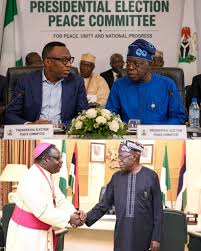
Political parties and presidential and National Assembly candidates on Tuesday signed the first National Peace Accord ahead of the 2027 general elections, pledging to shun violence, hate speech, misinformation and personal attacks during campaigns.
The ceremony, organized by the National Peace Committee in partnership with The Kukah Centre, was held in Abuja barely 24 hours before the statutory commencement of public campaigns on Wednesday, August 19, 2026.
Those who signed included President Bola Tinubu, represented by Secretary to the Government of the Federation, Senator George Akume; Nigeria Democratic Congress candidate Peter Obi; Social Democratic Party candidate Adewole Adebayo; and African Action Congress candidate Omoyele Sowore.
Also present were APC National Chairman Prof Nentawe Yilwatda; PRP presidential candidate Donald Duke; Labour Party’s Chibuzor Okereke; Deputy Senate President Barau Jibrin; PRP National Chairman Hakeem Baba-Ahmed; INEC Chairman Prof Joash Amupitan; and IGP Olatunji Disu.

Notable absentees were ADC presidential candidate Atiku Abubakar and APM candidate, Oyo State Governor Seyi Makinde.
General Abdulsalami Abubakar, Chairman of the National Peace Committee, was represented by former Chief of Defence Staff, General Martin Agwai.
Speaking through Akume, President Tinubu urged parties to prioritize national interest and campaign on ideas, not ethnicity or religion.
“Signing this peace accord is a solemn pledge to the Nigerian people that we, as leaders, will put the nation’s interests above personal or partisan ambitions,” he said.
The President said the APC rejects “violence, hate speech, the spread of misinformation, including through artificial intelligence, and all forms of incitement, especially via social media,” and called for peaceful, transparent elections.
INEC Chairman Prof Amupitan described the accord as an effort to define “the ethical boundaries of their contest” before campaigns begin. He warned of an “alarming resurgence” of hate speech, toxic polarization and AI-driven misinformation.
“Electoral contests in a constitutional democracy are not total wars; they are competitive job interviews before the electorate. Nigerians do not want insults; they want solutions,” Amupitan said.
He challenged candidates to focus on the economy, security, infrastructure, healthcare, education and social inclusion. The INEC boss also disclosed that the commission will deploy about 1.4 million ad hoc personnel across more than 176,000 polling units for the 2027 polls.
“Leadership attained at the expense of public peace, institutional integrity, or human life is a hollow victory,” he warned.
According to INEC’s revised timetable, presidential and National Assembly elections will hold on January 16, 2027, while governorship and State House of Assembly elections are scheduled for February 6, 2027.
The National Peace Committee said it has facilitated 30 peace accords since 2015 and established faith-based peace structures in 23 states to support peaceful elections.

Uncategorized
Israel-US-Iran Conflict: NCPC Lifts Ban on Christian Pilgrimage to Israel
Published
1 month agoon
August 1, 2026
The Nigerian Christian Pilgrim Commission (NCPC) has lifted the ban on Christian pilgrimage to Israel following an assessment of the security situation in the Holy Land.
The Executive Secretary of the NCPC, Bishop Stephen Adegbite, announced the decision in a statement on Saturday in Abuja.
Adegbite who was at the Wailing Wall in Jerusalem, Israel, said his declaration followed an on-the-spot assessment of the security atmosphere during his three-day visit to Jerusalem.
”I promised everyone that I will be here to see what is happening in the Holy Land. I have been here in the last three days. The Holy Land is peaceful.
“Jerusalem is at peace and will continue to be at peace.
”Consequently, the ban on Christian Pilgrimage from Nigeria to Israel is hereby lifted from today,” he said.
He further revealled that under the new arrangement, Nigerian pilgrims would only be permitted to travel through the Ben Gurion International Airport in Tel Aviv.
He said that pilgrimage routes through Jordan remained suspended due to ongoing security concerns in that territory.
”Jordan is not safe at the moment, and the commission can not take that risk,” he added.
Adegbite expressed confidence in the safety of Nigerian pilgrims, assuring that every prayer offered in the Holy Land would be answered.
He reassured prospective pilgrims that the commission had maintained a record of safe returns from past exercises and that the 2026 exercise would be no exception.
The NCPC helmsman also offered prayers for national unity, praying for peace for President Bola Tinubu, the First Lady, and government officials across all six geopolitical zones of Nigeria.
The NCPC is the federal agency established to supervise and coordinate the movement of Nigerian Christian pilgrims to holy sites around the world, primarily in Israel, Jordan, and Rome.
The commission had in February, suspended pilgrimage activities to the region following the outbreak of the US-Israel-Iran conflict.
Escalations stemming from the US-Israel-Iran conflict led to heightened security risks across the Middle Eas
This forced international flight disruptions and prompted several governments, including Nigeria, to temporarily halt religious pilgrimages to the region to protect citizens.
The lifting of the ban marks the formal resumption of state-backed and private Christian pilgrimage operations from Nigeria to Tel Aviv for the remainder of the 2026 pilgrimage calendar
Latest News
NLC Requests More Crude For Refineries, Rejecst Petrol Price Hike
ShareThe latest increase in the price of Premium Motor Spirit, popularly known as petrol, has been rejected by the Nigeria...
2 Abuja Doctors, 2 Others Arrested Over Organ Harvesting in Abuja
ShareTwo medical doctors and two other suspects have been arrested in Abuja for organ harvesting by the Nigerian Police Force...
Shettima at 60: VP Rejects Birthday Gifts, Asks Nigerians to Give to the Needy
Share Vice President Kashim Shettima has rejected birthday gifts, elaborate celebrations and other material gestures as he...
Lionel Messi Retires From International Football at 39
ShareLionel Messi has announced his retirement from international football, bringing an extraordinary 20-year career with the Argentina national team to...
10 of 15 Abducted NYSC Members in Kogi Rescued
ShareTen of the 15 National Youth Service Corps (NYSC) members abducted by suspected bandits in Kogi State have been rescued,...