Connect with us

Uncategorized

Психологические факторы прокрастинации в эпоху интернета

Published

on

Share

Психологические факторы прокрастинации в эпоху интернета

Прокрастинация представляет собой тенденцию откладывать существенные задачи на потом. Нынешний интернет укрепляет эту закономерность через совокупность инструментов влияния на психику человека. Виртуальная пространство создаёт обстоятельства для непрерывного рассеивания внимания от намерений.

Мозг человека направлен к быстрому награде. Интернет предлагает мгновенное насыщение через досуговый контент, видеоролики, уведомления. Сложные рабочие задачи предполагают усилий и концентрации, результат появляется не быстро. Выбор между непростым занятием и лёгким досугом оказывается ясным.

Компьютерные технологии воздействуют на дофаминовую механизм вознаграждения. Каждое оповещение или лайк провоцирует высвобождение нейромедиатора удовольствия. Складывается зависимость от кратких вспышек радости.

Психологи фиксируют связь откладывания с беспокойством и перфекционизмом. Боязнь фиаско принуждает сторониться начала труда. Интернет становится укрытием от тягостных ощущений. Человек уходит в игровые автоматы онлайн, чтобы не встречаться с неудобством от невыполненных обязанностей.

Почему доступ к интернету изменяет модели и фокус человека

Круглосуточный доступ к интернету преобразует возможность человека сосредотачиваться на целях. Мозг адаптируется к свежим параметрам цифровой пространства. Нейронные соединения трансформируются под режим многозадачности и оперативного переключения между носителями информации.

Концентрация оказывается фрагментированным. Обычная длительность фокусировки падает до нескольких минут. Склонность беспрестанно смотреть смартфон или открывать дополнительные вкладки формируется на стадии рефлекса. Основательное сосредоточение в деятельность предполагает усилий, которые мозг считает как избыточную затрату.

Присутствие сведений преобразует механизмы усвоения. Человек перестаёт хранить информацию в голове, осознавая о шанса разыскать искомое в поисковике. Быстрое просматривание записей вытесняет осмысленное восприятие.

Интернет формирует мираж продуктивности. Изучение текстов понимается как полезная деятельность. Действительные обязанности остаются незавершёнными, но человек воспринимает себя деятельным. Формируется тенденция откладывать трудные занятия в пользу казино онлайн, нуждающихся наименьших когнитивных усилий.

Быстрое удовлетворение от материала как замена трудным задачам

Развлекательный материал в интернете обеспечивает быстрое насыщение без усилий. Короткие ролики, мемы, новостные ленты включают зоны наслаждения за секунды. Тяжёлые профессиональные дела предполагают часов сосредоточения, а результат сохраняется неясным. Выбор в пользу простого развлечения становится логичной реакцией.

Алгоритмы платформ корректируют контент под интересы клиента. Каждое клип вызывает эмоциональный реакцию. Складывается цикл поглощения, из которого сложно выбраться. Человек переносит существенные дела ради онлайн казино, сулящего мгновенное поощрение.

Главные причины привлекательности оперативного контента:

  • Исключение нужды прикладывать умственные усилия для восприятия
  • Многообразие форматов, постоянно варьирующих графические стимулы
  • Социальное принятие через лайки и реакции участников
  • Эффект свежести, когда каждый элемент ленты гарантирует любопытное

Мозг привыкает к режиму быстрых поощрений. Длительные задачи перестают представляться привлекательными из-за отложенного итога.

Опасение промаха, сомнение в себе и откладывание существенных обязанностей

Перфекционизм оказывается фактором хронического откладывания задач. Человек опасается начать к работе из-за опасений сделать неудовлетворительно качественно. Завышенные собственные нормы останавливают шаги. Интернет предлагает комфортное убежище для избегания соприкосновения с личными изъянами.

Сомнение в умениях нарастает при соотнесении себя с экспертами онлайн. Мастерские труды остальных людей создают ощущение невозможности итога. Начинающий работник видит идеальные проекты и утрачивает стимул. Боязнь критики заставляет откладывать демонстрацию итогов.

Откладывание ограждает самоуважение от возможного повреждения. Если дело не исполнена из-за дефицита времени, а не компетенций, достоинство продолжает целым. Человек выбирает винить условия, а не допускать вероятную некомпетентность.

Интернет повышает волнение через беспрестанный объём сведений о стандартах. Статьи об достижениях и рекомендации специалистов создают давление. Человек уходит в казино онлайн, чтобы отсрочить миг проверки собственных ресурсов реальной деятельностью.

Данных переизбыток и затруднения с определением приоритетов

Сегодняшний человек постоянно встречается с гигантским массивом данных. Новости, публикации, видео, оповещения генерируют бесконечный поток сведений. Мозг не поспевает усваивать приходящий материал. Появляется умственная перенасыщенность, снижающая возможность совершать постановления.

Переизбыток сведений затрудняет установление первоочередных. Все обязанности кажутся одинаково приоритетными. Человек тратит время на изучение нюансов вместо конкретных шагов. Анализ путей вытесняет прогресс к результату. Выбор переносится из-за страха выбрать неправильное путь.

Интернет даёт безграничное число приёмов повышения результативности. Изучение методов борьбы с откладыванием само оказывается разновидностью отсрочки обязанностей. Человек просматривает статьи о планировании вместо работы над делом. Выискивание безупречного приёма трансформируется в отдельную дело.

Одновременность в цифровой обстановке создаёт иллюзию результативности. Активные вкладки браузера, параллельные переписки разбрасывают концентрацию. Качество деятельности уменьшается. Человек мечется между топ казино, не доводя ни одной обязанности до конца.

Социальные сети, соотнесение с другими и уменьшение стимула

Социальные сети формируют неверное представление о жизни прочих персон. Посетители публикуют лучшие эпизоды, маскируя препятствия. Постоянное наблюдение за сторонними победами провоцирует ощущение личной недостаточности. Сопоставление себя с идеализированными образами снижает самоуважение и энтузиазм.

Эффект социального сопоставления чрезвычайно мощен в профессиональной области. Товарищи показывают результативные достижения, повышения, поощрения. Человек начинает колебаться в значимости собственных усилий. Эти соображения останавливают предприимчивость и стимулируют откладывание задач.

Основные ментальные эффекты общественных сетей:

  • Ревность к сторонним достижениям вместо удовольствия за личный развитие
  • Впечатление отставания от коллег в работе
  • Нужда в признании через лайки вытесняет внутреннюю мотивацию
  • Боязнь порицания при размещении неидеальных результатов

Период в общественных сетях оказывается инструментом уклониться реальных обязанностей. Человек просматривает онлайн казино, отсрочивая задачи, нуждающиеся усилий и внимания.

Оповещения, нескончаемая канал и постоянное смена внимания

Сообщения на устройствах нарушают внимание каждые несколько минут. Акустические уведомления, вибрация, выскакивающие сообщения требуют быстрой ответа. Мозг смещается с центральной задачи на контроль уведомления. Возвращение к остановленной работе требует до двадцати минут.

Непрерывная канал материала держит внимание максимально долго. Системы отбирают публикации, соответствующие интересам клиента. Исключение органичной момента завершения заставляет скроллить продолжать. Один фрагмент вытесняется другим без остановок для обдумывания.

Систематическое перескакивание между делами уменьшает продуктивность. Многозадачность является заблуждением: мозг переваривает информацию поочерёдно. Каждое перескакивание нуждается умственных запасов. К завершению дня человек испытывает изнеможение, не выполнив существенных дел.

Паттерн откликаться на каждое уведомление создаёт зависимость от сторонних импульсов. Способность к независимой фокусировки снижается. Деятельность без просмотра телефона провоцирует беспокойство. Человек открывает топ казино рефлекторно, даже не осознавая поступка.

Видимость занятости: почему разыскание сведений заменяет практические действия

Накопление данных создаёт чувство движения к результату без реального выполнения труда. Человек просматривает статьи, просматривает инструктивные клипы, анализирует посторонний знания. Подобная занятость выглядит значимой. На самом деле поиск данных оказывается формой отсрочки определённых действий.

Подготовка к проекту продлевается на недели. Перфекционист желает узнать всё до старта деятельности. Страх начать к задаче скрывается под тщательное организацию. Реестр прочитанных материалов расширяется, но итог остаётся нулевым.

Интернет даёт неограниченное множество источников по произвольной теме. Всегда обнаружится ещё одна материал для прочтения. Человек уверяет себя в потребности добавочной сведений. Критерий достаточности познаний отсутствует, поэтому обучение никогда не завершается.

Мозг воспринимает усвоение материала как деятельность. Изучение и изучение роликов требуют внимания, формируют чувство усталости. Человек завершает день с ощущением загруженности. Настоящие задачи не выполнены, но самооценка ограждена. Время потрачено на рассмотрение казино онлайн, а не на формирование собственного проекта.

Как откладывание действует на эмоциональное настроение и самоуважение

Откладывание задач инициирует цикл деструктивных эмоций. Человек чувствует вину за несделанную задачу, но продолжает избегать шагов. Тревога нарастает по мере подхода крайнего срока. Давление от осознания потерянного времени повышает стремление уйти. Замкнутый цикл углубляет эмоциональный страдание.

Самоуважение страдает от систематического противоречия целей и действительности. Человек клянётся себе приступить работу завтра, но снова отсрочивает. Каждая фиаско усиливает деструктивное представление о личной дисциплине. Складывается уверенность в невозможности регулировать действия.

Психологические эффекты постоянной прокрастинации:

  • Беспрестанное ощущение раскаяния за невыполненные дела
  • Беспокойство из-за скопления перенесённых обязанностей
  • Стыд при сопоставлении результативности с успехами близких
  • Досада после очередного дня без достижений

Прокрастинация делается корнем постоянного напряжения. Человек уходит в онлайн казино, чтобы на время игнорировать о незавершённых делах и уменьшить психологическое напряжение.

Действенные методы уменьшить зависимость от отвлекающего материала

Выключение уведомлений на всех аппаратах снижает количество помех. Смартфон перестаёт запрашивать беспрестанного внимания. Просмотр уведомлений происходит в запланированное момент. Фокус на обязанностях возвращается постепенно.

Введение временных рамок для развлекательных сервисов содействует управлять поглощение материала. Целевые программы блокируют доступ к мешающим страницам в рабочие часы. Физическое дистанция между человеком и телефоном уменьшает искушение просмотреть поток. Устройство находится в отдельной комнате.

Приём помодоро разделяет работу на отрезки с короткими перерывами. Двадцать пять минут сосредоточения заменяются пятью минутами расслабления. Способ образует каркас служебного периода. Задачи становятся меньше устрашающими при разбивке на контролируемые блоки.

Планирование точных действий вместо расплывчатых намерений усиливает шанс завершения. Формула обязана включать момент, место и характеристику действия. Подмена пассивного использования на активные занятия трансформирует навыки. Человек выбирает выход или контакт вместо просмотра топ казино.

Continue Reading
Click to comment

Leave a Reply

Your email address will not be published. Required fields are marked *

Uncategorized

FG unveils New Reforms to Tackle Almajiri, Out of School Children

Published

on

Share

The Federal Government has unveiled new reforms aimed at ensuring every Nigerian child returns to school and acquires relevant knowledge and skills.

Special Adviser to the Minister of Education on Almajiri,  and Out of School Children, Dr Balarabe Kakale disclosed this in Kaduna on Monday while speaking at a National Education Sector Renewal Initiative (NESRI) advocacy and stakeholders engagement on Almajiri and out-of-school children.

He said the Federal Ministry of Education has introduced transformative policies to address challenges confronting Almajiri, out-of-school and other non-formal education systems.

According to him, the reforms are designed to strengthen coordination between federal and state agencies working in the education and out-of-school subsectors.

He said the policies were anchored on five pillars, including foundational literacy, numeracy, vocational and technical education, digital education and civic education.

Kakale said proper implementation of the policies by states would ensure that no Nigerian child was left without access to education.

He urged states to domesticate the National Commission for Almajiri and Out-of-School Children Education Act according to their peculiar educational challenges.

He also called for domestication of policies on Almajiri education, non-state schools, alternative pathways and Accelerated Basic Education Programme.

Kakale commended the Kaduna Government for implementing several reforms through the Reaching Out of School Children (ROSK) project.

He described Kaduna as a model that could provide lessons for national scale-up of interventions addressing out of school children.

The special adviser said the Federal Government was promoting data sovereignty through the Nigerian Education Data Infrastructure and other digital education management systems.

He said the initiative would ensure that every child, school, teacher and infrastructure gap was properly captured for effective policy interventions.

Kakale said Nigeria currently had no final figure for out-of-school children, stressing that reliable and verifiable data remained critical to solving the challenge.

He said the Federal Government would no longer depend on third-party estimates, but would track children from enrolment through retention and academic progress.

The special adviser urged North-West states to embrace federal education policies and digital data initiatives to accelerate efforts to return children to school.

He expressed optimism that coordinated implementation would help Nigeria achieve its goal of becoming a leading nation in Africa.

Representing the Executive Secretary of the National Commission for Almajiri and Out of School Children Education, Malam Halliru Musa Halliru said the commission was committed to transforming Almajiri education.

Halliru said the commission had developed a 10 year strategic plan for 2025–2035 to provide coordinated and sustainable interventions in Almajiri and out of school education.

He said the National Policy on Enhancement of Almajiri Education sought to strengthen traditional education through literacy, numeracy, vocational training and quality assurance.

According to him, the policy seeks to build bridges between traditional and modern education without discarding the religious and cultural values of the Almajiri system.

Halliru said about 200 Almajiri learners at the Tinubu Legacy Skills Training Institute in Kaduna had received Arabic, English, vocational and practical skills training.

He said the learners had also excelled in examinations conducted by the National Board for Arabic and Islamic Studies.

The commission’s representative said 119 learning centres had been established nationwide to support Almajiri learners and out of school children.

He added that the commission had mapped more than 700,000 out of school children to support targeted interventions and enrolment.

Halliru said the commission was also collecting comprehensive data on Tsangaya centres to improve planning, support, coordination and quality assurance.

He said the commission had established offices in all states and the Federal Capital Territory to strengthen collaboration and monitoring.

Prof. Abubakar  Sambo, Kaduna State Commissioner for Education, said the challenge of Almajiri and out of school children required coordinated action by governments and stakeholders.

Sambo said poverty remained a major factor forcing children out of school, particularly in rural and peri urban communities.

He said some parents also sent very young children to Almajirai, describing the practice as a growing challenge in northern states.

The commissioner urged participants to carefully study the federal policies and develop strategies for implementing them across states and local governments.

He identified accurate data on out of school children as critical to successful planning and intervention.

Sambo said Kaduna State had fully embraced the Federal Government’s policies and remained committed to addressing the out-of-school children challenge.

Mr Ezra Angai, Coordinator of the Kaduna ROOSC project, said the state had adopted a holistic approach to returning children to learning.

Angai said the project was designed to return 100,000 out of school children to education through formal schools and alternative learning pathways.

He said Kaduna had mapped 187,912 out of school children across its 23 local government areas.

According to him, the project had established alternative learning systems, including Accelerated Basic Education Centres and interventions within Tsangaya schools.

Angai said the state had signed memoranda of understanding with 25 Tsangayas, reaching 6,326 learners, while plans were underway to engage 50 more.

He said the project would also provide interventions for Tsangayas, recognising them as important learning centres within communities.

The coordinator said 272 schools, comprising new and renovated facilities, were planned under the project, including 102 new schools.

He said six Tsangayas would benefit from the first phase of infrastructure intervention, while 27 others were proposed for the second phase.

Angai said more than 25,000 children had already been returned to learning through the ROOSC project.

He said over 40,000 teaching and learning materials had been distributed, alongside uniforms, textbooks and psychosocial support.

According to him, more than 2,000 children with disabilities had received assistive devices across nine local government areas.

Angai said the project had received support from development partners, including the Islamic Development Bank, Kuwait Fund, UNICEF and Save the Children International.

He said the project also collaborated with Education Above All and the Global Partnership for Education.

He urged stakeholders to sustain collaboration with the Federal Government to strengthen implementation of policies addressing education exclusion.

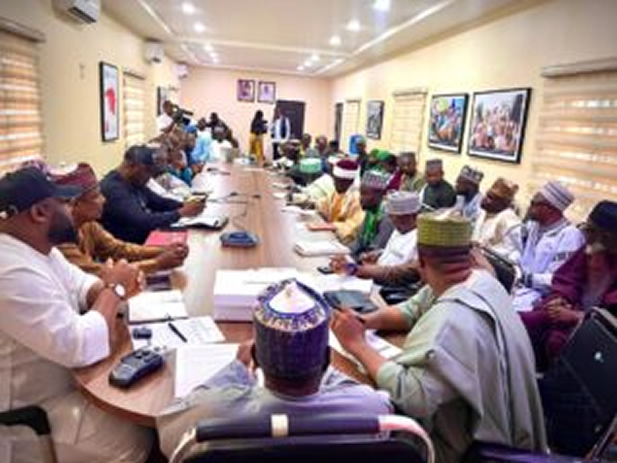
The engagement brought together government agencies, traditional rulers, Islamic scholars, Alarammas, Tsangaya proprietors, civil society organisations and development partners.

Participants also called for stronger collaboration, improved data collection and community mobilisation to ensure vulnerable children returned to learning.

The stakeholders pledged continued support for reforms aimed at integrating Almajiri education with broader educational opportunities and reducing the number of out of school children.

They also stressed the need to move beyond data collection and policies towards practical interventions capable of improving children’s access, retention and learning outcomes.

NAN

Continue Reading

Politics

Tinubu, Obi, Adebayo, Sowore: Sign Peace Pact to Shun Violence Ahead Of 2027 Poll

Published

on

Share

Political parties and presidential and National Assembly candidates on Tuesday signed the first National Peace Accord ahead of the 2027 general elections, pledging to shun violence, hate speech, misinformation and personal attacks during campaigns.

The ceremony, organized by the National Peace Committee in partnership with The Kukah Centre, was held in Abuja barely 24 hours before the statutory commencement of public campaigns on Wednesday, August 19, 2026.

Those who signed included President Bola Tinubu, represented by Secretary to the Government of the Federation, Senator George Akume; Nigeria Democratic Congress candidate Peter Obi; Social Democratic Party candidate Adewole Adebayo; and African Action Congress candidate Omoyele Sowore.

Also present were APC National Chairman Prof Nentawe Yilwatda; PRP presidential candidate Donald Duke; Labour Party’s Chibuzor Okereke; Deputy Senate President Barau Jibrin; PRP National Chairman Hakeem Baba-Ahmed; INEC Chairman Prof Joash Amupitan; and IGP Olatunji Disu.

Notable absentees were ADC presidential candidate Atiku Abubakar and APM candidate, Oyo State Governor Seyi Makinde.
General Abdulsalami Abubakar, Chairman of the National Peace Committee, was represented by former Chief of Defence Staff, General Martin Agwai.

Speaking through Akume, President Tinubu urged parties to prioritize national interest and campaign on ideas, not ethnicity or religion.
“Signing this peace accord is a solemn pledge to the Nigerian people that we, as leaders, will put the nation’s interests above personal or partisan ambitions,” he said.

The President said the APC rejects “violence, hate speech, the spread of misinformation, including through artificial intelligence, and all forms of incitement, especially via social media,” and called for peaceful, transparent elections.

INEC Chairman Prof Amupitan described the accord as an effort to define “the ethical boundaries of their contest” before campaigns begin. He warned of an “alarming resurgence” of hate speech, toxic polarization and AI-driven misinformation.

“Electoral contests in a constitutional democracy are not total wars; they are competitive job interviews before the electorate. Nigerians do not want insults; they want solutions,” Amupitan said.

He challenged candidates to focus on the economy, security, infrastructure, healthcare, education and social inclusion. The INEC boss also disclosed that the commission will deploy about 1.4 million ad hoc personnel across more than 176,000 polling units for the 2027 polls.

“Leadership attained at the expense of public peace, institutional integrity, or human life is a hollow victory,” he warned.

According to INEC’s revised timetable, presidential and National Assembly elections will hold on January 16, 2027, while governorship and State House of Assembly elections are scheduled for February 6, 2027.

The National Peace Committee said it has facilitated 30 peace accords since 2015 and established faith-based peace structures in 23 states to support peaceful elections.

Continue Reading

Uncategorized

Israel-US-Iran Conflict: NCPC Lifts Ban on Christian Pilgrimage to Israel ​

Published

on

Share

The Nigerian Christian Pilgrim Commission (NCPC) has lifted the ban on Christian pilgrimage to Israel following an assessment of the security situation in the Holy Land.

​The Executive Secretary of the NCPC, Bishop Stephen Adegbite, announced the decision in a statement on Saturday in Abuja.

Adegbite who was at the Wailing Wall in Jerusalem, Israel,  said his declaration followed an on-the-spot assessment of the security atmosphere during his three-day visit to Jerusalem.

​”I promised everyone that I will be here to see what is happening in the Holy Land. I have been here in the last three days. The Holy Land is peaceful.

“Jerusalem is at peace and will continue to be at peace.

​”Consequently, the ban on Christian Pilgrimage from Nigeria to Israel is hereby lifted from today,” he said.

​He further revealled that under the new arrangement, Nigerian pilgrims would only be permitted to travel through the Ben Gurion International Airport in Tel Aviv.

​He said that pilgrimage routes through Jordan remained suspended due to ongoing security concerns in that territory.

​”Jordan is not safe at the moment, and the commission can not take that risk,” he added.

​Adegbite expressed confidence in the safety of Nigerian pilgrims, assuring that every prayer offered in the Holy Land would be answered.

​He reassured prospective pilgrims that the commission had maintained a record of safe returns from past exercises and that the 2026 exercise would be no exception.

​The NCPC helmsman also offered prayers for national unity, praying for peace for President Bola Tinubu, the First Lady, and government officials across all six geopolitical zones of Nigeria.

​The NCPC is the federal agency established to supervise and coordinate the movement of Nigerian Christian pilgrims to holy sites around the world, primarily in Israel, Jordan, and Rome.

The commission had in February, suspended pilgrimage activities to the region following the outbreak of the US-Israel-Iran conflict.

​Escalations stemming from the US-Israel-Iran conflict led to heightened security risks across the Middle Eas

This forced international flight disruptions and prompted several governments, including Nigeria, to temporarily halt religious pilgrimages to the region to protect citizens.

​The lifting of the ban marks the formal resumption of state-backed and private Christian pilgrimage operations from Nigeria to Tel Aviv for the remainder of the 2026 pilgrimage calendar

Continue Reading