The Ogun State Government and DP World MEA FZE have signed Memoranda of Understanding (MoUs) for the development of the Gateway Deep Sea Port and the Ogun State Blue Marine Special Economic Zone (SEZ), in a deal projected to attract more than $7 billion in initial investment and create over 50,000 direct jobs.
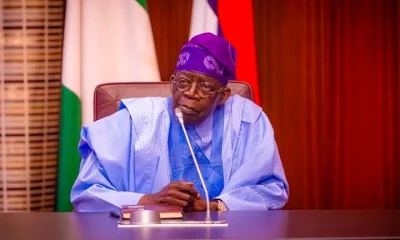
President Bola Tinubu witnessed the signing in Paris, France, alongside the Minister of Marine and Blue Economy, Adegboyega Oyetola, and the Director-General of the Nigerian Ports Authority (NPA), Abubakar Dantsoho.
The agreements bring together the Federal Government, Ogun State, DP World, financial advisers and other private-sector partners in a framework designed to ease logistics bottlenecks, expand industrial capacity and strengthen Nigeria’s manufacturing and export potential.
The Gateway Deep Sea Port, planned for Ogun Waterside, will feature a four-kilometre berth and an 18-metre draft, allowing it to accommodate larger vessels, ease pressure on the Lagos port corridor and reduce transportation costs and delays for businesses.
The port will be linked to the proposed 10,000-hectare Blue Marine Special Economic Zone, which is expected to host manufacturing, processing, logistics and export-oriented industries.
Tinubu said the integrated development would help transform imported inputs into finished goods while enabling Nigerian raw materials to be processed for export, thereby supporting the expansion of the country’s non-oil export base.
“A port moves cargo; a port integrated with a special economic zone helps to build an economy,” the President said.
He said the 28-kilometre Ogun section of the Lagos-Calabar Coastal Highway would provide a critical connection between the port, the industrial zone, Lagos, the Nigerian hinterland and wider African markets.
The corridor is also expected to connect with other strategic investments, including the proposed Nigerian Navy Operating Base and Dockyard and the OK LNG Project, creating stronger links between maritime infrastructure, industry, energy and trade.
According to the President, the projects represent an initial investment of more than $7 billion and are projected to generate over 50,000 direct jobs, in addition to indirect employment opportunities.
Tinubu described the development as a practical demonstration of the Federal Government’s economic diversification and industrialisation drive under the Renewed Hope Agenda.
He commended Ogun State Governor Dapo Abiodun for securing the required land, structuring the investment framework and reducing project risks for investors.
The President also described the initiative as an example of cooperative federalism, with Ogun State driving the project while receiving strategic support from the Federal Government.
Tinubu assured investors of regulatory clarity and policy stability, pledging federal support for road, rail and power connectivity, investment security and the maritime sector.
He stressed that the agreements must translate into actual investments, infrastructure, jobs and economic opportunities.
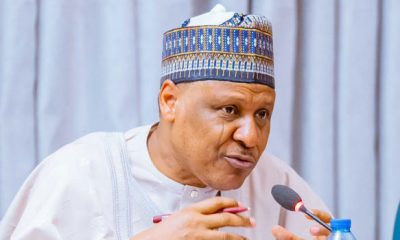
Earlier, Governor Abiodun described the signing as a defining moment for Ogun State and Nigeria’s engagement with the global economy.
Abiodun said the deep seaport vision had remained largely unrealised for more than three decades until the intervention of the Tinubu administration.
“It has taken the foresight, courage and dogged leadership of President Bola Ahmed Tinubu to move it from aspiration to reality,” the governor said.
He commended the Federal Government, Oyetola, the NPA and other institutions for supporting the project, describing it as a convergence of the Renewed Hope Agenda and Ogun State’s Building Our Future Together agenda.
According to Abiodun, the deep seaport will strengthen trade, attract investment, improve connectivity and expand Nigeria’s maritime economy, while creating opportunities for SMEs, logistics operators, manufacturers, technology firms and other businesses.
He said the Blue Marine SEZ would provide a platform for investment, technology, innovation and talent, drawing on the integrated port-and-industrial-zone model exemplified by DP World’s Jebel Ali Free Zone.
The governor added that the development would form part of a wider multimodal infrastructure network connecting the Gateway International Airport, dry ports, the Lagos-Calabar Coastal Highway and the deep seaport.
“History will judge us not by the elegance of documents signed, but by the transformation that follows. Ceremonies proclaim intentions; only implementation creates prosperity,” Abiodun said.
He assured DP World and other partners of Ogun State’s commitment to investment, while emphasising community participation, environmental sustainability and security.
The MoUs mark a significant step in Ogun State’s long-standing ambition to develop its coastline into a major maritime and industrial hub, with the proposed port and SEZ expected to strengthen logistics, manufacturing, exports and regional trade.