Connect with us

News

Pension Reform bill, five others scale second reading  

Published

on

Senate Chamber
Senate in Session
Share


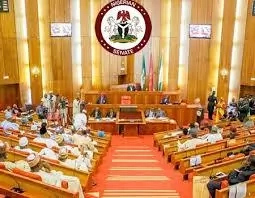
The Senate on Wednesday considered a bill seeking to bring respite to distressed Nigerian retirees.

The bill which passed second reading was tagged “Pension Reform Act 2014 (Amendment), 2022.”

The bill was sponsored by Senator Aliyu Magatakarda Wamakko (Sokoto North).

Wamakko, while leading debate on the general principles of the bill, said the bill seeks to amend the Pension Reform Act 2014, to provide for a definite and reasonable percentage a retiree can withdraw from his/her retirement savings accounts.

According to him, the provisions of the bill seeks to also “provide for succor to retirees in the delay and other difficulties they stumble upon in withdrawing their savings from retirement savings account.”

He lamented that the inability of Nigerian pensioners to access their benefits after service had resulted in their suffering which, in most cases, led to eventual and untimely deaths.

“Mr. President, none of us can claim ignorance of the long-drawn-out anguish of retirees from the Civil Service, Nigerian Prison Service, Universities and Parastatals among other Federal Agencies in this country.

“These retirees rather than enjoy retirement after selflessly serving their fatherland, have continued to live in misery and pain, leading to diseases and even death, as they cannot easily access their benefits” he said.

The lawmaker explained that the Pension Reform Act 2004, amended as Pension Reform Act 2014, provides for a departure from the old pension scheme of Defined Benefits’, to the new Contributory Pension Scheme (CPS) that established the National Pension Commission (Pen Com).

He noted that in spite of the amendments to the Pension Act, the legislation has failed to achieve its objective of solving the intractable pension crisis in the country.

“Suffice to say that the issue of pension Nigeria has more or less, turned a monster that has defied all efforts by successive governments to contain it.

“In view of the retirees protracted sufferings and pains who are equally Nigerians, continued search for a lasting panacea is a duty bound upon us and all others concerned.”

Wamakko explained that the Act in Section 7(1)(a) was amended in the bill to allow retirees withdraw 75 percent of their benefits.

He bemoaned the situation where pension administrators in the country benefit at the expense of Nigerian pensioners who continue to suffer neglect.

“These Nigerians who have retired from service after several years serving the nation are finding it extremely difficult to be the owners of their pension savings in this new arrangement.

“So, unless that law is made categorically clear that they can withdraw the 75 per cent which we are proposing in this amendment, then they can definitely have some relief as retirees.

“But Mr President, my dear colleagues, of what significance are all these huge assets and sums of money to the owners, the Nigerian pensioners who are dying daily of hunger, disease, and deprivation. I believe this is cruel and unjustifiably inhuman.

“You may recall that the DG Pencom proudly announced that as at 31st July, 2021, that they have an accumulated assets of N12.78 Trillion.

“So let the Nigerian pensioners feel the impact of the assets in the savings they have generated. But the true situation is that only the Pension Administrators a benefitting while the owners continue to suffer total neglect.”

The bill after scaling second reading was referred by the Senate President, Ahmad Lawan, to the Committee on Establishment and Public Service Matters.

The Committee was given four weeks to report back to the Senate.

In a related development, a total of five bills also passed second reading on Wednesday.

The bills include: a bill to establish the Federal University of Transportation, Daura; and a bill to amend the Companies and Allied Matters Act to strengthen Non- Governmental Organisations in Nigeria.

Others are a bill to establish the Federal University of Medicine and Medical Sciences Egbe, Kogi State; a bill to establish the Federal Medical Centre Ijebu Ode; and a bill to amend the Nigerian Security and Civil Defence Corps Act 2010 to make for the mode of appointment of the Commandant-General of the Corps.

The bills were sponsored by Senators Abdulfatai Buhari (Oyo North), Yahaya Oloriegbe (Kwara Central), Smart Adeyemi (Kogi West), Mustapha Olalekan (Ogun East) and George Thompson Sekibo (Rivers East), respectively.

The Senate President referred the bill to establish the Federal University of Transport, Daura, to the Joint Committee on Tertiary Institutions and TETFUND; and Land Transport for further work.

He also referred the bill to amend the Companies and Allied Matters Act to the Joint Committee on Trade and Investment; and Diaspora.

On the other hand, the bills to establish the Federal University of Medicine and Medical Sciences Egbe, Kogi State, and Federal Medical Centre Ijebu Ode, were both referred to the Joint Committee on Tertiary Institutions and TETFUND; and Health (Secondary and Tertiary).

Also referred was the bill to amend the Nigeria Security and Civil Defence Corps, which was sent to the Committee on Interior for further legislative inputs.

The Senate President gave all the Committees four weeks to report back to the Senate.

 

Continue Reading
Click to comment

Leave a Reply

Your email address will not be published. Required fields are marked *

News

43 Feared Dead as Illegal Fuel Siphoning Turns Fatal in Rivers Community

Published

on

Rivers State Map
Share

OKRIKA, Rivers — What began as an overnight attempt by hundreds of youths to siphon petroleum products from an illegal pipeline connection has ended in tragedy, with at least 43 people feared dead in Okrika Local Government Area of Rivers State.

The incident occurred around midnight on Thursday at Okari Jetty in Okrika Mainland, leaving families searching for loved ones and the community grappling with the scale of the disaster.

Community sources said more than 200 youths from neighbouring communities arrived at the jetty in wooden boats and attempted to collect petroleum products from an illegally connected tapping point on a pipeline linked to the facility.

The operation reportedly turned deadly after the youths were exposed to concentrated fumes while loading the product into waiting boats.

Several people reportedly lost consciousness. Some fell into the river and drowned, while others managed to escape and are receiving treatment for respiratory complications.

Of the 43 people reportedly dead, 37 have been identified as indigenes of Okrika, while six others remain unidentified. Several people are also still unaccounted for.

The incident has left relatives and community members facing the painful task of searching for missing family members and identifying those who died.

Blessing Agabe, spokesperson for the Rivers State Police Command, confirmed the incident and said investigations were underway to determine the circumstances surrounding the deaths and establish the actual number of casualties.

Fyneface Fyneface, Executive Director of the Youths and Environmental Advocacy Centre (YEAC-Nigeria), said the victims were allegedly involved in an illegal operation at a tapping point on a pipeline transporting petroleum products from the Indorama Eleme Petrochemicals area through the Port Harcourt refinery corridor to export vessels.

According to him, the victims were loading the product into waiting boats while a vessel was receiving supplies from the pipeline.

Fyneface described the incident as a major warning about the dangers associated with tampering with oil and gas infrastructure and illegal bunkering activities in the Niger Delta.

YEAC-Nigeria has called on the National Oil Spill Detection and Response Agency (NOSDRA) to conduct a joint investigation into the incident and determine what led to the deaths.

The organisation also urged operators of oil and gas facilities to strengthen security around critical infrastructure to prevent vandalism and unauthorised access.

Beyond the immediate investigation, Fyneface called for stronger measures to reduce the economic pressures that drive young people into dangerous activities, including the creation of alternative livelihood opportunities, industrial development programmes and other sustainable economic initiatives across the Niger Delta.

For families in Okrika, however, the immediate concern is more personal: finding missing relatives, identifying the dead and coming to terms with a tragedy that has claimed dozens of lives in a single night.


Continue Reading

News

Uber Exits Nigeria After 12 Years, Cites Changing Business Priorities

Published

on

Share

Global ride-hailing giant Uber has ended its ride-hailing operations in Nigeria, bringing its 12-year presence in the country to a close.

Uber announced the decision on Wednesday, September 2, 2026, saying it would wind down its operations in Nigeria following a review of its business priorities and investment focus across Africa.

The company, which launched its service in Lagos in 2014, said the decision takes effect immediately.

“After a thorough review, we have taken the difficult decision to wind down operations in Nigeria and Uganda, effective September 2, 2026,” Uber said in a statement.

Uber stressed that the decision is limited to Nigeria and Uganda and does not represent a withdrawal from the wider African market.

The company said it remains committed to Sub-Saharan Africa, which it described as a region with strong growth prospects and long-term opportunities.

Why Uber is leaving Nigeria

Uber attributed its Nigerian exit to its “evolving business priorities and investment focus across the continent.”

The company said it was concentrating investments on markets where it could create the greatest value for drivers by providing earning opportunities at scale while allowing passengers to move around seamlessly.

Uber did not cite regulatory difficulties in Nigeria as the reason for its withdrawal.

The company also specifically denied that its decision was linked to a recent directive by the Federal Airports Authority of Nigeria (FAAN) concerning e-hailing operations at Nigerian airports.

“No,” Uber said when asked whether the FAAN directive was responsible for its decision.

FAAN had recently clarified that it had not imposed a blanket ban on e-hailing services at Nigerian airports, explaining that discussions with operators were focused on establishing an appropriate framework for their operations within airport premises.

Drivers, riders affected

Uber said its immediate priority is supporting drivers, riders and employees affected by the shutdown.

The company said it is communicating directly with affected stakeholders about the implications of the decision and arrangements for the transition.

Uber has operated in Nigeria for more than a decade, expanding beyond Lagos to several cities, including Abuja, Port Harcourt, Ibadan, Enugu, Kano and other major urban centres.

Its departure is expected to reshape Nigeria’s increasingly competitive ride-hailing market, where operators compete for passengers and drivers amid rising operating costs and evolving regulatory requirements.

End of an era

Uber’s exit marks the end of a significant chapter in Nigeria’s digital transport industry.

The company helped popularise app-based ride-hailing in the country after launching in Lagos in 2014, offering passengers an alternative to conventional taxi services and creating new earning opportunities for thousands of drivers.

Its withdrawal also comes at a time when ride-hailing companies across Africa are reassessing their operations and investment strategies.

Uber previously withdrew from Côte d’Ivoire in 2025 and ended operations in Tanzania in January 2026, reflecting the challenges global mobility platforms can face in adapting their business models to individual African markets.

For Nigerian passengers and drivers, however, the immediate question is what Uber’s departure will mean for competition, fares, driver earnings and service availability.

While Uber is leaving Nigeria, the company maintains that its broader commitment to Sub-Saharan Africa remains intact.

The exit therefore represents a strategic withdrawal from the Nigerian market rather than a retreat from Africa, according to the company.

Continue Reading

News

Kogi Information Perm Sec Pledges Support for NUJ Chapel, Urges Journalists to Uphold Trust

Published

on

Share

The newly appointed Permanent Secretary, Kogi State Ministry of Information and Communications, Mr. Awulu Tijani David, has pledged his full support to information officers in the state, stressing that effective information management remains critical to the success of government and its policies.

Awulu Tijani made the commitment on Wednesday, September 2, 2026, when the leadership of the Nigerian Union of Journalists (NUJ), State Information Chapel, led by its Chairman, Mr. Solomon Musa, paid him a courtesy visit at his office in Lokoja to formally introduce the newly elected executives of the chapel.

The Permanent Secretary, who described the position of leadership as a privilege and a responsibility entrusted to individuals by the people, urged the new NUJ Information Chapel leadership to justify the confidence reposed in them by members.

He advised the executives to remain accountable, trustworthy and committed to the welfare and professional advancement of members, noting that records of every person entrusted with responsibility would eventually speak for them.

“People trusted and elected you. It is my prayer that you succeed better than those who have been there before you,” he said, while assuring the chapel of his willingness to work with the new leadership for the advancement of the information profession in Kogi State.

Awulu particularly emphasised the strategic importance of information officers to government, describing them as the “eyes” of the Ministry of Information and Communications and key players in communicating government policies, programmes and achievements to the public.

According to him, the success of the ministry is closely tied to the effectiveness of its information officers, stressing that the leadership of the ministry must provide the necessary support and working environment for them to perform optimally.

“If the Ministry of Information does not do whatever it will take to make the information officers work well, then what are we here for? You are the eyes of the Ministry of Information. Without you, the ministry cannot do anything,” he stated.

The Permanent Secretary also encouraged the chapel leadership to always communicate its needs and challenges to his office, assuring them that issues within his capacity would receive prompt attention, while matters requiring higher-level intervention would be referred appropriately.

He said his door would remain open to members of the chapel, describing the ministry as their own home and urging them not to hesitate to approach him whenever they required his intervention.

“This is your office; it is your home. Whenever you need the office to intervene, call on me. I don’t know everything that you do, and I am not a journalist; I am an administrator. That is why I need people to advise me,” he said.

Awulu further noted that his appointment as Permanent Secretary should be seen as a privilege rather than a position that places him above others, stressing that any member of the service could attain similar responsibility in the future.

He also commended the Chairman of the NUJ Information Chapel, Mr. Solomon Musa, whom he described as a humble and experienced professional who understands the demands of the information business.

He assured the chapel that he would support programmes that would contribute to the professional development and welfare of information officers, urging the leadership to formally present its proposals for consideration.

Earlier, the Chairman of the NUJ State Information Chapel, Mr. Solomon Musa, said the visit was aimed at formally introducing the newly elected executives to the Permanent Secretary as the Chief Accounting Officer of the Ministry and to seek his support and that of the ministry for the chapel’s activities.

Musa introduced the new executives, including the Vice Chairman, Mrs. Olajumoke Ajani, a State Information Officer with the Ministry of Local Government and Chieftaincy Affairs; Secretary, Miss Gloria Amodu, State Information Officer with the Ministry of Works; Treasurer, Mr. Salau Ibrahim of SEMA; Financial Secretary, Mrs. Mariam Tenimu, State Information Officer with the Ministry of Environment; and Auditor, Mr. Abah Benjamin Eneojoh Treasure, State Information Officer at Government House.

He said the new leadership had come into office with a commitment to strengthen unity, professional development and collaboration among information officers across ministries, departments and agencies.

Musa also appealed for the ministry’s continued support for the chapel’s annual professional and social programme, which brings together serving and retired information officers, including former Permanent Secretaries and Directors who had served in the information sector.

He recalled that the inaugural edition of the programme held last year provided an opportunity for retired senior officers to share their experiences with younger information officers, describing the engagement as an avenue for knowledge transfer and mentorship.

According to him, the chapel intends to make this year’s edition bigger and more impactful, with plans to incorporate activities including a visit to an orphanage, sporting activities and professional lectures designed to strengthen the capacity of members.

He also sought the support of the ministry for the enrolment of chapel members into the Nigerian Institute of Public Relations (NIPR), noting that the proposal had previously been discussed with the relevant authorities.

The chapel’s Auditor, Mr. Abah Benjamin Eneojoh, further appealed to the Permanent Secretary to accept the role of a fatherly figure and strategic partner to the chapel, stressing that the support of the ministry’s leadership would be critical to the success of its programmes.

Eneojoh emphasised the need for government to continue strengthening State Public Relations Officers and other information professionals, noting that adequately supported information officers would be better positioned to effectively communicate government policies and achievements to the people.

He commended the Commissioner for Information and Communications, Hon. Kingsley Femi Fanwo, for what he described as his consistent support for the activities of the chapel and his commitment to the rebranding and repositioning of Kogi State through effective communication.

Continue Reading