Connect with us

News

NFIU: Terrorists Adopt Crowdfunding, Dead/Proxy Accounts, Mules, Others To Raise, Transfer Funds

Published

on

Share

Crowdfunding networks, gender proxy accounts and other ways are now being exploited to raise and channel funds for terrorist operations, the Nigeria Financial Intelligence Unit has uncovered.

The new disclosures are contained in the NFIU’s 2025 Annual Report, obtained by the press from a top official.

The crowdfunding scheme involves foreign-based facilitators using social media platforms to solicit donations under false pretexts of humanitarian relief or educational support, before moving the funds through multiple layers to terrorist operatives in Nigeria.

The NFIU said hundreds of sympathisers were typically encouraged to make deliberately small donations, ranging from $50 to $500, through PayPal pages or conventional bank accounts, to evade automated anti-money laundering alerts.

“The following is a case study on Crowdfunding Network identified during the year: A foreign-based facilitator runs social-media campaigns claiming humanitarian relief or educational support and uses encrypted apps (Telegram, Signal) to share links to convincing PayPal pages or standard bank accounts.

“Hundreds of sympathiser donors contribute $50–$500 each, amounts small enough to avoid most automated AML alerts,” the report read.

The funds are subsequently pooled into a “master account” controlled by a senior member of the group living legally abroad.

“When the pool reaches a threshold, that account becomes the hub for onward movement,” the report stated.

The NFIU said the funds were again fragmented into dozens of smaller payments and transferred through International Money Transfer Operators and remittance applications to a network of money mules in Nigeria.

It identified students, small-business owners and relatives among those used as mules, noting that the strategy was designed to avoid reporting thresholds and obscure the origin and destination of the funds.

“Rather than sending one large transfer, the senior member fractures the funds and sends dozens of sub-threshold payments through IMTOs and remittance apps to a network of money mules in Nigeria; students, small-business owners, or relatives, avoiding reporting triggers.

“Upon receipt, the money was either converted to cash, used to purchase dual-use items such as motorcycles, fertilisers and satellite internet equipment, or transferred through mobile banking channels to logistics managers and field operatives.”

The report described the final stage as the “integration” of the funds into terrorist operational financing.

The Unit also identified the use of gender-based proxy accounts as another emerging terrorist financing technique, with terrorists opening bank accounts in women’s names while male commanders or logistics managers secretly control them.

“Terrorist financiers are opening bank accounts in women’s names while male commanders and logistics managers secretly control them.

“They exploit cultural norms that make women less likely to be suspected by authorities, using wives, sisters, or female associates as fronts to distance illicit funds from the true operatives.

“This tactic functions as identity laundering: women’s accounts are managed by men who hold ATM cards, mobile-banking credentials, and PINs, while the women often remain unaware of the transactions and volumes,” the report stated.

The report further revealed that terrorist facilitators were using telephone numbers that were not registered to the account holders or actual beneficiaries for mobile banking and transaction alerts.

It said pre-registered SIM cards, numbers registered to deceased persons and SIMs linked to gender-based proxies were being used to break the connection between bank accounts, SIM cards and Bank Verification Numbers.

“Terrorist facilitators use phone numbers for mobile banking or account alerts that are not registered to the account holder or the true beneficiary.

“They bypass the security link between SIM cards and BVNs by using pre-registered SIMs, SIMs registered to deceased people, or SIMs tied to gender-based proxies. This severs the audit trail: when a transaction is flagged, investigators trace the phone to an unrelated person, letting the real facilitator stay anonymous and continue operations,” it stated.

The NFIU also uncovered sophisticated methods of disguising terrorist transactions through detailed or coded narrations.

It said cells, particularly those linked to the Islamic State West Africa Province, used precise transaction descriptions to maintain what analysts described as an internal accounting system.

According to the report, frequent logistics-related payments with detailed narrations were often sent from a single source to multiple recipients, reflecting a structured financial system within the terrorist network.

“Terrorist cells, particularly those linked to ISWAP, routinely use precise, professional-sounding transaction narrations to maintain internal accounting. Operating like “shadow states” with strict bureaucratic controls, they require detailed descriptions so field commanders can justify expenses to central financial controllers. Although truthful narrations appear counterintuitive, they create an internal audit trail; analysts repeatedly observe high-frequency, logistics-related payments with accurate narrations sent from a single source to multiple recipients,” the report said.

The NFIU report added that some facilitators used innocuous words, secret codes and alphanumeric strings in transaction descriptions, sometimes switching between languages, to conceal the purpose of payments and evade automated bank filters.

“Transaction descriptions employ innocuous words, secret codes, or alphanumeric strings to conceal intent. Facilitators use this coded language, often switching languages to evade banks’ automated keyword filters that flag terms like ‘Jihad,’ ‘Arms,’ or ‘Boko.’

“This practice obscures the true purpose of transfers, preventing detection and enabling continued financing,” it said.

It noted that fraud remained a dominant predicate offence, with growing cases of Ponzi schemes, fraudulent crowdfunding arrangements, cryptocurrency-enabled investment scams and hacking-related fraud.

The Unit said the schemes increasingly exploited fintech onboarding gaps, including tiered accounts requiring minimal identification, while digital platforms were used to rapidly recruit victims and move funds.

The report also highlighted persistent vulnerabilities in public sector financial management, including the diversion of state and local government funds through accounts belonging to finance officers and associated third parties.

It identified procurement processes and cash transactions as significant risk areas, saying the latter complicated audit trails and efforts to trace illicit assets.

The NFIU said its findings were translated into targeted advisories, executive alerts and strategic intelligence products to support competent authorities, reporting entities and policy responses.

“Financial Fraud and Investment Scams: Fraud remains a dominant predicate offence, with notable growth in Ponzi schemes, fraudulent crowdfunding arrangements, cryptocurrency-enabled investment scams, and hacking-related fraud (including compromised social media and messaging accounts).

“Analytical reviews during the period examined these trends and informed internal advisories and alerts, some of which remained restricted for operational purposes.

“These schemes increasingly exploit fintech onboarding gaps, including tiered accounts with minimal identification requirements, and leverage digital platforms to rapidly scale victim recruitment and fund movement.

“Corruption and Misappropriation of Public Funds Analysis highlighted persistent vulnerabilities in public sector financial management, including the diversion of state and local government funds through accounts of finance officers and associated third parties.

“Procurement processes remain a significant risk area, while utilisation of cash transactions complicates audit trails and asset tracing efforts,” the report said.

A security expert, Chidi Omeje, called on Nigeria’s security and financial intelligence institutions to enhance their operational strategies to counter the rising sophistication of non-state actors in the country.

Omeje noted that criminal elements are constantly devising new methods to circumvent existing security architecture.

He urged key agencies, including the Nigeria Police Force, the Department of State Services, and financial regulatory authorities tasked with monitoring banking transactions, to step up their efforts, stay ahead of criminal networks, and track illicit financial flows.

“Every single day, these guys grow in sophistication and desperation, and we must also devise means to bring them to their knees.

“The state must ultimately deal with them. They must follow the money trail to monitor these movements and effectively tackle the situation,” he said.

Omeje emphasised that the government and security apparatus cannot afford to yield ground to criminal groups, insisting that intelligence-driven operations and financial tracking remain critical to safeguarding national security.

Another security analyst, Lawrence Alobi, urged security agencies to step up intelligence sharing and work closely with financial institutions to curb the trend.

Addressing the issue, Alobi emphasised that security agencies must enhance their information gathering to outsmart criminals attempting to evade detection through fraudulent account setups.

“It behoves us now, the security agencies, to intensify intelligence sharing and information gathering, because it is through information that we can get some of these things.

“Security agencies need to work with the banks and also warn them. Any bank found to have connived or aided this act should be sanctioned,” he said.

He further stressed the need for strict compliance and verification procedures within the banking sector to prevent proxies from being used to run illicit accounts.

“The banks themselves must sit up and ensure they properly verify every individual’s identity so that there is a real, verifiable person behind every account, not just someone acting by proxy. Intelligence agencies must go the extra mile to hold banks accountable for any loopholes exploited within their system,” he added.

Continue Reading
Click to comment

Leave a Reply

Your email address will not be published. Required fields are marked *

News

Tinubu Declares Three-Day National Mourning Over Ondo Military Aircraft Crash

Published

on

President Bola Ahmed Tinubu
Share


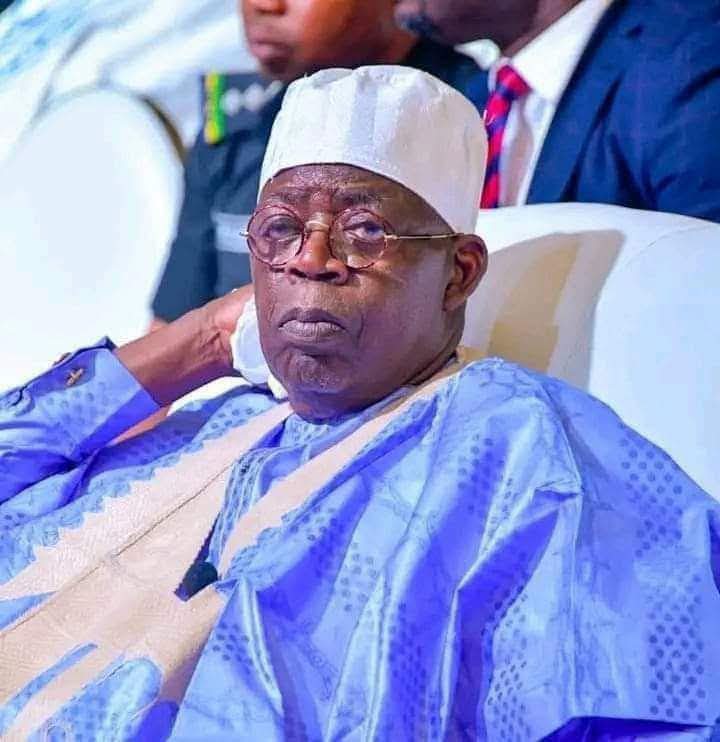
President Bola Ahmed Tinubu has declared three days of national mourning following the military aircraft crash in Igbokoda, Ondo State, which claimed the lives of all 32 people on board.

The President also ordered that the Nigerian flag be flown at half-mast across the country as a mark of respect for the victims.

The aircraft, reportedly an ATR-42 operated by the Nigerian Air Force, was on a routine mission from Benin City to Lagos when it crashed near Igbokoda shortly after 9:00am on Monday.

A military source confirmed that all 25 passengers and seven crew members on board died in the crash.

In a statement issued by his Special Adviser on Information and Strategy, Bayo Onanuga, President Tinubu expressed his condolences to the families of the victims, the Chief of Air Staff, Air Marshal Sunday Kelvin Aneke, and the entire Nigerian Air Force.

“This is a painful moment for our Armed Forces and for the entire nation. Our Air Force personnel put their lives on the line every day to secure Nigeria. Their sacrifice will never be forgotten,” the President said.

Tinubu commended the Nigerian Air Force for quickly launching a search and rescue operation after the crash. He also praised first responders and the Ondo State Government for their efforts at the crash site.

The President directed the Nigerian Air Force to immediately begin a thorough investigation into the cause of the crash, with a view to preventing similar incidents in the future.

Aviation Minister, Festus Keyamo, also confirmed that the aircraft crashed near a naval base.

The Nigerian Air Force said the identities of the victims would be released after their families had been officially notified.

Residents around Igbokoda said they heard a loud sound around the time of the crash. Rescue teams were later seen searching the area around the river by boat.

The crash has thrown the Nigerian Armed Forces and the wider nation into mourning as efforts continue to establish the exact circumstances surrounding the tragic incident.

Continue Reading

News

Oyebanji’s second term will usher in greater devt , inauguration Committee declares

Published

on

Share


As preparations Governor Biodun Oyebanji’s second term inauguration commenced with the official release of programme of activities, the Planning Committee has highlighted remarkable achievements of the administration in the last four years.


Reflecting on the achievements of the administration since it assumed office in October 2022, the chairman of the Second term inauguration committee, Mr Oyeniyi Adebayo, who spoke at a press conference in Ado Ekiti on Thursday, said Ekiti people has a lot to look out for as the second term administration would usher in greater development and at a faster pace.


Adebayo who highlighted activities marking the inauguration, said the programme will be kickstarted with a Jumat Thanksgiving service at the Central Mosque, Ado Ekiti on Friday, October 2nd, while the inauguration ceremony would hold on October 16th.

Highlighting the infrastructure development of the administration, Adebayor, who is also the Chief of Staff to the Governor, noted that the completion of the Ekiti Agro-Allied International Cargo Airport, which commenced commercial flight operations in late 2025 has created opportunities for investment, tourism, trade, commerce and agricultural exports which has invariably boosted the economy of the state.


He also disclosed that the administration had completed and commissioned over 500 kilometres of inter-city and rural roads, with several other road projects currently at various stages of completion.

According to him, the administration had also provided electricity to parts of Aiyekire, Ekiti East Local Government Areas and the Ikogosi tourism belt, areas which, he said, had experienced prolonged lack of public electricity supply long before the advent of this administration.


On healthcare and education, the committee chairman said the administration had, as of 2026, renovated over 110 primary healthcare centres and all the general hospitals in the state, equipping them with modern facilities.


He added that the government had made significant investments in education, including the comprehensive renovation of 203 secondary schools, including three special schools and 950 primary schools across the state.


The committee disclosed further that the administration had also established nine ICT laboratories in selected secondary schools and technical colleges and constructed new primary schools under the Suburb Model School Project adding that Governor Oyebanji’s administration had continued to support students by paying WAEC examination fees to the tune of Two Billion, one hundred and fifty-eight million Naira (N2,158,000,000) to sixty-nine thousand (69,000) students as well as procurement of free JAMB forms to 12,400 students in four years.


While highlighting the administration’s youth-focused agricultural initiatives, the committee said over 5,000 youths have been engaged in commercial agriculture through the Bring Back the Youth into Agriculture initiative, with participants reportedly realising more than ₦1 billion in profits over the past one and a half years.


The administration, he said, had also disbursed N1.1 billion to 2,777 beneficiaries as credit and operational grants credit, N400million loan disbursed to 443 micro, small and medium-scale enterprises, provided ₦450 million in grants to 10 cooperatives involved in agro-processing and production, and facilitated free Corporate Affairs Commission registration for about 5,400 MSMEs.


Praising the Oyebanji administration on Fiscal responsibility, the chairman also drew attention to the robust fiscal management in the state, saying Ekiti had maintained a strong record of fiscal transparency and responsibility for over two years. He maintained that the state had been ranked first for nine consecutive quarters, from the second quarter of 2024 to the second quarter of 2026, in the State Fiscal Transparency League reports published by BudgIT Foundation.


Projecting into the second term tenure, the committee chairman said the theme of the inauguration, “The Good Work Continues,” reflected the administration’s intention to consolidate existing programmes while introducing further interventions aimed at strengthening the state’s economy and improving the welfare of citizens.


He said recent stakeholder engagements across the three senatorial districts, identified healthcare, electricity, roads, water supply, agriculture, human capital development and economic opportunities as areas requiring sustained consideration stressing that the major target is the expansion of rural road development, with a target of delivering up to 1,500 kilometres of roads through various interventions, including collaboration with development partners.


The chairman used the opportunity to commend the media for the symbiotic relationship with government as he described them as an important bridge between government and the people. He urged journalists to continue to provide accurate and professional coverage of the state’s activities as well as help citizens understand government policies, programmes and projects while providing broad coverage of the inauguration.


He assured the people that the administration would continue to engage stakeholders, improve service delivery and work towards ensuring that the impact of its shared prosperity agenda was felt across the state.


“As we begin preparations for the second term, the emphasis is on continuity and further development. The Governor has stated that the next phase will focus particularly on interventions that add value to the economy, improve productivity and respond to the needs and aspirations of our people. Recent engagements with stakeholders, including the just concluded Budget Tour of the three Senatorial Districts of the State have identified healthcare, electricity, roads, water supply, agriculture, human capital development and economic opportunities as areas requiring sustained attention.


“The Governor has also stated that this consultative approach, which has been a hallmark of his administration during the first term, will continue through the second term. The Administration has also announced plans to expand rural road development, with a target of delivering up to 1,500 kilometres of roads through various interventions, including collaboration with development partners.” the committee chairman said.


“Gentlemen of the Press, I want to specially acknowledge your role in this process. The media is an important bridge between government and the people. Your responsibility goes beyond reporting events. It includes informing the public accurately and helping citizens understand government policies, programmes and projects.


In attendance at the news conference were other members of the planning committee. They include the Commissioner for Information, Chief Taiwo Olatunbosun, Secretary to the State Government, Prof Habibat Adubiaro, Head of Service, Dr Folakemi Olomojobi; Chairman APC, Mr Sola Elesin, Chairman ALGON, Hon Segun Ojo; Special Adviser (Media) to the Governor, Mr Yinka Oyebode, Director General , Bureau of Comminity Comminications, Mrs Mary Oso Omotoso; and Special Assistant on Political Matters, Mrs Toyin Adepoju, among other.

Continue Reading

News

EKITI’LL FOREVER BE GRATEFUL TO YOU. GOV OYEBANJI, SEN BAMIDELE HAIL CHIEF DEJI FASUAN AT 95

Published

on

Share


Ekiti State Governor, Mr. Biodun Oyebanji, and Senate Leader, Senator Opeyemi Bamidele, have described the Chairman of Committee for the creation of Ekiti State, Chief Deji Fasuan as a distinguished statesman whose contributions to the creation of the State will remain indelible, assuring that the state will forever be grateful for his commitment to its actualization


Chief Fasuan clocked 95, on Thursday, which coincided with the 30th anniversary of the Stete, chaired the committee responsible for the creation of Ekiti State, with Governor Oyebanji serving as the committee secretary.

Governor Oyebanji, accompanied by the Senate Leader, Senator Opeyemi Bamidele, House of Representative member, Hon. Ojuawo and members of the state Executive council, Prof Bolaji Aluko and Chief Taiwo Olatunbosun, noted the significant role played by the elder statesman in the struggle for Ekiti State. The Governor noted that his leadership and dedication helped advance the aspiration of the people for a separate state.


He described the nonagenarian as a symbol of patriotism, selflessness and service, whose contribution to the political and administrative history of Ekiti state continue to provide a reference point for present and future generation.


The governor noted that the creation of Ekiti state represents the fulfillment of a long standing aspiration of its people and that the efforts of those who championed the cause, including Chief Deji Fasuan deserved lasting recognition and appreciation.


The Governor said, “thirty years ago, this house was agog because that was the day Ekiti State was created. On behalf of all Ekiti indigene at home and the diaspora, we say that your struggle, sweat and sacrifice has given the platform to serve Ekiti people, we say thank you.


“Throughout the struggle, one thing I learnt from Daddy was his integrity, commitment to excellence, courage, perseverance and sacrifice. Daddy is a tough person but through the process of the struggle, he took insults and was not annoyed for one day.


“I am happy you have seen the transformation in Ekiti in the last 30 years, yes, we have not reach the promise land but we have left Egypt, there is no doubt about that, individually we are developing, collectively we are developing and I am happy that by the grace of God and the benevolent of Ekiti people, I am in the saddle today”.


Also in his remarks, the Senate Leader, Senator Opeyemi Bamidele also celebrated the former committee chairman for his commitment to the development of Ekiti State, describing his 95th birthday as an opportunity to reflect on the founding figures whose efforts shaped state history.


The Senate Leader, who noted that Ekiti State had continued to make steady progress, maintained that the state had recorded remarkable improvement in various areas of development in recent years.


While explaining that Chief Deji Fasuan’s greatest joy shoud be the fact that the secretary of the State Creation Committee, Governor Oyebanji, is today the Governor of Ekiti State, Senator Bamidele said the Governor is implementing the ideals and aspiration they shared during the struggle for the creation of the state.


He maintained that Ekiti had witnessed tremendous development in the last four years, particularly through Oyebanji’s effort to bring the various leaders and stakeholders together, thereby achieving the aspiration of the founding fathers for a united Ekiti state.

Continue Reading