Connect with us

Business & Economy

Naira notes: Senate urges CBN to extend withdrawal date to June 31

Published

on

New Naira Notes
New Naira Notes
Share

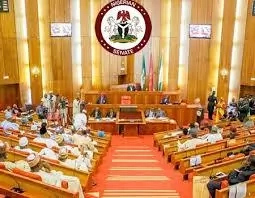
The Senate has urged the Central Bank of Nigeria (CBN) to urgently extend the withdrawal date of old naira notes from January 31, 2023, to June 31.

The Senate’s resolution was sequel to a point of order raised by Sen. Mohammed Ndume (APC-Borno) at the plenary in Abuja on Wednesday.

The CBN had on October 26 announced plans to redesign three naira notes out of the existing eight banknotes.

These are the N200, N500, and N1,000 denominations which took effect on Thursday, December 15 after its launch by President Muhammadu Buhari.

The apex bank said the new and existing currencies shall remain legal tender and circulated together until January 31 when the existing money will cease to be legal tender in Nigeria.

Raising Orders 41 and 51 of the Senate Standing Rule, Ndume said the call for an extension of the date should be considered a matter of urgent national importance in order to forestall imminent hardship on Nigerians.

Ndume said: “This Senate notes that many Nigerian banks on Thursday, December 15, opened their vaults to customers and depositors to exchange their old currency notes for the newly redesigned currency notes which have a stipulated deadline of January 31.

“Some Nigerians are already envisaging long queues in the banking hall across the country as a result of people trying to get access to the new naira notes.

“The old notes are expected to be in circulation along the new ones until Jan. 31 when the old ones are expected to be phased out.

“It is expected that many Nigerian businesses will start to rid the old notes as soon as banks start paying redesigned notes to customers.”

The lawmaker stated that access to the new notes would be compounded by a recent circular by the CBN which limited the amount of cash withdrawal by corporate entities to withdraw within a certain period of time.

“The withdrawal of old notes from circulation if not extended beyond Jan. 31, many Nigerians will be thrown into hardship and to avoid the repeat of 1984 experience withdrawal of old notes,” he added.

Contributing, Sen. Adamu Aliero (PDP-Kebbi) said that it was true that in rural areas, people were not aware that there was going to be a currency change.

“So this motion is very apt and timely. If we insist on the date given by CBN, it will cause a lot of hardship for our rural dwellers.

“Majority of our people live in rural areas where there are no banks and PoS. It is appropriate we extend the time as suggested in the motion,” Aliero said.


Business & Economy

Tinubu Tables ₦58.18trn 2026 Budget, Projects Sustained Economic Stability

Published

on

President Bola Ahmed Tinubu
Share

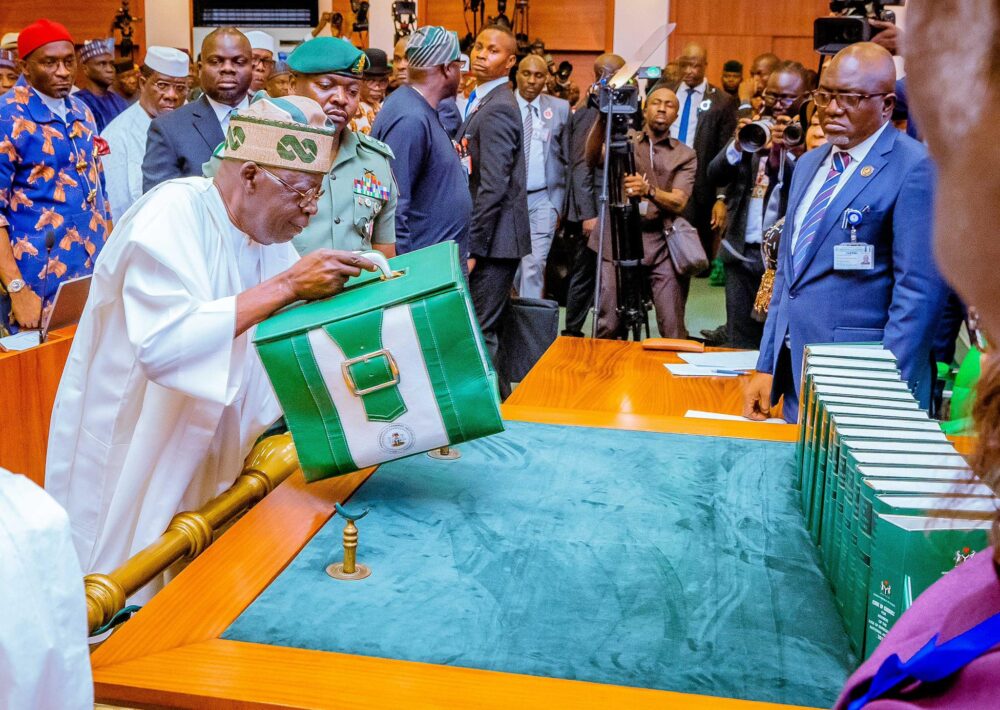
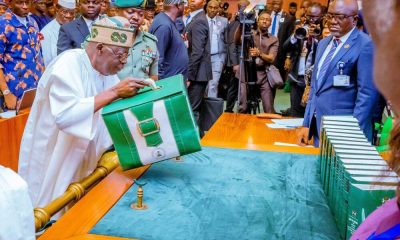
President Bola Tinubu on Friday presented a ₦58.18 trillion 2026 Appropriation Bill to a joint session of the National Assembly of Nigeria, declaring that Nigeria’s economy is showing measurable signs of stabilisation following years of structural pressure.

Tagged “Budget of Consolidation, Renewed Resilience and Shared Prosperity,” the 2026 fiscal plan is aimed at locking in recent macroeconomic gains while translating economic recovery into improved living standards for citizens.

According to the President, Nigeria’s economy expanded by 3.98 per cent in Q3 2025, while inflation moderated significantly, falling to 14.45 per cent in November 2025 from 24.23 per cent in March 2025.

“With stabilising food and energy prices, tighter monetary conditions, and improving supply responses, we expect the disinflationary trend to persist into 2026, barring major supply shocks,” Tinubu said during the presentation on December 19, 2025.

The President highlighted additional positive indicators, including improved crude oil production, rising non-oil revenues, renewed investor confidence, and external reserves climbing to a seven-year high of approximately $47 billion.

Under the proposal, the Federal Government projects ₦34.33 trillion in revenue against planned expenditure of ₦58.18 trillion, resulting in a budget deficit of ₦23.85 trillion, equivalent to 4.28 per cent of GDP. Tinubu emphasised that the fiscal framework is built on realism, prudence, and growth-driven assumptions.

He further assured lawmakers of tighter discipline in budget implementation, stressing that fiscal spending in 2026 would be more outcome-focused.

“Every naira spent or borrowed must deliver measurable public value,” the President said.

Continue Reading

Business & Economy

CBN Governor Reassures U.S. Investors on Nigeria’s Economic Reforms, Stability

Published

on

CBN Governor, Yemi Cardoso
Share

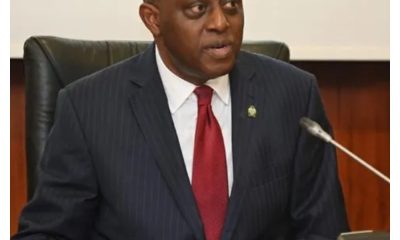
The Governor of the Central Bank of Nigeria (CBN), Mr. Olayemi Cardoso, has reassured United States investors of Nigeria’s commitment to macroeconomic stability and market-driven reforms, amid global economic uncertainty.

Cardoso gave the assurance during high-level engagements with U.S. business leaders and institutional investors in Washington, D.C., including the U.S.–Nigeria Executive Business Roundtable.

Speaking at the forum, the CBN governor said Nigeria remains focused on rules-based economic management, transparent markets, and predictable policy frameworks to restore investor confidence and drive sustainable economic growth.

He highlighted recent reforms in the foreign exchange market, the adoption of orthodox monetary policy measures, ongoing banking sector reforms, and the modernisation of the payments system. According to him, the reforms are aimed at stabilising the economy and supporting private-sector-led development.

The roundtable, convened by the U.S. Chamber of Commerce’s U.S.-Africa Business Center, focused on macroeconomic stabilisation, regulatory clarity, and opportunities to scale bankable projects across key sectors of the Nigerian economy. Discussions also emphasised efforts to deepen commercial and investment ties between Nigeria and the United States.

Commenting on the outcome of the engagement, President of the U.S.-Africa Business Center, Ms. Kendra Gaither, said investors are increasingly prioritising policy credibility and consistency.

She noted that clarity of rules, credible reforms, and disciplined economic management are critical factors driving investor interest, adding that Nigeria’s evolving message of discipline and opportunity is important in a global economy seeking stability and predictability.

Continue Reading

Business & Economy

Tinubu Welcomes Nigeria’s Removal from FATF Grey List, Pledges Continued Financial Reforms
Published

on

President Bola Tinubu
President Bola Ahmed Tinubu
Share

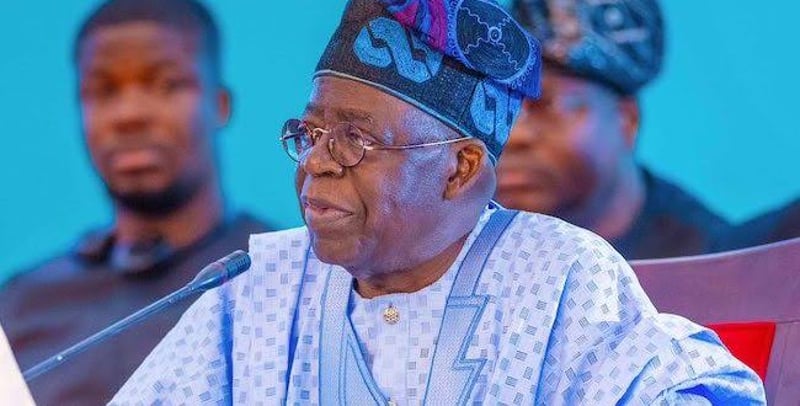
President Bola Ahmed Tinubu has welcomed the removal of Nigeria from the Financial Action Task Force (FATF) grey list, describing it as a major milestone in the nation’s economic reform and global credibility drive.

The FATF, the world’s foremost body for combating money laundering, terrorist financing, and proliferation financing, announced Nigeria’s delisting on Friday at its plenary session in Paris, France.

The decision formally removes Nigeria from the list of countries under increased monitoring, following the nation’s successful completion of its FATF Action Plan after over two years of sustained reforms and inter-agency coordination.

In a statement issued by his Special Adviser on Information and Strategy, Bayo Onanuga, President Tinubu said the development reflects Nigeria’s progress in strengthening its Anti-Money Laundering and Counter-Financing of Terrorism (AML/CFT) framework.

“Rather than treat our placement on the grey list in 2023 as a setback, we saw it as a call to action,” the President said. “This delisting is a strategic victory for our economy and a renewed vote of confidence in Nigeria’s financial governance.”

The President credited the achievement to far-reaching legal, institutional, and operational reforms implemented under his administration through the Nigerian Financial Intelligence Unit (NFIU), in collaboration with the Attorney-General of the Federation, the Minister of Finance and Coordinating Minister of the Economy, and other key ministries.

Tinubu commended the Director/CEO of the NFIU, Ms. Hafsat Abubakar Bakari, and her team for their diligence and professionalism, as well as the contributions of several ministries, agencies, and private sector representatives who participated in the National Task Force on AML/CFT.

He also acknowledged the support of international partners including France, Germany, the United Kingdom, the United States, the United Nations, and the European Commission, for their technical assistance throughout Nigeria’s reform process.

President Tinubu assured that his administration will sustain and deepen the reforms that led to the country’s delisting.

“This is not just a technical accomplishment,” he said. “It marks the beginning of a new chapter in our financial reform agenda as we continue building a system Nigerians and the world can trust.”

Continue Reading