Connect with us

News

Matawalle Swears In New Zamfara Deputy Governor, Senator Hassan

Published

on

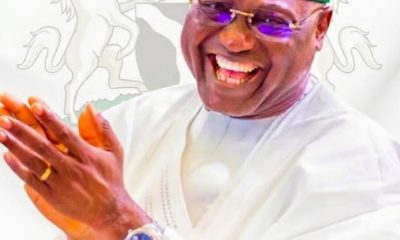
New Zamfara State Deputy Governor , Senator Hassan Mohammed Gusau.
Share

Governor Of Zamfara State, Bello Mohammed Matawalle, has sworn in the new Deputy Governor of the state, Senator Hassan Mohammed Gusau.

Delivering his speech at the Councils Chamber, Government House, Gusau on Wednesday, the Governor said following the impeachment of the immediate past Deputy Governor by the State House of Assembly, it became imperative to fill the vacancy as provided for by section 191, subsection 3 of the 1999 Constitution.

According to him, the person who should occupy the position of Deputy Governor should be an able lieutenant, loyal, credible and politically astute and relevant.

“This is the reason why after a wide range of consultation across the broad political spectrum, it was agreed that distinguished Senator Hassan Mohammed Gusau should be nominated for the position of Deputy Governor of Zamfara State, to which he was just sworn in following the confirmation of the State House of Assembly,” Governor Matawalle said.

The statement read in part: “We are grateful to Allah for guiding us to arrive at this critical decision at this crucial point in our political history.

Going by the pedigree of the new Deputy Governor, most especially his excellent record of political accomplishments, his excellent interpersonal relations, his accessibility, and closeness to his political constituency, I am confident that His Excellency, Senator Hassan Mohammed Gusau is not just the right person for this enviable position but also someone that will deploy his vast experiences in our relentless pursuit of building a new Zamfara State.

“While I congratulate you for attaining this feat, let me remind you that you are taking over this onerous responsibility at a time when Zamfara State, more than any time before, needs the services of competent and capable hands to join ranks to address our myriad of challenges.

As you know, the most formidable challenge before us is that of more than a decade-old banditry.

“Almost 26 years since the creation of Zamfara State, we are still confronted with many issues of development that require planning and proper channelling of resources to address.

Apart from the blueprint drawn for the development of the State during the first administration of Jibril Bala Yakubu, the State’s development has virtually remained without a roadmap.

This is what informed our decision to inaugurate a committee to draw a Development Plan that will guide the development of the State in the next 25 years.

“As my lieutenant, your role in the implementation of the plan and other government programmes is vital.

“As a Deputy Governor, your role as defined by the constitution is to assist the Governor in discharging his functions.

You are to also perform other responsibilities as might be delegated to you by the Governor.

You should therefore be ready for all the challenges associated with your new responsibility.

“At this juncture, let me commend the State House of Assembly for staying true to the course of democracy at this critical moment in our political journey.

As true democrats, they acted swiftly within the boundaries of the law to salvage our democracy and save the State from the incompetence, insubordination, and carefree attitude of the immediate past occupant of the office of the Deputy Governor.

“I call on the good people of our dear State to extend their usual prayers, support and cooperation to the just sworn-in Deputy Governor for him to perform as expected.

“As you assume office, I pray to Allah to guide you in the course of discharging all your functions with ease and a high sense of responsibility. Thank you very much. Wassalamu Alaikum”.

Continue Reading
Click to comment

Leave a Reply

Your email address will not be published. Required fields are marked *

News

EU Will Deploy Electoral Experts for Nigeria’s 2027 Election

Published

on

EU Delegation Ambassador to Nigeria and ECOWAS, Gautier Mignot
Share
  • Denies boycotting election claim
  • Urges journalists to very facts before reporting

The European Union Delegation to Nigeria and ECOWAS has pledged to deploy an Electoral Expert Mission of two to four independent experts to be part of Nigeria’s 2027 elections.

It also denied withdrawing from observing Nigeria’s 2027 general elections.

On Monday, the EU Delegation Ambassador to Nigeria and ECOWAS, Gautier Mignot released a statement concerning its position on the matter.

Furthermore, it urged journalists to verify reports concerning EU positions directly with its press and communication office.

The statement said:

“The European Union Delegation to Nigeria and ECOWAS has noted with surprise inaccurate press reports published today stating that it had sent a letter to the Independent National Electoral Commission (INEC) declining an invitation to observe the 2027 polls in Nigeria and citing in the correspondence two reasons for this decision: the worsening security situation across the country and the hostile treatment of its observers and officials after the publication of its final report on the 2023 general election.”

Instead, the delegation said it received a formal invitation from INEC dated April 17, 2026, and responded on July 28, informing the commission that the EU would field an Electoral Expert Mission (EEM).

The statement equally explained the role of the eem saying:

“An EEM, like an Electoral Observation Mission, assesses whether the electoral process is conducted in line with international, regional and national obligations and commitments on the conduct of democratic elections to which the country has subscribed. The EEM submits a final report with recommendations on how to improve the electoral framework and future electoral processes, the report will be shared with the government, and if they agree, it can also be released to the wider public.”

The EU Delegation also dismissed the reported false narrative that worsening insecurity and the alleged hostile treatment of its observers and officials after its 2023 election report were reasons for its decision.

“The EU Delegation further underlines that the two alleged reasons mentioned in the press reports do not appear in the letter: these are pure speculations,” it said.

The delegation explained that the European Union decides annually on the electoral missions it sends to partner countries that extend invitations, as well as the type of mission to be deployed, based on individual circumstances and available resources.

“It is on this basis that the decision to conduct an EEM in Nigeria has been taken and will be further consulted with the relevant Nigerian authorities for its implementation,” the statement said.

The EU stressed that the decision would not affect its wider support for Nigeria’s democratic and electoral processes.

“This decision does not affect in any way the continuation of the implementation of the EU-funded project ‘Support to Democratic Governance in Nigeria’ including its dimension of support to the electoral process,” it said.

Continue Reading

News

EU Denies Rejecting INEC Invitation, Confirms Election Observer Mission for Nigeria’s 2027 Polls

Published

on

EU Flag
Share


The European Union (EU) has denied reports that it rejected an invitation from Nigeria’s Independent National Electoral Commission (INEC) to observe the country’s 2027 general elections.

The EU Delegation to Nigeria and the Economic Community of West African States (ECOWAS) said it had, in fact, accepted INEC’s invitation and would deploy an Electoral Expert Mission (EEM) to monitor aspects of the electoral process.

The clarification was contained in a statement issued on Monday in Abuja and signed by the EU Ambassador to Nigeria and ECOWAS, Gautier Mignot.

According to the EU, INEC formally invited the bloc on April 17, 2026, to deploy an electoral observation mission for the 2027 elections.

The delegation said it responded to the invitation on July 28, confirming its decision to deploy an Electoral Expert Mission comprising between two and four independent experts.

The experts, it added, would be formally accredited as election observers by INEC.

The clarification followed media reports suggesting that the EU had declined INEC’s invitation because of concerns over Nigeria’s worsening security situation and alleged hostile treatment of EU observers and officials after the publication of the bloc’s final report on the 2023 general elections.

The EU rejected the reports, describing them as inaccurate and stressing that neither of the reasons attributed to its decision was contained in its response to INEC.

“The two alleged reasons mentioned in the press reports do not appear in the letter: these are pure speculations,” the EU delegation said.

The bloc explained that it takes annual decisions on whether to deploy electoral missions to partner countries that formally invite it, with the nature and size of each mission determined by the prevailing circumstances in the country and the resources available to the EU.

It said the decision to deploy an Electoral Expert Mission to Nigeria was made within that framework and would be discussed further with the relevant Nigerian authorities.

What the EU Mission Will Do

The EU said an Electoral Expert Mission is designed to assess whether an electoral process complies with international, regional and national obligations and commitments relating to democratic elections.

Unlike a larger-scale election observation mission, the EEM will consist of a small team of independent experts who will examine key aspects of Nigeria’s electoral framework and process.

Following its assessment, the mission is expected to prepare a final report containing recommendations aimed at strengthening Nigeria’s electoral framework and improving future electoral processes.

The EU also stressed that its decision to deploy the Electoral Expert Mission would not affect its broader democratic governance programmes in Nigeria.

It said the mission would operate alongside the EU-funded “Support to Democratic Governance in Nigeria” project, which includes support for the country’s electoral process.

The EU delegation further urged Nigerian media organisations to verify reports concerning its positions, decisions and official statements before publication.

It specifically encouraged journalists and media outlets to contact its press and communication office whenever clarification is required.

“The European Union Delegation respectfully reminds members of the esteemed media community that, to avoid issuing such misleading information about positions or statements of the EU, they can simply check their accuracy with the press and communication office of the EU,” the statement said.

The clarification effectively puts to rest reports that the EU had withdrawn from Nigeria’s 2027 electoral process, confirming instead that it intends to send a team of independent electoral experts as preparations intensify for the general elections.

Continue Reading

News

Nigeria, Chad Dialogue for Abidjan-Lagos Highway Project

Published

on

David Umahi recently dialogued, on behalf of the Federal Government, with a high-level delegation from the Republic of Chad, led by the Chadian Minister of Infrastructure and Road Maintenance, Mr. Amir Idriss Kourda
Share

–Why the high way matters

Nigeria’s Minister of Works, David Umahi recently dialogued, on behalf of the Federal Government, with a high-level delegation from the Republic of Chad, led by the Chadian Minister of Infrastructure and Road Maintenance, Mr. Amir Idriss Kourda, on the implementation of the Abidjan-Lagos highway project.

The dialogue centred on the Fluvio Lacustrine Connectivity Programme and a proposal for direct transportation link between Nigeria and Chad.

The minister assured the Chadian delegation Nigeria’s: “activating partnerships and fostering collaborations to address common challenges and to aggregate, harness and project the shared strength of the Sahel region towards realising the full economic potential of the continent of Africa.

“I am happy that you mentioned that your President is in touch with our President on this project. The two countries have a broad and brotherly relationship. We welcome you with open arms. The co-operation between the two countries has been there, especially on security and economy, and Chad is a very important partner to Nigeria. We assure you that the project is key to the development of Nigeria and Chad. As a Ministry of Works, we are capable and ready to do our part as soon as we are given a nod by Mr. President.” He urged the delegation to make official communication on the nitty gritty of collaborations needed from the Nigerian government.”

The leader of the Chadian delegation and Chadian minister of infrastructure said they were in the country to discuss the establishment of a direct transportation link between Chad and Nigeria, which majorly is the construction of a bridge over the Lake Chad, a total of 65km.

He highlighted the potential of the transportation corridor which, he said, would enhance regional connectivity and accessibility, economic development, social cohesion, and political and diplomatic cooperation.

He requested for a meeting between the two countries at technical and administrative levels in order to finetune modalities and mechanisms for realising the programme.

He said the initiative could include port, transport, and fluvial infrastructure projects, as well as joint actions for the preservation of the Lake Chad ecosystem.

The meeting had in attendance the Minister of State for Works, Rt. Hon. Bello Muhammad Goronyo Esq, the Permanent Secretary of the Federal Ministry of Works, Mr. Rafiu Adeladan, the Director Highways Construction and Rehabilitation, Engr Clement Ogbuagu, the Director, Highways Bridge and Design, Engr. Musa Saidu, the Director, Legal Services, Chinelo Igboko Esq, among others.

The Director, African Affairs, Ministry of Foreign Affairs, H.EX Amb. Mistura Abudulahem also came to witness the bilateral event.

In the company of the Chadian Minister were: The Ambassador of Chad to Nigeria, H.E Mr. Brah Mahamat; the Chadian Adviser on Infrastructure, H.E Mr. Baharadine Mahamat Zakaria; the Director General of Special Fund for the Preparation of Infrastructural Projects, Mr. Issa Doubragne; the Chadian General Affairs Officer, Mr. Oumar Adam Saleh; the Permanent Secretary, Mr. Mbounadye Antoine, among others.

The project scope and timeline.
The Length is 1,028 km to 1,081 km six-lane expressway along the West African coast that passes through: Côte d’Ivoire 144km, Ghana 520km, Togo 90km, Benin 127km, Nigeria 82km, with Ghana having the longest segment.

The estimated Cost is $15bn – $16bn
The target time to begin construction is 2026, completion projected for 2030.

Financing and next steps
ECOWAS and African Development Bank AFDB are leading mobilization. AfDB has already committed $25m for technical studies and is discussing an additional $500m.

In April 2026, ECOWAS and AfDB ran a joint investment mission and consolidated 200+ proposals into 26 priority projects along the corridor
– ALCoMA board also formed subcommittees including a finance committee, and called on EU, World Bank and other partners to support.

*4. Why it matters*
Officials say it’s designed to cut logistics costs, boost cross-border trade efficiency, and strengthen regional integration.
– Projected to generate ∼$16bn in combined trade value and ∼$1.3bn in toll revenues
– Will also include plans for a parallel high-speed rail line
– The corridor covers over 60% of West Africa’s commercial activity.

*5. Nigeria angle*
Minister of Works David Umahi reaffirmed President Tinubu’s backing, saying the corridor will match the ambition of Nigeria’s Sokoto-Badagry Superhighway. Nigeria also raised concerns about design standards and distribution of length.

*Bottom line*: The highway is no longer just an MoU. With ALCoMA now running and financing talks intensifying, 2026 is being treated as the year construction kicks off.

Continue Reading