Connect with us

Agriculture

Katsina To Consider Law Banning Open Grazing, collects N6.2 Billion for ranching– Masari

Published

on

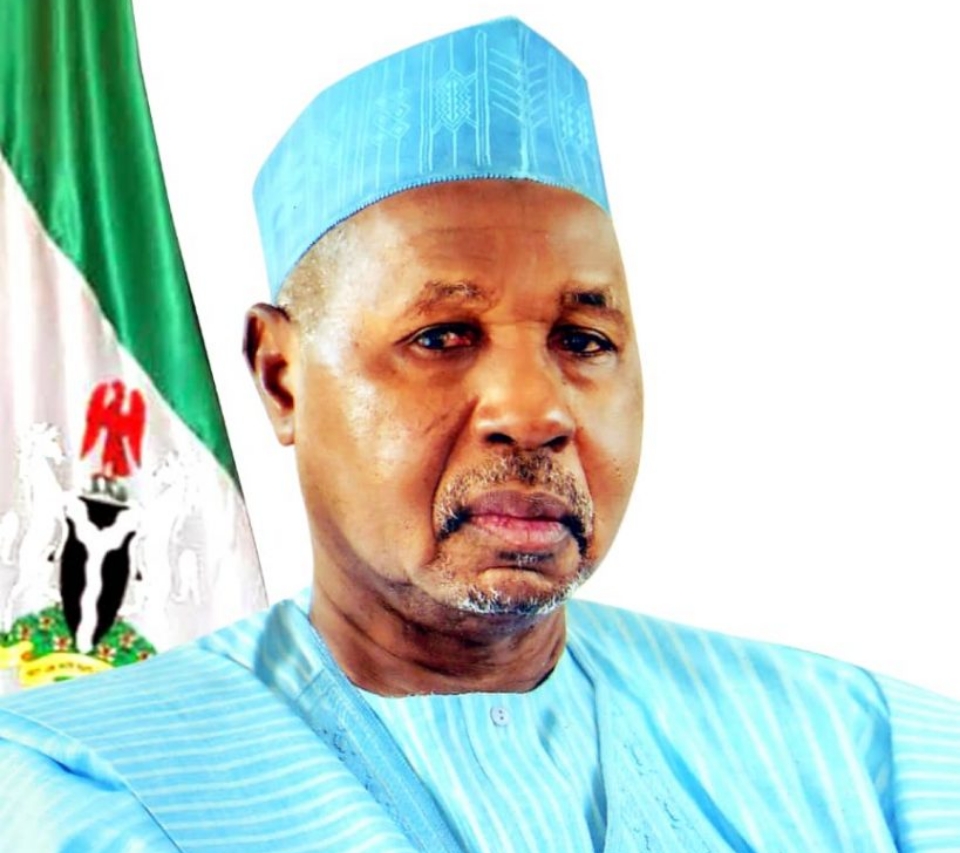
Kastina State Governor Aminu Bello Masari
Share

Following continue clashes between Herders and Farmers,Katsina State Governor, Aminu Masari, has said that his administration is considering banning open grazing in the state.

Masari who spoke during an interview on Channels Television’s Politics Today on Monday, which was monitored in Abuja, faulted the movement of herders from one part of the country to another.

He explained that before the state would create a law banning the open grazing of livestock, the government would make provisions to house the animals.

“We intend to have a law banning (cattle) roaming but before we do that, we would make provisions for where the animals would stay,” the governor said during the programme.

“Herdsmen should stay in one place. Roaming about should not be encouraged. In fact, for us, it is un-Islamic. Why do you have animals that you cannot feed and you have to go to other people’s land and farm and you say that is right? I don’t think it is right.”

He explained that as part of the efforts to kick start the ranching programme, the Federal Government disbursed N6.2 billion for the project.

Masari added, “We already have started. The Federal Government has given us N6.2 billion and as a state government, we are also investing N6.2 billion. The objective is to have Fulanis stay in one place.”

Masari’s comment comes four months after the Southern Governors Forum announced a ban on open grazing of cattle across states in the region.

The governors, after meeting in Asaba, the Delta State capital, asked President Buhari to address Nigerians on the state of the nation.

It also met months later and instructed states in the region to enact anti-open grazing laws in their domain to curb incessant clashes between herders and farmers.

Away from the farmers-herders crises, Governor Masari is also taking measures to combat crime in the North-West state which has had its fair share of banditry and kidnapping.

Last week, the governor introduced some measures – including banning sales of fuel in jerrycans  – to combat criminality, a move Masari said, is already yielding results.

“We are not totally shutting all the filling stations. In local governments, we said two filling stations will operate and in those filling stations, nobody will sell fuel in jerrycans and gallons,” he added.

“There may be some hardship but it is better now to take the hardship now in order to restore normalcy. We have a list of some of these filling stations that are dispensing fuel in jerrycans.”

Continue Reading
Click to comment

Leave a Reply

Your email address will not be published. Required fields are marked *

Agriculture

FG to Disburse Interest-Free Loans to 22,000 Farmers Under FarmerMoni Scheme

Published

on

President Bola Ahmed Tinubu
Share

The Federal Government has announced that at least 22,000 farmers across the country will benefit from interest-free loans under the FarmerMoni Dry and Wet Season Programme.

The initiative, implemented through the National Social Investment Programme Agency (NSIPA), was unveiled during the inauguration of the Renewed Hope GEEP 3.0 and the FarmerMoni Technical Working Group in Abuja.

Speaking at the event, the National Programme Manager of the Government Enterprise and Empowerment Programme (GEEP) under NSIPA, Mr. Hamza Baba, said the loans would be interest-free and collateral-free, aimed at boosting agricultural productivity nationwide.

According to Baba, the application portal has been opened for eligible farmers to register. Each beneficiary will receive up to N300,000, depending on the economic value of specific farming activities.

He stated that the programme targets vulnerable and low-income farmers at the grassroots.

To qualify, applicants must be Nigerian citizens aged 18 and above, actively engaged in farming, and either own or lease farmland.

They must also have a bank account, National Identification Number (NIN), municipal identification, and be registered members of a farming cooperative or association within their local government area.

Baba said the programme will cover all 774 local government areas, with an average of 28 farmers expected to benefit from each council in the current phase. He noted that state programme managers, enumerators, partner banks, FinTech recovery agents, agricultural development projects, and farmer associations would collaborate to ensure effective implementation across the 36 states and the Federal Capital Territory.

Minister of Humanitarian Affairs and Poverty Reduction, Dr. Bernard Doro, said the launch of Renewed Hope GEEP 3.0 and FarmerMoni underscores the administration’s commitment to strengthening agricultural development and expanding economic opportunities.

He stated that the programmes align with President Bola Tinubu’s Renewed Hope Agenda, which prioritises inclusion, resilience, and shared prosperity. According to him, FarmerMoni is designed to support farmers during both planting seasons, reduce seasonal risks, improve yields, and enhance national food security.

Doro added that investing in agriculture remains critical to poverty reduction and rural development, noting that the initiative seeks to empower farmers through sustainable financial support.

Continue Reading

Agriculture

Niger Donates 100,000 Hectares to Lagos for Food Production

Published

on

Niger State Governor Umar Bago
Share

Niger State Governor Umar Bago has donated 100,000 hectares of land to Lagos State for agricultural development to boost food production in Nigeria’s most populated but smallest state by landmass.

Bago announced the donation at the FirstBank Nigeria-sponsored Agric & Export Expo 2025 in Lagos on Thursday. He said Niger would serve as the production hub, while Lagos would handle consumption and logistics.

The governor disclosed that the proposed “Lagos Farm” project would be spread across several locations in Niger to cultivate yams, beans, and livestock for Lagos markets, while also targeting export opportunities in the Middle East.

“The annual Hajj requires about five million sheep, each costing 500 riyals, representing a 2.5 billion riyal market in one transaction,” Bago said, stressing the need for value addition across the livestock chain.

Minister of Agriculture and Food Security, Abubakar Kyari, represented by his Special Adviser, Ibrahim Alkali, outlined the Federal Government’s renewed push for agricultural growth, calling for improved infrastructure, certification, and a zero-reject policy for exports. He noted that while Nigeria earns about $700 million annually from raw cocoa exports, processing could multiply the value up to fivefold.

Kyari also highlighted the role of young people in driving innovation, pointing to $640 million in investment attracted by African youth-led agri-tech startups between 2020 and 2022.

Lagos State Governor, Babajide Sanwo-Olu, urged private sector collaboration to diversify the economy beyond oil, citing recent data from the Nigerian Export Promotion Council (NEPC) showing a 19.59 per cent rise in non-oil exports in the first half of 2025.

He said Lagos, as the country’s commercial hub, has a special responsibility in the transformation agenda, noting key projects supported by a $1.35 billion partnership with Afreximbank and Access Bank, as well as the launch of a N500 billion Offtake Guarantee Fund for food security.

Minister of Industry, Trade and Investment, Dr. Jumoke Oduwole, represented by NEPC CEO Mrs. Nonye Ayeni, reiterated government support for exporters through certification programmes, while FirstBank Managing Director, Olusegun Alebiosu, reaffirmed the bank’s commitment to financing agribusiness and non-oil exports.

The FirstBank 2025 Agric & Export Expo, themed “The Fundamentals of Building an Export-Driven Economy”, ended with calls for actionable strategies to transform Nigeria into an export-driven economy.


Continue Reading

Agriculture

Tragedy As 94 Die In Jigawa Petrol Tanker Explosion

Published

on

Tanker Explosion
Tanker Explosion
Share

A petrol tanker exploded at Majiya Town, Taura Local Government Area, Jigawa State In a devastating incident on Wednesday morning, leading to the loss of lives of over 90 people, with 50 others hospitalised.

The explosion occurred around 12:30 AM when the driver of the tanker, travelling from Kano to Nguru in Yobe State, lost control near Khadija University, Majiya.

According to the Police Public Relations Officer of Jigawa State Command, DSP Lawan Adam, the disaster was triggered by residents who had rushed to collect spilt petrol after the tanker overturned.

Although Channels Television obtained pictures of the badly burned victims, however, could not share them as they were gory.

“The residents were scooping fuel from the overturned tanker when the explosion occurred, sparking a massive inferno that killed 94 people on the spot,” DSP Adam explained.

“The incident left another 50 people severely injured, who were then rushed to Ringim and Hadejia General Hospitals for treatment.”

DSP Adam disclosed that the authorities have commenced a mass burial for the victims on Wednesday morning, with the entire community mourning the loss.

He described the scene as a “horrific tragedy,” emphasising the need for the public to understand the risks associated with scooping fuel from accident scenes.

Commissioner of Police in Jigawa State, AT Abdullahi, expressed his condolences to the families of the deceased and the entire people of Jigawa State.

“This is a heartbreaking moment for us all,” he said. “We share in the pain and sorrow of the families affected. Our thoughts and prayers go out to the bereaved.”

The commissioner called for increased public awareness regarding the dangers of petrol explosions and urged residents to report such incidents to relevant authorities.

“We appeal to the public to notify security agencies or relevant stakeholders when such accidents occur to prevent loss of life. Safety must be our priority,” he added.

Eyewitnesses described the scene as that of chaos and despair, with many struggling to rescue the injured amidst the flames.

A resident, Sani Umar who narrowly escaped the inferno, recounted, “It was terrifying. People were running in all directions, screaming for help. The fire spread so quickly that many couldn’t escape.”


source: CTV

Continue Reading