Connect with us

News

Kano Govt poised to provide stable water supply -Commissioner

Published

on

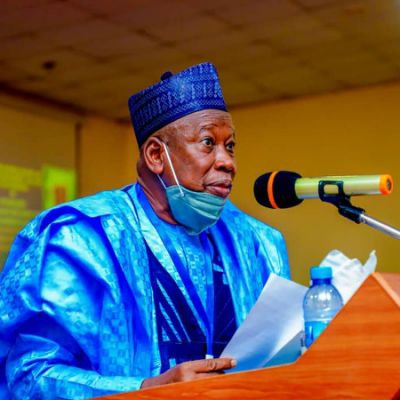
Kano State Governor Abdullahi Ganduje
Share

Kano State Government says it is working hard to ensure that residence get stable water supply for daily use and boost economic activities.

Kano Commissioner for Water Resources, Mr Sadiq Wali said this in Kano on Friday in an interview with the News Agency of Nigeria (NAN).

He spoke to NAN on the sideline of the official signing of power purchase agreement between the Niger Delta Power Holding Company (NDPHC) and Kano State Government.

Wali said that one of the problem facing the state which directly affects economic growth and other related issues is inadequate supply of portable water.

He said that the signing of the agreement with NDPHC was to boost water supply to the people of Kano State for improved health and economic activities.

“We found ourselves using the generators due to different factors, some transmission and some generation.

“The essence of the agreement is to guarantee a stable amount of power daily to the water plants as this will reduce the usage of diesel and cost of maintaining generators.

”We have been able to negotiate and reduce tariff in the agreement as water is more of a social service,” he said.

Wali said that based on the tariff the Kano government negotiated with NDPHC, the state has a significant drop in the cost of electricity per kilo watts.

He said that the cost of the drop in electricity tariff would go a long way to reduce the overhead expenses of Kano Water Board.

According to him, the revenue generated by the water plants will be rededicated to other infrastructure that will bring more water to the residence of Kano. (NAN)

Continue Reading
Click to comment

Leave a Reply

Your email address will not be published. Required fields are marked *

News

Senate Moves to Reshape Legal Profession, Proposes Two-Year Mandatory Pupillage for New Lawyers

Published

on

Senate Logo
Share

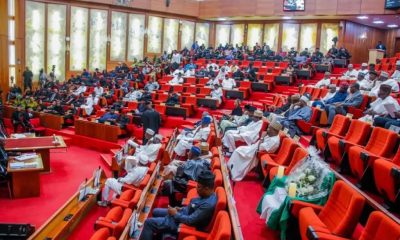
The Nigerian Senate on Wednesday considered sweeping reforms to the legal profession, passing into second reading a bill seeking to amend the Legal Practitioners Act 2004. Central to the proposal is a mandatory two-year pupillage programme for newly called lawyers, designed to align training and regulation with global best practices.

Debating the bill at plenary, lawmakers agreed that the legal system must evolve in response to technological advancement, complex commercial transactions, and growing demands for professional accountability. The bill was sponsored and led by the Leader of the Senate, Senator Opeyemi Bamidele.

According to Bamidele, the current law — nearly six decades old in design — no longer reflects contemporary realities of legal practice. He explained that the reform seeks to modernise oversight structures, strengthen discipline mechanisms, and enhance the quality of service within the profession.

A major highlight of the bill is the restructuring of the Body of Benchers, which, for the first time, will be established as a corporate legal entity with financial autonomy, strengthened secretariat, and defined rule-making authority. The reforms also introduce a clearer institutional framework for committees, oversight, and policy enforcement.

The Senate Leader stressed that the initiative would deliver “a coordinated and well-modernised regulatory framework that addresses admission to the bar, discipline, and professional standards.”

The bill also seeks to fast-track disciplinary processes by reorganising the Legal Practitioners Disciplinary Committee (LPDC). Under the proposed structure, multiple panels would sit across the country while wielding broader sanctioning powers, including suspension, disbarment, restitution, compensation, cost awards, and formal apologies. For transparency, disciplinary outcomes will be published, while affected practitioners will retain the right of appeal to the Supreme Court.

Additionally, the proposal creates a new Ethics, Adherence and Enforcement Committee empowered to inspect law offices, demand records, investigate public complaints, and prosecute cases before the LPDC.

To further boost competence, two years of compulsory pupillage and ongoing professional development will now be requirements for lawyers before full practice certification and licence renewal.

The bill also criminalises unauthorised legal practice, clearly defining the practice of law to protect the public from impersonators and unqualified service providers. Other provisions address the regulation of foreign lawyers, reform of the Senior Advocate of Nigeria rank, and improved safeguards for clients and public trust.

Speaking in support, Chief Whip of the Senate, Senator Tahir Monguno, recalled his experience entering practice over 35 years ago, noting that the realities of the digital age justify reform.

“This bill is very apt and germane,” Monguno said. “We are in the digital age, and our legal profession must reflect these realities.”

The Senate subsequently referred the bill to its Committee on Judiciary, Human Rights and Legal Matters for public hearing and a report within two weeks.


Continue Reading

News

Tinubu Approves Nigerian Team for US–Nigeria Joint Security Working Group

Published

on

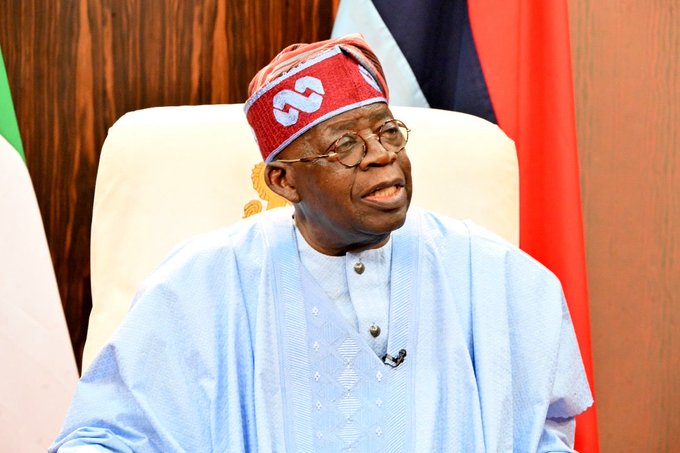
President Bola Ahmed Tinubu
Share

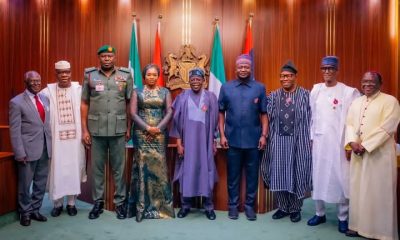
President Bola Tinubu has approved the Nigerian contingent of the US–Nigeria Joint Working Group, a new collaborative platform aimed at strengthening security cooperation between both countries.

The decision follows agreements reached during a recent high-level visit to Washington, D.C., led by the National Security Adviser (NSA), Nuhu Ribadu. Ribadu will head the Nigerian side of the Working Group, supported by senior officials drawn from key security and government institutions.

The Nigerian members include Minister of Foreign Affairs, Amb. Yusuf Maitama Tuggar; Minister of Defence, Mohammed Badaru Abubakar; Minister of Interior, Hon. Olubunmi Tunji-Ojo; and the Minister of Humanitarian Affairs, Dr. Bernard M. Doro.

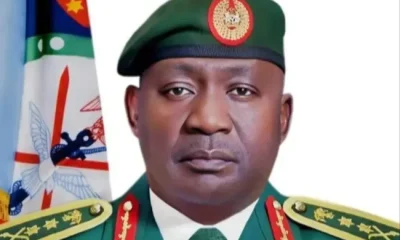
Also on the team are the Chief of Defence Staff, Gen. Olufemi Oluyede; Director-General of the National Intelligence Agency, Amb. Mohammed Mohammed; and the Inspector General of Police, Kayode Egbetokun.

Ms. Idayat Hassan of the Office of the National Security Adviser and Mr. Paul Alabi of the Nigerian Embassy in the United States will serve as the secretariat.

President Tinubu urged the members to work closely with their US counterparts to ensure the effective implementation of all agreements reached across various sectors.

The announcement was made on Wednesday in a statement by Bayo Onanuga, Special Adviser to the President on Information and Strategy.

Continue Reading

News

Obasanjo Returns $20,000 Allegedly Given for Fayose’s Birthday Logistics

Published

on

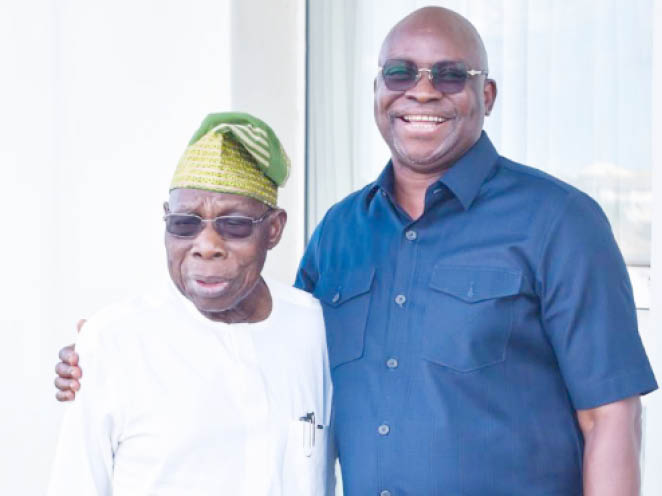
EX President Olusegun Obasanjo and Former Ekiti State, Ayo Fayose
Share

Former President Olusegun Obasanjo has returned the $20,000 allegedly provided to him by former Ekiti State Governor, Ayo Fayose, ahead of Fayose’s 65th birthday celebration, following a fresh disagreement between the two political figures.

Fayose confirmed the development during an interview with AF24 News, where he narrated the sequence of events surrounding the controversy. According to him, preparations for his birthday prompted him to reach out to individuals he had previously fallen out with politically. He noted that this move was aimed at “mending fences,” but stressed that his call to Obasanjo should not be misconstrued as an apology.

The former governor recounted that Obasanjo visited his Lagos residence days before the celebration and expressed willingness to attend the event, despite having a conflicting engagement in Rwanda. Fayose said that during the visit, Obasanjo requested financial support for his travel logistics, prompting him to provide $20,000.

“I changed $20,000 and gave it to him. How can you accept somebody’s money and come and be spiting that person?” Fayose said, expressing disappointment over Obasanjo’s subsequent public remarks.

The matter escalated after Obasanjo stated that he had not opened the money and would return it, comments that Fayose considered disrespectful. In response, Fayose said he sent the former president a strongly worded text message demanding clarity and expressing his displeasure.

Following the exchange, Obasanjo reportedly returned the money.

“I have written to him, and he has returned my $20,000,” Fayose confirmed during the interview. When asked how he felt about the return of the funds, he replied: “I am very happy. I will not allow such a man to carry my money away.”

The clash adds another layer to the long-standing political tension between both men, who have had a history of public disagreements spanning several years.

Continue Reading