Connect with us

Defence and Security

Insecurity: Senate mulls life imprisonment for kidnappers

Published

on

Senate-President-Lawan
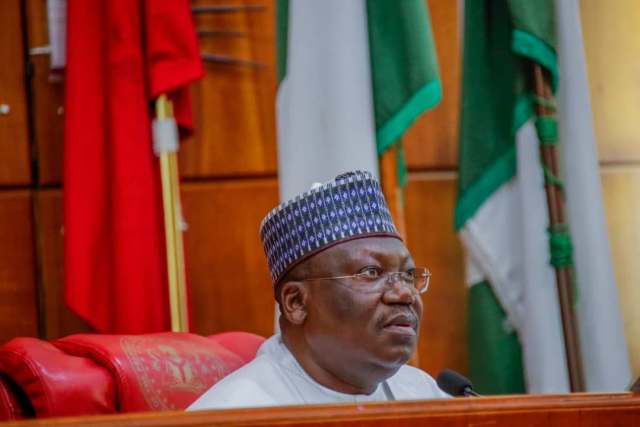
Senate President, Ahmad Lawan
Share

…proposes 30 years jail term for ransom collection  


A bill proposing life imprisonment for the offence of kidnapping or any form of abduction, wrongful restraint and confinement on Tuesday passed second reading in the Senate.

The bill sponsored by Senator Ibikunle Amosun (APC, Ogun Central) seeks to, among others, introduce stiffer punishments and punitive measures to combat and prevent kidnapping in Nigeria.

Leading debate on the bill, Senator Amosun observed that kidnapping is a major security challenge confronting Nigeria in recent times.

According to the lawmaker, the light punishment for the offence has continued to make it grow and assume horrendous dimensions with a negative impact on the economy.

“The impact of kidnapping on both economic and daily life has been devastating.

“For many Nigerians, kidnapping is far more devastating than the carnage of Boko Haram in the northeast, or the carnage in the middle belt over land, pasture and water use between farmers and herders.

“In the rich oil south-south, kidnapping is often seem as a manifestation of the insurrection over how oil revenue is distributed.

“Overtime, the pool of potential victims has shockingly been expanded. No, most victims are often poor villagers, sometimes kidnapped indiscriminately, a departure from the targeted kidnapping of wealthy people. They struggle to pay ransoms because of their relative poverty; and this has resulted into many victims being killed in the process”, he said.

Amosun lamented that, “Nigeria has one of the rates of kidnaps for ransom of both locals and foreigners in all of Africa.”

He added, “while the insurgents in the North East now thrive on the proceeds of kidnappings, criminal

elements in the South East and South West are also having a field day. In fact, kidnapping has now become a big and lucrative business.”

Citing recent statistics released by Neil Young Associates International – a specialist crisis prevention and response consultancy group – the lawmaker noted that Nigeria accounted for 26 percent of kidnapping and ransom incidents globally.

Similarly, Amosun said that a Vanguard report published online on the July 13, 2021, states that an average of 13 persons were abducted daily in Nigeria in the first half of 2021, bringing to 2,371 the number of reported persons kidnapped in the country within the first six months of the year.

He bemoaned the worrisome development, warning that the trend has the potential of negatively affecting Nigeria’s Foreign Direct Investment.

The lawmaker stated that the bill, therefore, seeks to introduce stiffer punishment for the offence of abduction, wrongful restraint and confinement for ransom.

“This bill also provides more punitive measures

for ancillary crimes flowing from the commission of the crime of abduction, like death or grievous harm.

“To achieve the deterrent effect, life imprisonments is proposed for the offence of kidnapping, particularly where death results from the act.

“The law is made stricter by ensuring that recipients of any proceeds of the act of kidnapping are heavily sanctioned with term of imprisonment of up to 30 years”, Amosun said.

The bill, according to him, also proposes to give the Inspector General of Police wider powers to enable adequate policing of the crime of kidnapping.

The Senate President, Ahmad Lawan, referred the bill after it was exhaustively debated, to the Committee on Judiciary, Human Rights and Legal Matters.

The Committee which is chaired by Senator Michael Opeyemi Bamidele was given four weeks to report back to the upper chamber.

Meanwhile, the Senate President on Tuesday referred President Buhari’s request to approve $4.054bn, €710m external borrowing, and $125m

grant component captured for projects under the 2018 – 2021 borrowing plan to the Committee on Local and Foreign Debts.

The Committee chaired by Senator Clifford Ordia was given one week to report back to the Senate.

Buhari in a letter dated August 24, 2021, explained that the projects listed in the 2018-2021 Federal Government Borrowing Plan are to be financed through sovereign loans from the World Bank, French Development Agency (AFD), China-Exim Bank, International Fund for Agricultural Development (IFAD), Credit Suisse Group and Standard Chatered/China Export and Credit (SINOSURE) in the total sum of USD4,054,476,863.00; Euro 710,000,000.00 and Grant Component of USD125,000,000.00.

He added that the amount would be used to fund Federal and States Government projects cut across key sectors such as Infrastructure, Health, Agriculture and Food Security, Energy, Education and Human Capital Development and COVID-19 Response efforts.

Continue Reading
Click to comment

Leave a Reply

Your email address will not be published. Required fields are marked *

Defence and Security

Troops Rescue Wife of Former Defence Spokesman from Bandits in Katsina

Published

on

Share


The Nigerian military has successfully rescued Mrs. Amina Abubakar, wife of the late Major General Rabe Abubakar, a former Director of Defence Information, following weeks of captivity in the hands of bandits.

The rescue was carried out by troops of Operation FASAN YAMMA in collaboration with the Nigerian Air Force during intensified search-and-rescue operations aimed at locating and securing her release.

According to a statement issued on Monday by the Director of Defence Information, Major General Samaila Uba, troops made contact with the kidnappers at Tunga Village after sustained offensive operations and mounting pressure on criminal elements operating within the area.

The military disclosed that during the encounter, the fleeing bandits shot Mrs. Abubakar before abandoning her as troops closed in on their location. She was subsequently recovered and evacuated from the area.

Mrs. Abubakar was immediately taken to a military hospital, where she is currently receiving medical treatment. The Defence Headquarters said she is responding positively to treatment and remains under close medical supervision.

The Armed Forces of Nigeria assured the public of its commitment to her full recovery and stated that all necessary support is being provided to her family during this difficult period.

The military further revealed that operations are ongoing to track down and neutralise the bandits responsible for the abduction. Troops, it said, will continue to intensify efforts to eliminate terrorist and criminal threats not only in Katsina State but across the country.
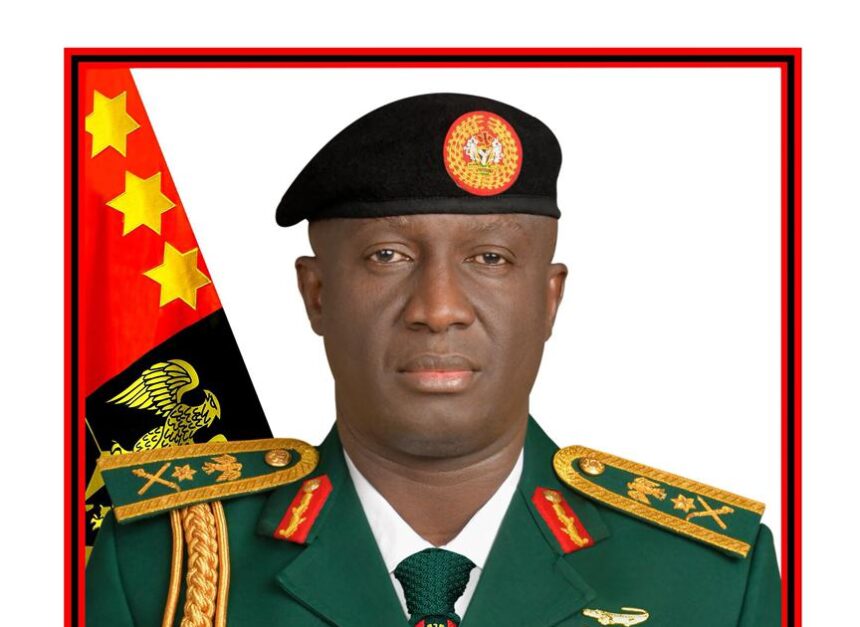
Major General Samaila Uba reiterated the Armed Forces’ resolve to restore peace and security in affected communities and ensure that those responsible for acts of banditry and terrorism are brought to justice.

Continue Reading

Defence and Security

Tinubu Commends Troops, Reaffirms Commitment to Defeating Terrorism

Published

on

President Bola Ahmed Tinubu
Share


President Bola Ahmed Tinubu has praised Nigerian troops and other security personnel for their dedication and sacrifices in the ongoing fight against terrorism, banditry, kidnapping, and other violent crimes across the country.

In a message posted on his official X account on Monday, the President described members of the Armed Forces and security agencies as the nation’s shield against criminal elements threatening peace, safety, and national unity.

According to Tinubu, security operatives continue to make immense sacrifices in difficult and dangerous environments to ensure that Nigerians can go about their daily activities without fear.

“You stand as a shield between innocent citizens and those who seek to destroy the peace, safety, and dignity of our communities,” the President stated.

He noted that personnel of the military and other security agencies are deployed across forests, highways, airspace, waterways, and remote operational areas, carrying the responsibility of protecting millions of citizens.

“In the forests, on the roads, at forward operating bases, in the air, creeks, and across difficult terrains, you carry the burden of national protection so that millions of Nigerians can sleep, work, worship, farm, trade, and raise their children in hope,” he said.

The President acknowledged the challenges faced by security personnel, noting that the battle against terrorism and insecurity has come with enormous pressure, hardship, and sacrifice.

“This fight has not been easy. It has come with pain, pressure, and sacrifice. But your courage has remained firm. Your service is acknowledged. Your sacrifice is honoured. Your country does not take you for granted,” he added.

Tinubu extended his appreciation to members of the Armed Forces, the Nigeria Police Force, the Department of State Services (DSS), the Nigeria Security and Civil Defence Corps (NSCDC), intelligence agencies, local security outfits, and other stakeholders contributing to national security efforts.

The President also paid tribute to the families of security personnel, recognizing the emotional burden they bear while their loved ones serve the nation in various operational theatres.

“I also acknowledge the families behind the uniform. Many of you have endured long absences, anxious nights, and the emotional cost of duty. Nigeria remembers that sacrifice, too,” he said.

He further honoured officers and men who lost their lives while protecting the country, describing their sacrifice as crucial to preserving peace and safeguarding communities.

Tinubu called on Nigerians to support security agencies by providing credible and timely information that could assist in preventing criminal activities and tracking down perpetrators.

“The fight against terror is not only a military operation. It is a national duty. Citizens must support our security forces by providing timely, useful information. When you see something, say something. When you know something, report it,” the President urged.

Reaffirming his administration’s commitment to ending insecurity, Tinubu stressed that Nigeria would not bow to terrorists, bandits, kidnappers, or violent extremists.

“Nigeria will not surrender to fear. We will not allow terrorists, bandits, kidnappers, or violent extremists to define who we are as a people. Their violence is not our identity. Their hatred does not represent Nigerians of any faith, creed, or community,” he declared.

The President concluded by expressing gratitude to frontline security personnel for their courage, vigilance, and commitment to national service, while praying for their safety and success in ongoing operations.

Tinubu’s remarks come amid renewed security concerns in several parts of the country, including incidents of terrorism, banditry, kidnapping, and communal violence. Recent months have witnessed a number of mass abductions, including the kidnapping of schoolchildren and teachers in Oyo and Borno States, attacks on rural communities by armed groups, and the abduction of travellers along major highways.

Despite these challenges, the Federal Government has continued to assure Nigerians that efforts are being intensified to restore peace and strengthen security across the country.

Continue Reading

Defence and Security

State Police Near Reality as Senate Moves to Fast-Track Constitutional Amendment This Week

Published

on

Senate Leader, Senator Michael Opeyemi Bamidele
Share


ABUJA, – In what could become one of the most significant security reforms since Nigeria’s return to democratic rule in 1999, the Senate has concluded plans to consider and fast-track constitutional amendments that will pave the way for the establishment of State Police across the federation.

The Leader of the Senate, Senator Opeyemi Bamidele, disclosed on Monday that the National Assembly is set to isolate the State Police proposal from other constitutional amendment bills and expedite its passage due to the urgent security challenges confronting the country.

According to Bamidele, there is now an unprecedented level of consensus among critical stakeholders, including President Bola Ahmed Tinubu, state governors, federal lawmakers, security agencies and state legislatures, on the need to decentralise policing and strengthen internal security architecture.

The Senate Leader stated that the legislative week commencing on Tuesday would be dedicated largely to deliberations on the proposed amendment, describing the creation of State Police as a national necessity whose time has come.

Security Challenges Driving Reform

Nigeria has continued to grapple with multiple security threats, including terrorism, banditry, kidnapping, communal violence, farmer-herder conflicts and organised crime across various regions.

Security experts have long argued that the centrally controlled Nigeria Police Force is overstretched and lacks the local intelligence network required to effectively respond to emerging threats in communities nationwide.

The current constitutional arrangement, specifically Section 214(1) of the 1999 Constitution, provides for a single police force for the federation, making Nigeria one of the few federal systems in the world operating a strictly centralized policing structure.

Advocates of State Police believe that decentralised policing will improve intelligence gathering, enhance rapid response capabilities and allow states to tackle unique security challenges within their jurisdictions.

National Assembly Building Consensus

Bamidele revealed that extensive consultations had taken place between the National Assembly and key stakeholders to address concerns surrounding the proposed security reform.

According to him, the Chairman of the Senate Committee on the Review of the 1999 Constitution, Senator Barau Jibrin, and the Chairman of the House of Representatives Committee on Constitutional Review, Deputy Speaker Benjamin Kalu, have held a series of strategic meetings with relevant government institutions.

The consultations involved the Office of the Attorney-General of the Federation, the Office of the Chief of Staff to the President, the Nigeria Police Force leadership and other security stakeholders.

He said the engagements had helped resolve critical issues surrounding the proposed framework and created the momentum necessary for immediate legislative action.

Fast-Track Passage Planned

Bamidele explained that lawmakers have resolved to separate the State Police proposal from other constitutional amendment bills to prevent delays in its consideration.

Once passed by the National Assembly, the amendment will be transmitted to the 36 State Houses of Assembly, where approval by at least 24 state legislatures will be required before it can be presented to President Tinubu for assent.

The Senate Leader expressed confidence that the proposal would receive broad support at the state level, noting that many governors and state lawmakers have consistently advocated for constitutional backing for state-controlled policing structures.

Presidency Signals Strong Support

The latest development comes days after the Chief of Staff to the President, Femi Gbajabiamila, announced that consultations on the constitutional framework for State Police were nearing completion.

Gbajabiamila had disclosed that President Tinubu would soon receive a comprehensive report detailing the proposed structure, operational framework and legal safeguards for the establishment of State Police.

The Presidency’s endorsement is seen as a major boost for the reform, given concerns in the past over possible political abuse of state-controlled police forces by governors.

A Defining Moment for Nigeria’s Security Architecture

If successfully enacted, the State Police amendment could fundamentally reshape Nigeria’s security framework by creating a multi-layered policing system involving both federal and state law enforcement agencies.

Supporters argue that such a structure would strengthen community-based policing, improve intelligence gathering and reduce response times during security emergencies.

With bipartisan support emerging across political and regional lines, this week’s deliberations in the National Assembly are expected to mark a decisive step in Nigeria’s long-running debate over policing reforms and the decentralisation of internal security operations.

For many observers, the outcome could determine the future direction of Nigeria’s fight against insecurity and its broader quest for a more effective and responsive security system.

Continue Reading