Connect with us

Defence and Security

Insecurity: Experts call for community policing

Published

on

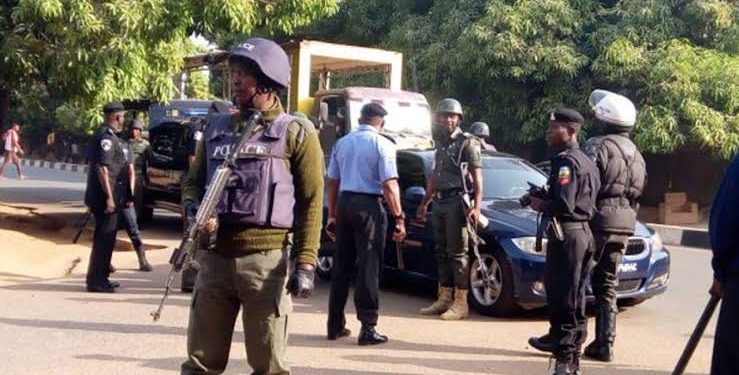
Policemen in operation
Share


Security experts at a virtual meeting organised by the Nigeria Diaspora Network (NDN), United Kingdom (UK) chapter, have said that a well coordinated community policing system would address the present security challenge in Nigeria.

Some of the participants, who spoke at the meeting monitored by the News Agency of Nigeria (NAN) in Abuja, stressed that all hands must be on deck to check security problems.

The title of the meeting was: “Security Challenges and Community Policing.”

A security expert in Global Community Policing, Dr Aminu Audu, was optimistic that if adopted in line with international best practice, community policing would work in the country.

Audu, who authored a publication titled: ”Police Corruption and Community Policing in Nigeria: A Sociological Case Study,” said  the issue of insecurity was not a new thing in the country.

“What we are seeing today is a product of series of activities that have transpired in the past. So it is a build up,” he said.

He said though there is insecurity in Nigeria, the way forward is community policing.

“According to Freeman in 1992, community policing is about policy and strategy to achieve more effective crime control, reduce fear of crime, improve quality of life, improve police services and police legitimacy through proactive reliance on community resources that seeks to change crime causing conditions,” he said.

He stated further that community policing would ensure the need for greater accountability of police, greater public share in decision making and greater concern for civil rights and liberty.

Audu said it was disheartening that when talking about community policing, “what comes to our minds is about forming vigilante group and arming them with weapons for them to begin to delve into prejudicial killings and manhandling of crime suspects.

“No, that is not the way. Community policing is about the police, the community coming together to address issues, most especially crime causing conditions.

“Now we are talking about insecurity, what happens

to poverty? How has poverty being addressed?

“Who are the people sponsoring those who carry guns?

“For example, I read sometimes ago that about 400 people have been arrested on allegation that they are sponsoring Boko Haram, I don’t know what has happened to them?”

The expert, who acknowledged the influence of foreign factor in the security challenge, said community policing would not be a success if the problem of poverty and other factors were not addressed.

He also said over the years, community policing had not worked effectively in the country because there has been a wide communication gap between the community and the security providers.

He urged people to desist from politicising the initiative.

“Do we really practice community policing accurately? So the problem is that it has been a guess work affairs,” he said.

Audu, however, commended President Muhammadu Buhari for his support for community policing.

“I really commend President Buhari for taking the step to implement community policing with a funding investment to the tune of about 26 million pounce.

“But how many governors or local government chairmen have taken it upon themselves to implement these policies according to specification?” he asked.

The National Economic Council (NEC) in a virtual meeting chaired by Vice-President Yemi Osinbajo had, on Aug. 20, 2020, approved the sum of N13.3 billion for the take-off of community policing initiative across the country.

“I am happy that the Federal Government is implementing based on empirical research. Now at the moment, they are undergoing process,” Audu said.

A Preventive Terrorism Consultant, Mr Temitope Olodo, said all the stakeholders should be ready to take it seriously if community policing would

work.

He said the system was the easiest way of policing but corruption had been the bane.

He said people had to own community policing to work.

“Community policing is all about people telling the authority what the security needs are and channelling the effort and resources to those areas to tackle them,” he added.

He also said to solve the problem, the country needed to look at the past and how we got to this present position.

According to Olodo, in Nigeria, we are not policing by consent, we are policing by force.

“If we police by consent, a lot of things that are happening in Nigeria will not be happening. I think that is where we have got it wrong,” he said.

Olodo, who is the president, African Security Forum and a retired Metropolitan police officer in the UK, enjoined the Federal Government to introduce a system of Key Performance Indicator (KPI) to measure the performance of all security officers

in the country.

“We need practical changes that we can turn around and say, this is the change that we want.

“I was a formal civil servant. If you ask me today, I have never seen the job description of IGP (inspector-general of police) and I am not making it personal.

“I don’t know what kind of KPI he is being measured against but I can tell you that we know the KPI of commissioner of police for the Metropolitan Police, we know the one for New York, Australia, etc.

“We know how police are being measured.

I was once a constable and I have KPI.

“When I was leaving the Metropolitan Police on secondment, I was measured on KPI.

“They brought out my KPI and that was the basis upon which if I am entitled to other benefits, in terms of my salary going up.

“But I don’t know what KPIs are for the Nigerian

police. If there is no KPI, what do you measure them against?” he asked.

Olodo explained that if there is no KPI, security officers’ performance indicators would not be proportionate to their work done.

A Cyber Security Professional, Mr Deji Adebayo, who is one of the NDN coordinators in the UK, said the meeting was organise as part of the effort by Nigerians living abroad to see how the security challenge could be solved towards creating a better and secured society for the country.

Other members of the NDN at the meeting include Dr Aminu Ahmadu, a lecturer and academic consultant within the UK universities; Mr Offor Okpanachi, an AML professional, among others.

NDN is an association of Nigerian professionals, who have come together to see how Nigeria can be moved forward.

NAN

Continue Reading
Click to comment

Leave a Reply

Your email address will not be published. Required fields are marked *

Defence and Security

TINUBU SWEARS IN GEN. CHRISTOPHER MUSA AS DEFENCE MINISTER

Published

on

President Bola Ahmed Tinubu, New Minister of Defence, General Christopher Musa and others dignitaries at the Oath taking ceremony in Abuja
Share

President Asiwaju Bola Ahmed Tinubu on Thursday swore in retired General Christopher Gwabin Musa as Nigeria’s Minister of Defence at the Presidential Villa, Abuja.

Musa’s appointment follows the resignation of former Defence Minister Mohammed Badaru Abubakar on December 1. His nomination was sent to the Senate on Tuesday and swiftly confirmed.

Born in Sokoto in 1967, Musa was commissioned into the Nigerian Army in 1991. He served as Chief of Defence Staff from 2023 until his retirement in October 2025, during which he promoted stronger cooperation among the armed forces.

With his swearing-in, Musa is expected to immediately take charge as the Tinubu administration intensifies security reforms and seeks to consolidate recent gains toward lasting peace nationwide.

Dignitaries at the ceremony included Senate President Godswill Akpabio, Senate Leader Opeyemi Bamidele, Information Minister Mohammed Idris, National Security Adviser Nuhu Ribadu, and senior military chiefs. Also present were Musa’s wife, Lilian Oghogho Musa; Bishop Matthew Hassan Kukah; and retired Justice Kumai Bayang Akaahs.

Continue Reading

Defence and Security

Senate Confirms Former Defence Chief Christopher Musa as Minister

Published

on

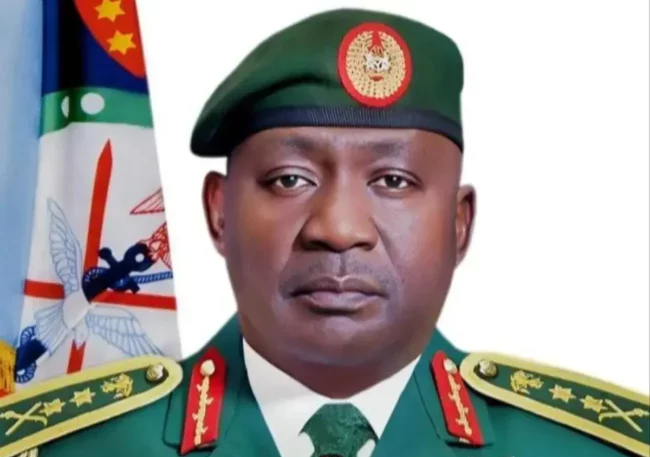
General Christopher Musa Rtd
Share

The Senate has confirmed General Christopher Musa (rtd), the immediate past Chief of Defence Staff, as Nigeria’s new Minister of Defence.

Musa’s nomination was approved on Wednesday after a screening session in which senators examined his military credentials and asked questions on national security challenges.

Addressing the lawmakers, Musa pledged commitment to diligent service and emphasised collaboration in tackling insecurity.

“The challenges we are facing are Nigerian challenges, not just for the armed forces or security agencies,” he said. “We will win if we work together as a team.”

He highlighted gaps in security operations and called for a unified national database to support intelligence gathering. Musa also urged stronger roles for local governments and the judicial system.

Rejecting ransom payments to kidnappers and terrorists, he warned that negotiation only emboldens criminals. “They use the money to buy more arms,” he noted.

Responding to claims of religious targeting in violence across the country, Musa said terrorism affects all citizens. “We must stop the killings. Nigerians should not be killed. We must unite,” he stated.

Senate President Godswill Akpabio praised Musa’s performance during the screening, describing him as the most thorough nominee since 1999. He encouraged the new minister to immediately visit defence industry facilities.

Musa’s nomination was subsequently approved through a unanimous voice vote.

Continue Reading

Defence and Security

Senate Backs Death Penalty for Kidnapping, Moves to Redefine Crime as Terrorism

Published

on

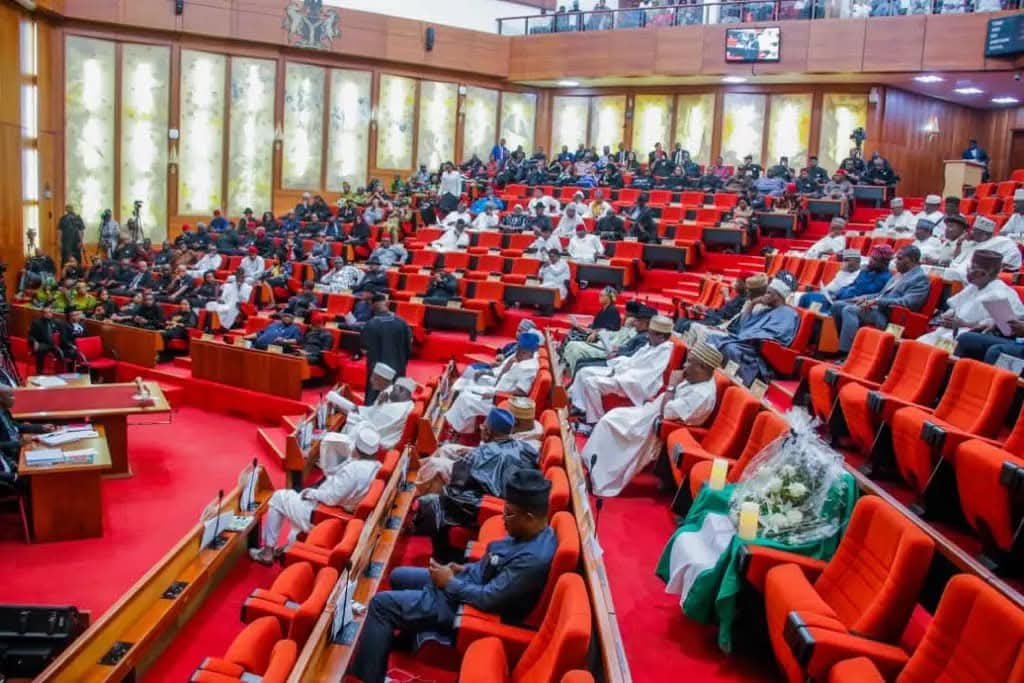
Senate in Session
Senate in Session
Share

In a decisive move to stem rising insecurity, the Senate has approved key amendments to the 2022 Terrorism (Prevention and Prohibition) Act, prescribing the death penalty for kidnappers and anyone who aids kidnapping operations.

During Wednesday’s plenary, senators across political lines overwhelmingly supported the bill sponsored by the Leader of the Senate, Senator Opeyemi Bamidele. The amendment seeks to classify kidnapping, hostage-taking, and related offences as acts of terrorism, granting law enforcement broader powers to dismantle criminal networks.

The bill has now been referred to the Committees on Judiciary, Human Rights and Legal Matters, National Security and Intelligence, and Interior for further scrutiny, with instructions to report back within two weeks.

Presenting the proposal, Bamidele said kidnapping had evolved from sporadic activity into organised violence affecting all regions of the country. He argued that the severity and scale of the crime now bear the hallmarks of terrorism, warranting the strongest punishment.

> “Kidnapping has instilled fear in communities, disrupted economic activities, ruined families, and claimed countless innocent lives,” he declared. “Our legal framework must reflect the magnitude of this threat.”

The amendment prescribes capital punishment not only for perpetrators but also for financiers, informants, logistics suppliers, harbourers, and anyone who knowingly supports kidnapping operations. Attempt, conspiracy, or incitement would attract the same penalty.

The Senate leader explained that reclassification under terrorism laws would enable intelligence-led operations, asset tracing, inter-agency cooperation, and disruption of funding channels.

Backing the proposal, Senator Adams Oshiomhole dismissed existing deradicalisation programmes as ineffective, arguing that some offenders return to crime after release.

> “Even Scriptures acknowledge that those who kill cannot be allowed to continue living,” Oshiomhole said. “If convicted for terrorism, the penalty should be death.”

Senator Orji Uzor Kalu lamented the suffering inflicted on Nigerians, citing cases of widows, traumatised families and victims of sexual assault.

> “Everyone involved in this criminal enterprise must face consequences,” he maintained.

Minority Leader Senator Abba Moro described kidnapping as a business venture for criminals and endorsed the bill as a necessary measure to deter offenders.

Also speaking, Senator Victor Umeh condemned the killing of victims after ransom payment and called for sanctions against facilitators, including complicit financial institutions.

The Senate President, Godswill Akpabio, welcomed the bipartisan support and mandated the lead committee to expedite consultations and present recommendations at a public hearing.

The proposed amendment marks one of the strongest legislative responses to Nigeria’s worsening kidnapping crisis, signalling a toughened stance on national security and criminal justice.

Continue Reading