Connect with us

News

INEC Begins Upload of FCT Area Council Poll Results on IReV

Published

on

INEC
INEC Logo
Share

The Independent National Electoral Commission (INEC) has commenced the upload of results from the Federal Capital Territory (FCT) area council elections onto its Results Viewing Portal (IReV).

The elections were held on Saturday, February 21, across the six area councils in the nation’s capital.

Checks on the IReV portal showed that polling unit results for chairmanship and councillorship positions had started appearing from various area councils. As of 6:28:05 pm, 809 out of 1,401 results from the Abuja Municipal Area Council (AMAC), representing 57.74 percent, had been uploaded.

Results from some polling units in by-elections conducted in Kano and Rivers states were also observed on the portal.
The FCT area council elections are widely seen as a test run for INEC ahead of the 2027 general election.

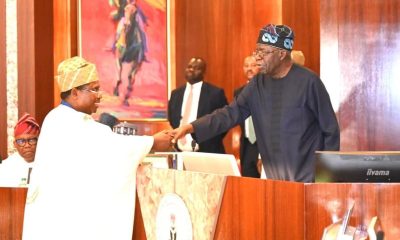
The development comes days after President Bola Tinubu signed the Electoral Act 2026 (Amendment) Bill into law.

The amendment process generated controversy, particularly over the provision for real-time electronic transmission of election results.

While the House of Representatives, in December 2025, adopted a proposal mandating real-time transmission of results to IReV, the Senate initially rejected the provision when it passed its version of the bill in early February 2026.

The decision sparked protests and calls for a reversal.

The Senate later rescinded its position and approved electronic transmission of election results, with a clause providing for manual collation as a fallback in the event of technological failure.

Following the differences between both chambers, a conference committee was constituted to harmonise the bill. The committee subsequently adopted the Senate’s version, allowing electronic transmission of results alongside manual backup procedures.

News

DSS to Arraign El-Rufai Feb 25 Over Alleged Cybercrime, Security Breach

Published

on

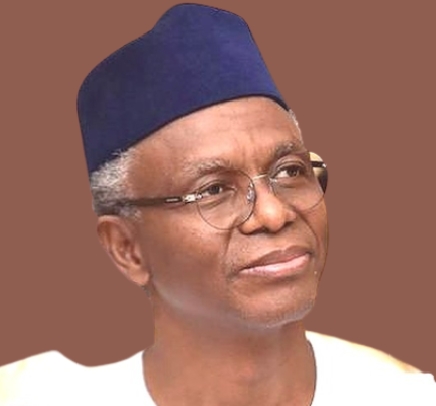
Former Kaduna State Governor, Nasir El Rufai
Share

The Department of State Services (DSS) has scheduled February 25 for the arraignment of Nasir El-Rufai, former governor of Kaduna State, over alleged cybercrime and breach of national security.

El-Rufai is to be arraigned before Justice Joyce Abdulmalik of the Federal High Court in Abuja.

The charges stem from allegations that the former governor unlawfully intercepted a telephone conversation involving Nuhu Ribadu, the National Security Adviser (NSA).

On February 18, the DSS briefly took El-Rufai into custody shortly after he had spent two nights with the Economic and Financial Crimes Commission (EFCC).

During an interview on Prime Time, an Arise Television programme aired last Saturday, El-Rufai alleged that “someone wiretapped” Ribadu’s phone, enabling him to listen to the NSA directing security operatives to arrest him.

On Monday, the DSS filed a three-count charge against the former governor, accusing him of intercepting the NSA’s telephone conversation in violation of the Cybercrimes (Prohibition, Prevention, etc.) Amendment Act, 2024, and the Nigerian Communications Act, 2003.

Meanwhile, El-Rufai remains in the custody of the Independent Corrupt Practices and Other Related Offences Commission (ICPC) over separate allegations of corruption linked to his tenure as Kaduna State governor.

The matter is expected to come up for arraignment on February 25.

Continue Reading

News

33 Killed as Lakurawa Terrorists Attack Kebbi Communities

Published

on

Gun Men
Gunmen
Share

At least 33 residents have been killed following coordinated attacks by Lakurawa terrorists on several communities in Arewa Local Government Area of Kebbi State.

The attackers reportedly struck on Wednesday, invading the communities in an attempt to rustle cattle.

In a statement issued on Thursday, Kebbi State Police Command spokesperson, Bashir Usman, said the armed militants are believed to have crossed into the affected district from Gudu Local Government Area of Sokoto State.

According to the statement, residents of Mamunu, Awasaka, Tungan Tsoho, Makangara, Kanzo, Gorun Naidal and Dan Mai Ago mobilised to resist the attackers, leading to a deadly confrontation that resulted in 33 fatalities.

“The command deeply regrets the loss of thirty-three innocent lives and extends its heartfelt condolences to the families affected and the entire Arewa community,” the statement read.

“Preliminary investigations confirm that armed Lakurawa militants entered the area to rustle cattle. The assailants are believed to have crossed into the district from Gudu Local Government Area of Sokoto State.

“Residents from Mamunu, Awasaka, Tungan Tsoho, Makangara, Kanzo, Gorun Naidal, and Dan Mai Ago mobilized in response, during which the fatal confrontation occurred.

“The Command emphasizes that incidents involving armed criminal elements require coordinated security intervention.

“Members of the public are urged to promptly report suspicious movements through established security channels rather than engage directly, as such confrontations pose grave risks.”

The police spokesperson added that security operatives have since been deployed to the affected communities to restore calm and prevent further attacks.

In March 2025, six members of a vigilance group were killed by bandits in Dan Tulu and Rusakde villages, also in Arewa LGA, following a cattle rustling incident.

Continue Reading

News

Akpabio: Electoral Act Amendment Will End Result Manipulation, Make Every Vote Count

Published

on

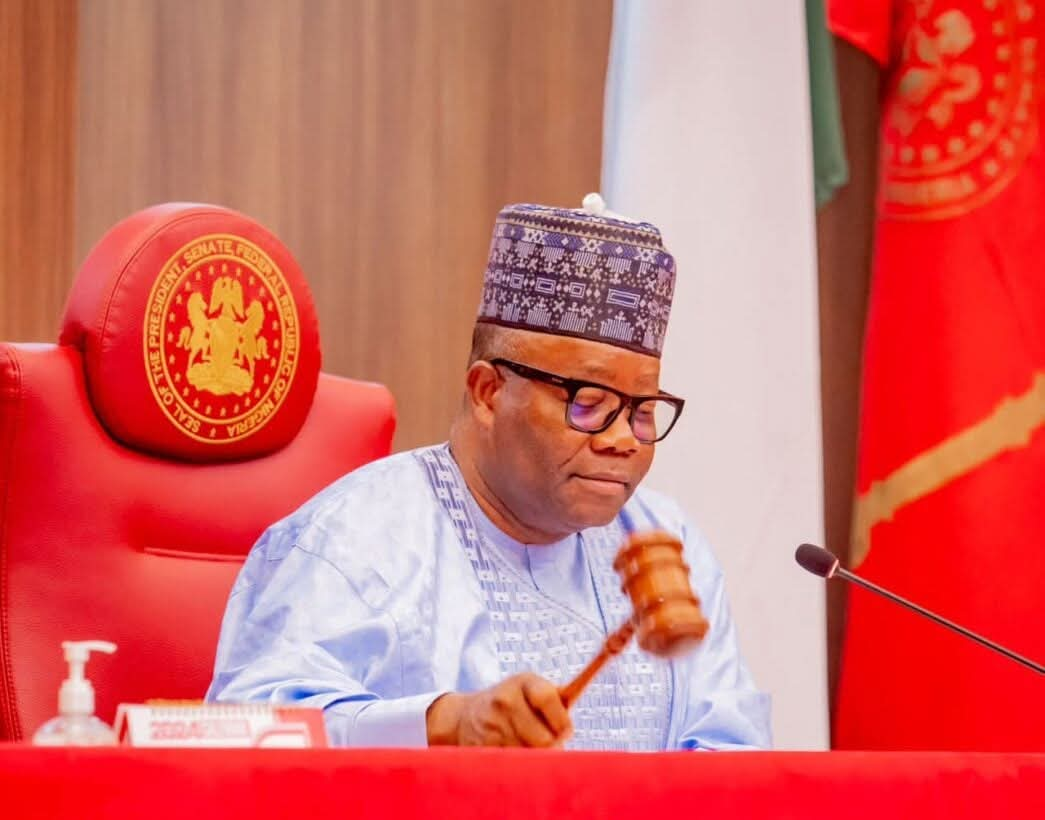
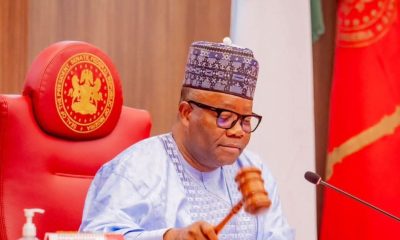
Senate President, Godswill Akpabio
Share

Senate President Godswill Akpabio says the Electoral Act 2026 (Amendment) signed into law by President Bola Ahmed Tinubu will ensure that every Nigerian vote counts and eliminate the manipulation of results.

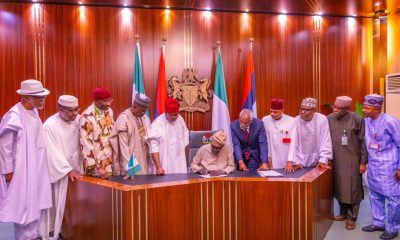
Akpabio spoke with State House correspondents on Wednesday shortly after Tinubu assented to the bill in the presence of principal officers of the national assembly.

“At the end, Nigerians will benefit a lot from future elections. Every vote will now count,” he said.

The senate president stated that the amendment addresses the longstanding issue of result manipulation between polling units and collation centres. He noted that, for the first time since independence in 1960, Nigeria’s electoral law formally recognises electronic transmission of results.

According to him, the amended act mandates the electronic transmission of polling unit results to the Independent National Electoral Commission result viewing portal (IReV).

Akpabio said the provision responds to demands by civil society organisations, opposition parties and election observers following allegations of result manipulation during the 2023 general election.

He, however, said the law makes allowances for areas with poor telecommunications infrastructure.

“We took cognisance of areas where there may not be any network, where there may not be communication capacities and availability,” he said.

He explained that the EC8A form, signed by the presiding officer and party agents in the presence of security personnel, would serve as the primary source of collation at the polling unit level.

“Even if there is no network at that time, once we step out of there, maybe towards the ward centre or the local government centre, it will drop into the iREV, and people will still be able to view,” he added.

Akpabio said the new framework allows Nigerians to compare results uploaded on the portal with figures collated at ward, local government and state levels.

“The implication of that is that if what is eventually collated at the next centre is different from what is in the iREV, Nigerians will be able to compare whether the election result had been tampered with,” he said.

He dismissed claims that the national assembly yielded to political pressure in passing the amendment, insisting that lawmakers acted in the interest of Nigerians. He added that the senate cut short its holiday to conclude work on the legislation.

Akpabio also said the amendment introduces direct primaries for political parties, enabling members to vote directly for candidates of their choice rather than relying solely on delegate systems.

In addition, he said the law provides that where a court disqualifies a declared winner, a fresh election must be conducted instead of declaring the runner-up as winner.

“We don’t want a situation where, in an election, you have five people contesting, one person scores 300,000 votes, one person scores 290,000, and then, for one reason or another, he’s disqualified by the court, and then the person who scored 1,000, who is not popularly elected, will now be declared a winner,” he said.

He added that the same principle applies to governorship elections, where candidates must meet constitutional spread requirements.

Speaker of the House of Representatives Tajudeen Abbas, who also addressed journalists, said the amendment reduces the election notice period from 360 days to 300 days.

He said the adjustment would likely result in the presidential and national assembly elections being held in January 2027, thereby avoiding the Ramadan period and reducing the risk of voter apathy.

The amendment was signed into law days after INEC released the timetable for the 2027 general elections.

Continue Reading