Connect with us

News

GREATER LAGOS VISION: SANWO-OLU UNVEILS 2052, 30-YR DEVT. PLAN .

Published

on

Governor-Babajide-Sanwo-Olu
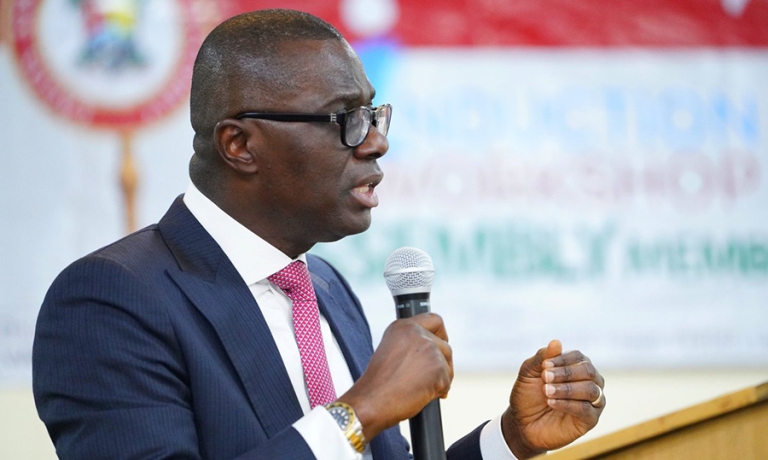
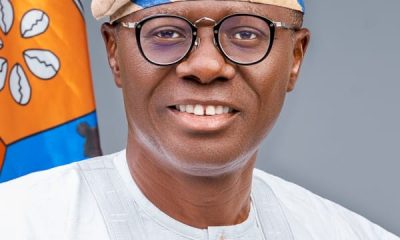
Lagos State Governor, Mr. Babajide Sanwo-Olu
Share


…As Lagos records 71 per cent of Nigeria’s $1.5bn FDI in Q1 2022 – LCCI

Lagos State will be on another 30-year journey in pursuit of physical development, social growth and economic prosperity.

Governor Babajide Sanwo-Olu broke this news to business leaders and the organised private sector at an interactive meeting, on Tuesday.

The Lagos State Development Plan 2052, Sanwo-Olu said, will be officially rolled out at the forthcoming 9th Economic Summit of the State (known as Ehingbeti). The 30-year plan, the Governor said, was developed with clear objectives from four strategic dimensions aimed at positioning the State to achieve its vision.

The meeting, held at Commerce House on Victoria Island, was at the instance of the Lagos Chamber of Commerce and Industry (LCCI). It was also attended by members of the diplomatic community. Established in 1888, the LCCI is the oldest chamber of commerce in the West Africa sub-region.

Sanwo-Olu hinted that each of the four dimensions in the development plan would be achieved through over 400 policy initiatives that would be implemented throughout the period.

He said: “The Lagos State Development Plan 2052 has been developed with a set of clear objectives across four strategic dimensions, which are to position Lagos on the track to achieving its vision.

The dimensions to this plan are to keep a thriving economy that will make Lagos a robust, healthy and growing economy with adequate jobs and strategic investments to sustain growth. We are building a human-centric city in which every Lagosian will have access to affordable and world-class education, healthcare and social services.

“There will be deliberate effort to keep modernising our infrastructure, by providing reliable and sufficient infrastructure that meets the needs of a 21st century city. The plan will also bring about sustenance of effective governance. Lagos will have a supportive and enabling environment that creates opportunities for all Lagosians.

This is a huge task that must be achieved between now and the nearest possible future.”
Sanwo-Olu believed the plan would not be realised when the private sector – the drivers of the State’s economy – is not carried along in the implementation of the identified policy phases.

The Governor thanked the business community for supporting the State Government in dealing with arising issues in the challenging period of Coronavirus (COVID-19) pushback, noting that more social burden could have trailed the pandemic had the private sector not considered the Government’s entreaty that prevented mass retrenchment of workers.

Sanwo-Olu used the occasion to reel out interventions initiated by the State Government in the areas of infrastructure, transportation, education, healthcare, security, environment and technology to improve ease of doing business in Lagos.

He said: “In road construction, I make bold to say that our impacts are being felt across the State, because we have taken up the total rehabilitation of major roads and creating new highways. In the Central Business District of Victoria Island and Ikoyi, we have delivered key infrastructure projects that are improving mobility and giving businessmen new experience. Reconstruction of Idowu Taylor, Adeyemo Alakija, Adeola Hopewell is a major facelift we have signed off in this corridor.

“For the first time, we are seeing a sub-national Government building rail lines to improve mobility. Lagos is expecting two brand-new light rail projects in a few months and we took this audacious decision about three years ago to deliver this important transport infrastructure. Our intervention in education has yielded a highly encouraging outcome, given the results of our students in national examinations. All of these have confirmed that we are on the right track.”
In the last one year,

Sanwo-Olu said Lagos had recorded massive influx of Foreign Direct Investment (FDI) up to the tune of $750 million in the technology sector, attracting global tech brands, such as Equinox, Google, and Microsoft, among others. This, he said, is complementing the rollout of metropolitan fibres by the State Government to promote e-commerce, traffic management and improve security.

The Governor expressed the hope that the meeting would lead to creation of new pathways that would facilitate a more robust relationship with the private sector.

LCCI President, Dr. Michael Olawale-Cole, said the meeting with Sanwo-Olu indicated the Chamber’s continued faith in the Governor’s administration for a better business environment.
Noting that Lagos had continued to be the investment haven for FDIs coming to the country, Olawale-Cole said the State alone accounted 71 per cent of the $1,573 billion foreign investment Nigeria recorded in the first quarter of 2022.

He said: “Policy direction is critical for a thriving and supportive business environment in any economy. The quality of the policy is a key consideration for local and foreign investment decisions. With an improved business environment, Lagos can attract more capital inflows from Nigerians in Diaspora as a more sustainable funding for the provision of required infrastructure. Enormity of needs in Lagos requires the cooperation of both the public and private sector.”

The LCCI boss announced that Lagos would be the official chief host of the international tech and telecommunication (ICTEL) expo coming up in August.
LCCI Deputy President and Group Executive Director at Dangote Group, Mr. Knut Ulvmoen, said Sanwo-Olu took his most important decision to come out and meet with the investors.
The Norwegian, who has lived in Lagos for 36 years, said he had witnessed the city transformed before his eyes into a blossoming economy.

He said: “The Lagos narrative is a story in progress. The city is now cleaner than it used to be. I implore the Government to focus more on education and make it accessible to the teeming young people. This is what will sustain the city in the long term. Government leaders should demand more than donations from the international community; they must come and create jobs.”

News

Supreme Court Affirms President’s Power to Declare Emergency Rule, Dismisses PDP Governors’ Suit

Published

on

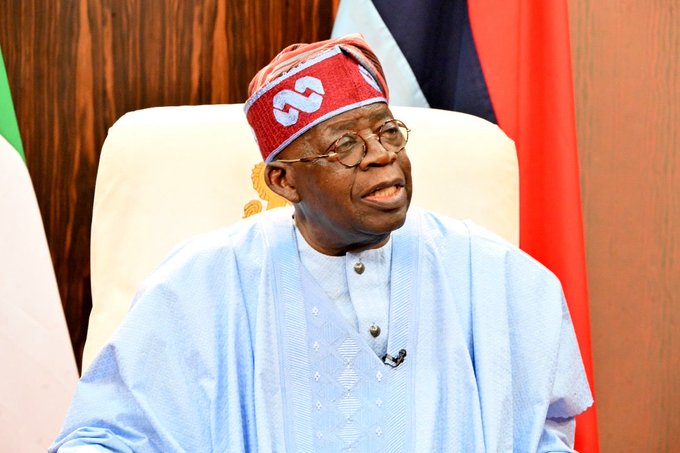
President Bola Ahmed Tinubu
Share

The Supreme Court has upheld the president’s constitutional powers to declare a state of emergency in any part of the country to prevent a breakdown of law and order.

In a split decision of six to one, the apex court also affirmed the president’s authority to suspend elected officials for a limited period during a state of emergency.

The ruling followed a suit filed by Adamawa State alongside 10 other Peoples Democratic Party (PDP)-led states, challenging the emergency rule declared by President Bola Tinubu in Rivers State in March.

President Tinubu had suspended Governor Siminalayi Fubara, his deputy, and members of the Rivers State House of Assembly for an initial period of six months.

Delivering the majority judgment, Mohammed Idris held that Section 305 of the 1999 Constitution (as amended) grants the president the discretion to determine the measures required during a state of emergency.

The court consequently struck out and dismissed the suit for lack of jurisdiction.

The state of emergency in Rivers State was lifted in September.

Continue Reading

News

Senate Moves to Reshape Legal Profession, Proposes Two-Year Mandatory Pupillage for New Lawyers

Published

on

Senate Logo
Share

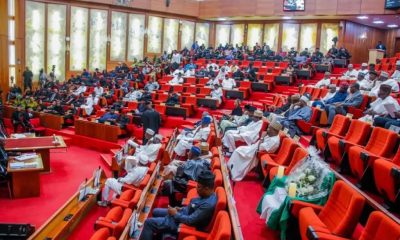
The Nigerian Senate on Wednesday considered sweeping reforms to the legal profession, passing into second reading a bill seeking to amend the Legal Practitioners Act 2004. Central to the proposal is a mandatory two-year pupillage programme for newly called lawyers, designed to align training and regulation with global best practices.

Debating the bill at plenary, lawmakers agreed that the legal system must evolve in response to technological advancement, complex commercial transactions, and growing demands for professional accountability. The bill was sponsored and led by the Leader of the Senate, Senator Opeyemi Bamidele.

According to Bamidele, the current law — nearly six decades old in design — no longer reflects contemporary realities of legal practice. He explained that the reform seeks to modernise oversight structures, strengthen discipline mechanisms, and enhance the quality of service within the profession.

A major highlight of the bill is the restructuring of the Body of Benchers, which, for the first time, will be established as a corporate legal entity with financial autonomy, strengthened secretariat, and defined rule-making authority. The reforms also introduce a clearer institutional framework for committees, oversight, and policy enforcement.

The Senate Leader stressed that the initiative would deliver “a coordinated and well-modernised regulatory framework that addresses admission to the bar, discipline, and professional standards.”

The bill also seeks to fast-track disciplinary processes by reorganising the Legal Practitioners Disciplinary Committee (LPDC). Under the proposed structure, multiple panels would sit across the country while wielding broader sanctioning powers, including suspension, disbarment, restitution, compensation, cost awards, and formal apologies. For transparency, disciplinary outcomes will be published, while affected practitioners will retain the right of appeal to the Supreme Court.

Additionally, the proposal creates a new Ethics, Adherence and Enforcement Committee empowered to inspect law offices, demand records, investigate public complaints, and prosecute cases before the LPDC.

To further boost competence, two years of compulsory pupillage and ongoing professional development will now be requirements for lawyers before full practice certification and licence renewal.

The bill also criminalises unauthorised legal practice, clearly defining the practice of law to protect the public from impersonators and unqualified service providers. Other provisions address the regulation of foreign lawyers, reform of the Senior Advocate of Nigeria rank, and improved safeguards for clients and public trust.

Speaking in support, Chief Whip of the Senate, Senator Tahir Monguno, recalled his experience entering practice over 35 years ago, noting that the realities of the digital age justify reform.

“This bill is very apt and germane,” Monguno said. “We are in the digital age, and our legal profession must reflect these realities.”

The Senate subsequently referred the bill to its Committee on Judiciary, Human Rights and Legal Matters for public hearing and a report within two weeks.


Continue Reading

News

Tinubu Approves Nigerian Team for US–Nigeria Joint Security Working Group

Published

on

President Bola Ahmed Tinubu
Share

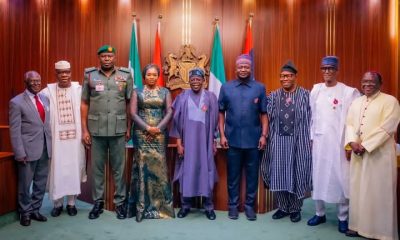
President Bola Tinubu has approved the Nigerian contingent of the US–Nigeria Joint Working Group, a new collaborative platform aimed at strengthening security cooperation between both countries.

The decision follows agreements reached during a recent high-level visit to Washington, D.C., led by the National Security Adviser (NSA), Nuhu Ribadu. Ribadu will head the Nigerian side of the Working Group, supported by senior officials drawn from key security and government institutions.

The Nigerian members include Minister of Foreign Affairs, Amb. Yusuf Maitama Tuggar; Minister of Defence, Mohammed Badaru Abubakar; Minister of Interior, Hon. Olubunmi Tunji-Ojo; and the Minister of Humanitarian Affairs, Dr. Bernard M. Doro.

Also on the team are the Chief of Defence Staff, Gen. Olufemi Oluyede; Director-General of the National Intelligence Agency, Amb. Mohammed Mohammed; and the Inspector General of Police, Kayode Egbetokun.

Ms. Idayat Hassan of the Office of the National Security Adviser and Mr. Paul Alabi of the Nigerian Embassy in the United States will serve as the secretariat.

President Tinubu urged the members to work closely with their US counterparts to ensure the effective implementation of all agreements reached across various sectors.

The announcement was made on Wednesday in a statement by Bayo Onanuga, Special Adviser to the President on Information and Strategy.

Continue Reading