Connect with us

Business & Economy

Food Inflation: Beans Now Out Of Reach, Says Rewane

Published

on

Beans
Beans
Share

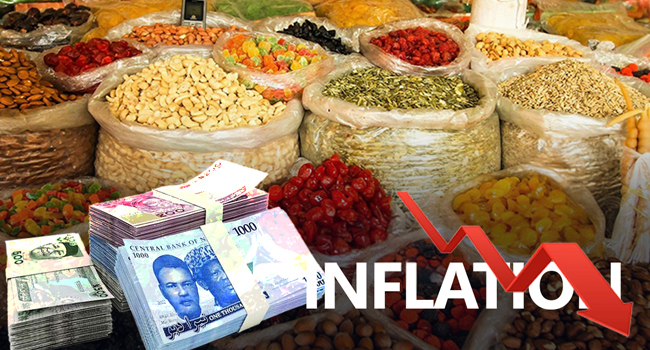
The Managing Director of Financial Derivatives Company Limited, Bismarck Rewane, says while the prices of other food commodities have recorded a minimal drop in the last few days, market prices of beans have significantly gone up.

Rewane stated this on Channels Television’s Business Morning segment of Sunrise Daily breakfast programme on Thursday.

“We’ve seen onions come down sharply to N115,000, and rice has also come down to N110,000; it was as high as N120,000. The commodity that is surprising to everybody is beans; beans has gone out of storage and out of reach,” he said.

According to market checks by our correspondent, traders sold a paint rubber of beans for N13,000 and a derica of the commodity for N3,000 while a bag of beans goes for as high as N180,000.

The economist attributed the hike in beans’ prices to recent flooding which ravaged food-producing states like Borno, Bauchi, and Sokoto, amongst others.

“Flooding has destroyed a lot of goods,” Rewane said, adding that the costs of moving agricultural produce from farms to the markets have also gone up due to a recent hike in petrol prices — from around N600 to about N1,000 per litre.

The economist predicted that food inflation would increase in the coming weeks but was optimistic that duty waivers on expected imported commodities would moderate prices.

“For now, despite everything, we think that inflation will still increase. Food inflation in particular will increase; headline inflation will increase to 34% but this is only temporary. When the imported commodities that we are going to enjoy the duty waivers come into the country, those prices will start to reduce,” Rewane said.

On October 1, 2024. President Bola Tinubu said his administration is focused on restoring peace to the troubled parts of the North so that farmers displaced by bandits and kidnapping can return to their farmlands and increase food production.

“We expect to see a leap in food production and a downward spiral in food costs. I promise you, we shall not falter on this,” Tinubu said on Tuesday during his 2024 Anniversary Broadcast on the occasion of Nigeria’s 64th Independence Day Anniversary.

Continue Reading
Click to comment

Leave a Reply

Your email address will not be published. Required fields are marked *

Business & Economy

FG Bans Roadside Tax Collections, Orders Dismantling of Checkpoints

Published

on

Coat of Arms
Share

The Federal Government has banned the collection of road taxes through roadside checkpoints and the use of tax stickers nationwide as part of sweeping tax reforms introduced in 2026.

The Joint Revenue Board (JRB) announced that all forms of roadside levies are now illegal, effectively ending a long-standing practice that required motorists to stop at checkpoints to make payments.

In a statement, the Board said the move is aimed at modernising tax administration, eliminating harassment of motorists, and improving transparency in revenue collection.

“This is a major win for motorists and a step toward transparent taxation,” the JRB stated, adding that security agencies have been directed to dismantle illegal checkpoints and ensure full compliance with the new law.

For years, motorists across the country were subjected to multiple levies under different designations, a situation that often created confusion and opened the door to alleged abuse and irregular collections.

Under the new framework, road tax stickers previously issued at state checkpoints are no longer valid, and motorists are not expected to make any payments related to road taxes on highways.

The government said the reform is designed to protect drivers from illegal collections, streamline tax administration under a centralised system, and promote voluntary compliance through a clearer and more accountable structure.

Security and enforcement agencies have been tasked with monitoring implementation to ensure that all roadside collections cease immediately.

Continue Reading

Business & Economy

Ogun to Establish 5,000-Herd Dairy, Cattle Ranches in Ipokia, Yewa South — Abiodun

Published

on

Ogun State logo
Share

Ogun State Governor, Dapo Abiodun, has announced plans to establish what he described as the largest dairy and cattle ranches in Nigeria in Ipokia and Yewa South Local Government Areas of the state, with an initial capacity of 5,000 herds of cattle.

Abiodun made the disclosure on Thursday at the All Progressives Congress (APC) strategic stakeholders’ meeting held in Abeokuta.

He said the projects would be sited in Ogun State at the instance of President Bola Tinubu, adding that construction work would commence soon.

According to the governor, the initiative is part of efforts to strengthen food security, boost local agricultural production, and deepen value chains across the state.

“The biggest dairy and cattle ranches will soon be established in Yewa South and Ipokia Local Government Areas. This is at the instance of Mr. President. These farms will start with 5,000 herds of cattle, and work will begin very soon,” Abiodun said.

The governor commended Tinubu for what he described as bold economic reforms, noting that the policies had stabilised the foreign exchange market, eliminated multiple exchange-rate regimes, and increased Nigeria’s foreign reserves to about $45 billion.

Abiodun also acknowledged what he called the President’s goodwill towards Ogun State, citing federal interventions such as the reconstruction of the Sagamu–Ijebu Ode Road, funding support for the Eba oil discovery, and the resuscitation of the OKLNG project.

“There is nothing I have asked Mr. President for Ogun State that he has not approved,” he said, adding that the President consistently directs investors to the state when they express interest in Nigeria.

The governor said the administration’s performance at the federal level had rekindled hope among Nigerians and strengthened public confidence in the ruling APC.

Highlighting achievements of his administration over the past six years and eight months, Abiodun said the state had recorded progress in education, infrastructure, job creation, youth and women empowerment, healthcare, agriculture, housing, technological innovation, industrial growth, and economic expansion.

He disclosed that over 1,700 kilometres of roads, including major highways, had been constructed across the state, more than 7,000 housing units delivered, and over 400 Primary Healthcare Centres upgraded and equipped.

Abiodun also stated that Ogun State was on the verge of becoming an oil-producing state.

He said the stakeholders’ meeting was convened to review progress and strategise ahead of emerging political challenges, urging party members to remain united as the state approaches another electioneering season.

“As we approach the upcoming congresses, they must unite us, not divide us. A united APC is an unbeatable APC,” he said.

Dignitaries at the meeting included former Governor Olusegun Osoba; Deputy Governor Noimot Salako-Oyedele; Speaker of the Ogun State House of Assembly, Oludaisi Elemide; Senators Solomon Adeola and Shuaib Salisu; and House of Representatives Chief Whip, Ibrahim Isiaka.

Also present were Minister of Communications and Digital Economy, Bosun Tijani; Minister of State for Health, Dr. Isiaka Salako; State APC Chairman, Yemi Sanusi; former deputy governors; lawmakers; local government chairmen; and other party stakeholders.

Continue Reading

Business & Economy

States’ Foreign Debt Service Jumps 26% to N455bn, Squeezing FAAC Allocations

Published

on

FAAC Logo
Share


Nigeria’s 36 states paid a combined N455.38bn to service foreign loans in 2025, marking a 25.77 per cent increase from the N362.08bn recorded in 2024, according to Federation Accounts Allocation Committee (FAAC) data released by the National Bureau of Statistics and analysed by The PUNCH.

The N93.30bn year-on-year rise underscores growing fiscal pressure on subnational governments, as a larger share of their monthly FAAC inflows is now automatically deducted at source to meet external debt obligations.

Tighter Fiscal Space

Foreign debt service in the FAAC framework operates as a first-line charge, meaning deductions are made before states access their allocations. While this structure safeguards creditors and ensures repayment discipline, it also narrows states’ discretionary spending space—particularly in periods of revenue volatility.

The 2025 monthly pattern reflected a “step-down” structure rather than sharp fluctuations. Deductions stood at N40.09bn in January before easing to N39.10bn in February. The N39.10bn level persisted from March through July, suggesting predictable repayment schedules.

A second adjustment occurred in August, when total deductions declined to N36.14bn—a 7.56 per cent drop from July—and remained at that level through December.

This contrasts with 2024, when debt service figures swung sharply in the first quarter—rising from N9.88bn in January to N40.41bn in March—before stabilising in the latter part of the year.

Top 10 States Account for 69%

Debt servicing obligations remain highly concentrated. The top 10 states accounted for 68.57 per cent of total foreign debt deductions in 2025.

Lagos led with N92.80bn, representing 20.38 per cent of the national total and a 28.33 per cent increase from 2024.

Rivers followed at N48.58bn, more than doubling its 2024 figure with a 110.02 per cent jump.

Kaduna ranked third at N47.93bn, up 5.13 per cent year-on-year.

Ogun posted one of the sharpest increases, rising 110.22 per cent to N25.20bn.

Cross River recorded N21.01bn, up 22.86 per cent.

Other major contributors included Oyo (N20.17bn), Edo (N18.70bn), Bauchi (N16.85bn), Kano (N10.63bn), and Ebonyi (N10.37bn), with Ebonyi posting a 53.09 per cent rise.

Regional Breakdown

By geopolitical zone, the South-West carried the heaviest burden at N162.77bn, accounting for 35.74 per cent of total foreign debt service, largely driven by Lagos and Ogun.

The South-South followed with N100.37bn (22.04 per cent), buoyed by Rivers, Edo, Cross River, and Delta.

The North-West recorded N81.97bn (18.00 per cent), with Kaduna and Kano as key contributors.

The North-East accounted for N42.42bn (9.32 per cent), while the South-East posted N40.20bn (8.83 per cent). The North-Central had the lowest at N27.65bn (6.07 per cent).

Sustainability Concerns Mount

The Nigeria Extractive Industries Transparency Initiative (NEITI) warned that several states with heavy debt burdens rank lower in FAAC allocations, raising red flags over fiscal sustainability.

Economists caution that without stronger internally generated revenue (IGR), rising debt service obligations could crowd out spending on salaries, infrastructure, and social services.

Teslim Shitta-Bey, Director and Chief Economist at Proshare Nigeria LLC, argued that borrowing should not be the default option. He advocated for longer-term debt instruments structured more like equity and called for the creation of a comprehensive national asset register to unlock value from dormant assets.

He also criticised the underutilisation of revenue bonds, urging states to prioritise them over general obligation bonds.

Similarly, macroeconomic analyst Dayo Adenubi emphasised the need to expand consumption to boost Value Added Tax receipts, strengthen property and transport-related tax enforcement, and reinforce the social contract to enhance compliance.

With debt service now absorbing a significant portion of subnational revenues, analysts say fiscal reforms and revenue diversification are becoming increasingly urgent for Nigeria’s states.


Source: Punch

Continue Reading