Connect with us

News

FG to Launch Nationwide Digital Switchover Platform With 100 Free TV Channels on June 17

Published

on

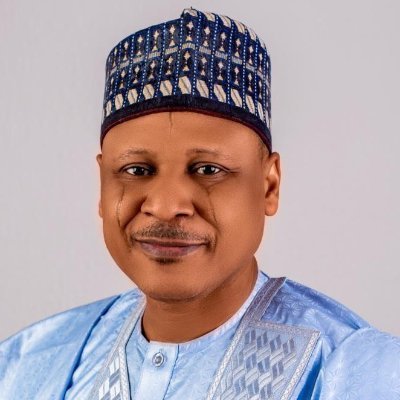
Minister of Information and National Orientation, Mohammed Idris
Share


The Federal Government has announced plans to officially launch Nigeria’s long-awaited Digital Switchover (DSO) platform on June 17, 2026, marking a major milestone in the country’s transition from analogue to digital broadcasting.

Minister of Information and National Orientation, Mohammed Idris, disclosed this during a tour of the headquarters of Nigerian Communications Satellite Limited in Abuja on Wednesday.

According to the minister, the new digital broadcasting platform will debut with over 100 free-to-air television channels for Nigerians, while promising improved picture quality, expanded content offerings, enhanced audience measurement systems, and greater opportunities for broadcasters and advertisers.

Idris described the development as a major breakthrough after several years of delays and unsuccessful attempts to fully migrate Nigeria’s broadcasting system from analogue to digital technology.

Nigeria Finally Completes Digital Migration

Speaking during the inspection tour, the minister said the successful rollout reflects President Bola Tinubu’s broader reform agenda across different sectors of the economy.

“The promise that President Bola Tinubu made that he is going to reform all sectors. We are seeing this reform in action in the broadcast industry,” Idris stated.

He noted that Nigeria had struggled for years to complete the DSO transition despite multiple deadlines and commitments under international broadcasting agreements.

“You recall that for many years, Nigerians have been grappling with this idea of the DSO, the digital switchover — in other words, removing our transmissions from analogue to digital. Now this has happened, and it is ready to be commissioned by the 17th of June this year,” he added.

The minister explained that the initiative is expected to significantly reshape television broadcasting not only in Nigeria but potentially across sub-Saharan Africa by modernising content delivery systems and creating a more competitive media environment.

100 Free Channels and Improved Viewing Experience

One of the key highlights of the new platform is the availability of approximately 100 television channels at launch, with more broadcasters and content creators already expressing interest in joining the service.

Director-General of the National Broadcasting Commission, Charles Ebuebu, said the platform was designed to align with changing audience habits and modern digital consumption patterns, especially among younger viewers.

“So, what we have done is basically taking into consideration emerging technologies, which is why we are going by way of the application,” Ebuebu explained.

He added that the commission had already established six regional production studios across the country to support content creators and decentralise media production away from traditional hubs such as Lagos, Abuja, and Kano.

“You don’t have to travel to Lagos or Abuja or Kano to go and develop your content. You just go to the nearest regional studio and develop,” he said.

The NBC boss also disclosed plans for a multilingual national call centre and a network of certified installers to assist subscribers nationwide.

Real-Time Audience Measurement for Advertisers

Another major feature of the digital switchover platform is the introduction of advanced audience measurement technology capable of tracking television viewing habits in real time.

According to Idris, the new system will provide broadcasters and advertisers with accurate data on audience preferences, helping them make more informed programming and advertising decisions.

“Now science is at play. If you are viewing a station, we know who is watching what and how many people are watching,” the minister said.

“This will help advertisers to take informed decisions about what programme it is that people are watching, what it is that Nigerians want to watch across all the demographics.”

Industry observers believe this could significantly improve advertising efficiency and revenue generation within Nigeria’s media sector.

Transition to High-Definition Broadcasting

The government also revealed that the platform would initially launch in standard definition before fully transitioning to high-definition (HD) broadcasting shortly after rollout.

“The most important thing is that we are now moving to HD. After the launch, we will be fully in HD,” Idris stated.

The minister further said the new digital ecosystem would encourage healthy competition among broadcasters and content producers, ultimately leading to better programming and expanded local content creation.

“Competition is going to set in. Everybody is going to compete. Content is going to grow. Viewership, hopefully, will also grow,” he said.

FG Says Service Will Be Free

In a significant departure from previous DSO implementations, Idris stressed that the new service would be free for Nigerians and would not rely on expensive encrypted set-top boxes.

“In the past, the set-top boxes provided under earlier digital switchover efforts were encrypted, meaning you had limited flexibility in choosing or switching services,” he explained.

“As a result, the cost also became higher. Now, this service is free, and the government has already absorbed some of these costs.”

The development is expected to ease access to digital television services for millions of households across the country.

NigComSat Plans Additional Satellites

Meanwhile, Chief Executive Officer of Nigerian Communications Satellite Limited, Jane Egerton-Idehen, said the agency was focused on ensuring uninterrupted service delivery and long-term technological expansion.

“It is important for us that the service delivery is perfect and the technology is continuous,” she said.

Egerton-Idehen also revealed that plans were underway to launch two additional satellites to improve operational efficiency and strengthen service coverage nationwide.

“The president has given us the ability to even launch two more satellites. So, the work has only just started,” she added.

The June 17 launch is expected to mark a historic turning point for Nigeria’s broadcast industry, potentially ending years of uncertainty surrounding the country’s digital migration project while opening a new chapter in television broadcasting, content production, and media advertising.

Continue Reading
Click to comment

Leave a Reply

Your email address will not be published. Required fields are marked *

News

Oyebanji Makes First Appointments in Second Term, Retains SSG, Chief of Staff, CPS

Published

on

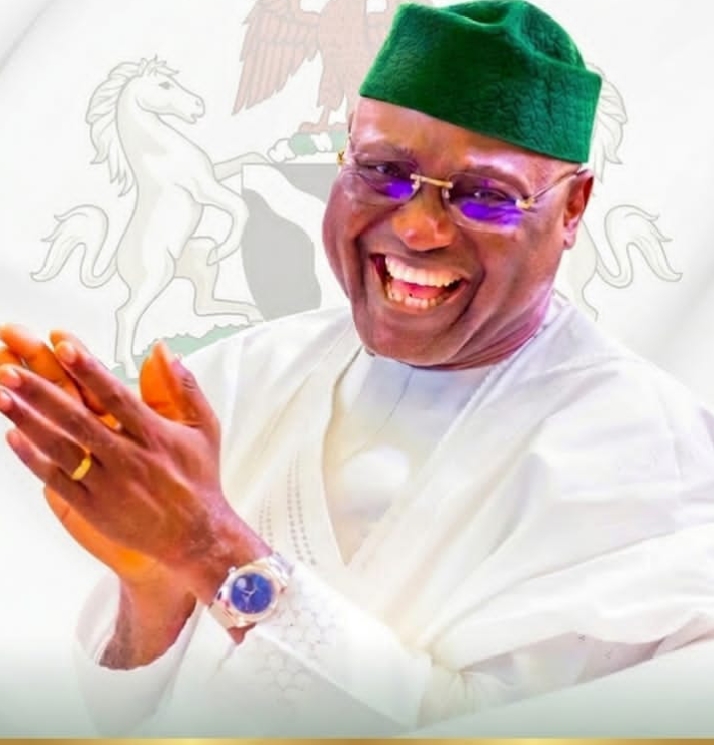
Ekiti State Governor,Biodun Abayomi Oyebanji
Share


Ekiti State Governor, Biodun Oyebanji, has made his first set of appointments following his inauguration for a second term in office, retaining three key members of his administration.

The governor approved the reappointment of Professor Habibat Adubiaro as Secretary to the State Government (SSG), Mr Oyeniyi Adebayo as Chief of Staff, and Mr Olayinka Oyebode as Chief Press Secretary (CPS) to the Governor.

The appointments were announced on Friday, October 16, 2026, shortly after Oyebanji and his deputy, Chief (Mrs.) Monisade Christianah Afuye, were inaugurated for another term in office in Ado-Ekiti, the Ekiti State capital.

According to a statement signed by the Chief Press Secretary to the Governor, Olayinka Oyebode, the appointments take immediate effect.

The decision to retain the three principal officials ensures continuity in key administrative, executive and communication positions as the governor begins his second term.

As Secretary to the State Government, Professor Adubiaro occupies a strategic position in the coordination of government policies, administrative processes and inter-agency relations.

Similarly, Adebayo, as Chief of Staff, is responsible for supporting the governor’s office and coordinating executive activities, while Oyebode oversees official communications and media relations for the state government.

The reappointments constitute the first official appointments announced by Oyebanji since his inauguration for a second term, signalling the continuation of the existing leadership structure in these critical offices.

The statement did not indicate whether further appointments would be announced in the coming days.

The announcement was signed by Olayinka Oyebode, Chief Press Secretary to the Governor of Ekiti State.


Continue Reading

News

Bamidele Hails Oyebanji’s First Term, Says Peaceful Politics Drove Ekiti Development

Published

on

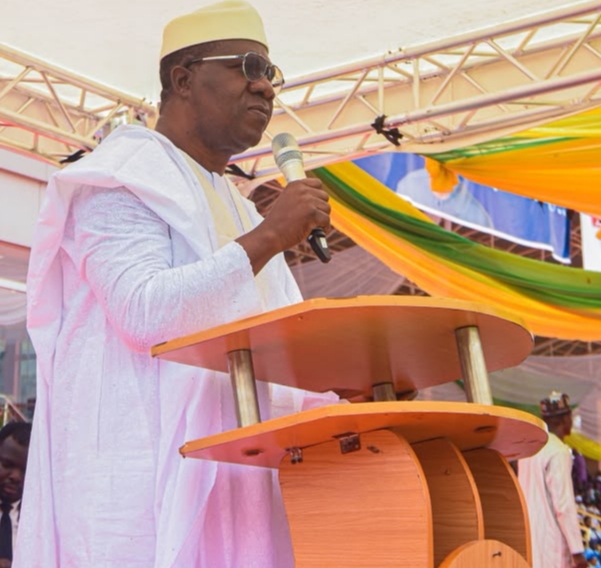
Senate Leader, Senator Michael Opeyemi Bamidele
Share

Senate Leader and Chairman of the Ekiti State Governorship Campaign Council, Senator Opeyemi Bamidele, has described the first term of Governor Biodun Abayomi Oyebanji as remarkably peaceful, attributing the achievement to the governor’s humility, sense of duty and inclusive leadership style.

Bamidele said Oyebanji’s ability to foster cordial relationships among political stakeholders across the state had created an enabling environment for development and progress in Ekiti State.

The Senate Leader stated this in his welcome address at the second-term inauguration of Governor Oyebanji and his deputy, Chief (Mrs.) Monisade Christianah Afuye, in Ado-Ekiti.

He commended the governor for sustaining a peaceful political atmosphere, noting that cooperation among political leaders and stakeholders had contributed significantly to the state’s developmental strides.

Reflecting on Ekiti State’s political and developmental journey from the administration of its first civilian governor, Otunba Niyi Adebayo, through subsequent administrations, including that of former Governor Kayode Fayemi, Bamidele said Oyebanji had continued to strengthen the culture of political stability and peaceful coexistence.

He noted that the governor’s leadership approach had helped sustain a harmonious political environment, allowing the state to focus on governance and development rather than political divisions.

Bamidele further described Oyebanji’s re-election as a historic milestone, noting that the governor had broken a longstanding political barrier by becoming the first governor in Ekiti State to secure consecutive second-term mandates.

He expressed confidence that the governor’s second term would provide further opportunities to consolidate the achievements of his first administration and advance the development of the state.


Continue Reading

News

Oyebanji: Impact on Livelihoods Will Define My Second Term

Published

on

Ekiti State Governor, Biodun Oyebanji
Share

EKITI STATE — Governor Biodun Oyebanji has declared that the success of his second term will be measured by the extent to which government investments translate into improved livelihoods, stronger businesses and greater economic opportunities for the people of Ekiti State.

Oyebanji made the declaration during his inauguration ceremony in Ado-Ekiti, outlining an ambitious development agenda focused on electricity, agriculture, skills development, job creation, education, healthcare and critical infrastructure.

He stressed that public spending must deliver tangible benefits to ordinary citizens, particularly households, farmers, artisans, entrepreneurs and young people grappling with rising living costs.

“The measure of our second term will be how much of investment we have made improve the lives of our people,” the governor said, insisting that development must be reflected in better incomes, productive farms, thriving businesses and improved access to essential services.

He explained that roads must enable farmers to transport their produce to markets efficiently, while reliable electricity would drive industrialisation, boost productivity and help small businesses sustain their operations.

Oyebanji also pledged to strengthen the education sector by connecting formal learning with practical skills, entrepreneurship and the demands of a changing economy.

“In this second term, we will connect education more closely to enterprise, practical skills, and the need of a changing economy,” he said.

Reflecting on Ekiti’s longstanding commitment to education, the governor acknowledged the sacrifices made by parents who endured economic hardship to educate their children, describing education as a defining pillar of the state’s heritage and future prosperity.

On agriculture, Oyebanji promised to expand productivity and strengthen the entire value chain through investments in farm clusters, processing, storage, packaging, transportation, marketing and access to capital.

He maintained that Ekiti’s agricultural potential must translate into greater economic returns for farmers, while creating employment opportunities for young people and other players across the production and distribution chain.

According to him, agriculture should be repositioned as a viable business driven by technology, innovation, investment and modern farming practices, rather than being confined to subsistence production.

“When agriculture prospers, the benefit travels from the farm to the market, from the market to the workshop, and from the workshop to the family home,” he said.

The governor further emphasised that healthcare facilities must provide accessible medical services without forcing families to deplete their savings, while investments in schools, roads and other public infrastructure must serve clearly defined social and economic purposes.

Meanwhile, President Bola Ahmed Tinubu congratulated Oyebanji on his inauguration for a second term, urging him to consolidate on his administration’s achievements and deliver greater dividends of democracy to the people.

Represented by Vice President Kashim Shettima at the ceremony, Tinubu described Oyebanji’s electoral victory as evidence of the confidence reposed in his leadership and the All Progressives Congress (APC).

The President urged the governor to sustain the momentum of development and deepen his administration’s commitment to improving the welfare of Ekiti residents.

Oyebanji’s second-term agenda places particular emphasis on converting government investments into measurable improvements in living standards, with economic growth, job creation and household prosperity emerging as key benchmarks for assessing his administration’s performance.


Continue Reading