Connect with us

News

FG To Consider TUC’s Demands, Set Up Committee To Review Minimum Wage

Published

on

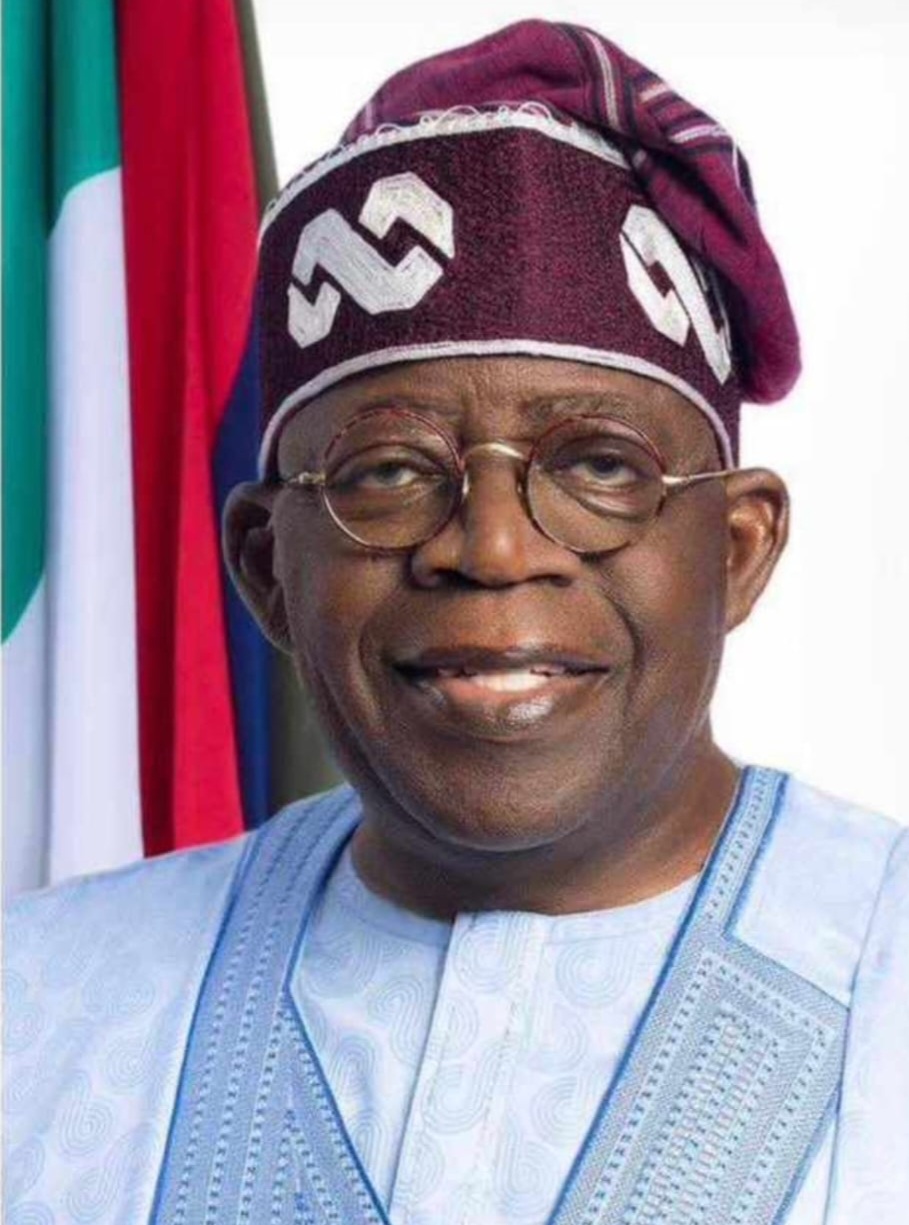
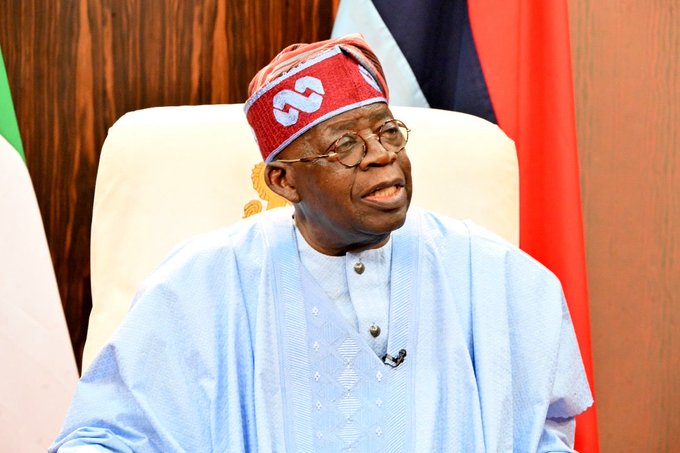
President Bola Ahmed Tinubu
President Bola Tinubu
Share

The Federal Government says it will consider the list of demands from the Trade Union Congress (TUC) which includes minimum wage.

Speaking to State House correspondents after a meeting between the Federal Government and the TUC which lasted for about three hours, the spokesperson for the Federal government, Dele Alake, said that it will also look at the practicability of the demands.

Among things the government is considering is tax holidays for workers.

Alake said that most fundamentally President Bola Tinubu will constitute a tripartite committee to include states and organised labour and the private sector to study the dynamics of the minimum wage augmentation to reach an amicable conclusion.

According to him, there is no disagreement with the Nigeria Labour Congress (NLC) over their demand for a review of the minimum wage or a return to the status quo, noting that the FG representatives will meet with the President to crystallize decisions on the demands.

He added that the absence of the NLC does not translate to an isolation of the group in the discussion but that the FG is making efforts to reach them as the parties agreed to reconvene on Tuesday 24 hours before a scheduled strike by the NLC.

Meanwhile, the TUC has maintained that the Federal Government, in the interest of social dialogue, revert the price of fuel while discussions continue.

President of the TUC, Festus Osifo, said the union is hopeful as the Federal Government promised to look into their demands, the top of which is a review of the current minimum wage among others.

“The demands are so long, they are so many. Part of it is the demand for a (review) of the minimum wage and we stated that for us, it is quite apt that the minimum today is not a living wage, as we all know. The value of the minimum wage since it was negotiated, has plummeted to a very abysmal level as it is today.”

News

Supreme Court Affirms President’s Power to Declare Emergency Rule, Dismisses PDP Governors’ Suit

Published

on

President Bola Ahmed Tinubu
Share

The Supreme Court has upheld the president’s constitutional powers to declare a state of emergency in any part of the country to prevent a breakdown of law and order.

In a split decision of six to one, the apex court also affirmed the president’s authority to suspend elected officials for a limited period during a state of emergency.

The ruling followed a suit filed by Adamawa State alongside 10 other Peoples Democratic Party (PDP)-led states, challenging the emergency rule declared by President Bola Tinubu in Rivers State in March.

President Tinubu had suspended Governor Siminalayi Fubara, his deputy, and members of the Rivers State House of Assembly for an initial period of six months.

Delivering the majority judgment, Mohammed Idris held that Section 305 of the 1999 Constitution (as amended) grants the president the discretion to determine the measures required during a state of emergency.

The court consequently struck out and dismissed the suit for lack of jurisdiction.

The state of emergency in Rivers State was lifted in September.

Continue Reading

News

Senate Moves to Reshape Legal Profession, Proposes Two-Year Mandatory Pupillage for New Lawyers

Published

on

Senate Logo
Share

The Nigerian Senate on Wednesday considered sweeping reforms to the legal profession, passing into second reading a bill seeking to amend the Legal Practitioners Act 2004. Central to the proposal is a mandatory two-year pupillage programme for newly called lawyers, designed to align training and regulation with global best practices.

Debating the bill at plenary, lawmakers agreed that the legal system must evolve in response to technological advancement, complex commercial transactions, and growing demands for professional accountability. The bill was sponsored and led by the Leader of the Senate, Senator Opeyemi Bamidele.

According to Bamidele, the current law — nearly six decades old in design — no longer reflects contemporary realities of legal practice. He explained that the reform seeks to modernise oversight structures, strengthen discipline mechanisms, and enhance the quality of service within the profession.

A major highlight of the bill is the restructuring of the Body of Benchers, which, for the first time, will be established as a corporate legal entity with financial autonomy, strengthened secretariat, and defined rule-making authority. The reforms also introduce a clearer institutional framework for committees, oversight, and policy enforcement.

The Senate Leader stressed that the initiative would deliver “a coordinated and well-modernised regulatory framework that addresses admission to the bar, discipline, and professional standards.”

The bill also seeks to fast-track disciplinary processes by reorganising the Legal Practitioners Disciplinary Committee (LPDC). Under the proposed structure, multiple panels would sit across the country while wielding broader sanctioning powers, including suspension, disbarment, restitution, compensation, cost awards, and formal apologies. For transparency, disciplinary outcomes will be published, while affected practitioners will retain the right of appeal to the Supreme Court.

Additionally, the proposal creates a new Ethics, Adherence and Enforcement Committee empowered to inspect law offices, demand records, investigate public complaints, and prosecute cases before the LPDC.

To further boost competence, two years of compulsory pupillage and ongoing professional development will now be requirements for lawyers before full practice certification and licence renewal.

The bill also criminalises unauthorised legal practice, clearly defining the practice of law to protect the public from impersonators and unqualified service providers. Other provisions address the regulation of foreign lawyers, reform of the Senior Advocate of Nigeria rank, and improved safeguards for clients and public trust.

Speaking in support, Chief Whip of the Senate, Senator Tahir Monguno, recalled his experience entering practice over 35 years ago, noting that the realities of the digital age justify reform.

“This bill is very apt and germane,” Monguno said. “We are in the digital age, and our legal profession must reflect these realities.”

The Senate subsequently referred the bill to its Committee on Judiciary, Human Rights and Legal Matters for public hearing and a report within two weeks.


Continue Reading

News

Tinubu Approves Nigerian Team for US–Nigeria Joint Security Working Group

Published

on

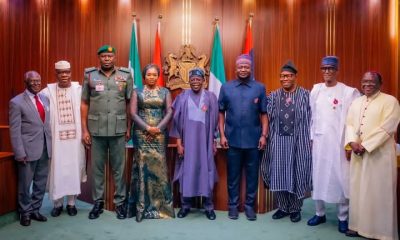
President Bola Ahmed Tinubu
Share

President Bola Tinubu has approved the Nigerian contingent of the US–Nigeria Joint Working Group, a new collaborative platform aimed at strengthening security cooperation between both countries.

The decision follows agreements reached during a recent high-level visit to Washington, D.C., led by the National Security Adviser (NSA), Nuhu Ribadu. Ribadu will head the Nigerian side of the Working Group, supported by senior officials drawn from key security and government institutions.

The Nigerian members include Minister of Foreign Affairs, Amb. Yusuf Maitama Tuggar; Minister of Defence, Mohammed Badaru Abubakar; Minister of Interior, Hon. Olubunmi Tunji-Ojo; and the Minister of Humanitarian Affairs, Dr. Bernard M. Doro.

Also on the team are the Chief of Defence Staff, Gen. Olufemi Oluyede; Director-General of the National Intelligence Agency, Amb. Mohammed Mohammed; and the Inspector General of Police, Kayode Egbetokun.

Ms. Idayat Hassan of the Office of the National Security Adviser and Mr. Paul Alabi of the Nigerian Embassy in the United States will serve as the secretariat.

President Tinubu urged the members to work closely with their US counterparts to ensure the effective implementation of all agreements reached across various sectors.

The announcement was made on Wednesday in a statement by Bayo Onanuga, Special Adviser to the President on Information and Strategy.

Continue Reading