Connect with us

Africa News

Ethiopia: 9 rebel groups join forces against the government

Published

on

Ethiopia: 9 rebel groups join forces against the government
Share

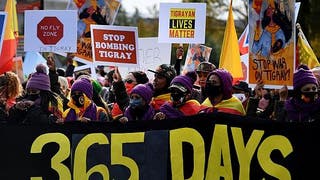
Ethiopia’s Tigray forces are joining efforts with eight others in an alliance against Prime Minister Abiy Ahmed to seek a political transition after a year of the disturbing war.

The signing that took place in Washington on Friday includes the Oromo Liberation Army now fighting alongside the Tigray forces and seven other groups from around the country.

U.S. special envoy Jeffrey Feltman is in Ethiopia’s capital meeting with senior government officials amid calls for an immediate cease-fire and talks to end the war that has killed thousands of people and has displaced many since November 2020.

Secretary of State Antony Blinken in a statement Friday again called for a cease-fire and talks, and called on the Tigray and Oromo Liberation Army forces to “immediately stop the current advance towards Addis Ababa.” He also urged Ethiopia’s government to halt its military campaign, including airstrikes in Tigray, and the mobilization of ethnic militias.

The new United Front of Ethiopian Federalist Forces seeks to “establish a transitional arrangement in Ethiopia” so the prime minister can go as soon as possible, organizer Yohanees Abraha, who is with the Tigray group, told The Associated Press late Thursday. “The next step will be, of course, to start meeting and communicating with countries, diplomats, and international actors in Ethiopia and abroad.”

He said the new alliance is both political and military. It has had no communication with Ethiopia’s government, he added.

A spokesman for the Oromo Liberation Army, Odaa Tarbii, confirmed the new alliance. When asked whether it meant to force Abiy out, he replied that it depended on Ethiopia’s government and events over the coming weeks. “Of course, we prefer if there’s a peaceful and orderly transition with Abiy being removed,” he said.

“The goal is to be as inclusive as possible. We know this transition requires all stakeholders, he added. But as for members of the prime minister’s Prosperity Party, “there would have to be a process. Many members would have to go through an investigation, possibly be prosecuted” for crimes related to the war.

Ethiopia’s government on Friday called the alliance “a publicity stunt, asserting that some of the groups involved are not really organizations that have any traction.“ It also asserted that life in the capital had a “sense of normalcy” and rejected any notion of a siege.

The prime minister’s spokeswoman, Billene Seyoum, addressed the alliance Thursday evening when she tweeted that “any outliers that rejected the democratic processes Ethiopia embarked upon cannot be for democratization,” pointing out Abiy’s opening-up of political space after taking office in 2018. His reforms included welcoming some opposition groups home from exile.

The OLA spokesman, replying to the tweet, noted that some of the people who returned to Ethiopia were later put in prison or under house arrest. “A lot of goodwill was lost over the last three years,” he said.

Other groups signing on Friday include the Afar Revolutionary Democratic Unity Front, Agaw Democratic Movement, Benishangul People’s Liberation Movement, Gambella Peoples Liberation Army, Global Kimant People Right and Justice Movement/ Kimant Democratic Party, Sidama National Liberation Front and Somali State Resistance, according to organizers.

Continue Reading
Click to comment

Leave a Reply

Your email address will not be published. Required fields are marked *

Africa News

Shettima Represents Tinubu at 2026 AU Summit in Ethiopia

Published

on

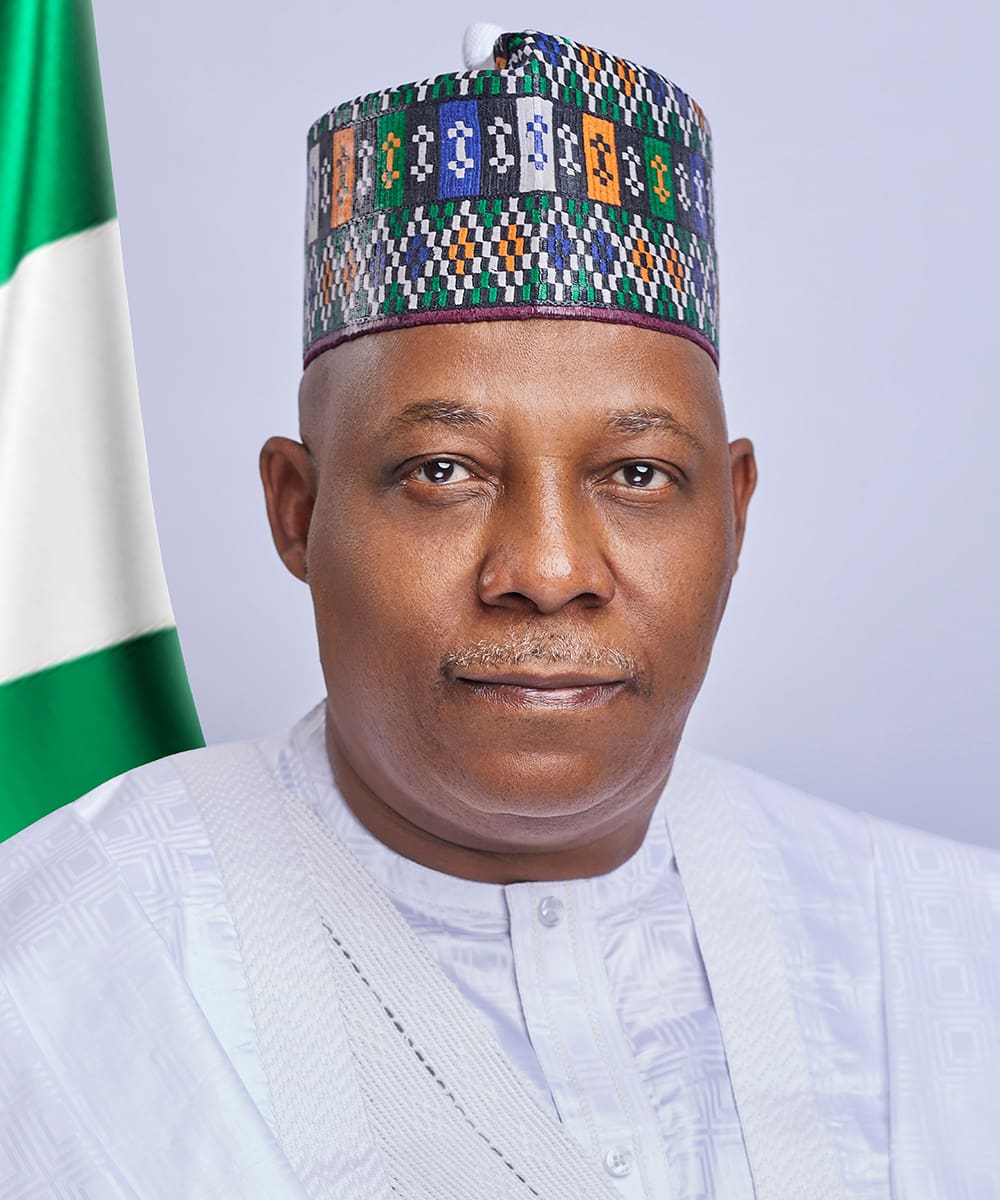
Vice President Kashim Shettima
Share

Vice President Kashim Shettima has departed Abuja for Addis Ababa, Ethiopia, to represent President Bola Ahmed Tinubu at the 2026 African Union (AU) Summit.

According to a statement issued on Thursday, February 12, 2026, by the Senior Special Assistant to the Vice President on Media and Communications, Stanley Nkwocha, the summit is themed “Assuring Sustainable Water Availability and Safe Sanitation Systems to Achieve the Goals of Agenda 2063.”

The summit will deliberate on advancing continental commitments toward sustainable water management, strengthening sanitation systems, and accelerating the broader development objectives outlined in the African Union’s Agenda 2063 framework.

Shettima is expected to join other African leaders at the 39th Ordinary Session of the Assembly of AU Heads of State and Government and the 30th Ordinary Session of the AU General Assembly, scheduled for February 14 and 15, 2026, respectively, in Addis Ababa.

In addition to plenary sessions, the Vice President will participate in high-level side events and bilateral meetings with political and business leaders. The engagements are aimed at reinforcing Nigeria’s diplomatic relations, deepening economic cooperation, and strengthening strategic partnerships across the African continent.

The Vice President is accompanied by cabinet ministers and senior government officials and is expected to return to Nigeria at the conclusion of the summit.

Continue Reading

Africa News

Gabon Coup Leader Sworn In As Interim President

Published

on

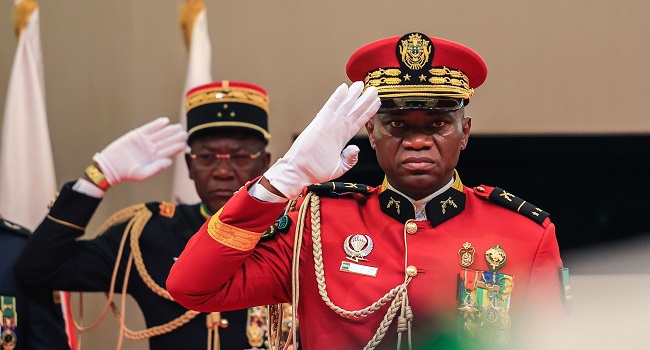
General Brice Oligui Nguema of Gabon
Share

General Brice Oligui Nguema, who led a coup last week that toppled Gabon’s 55-year-old dynasty, took the oath of office as interim president on Monday, promising to hold “free… (and) transparent elections” after an unspecified period.

Oligui, head of the elite Republican Guard, led officers in a coup on Wednesday against President Ali Bongo Ondimba, scion of a family that had ruled since 1967.

The ousting came just moments after Bongo, 64, was proclaimed victor in last month’s presidential election — a result branded a fraud by the opposition.

“I swear before God and the Gabonese people to faithfully preserve the republican regime,” said Oligui.

Dressed in the red ceremonial costume of the Republican Guard, Oligui also swore to “preserve the achievements of democracy”, at the ceremony held before judges of the Constitutional Court.

He immediately pledged in a speech to hold “free… (and) transparent elections” after a transition period which he did not specify, and to amnesty “prisoners of conscience.”

Elections Promised 

The coup leaders on Wednesday said they had dissolved the nation’s institutions, cancelled the election results and temporarily closed the borders.

Other countries have not acknowledged Oligui as Gabon’s legitimate leader and he faces pressure to spell out his plans for restoring civilian rule.

Oligui was lifted up triumphantly by his troops following the announcement of the coup, and in the days since has been seen flanked by generals and colonels.

He has also held hours of high-profile discussions with business and religious leaders, unions, political parties, NGOs, diplomats, and journalists, and has been taking notes and responding at length to questions and grievances.

On Friday, he vowed to create more democratic institutions that respect human rights, but said he would proceed “without haste”.

A fringe of the former opposition is urging Oligui to hand over power, but many people in Gabon seem happy about the overthrow of the Bongo dynasty, with celebrations in the streets of the capital Libreville and the economic hub of Port-Gentil.

Several Western countries and organisations have condemned the coup while acknowledging that it is different to others on the continent due to concerns over the credibility of the vote itself.

“Naturally, military coups are not the solution, but we must not forget that in Gabon there had been elections full of irregularities,” said the European Union’s foreign policy chief Josep Borrell.

‘Make Noise’ 

Former president Bongo had been seeking his third term in office after coming to power in 2009 following the death of his father Omar, who ruled Gabon with an iron fist for over 40 years.

The coup leaders said they had put him under house arrest and placed him “in retirement”.

But Bongo managed to distribute a video on social media where he said his son and wife Sylvia had been detained, appealing to “all friends that we have all over the world… to make noise” on his behalf.

National TV on Friday showed rolling images of the deposed president’s son Noureddin Bongo Valentin and other arrested officials in front of suitcases filled with cash allegedly seized from their homes.

The military has accused them of treason, embezzlement, corruption and falsifying the president’s signature, among other allegations.

Five other countries in Africa — Mali, Guinea, Sudan, Burkina Faso and Niger — have undergone coups in the last three years. Their new rulers have resisted demands for a short timetable for returning to barracks.


AFP


Continue Reading

Africa News

Niger Military Govt withdraws French ambassador’s immunity, orders his expulsion

Published

on

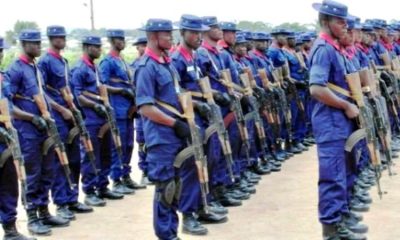
Niger Army
Share


Niger’s new military rulers have withdrawn the French ambassador’s diplomatic immunity and ordered police to expel him, according to a letter seen Thursday by AFP.

The envoy “no longer enjoys the privileges and immunities attached to his status as member of the diplomatic personnel in the French embassy,” according to their letter, dated Tuesday, to the foreign ministry in Paris.

“(His) diplomatic cards and visas and those of the members of his family have been cancelled. The police have been instructed to proceed to his expulsion,” it said.

The move follows a coup in the troubled Sahel state on July 26 that toppled a close French ally, President Mohamed Bazoum.

Relations with France spiralled downwards after Paris stood by Bazoum and refused to recognise Niger’s new rulers.

On Friday, the authorities gave French envoy Sylvain Itte 48 hours to leave the country.

France refused the demand, saying that the government had no legal right to make such an order.

On Tuesday, French President Emmanuel Macron singled out Itte for praise after he remained at his post.

French military spokesman Colonel Pierre Gaudilliere on Thursday warned that “the French military forces are ready to respond to any upturn in tension that could harm French diplomatic and military premises in Niger”.

“Measures have been take to protect these premises,” he said.

Continue Reading