News
EndSARS: SANWO-OLU RELEASES WHITE PAPER ON PANEL REPORT . — CALLS FOR HARMONY
Published
5 years agoon
By
News Editor
…Invites youths for Peace Walk to herald ‘healing of Lagos’
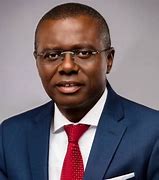
Lagos State deserves true healing after the disturbances that trailed last year’s protests against police brutality, Governor Babajide Sanwo-Olu said on Tuesday.
He said only sustenance of harmony can guarantee the realisation of aspirations of all residents.
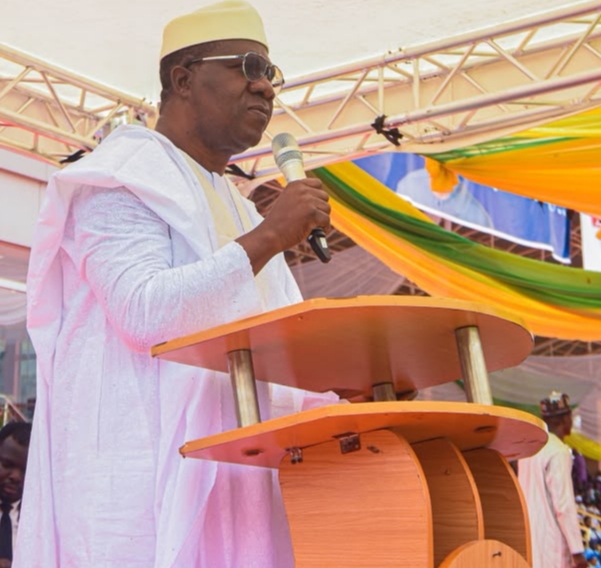
Sanwo-Olu spoke in a live broadcast held at the State House, Alausa, on the State Government’s position on the recommendations of the Judicial Panel of Inquiry on EndSARS submitted a fortnight ago.
The Governor said the State currently faced the hard choice of restoring harmony or doing itself a great harm, urging residents to join his administration in strengthening harmony and put the State on the path of peace.
Sanwo-Olu asked residents to reject those fueling anarchy and suspicion, clinging to unsubstantiated belief that carried no weight of verifiable evidence, while choosing emotion over facts.
His administration, he said, is ready to facilitate better communication between the youths and the State’s security machinery to resolve issues before they become intractable.
He said he would be leading
‘A Walk for Peace’ in December to herald the healing of the land, extending an open invitation to the youths, members of the diplomatic corps, civil society groups, students and the media as well as other stakeholders to join him in the Peace Walk.
The Governor specifically invited Folarin Falana (Falz), Debo Adebayo (Mr. Marcaroni), Dele Farotimi, Temitope Majekodunmi, Segun Awosanya (Segalinks), Adedotun (Just Detoun), Seun Kuti, Commissioner of Police, Hakeem Odumosu and Commander of Rapid Response Squad (RRS), CSP Yinka Egbeyemi and others to join him in the “historic march for our dear Lagos.”
He said: “Nobody will build this city for us. Let us show the world who we are. We are Lagosians. A people of great renown, driven by the irrepressible spirit of Lagos. It is a testimony to our strength and resilience as a people that, despite the huge losses incurred because of these terrible incidents, we have bounced back, with our economy as vibrant and virile as ever. I have no doubt whatsoever that our prospects are as bright as ever and the best lies ahead of Lagos State and Nigeria.
“We will make it easier for our young people to initiate formal complaints on human rights violations through the Ministry of Justice. We will also improve the coordination between the state government and the security agencies, including the police and the military. In this vein, we are studying how to improve security policy formulation, information sharing, and clarifying rules of engagement in times of social unrest.
“Just as we have established a mechanism to compensate all those who lost homes, businesses, and livelihoods to the violent destruction of October 2020, we shall also establish a detailed procedure for the just compensation of citizens with verified claims of police brutality committed during the protests.”
Speaking on last year’s EndSARS protests and the events that followed, especially the hijack of the protests by hoodlums, which led to the destruction of public and private property worth billions of naira, the Governor said the Government, the youth, protesters, the Police and other security agencies have learned the appropriate lessons from the EndSARS protests, particularly the Lekki Tollgate incident, with a view to averting any recurrence to the detriment of the State.
On mixed reactions following the release of the report of the Judicial Panel of Inquiry, Sanwo-Olu said his administration remained committed to the process that would bring a closure to a “painful episode” in the history of the State.
The much-expected White Paper, the Governor pledged, will be issued later in the day.
He recalled that the panel was originally inaugurated to investigate allegations of police brutality committed by the disbanded SARS and in the aftermath of what happened on October 20, 2020, he decided to expand the mandate to include investigating what happened at the Lekki Tollgate that night.
He said: “As a matter of good faith and a sincere commitment to uncovering the truth, we constituted a panel of individuals that we believed were independent, credible, and representative of the various stakeholder communities interested in the movement against police brutality.
“Apart from the chairman of the panel being a respected retired jurist, various stakeholders including the youths, #EndSARS protesters, the police and civil society groups were represented on the panel. I am sure no member of the panel can claim that the State Government made any attempt to influence them in any way throughout the duration of its sitting.
“While I commend the panel for undertaking its task to the best of its abilities, it is however regrettable that the panel’s work and the leakage of an unauthorised version of the report have generated much tension. Sadly, a deep wound has been reopened.
“The heated exchanges among various shades of opinion on the report have unfortunately put us all at the risk of missing the larger picture; the fact that what we all seek in common is a land in which we are all safe and secure, law enforcement agents are trusted, and justice is guaranteed for all.
“We have no intention to engage in histrionics or further inflame passion on a matter that has generated intense interest and controversy nationally and internationally. Our decisions and actions will be based entirely on the law, the weight of evidence, and unblemished respect for the truth.”
Governor Sanwo-Olu, while expressing his administration’s commitment to end human rights abuses, said he has never been in any doubt as to the sincerity, patriotism and noble motivations of both organisers of EndSARS protests and those who participated in the movement to see an end to the human rights abuses by the now disbanded Special Anti- Robbery Squad (SARS).
He said it is also on record that the Federal Government accepted all the demands of the protesters, including the immediate scrapping of SARS, adding that the National Economic Council (NEC) also recommended the establishment of State Panels of Inquiry into cases of police brutality and the Lagos State Government was the first to set up its own panel.
He said: “I can boldly say that no State took the advocacy for police reforms and justice in the face of documented brutality more seriously than we did in Lagos. We have so far paid N420 million in compensation to victims of police brutality, in line with the recommendations of the panel.
“My good people of Lagos State, you will also recall that in solidarity with the protesters, I joined our youths at various points during the demonstrations, particularly at the Lekki Tollgate and Alausa.
“I received the charter of demands of the protesters and promised to pass them on to the President and Commander-In-Chief of the Armed Forces, President Muhammadu Buhari.
“I kept my word and passed on the demands to the President, who promised to act promptly on the issues raised. However, perhaps as a result of entrenched lack of trust between the government and the governed over the years, the protesters responded to the government’s concessions with skepticism, and the demonstrations continued, even growing in intensity.
“Regrettably, what had been very well organized and peaceful protests were subsequently hijacked in different parts of the country, particularly in Lagos. In the ensuing descent into anarchy, many of our compatriots were caught up in the violence. Several policemen were killed. Public and private property, including critical infrastructure, were set on fire, leading to losses estimated at several billions of naira.
“At that point, I imposed a curfew to restore normalcy in Lagos. We had only one goal in mind: the maintenance of law and order, and the protection of citizens going about their daily lives. This is more than a legal duty. It is a sacred obligation under the constitution of the Federal Republic of Nigeria, which I swore to uphold,” the governor explained.

You may like
News
200,000 Asylum Seekers Risk Deportation as US Plans Mass Visa Revocation
Published
6 minutes agoon
August 26, 2026
The United State US Government headed by President Donald Trump is preparing to revoke the business and tourism visas of as many as 200,000 foreigners who have applied for or are currently seeking asylum in the United States, in what could become the largest single mass visa revocation in the country’s history.
The proposed action targets holders of B1 and B2 visas, which are generally issued for business travel and tourism. According to State Department documents obtained by the Associated Press and US officials, the visas under consideration were issued between 2016 and 2026 to people who subsequently sought asylum or have pending asylum claims.
The State Department is expected to begin announcing the revocations in the coming weeks, although officials have stressed that the final number remains uncertain and could change as the review progresses.
State Department spokesman Tommy Pigott said the agency was coordinating with the Department of Homeland Security to identify and revoke the visas of foreigners who entered the country claiming to be short-term visitors before filing for asylum.
The administration argues that the measure is aimed at addressing what it considers abuse of visitor visas and preventing people from using temporary visas as a route to remain permanently in the United States.
However, the proposed policy is likely to face legal challenges. Immigration advocates and lawyers are expected to question whether the government can use the visa-revocation process to broadly target people who later sought protection through the US asylum system.
The revocation of a B1 or B2 visa would not automatically mean that every affected person would be immediately deported. US officials told the AP that many people with pending asylum cases could instead be reclassified while losing their status as business or tourism visitors.
The distinction is significant because seeking asylum in the United States is a separate immigration process from holding a visitor visa.
The planned action would therefore primarily strip affected foreigners of their existing non-immigrant visa status rather than automatically determine the outcome of their asylum claims.
The proposed mass revocation comes as the Trump administration intensifies its broader immigration crackdown, including tougher visa screening, increased scrutiny of applicants’ backgrounds and social-media activity, and other restrictions on legal and humanitarian immigration.
The administration has already revoked more than 175,000 visas since Trump returned to office, according to Reuters, although those cancellations involved a range of cases and reasons.
If the planned B1 and B2 revocations proceed at the upper estimate of 200,000, the move would surpass previous large-scale visa cancellation efforts and represent an unprecedented use of visa revocation as part of the administration’s immigration enforcement strategy.
The State Department has not confirmed that exactly 200,000 visas will be revoked, and officials say the number remains dynamic. The final scope of the policy could also be affected by legal challenges or changes before implementation.
News
How Tracking Helped ICPC Recover N2.06bn From Kaduna Projects
Published
2 days agoon
August 24, 2026
The tracking of 31 constituency and executive projects across the three senatorial districts of Kaduna State, has enabled the Independent Corrupt Practices and Other Related Offences Commission (ICPC) to recover N2.056 billion.
The projects, valued at about N2 billion, were monitored under the commission’s Constituency and Executive Project Tracking Initiative, which aims to ensure that public funds allocated to development projects are properly utilised and that projects are executed in line with approved specifications.
The exercise was coordinated by Chief Superintendent Haruna Aminu, who was among the commission’s officers monitoring the selected projects across the Kaduna South, Kaduna North, and Kaduna Central Senatorial Districts.
The officers visited selected project sites to assess their level of execution, determine whether they represented value for money and verify compliance with approved project specifications.
The commission also examined the utilisation of funds allocated to the projects as part of efforts to promote transparency and accountability in the implementation of government-funded projects.
The recovery of N2,056,467,766.86, representing Two Billion, Fifty-Six Million, Four Hundred and Sixty-Seven Thousand, Seven Hundred and Sixty-Six Naira, Eighty-Six Kobo, according to the ICPC, was facilitated by the monitoring exercise.
This feat, the commission maintained, gives highlights the importance of sustained monitoring of constituency and executive projects to protect public resources and ensure that government interventions deliver the intended benefits to citizens.
The ICPC’s project tracking initiative is designed to promote transparency, accountability and value for money in the implementation of government-funded projects, while deterring the diversion and misuse of public resources.
The recovery of the funds is therefore considered a significant outcome of the Kaduna State exercise, demonstrating the role of effective oversight in safeguarding government funds and ensuring proper implementation of public projects.
New Zealand’s government has introduced legislation to ban children under 16 from using social media, joining a growing international push to shield young people from harmful online content and the risks associated with excessive social media use.
Prime Minister Christopher Luxon said the proposed law was necessary to protect a generation of children from what he described as the growing harms of social media, including addictive technology, harmful content and online pressures.
“We simply cannot accept the harm being done to a generation of New Zealand children,” Luxon said.
The prime minister said one in three New Zealand children aged between 13 and 17 now spends at least five hours a day on social media. He said excessive use was affecting young people’s family life, mental health, sleep and education.
Under the proposed legislation, major platforms including Instagram, TikTok, Snapchat and Facebook would be required to take “reasonable steps” to ensure their users are at least 16 years old.
Platforms could use existing account information, facial age-estimation technology, digital identity services and formal identification documents to verify users’ ages.
Companies would also be required to assess the risks their platforms pose to children and report on measures taken to reduce those risks.
Firms that fail to comply could face penalties of up to 10 per cent of their global revenue.
Education Minister Erica Stanford said the bill would place clear legal obligations on social media companies, while children and their parents or caregivers would not face penalties.
However, the legislation faces significant political hurdles. The government’s coalition partners, the libertarian ACT Party and populist NZ First, have expressed opposition to the proposal.
NZ First criticised Australia’s experience with a similar ban, describing the legislation there as a “colossal failure.” ACT has also argued that the proposed restrictions would not work and that teenagers could easily find ways around them.
The main opposition Labour Party has yet to decide whether to support the bill. It has submitted dozens of questions concerning issues including how age verification would operate and which platforms would be covered.
“We take this legislation very seriously,” Labour spokesman Reuben Davidson said, warning that the safety of young people in Aotearoa New Zealand was at stake as they faced increasingly complex online risks.
New Zealand’s proposal follows Australia’s landmark social media restrictions, which came into effect in December 2025 and barred under-16s from platforms including Facebook, Instagram and TikTok. The Australian measures were introduced to tackle problems such as online bullying and exposure to “predatory algorithms.”
However, a peer-reviewed study by Australia-based researchers published in June found little evidence that teenagers had significantly reduced their use of social media following the ban.
New Zealand’s proposed legislation will therefore face close scrutiny over whether age restrictions can be effectively enforced and whether they can deliver the intended protections for young people without simply driving teenagers toward alternative ways of accessing social media.
Latest News
200,000 Asylum Seekers Risk Deportation as US Plans Mass Visa Revocation
ShareThe United State US Government headed by President Donald Trump is preparing to revoke the business and tourism visas of...
2026 WAFU-B CAF: Edo Queens Trash AS Garde Nationale in Burkina Faso, 7-0
ShareNigerian champions Edo Queens made a stunning start to their 2026 WAFU-B CAF Women’s Champions League qualifying campaign, trashing AS...
Yari Predicts Tinubu’s 2027 Victory, APC to Retain Power Beyond 2031
Share Director-General of the All Progressives Congress (APC) Presidential Campaign Council, Abdul’Aziz Yari, has expressed confidence that President Bola Ahmed...
CLE Bans Five Law Students From Bar Final Exam For 10 Years
Share The Council of Legal Education (CLE) has barred five law students from taking the Bar Final Examination for 10...
FG unveils New Reforms to Tackle Almajiri, Out of School Children
ShareThe Federal Government has unveiled new reforms aimed at ensuring every Nigerian child returns to school and acquires relevant knowledge...