Connect with us

News

Education: Half-salary makes our members casual workers – ASUU

Published

on

ASUU Logo
Share


The Academic Staff Union of Universities, ASUU, has said the half-salary payment to its members by the Federal Government as an aberration that makes the lecturers casual workers.

It regretted the response of government towards ASUU’s demonstration of trust was the so-called ‘pro-rata’ payment for eighteen days as the October salary of academics, thereby portraying them as daily paid workers.

The union, in a statement titled: “We Are Intellectuals, Not Casual Workers”, also said government’s action was in contravention of all known rules of engagement in any contract of employment for academics the world over.

ASUU, in the statement released Tuesday and signed by its President, Prof. Emmanuel Osodeke, following the National Executive Committee, NEC meeting it held Monday in Abuja, said: “Paying academics on “pro-rata” basis, like casual workers, is unprecedented in the history of university-oriented labour relations and, therefore, condemned this attempt to reduce Nigerian scholars to casual workers in its entirety.”

ASUU’s statement

The statement read in full: “The Academic Staff Union of Universities (ASUU) suspended its eight-month strike on 14th October, 2022, in obedience to the order of the National Industrial Court and in further consideration of intervention efforts of well-meaning Nigerians, including the Honourable Speaker of the House of Representatives, Rt. Hon. Femi Gbajabiamila.

“The action of the Union was a display of manifest trust in the judiciary and other institutions and organs of government to always put national interest above all other considerations.

“This we believe, as a union of thinkers, intellectuals, and patriots, will not only aid the process of amicable resolution of the crisis, but will also set the tone for smooth industrial relations between Government and Nigerian workers at large.

“Unfortunately, the response of government towards ASUU’s demonstration of trust was the so-called ‘pro-rata’ payment for eighteen days as the October 2022 salaries of academics thereby portraying them as daily paid workers!

“This is not only an aberration, but a contravention of all known rules of engagement in any contract of employment for academics the world over.

“At an emergency meeting of the ASUU’s National Executive Committee (NEC), held on Monday, 7th November, 2022, the Union deliberated on developments since the suspension of the strike.

“NEC noted with dismay that paying academics on “pro-rata” basis, like casual workers, is unprecedented in the history of university oriented labour relations and therefore condemned this attempt to reduce Nigerian scholars to casual workers in its entirety.

“NEC commends the membership of ASUU for their perseverance in the face of untold hardship and unwarranted provocation by some notorious agents of the ruling class.

“NEC further appeals for the understanding of Nigerian students, parents and other genuinely concerned individuals and groups while the Union continues to pursue positive resolution of this avoidable crisis within the ambit of legality without compromising the interests and welfare of Nigerian intellectuals

Continue Reading
Click to comment

Leave a Reply

Your email address will not be published. Required fields are marked *

News

Ekiti Bureau Congratulates Oyebanji, Prioritises Curbing Capital Flight

Published

on

Share


The Ekiti State Bureau of Local Content has congratulated Governor Biodun Oyebanji on his inauguration for a second term in office, pledging to prioritise efforts to address capital flight and strengthen the state’s economy.

The Bureau, in a congratulatory message issued by its management, and signed by the director of Admin Mr Tope Fasoyin, described the governor’s second-term inauguration as an opportunity to consolidate the achievements of his first tenure and advance policies aimed at promoting sustainable economic development in the state.


The agency reaffirmed its commitment to supporting the governor’s vision of retaining more economic resources within Ekiti State through effective implementation of local content policies.


It said efforts would be intensified to promote the participation of indigenous businesses in government projects, encourage patronage of locally produced goods and services, and create more opportunities for local contractors, suppliers, and service providers.


According to the Bureau, prioritising local content would help reduce capital flight, stimulate indigenous enterprise, create employment opportunities, and ensure that more economic benefits accrue to the people of Ekiti State.


The management also pledged to collaborate with relevant stakeholders to ensure that the governor’s economic development agenda is translated into tangible benefits for residents.


It expressed confidence that Governor Oyebanji’s second term would bring renewed opportunities for economic growth, investment, and sustainable development across the state.


The Bureau wished the governor a successful and impactful second term in office.

Continue Reading

News

Ekiti Assembly Confirms Apata, Oyebode as Commissioner-Designates, Approves 10 Special Advisers

Published

on

Share


The Ekiti State House of Assembly has confirmed the nominations of Mr. Dayo Apata, SAN, and Mr. Akintunde Oyebode as commissioner-designates following their screening during plenary on Wednesday, October 28, 2026.


The Assembly also approved the appointment of 10 Special Advisers to support governance across key sectors of the state.


The Speaker of the House, Rt. Hon. Adeoye Aribasoye, presided over the plenary, during which the House considered nominations and other legislative matters forwarded by Governor Biodun Oyebanji.


According to a statement by the Chairman of the House Committee on Media and Public Affairs, Hon. Babatunde Oke, the two commissioner nominees were allowed to take a bow and leave after the Speaker acknowledged their previous service as commissioners and their familiarity with the legislative process.


Aribasoye noted that Apata and Oyebode had appeared before the House on several occasions, either for screening or to present their stewardship accounts, adding that their records were already known to lawmakers.


Following the Speaker’s remarks, members unanimously agreed to allow the nominees to take a bow and leave without further questioning. The House subsequently considered and confirmed their nominations.


Meanwhile, the screening of another commissioner nominee, Dr. Oyebanji Filani, has been rescheduled to Monday, November 2, 2026.


Filani had written to the Assembly to explain his inability to attend the screening scheduled for Wednesday and requested a new date, a request which the House granted.


In another development, the Assembly commenced consideration of the 2026 Supplementary Appropriation Bill, with the Leader of the House, Hon. Tolu Ige, leading the debate.


After the bill was read for the second time by the Clerk, the Speaker referred it to the House Committee on Finance and Appropriation for further legislative scrutiny. Other relevant committees were also designated to serve as sub-committees in the consideration of the bill.


The Assembly said it remained committed to expediting legislative business, including confirmation processes and consideration of bills, in the interest of good governance and service delivery to the people of Ekiti State.


The statement was signed by Hon. Babatunde Oke, Chairman of the House Committee on M

edia and Public Affairs.

Continue Reading

News

Bamidele Urges Lagos, Southwest States to Establish Regional Investment Compact

Published

on

Senate Leader, Senator Michael Opeyemi Bamidele
Share


The Leader of the Senate, Senator Opeyemi Bamidele, has called on the Lagos State Government and other Southwest states to establish a regional development and investment compact to accelerate infrastructure development, economic integration and regional prosperity.

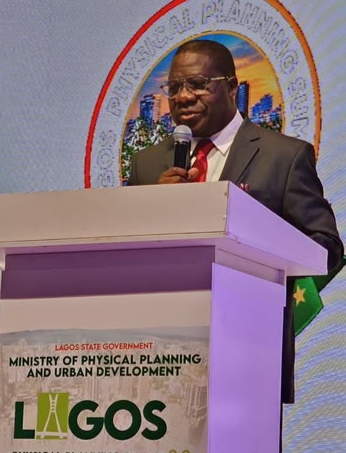
Bamidele made the call on Thursday while delivering a keynote address at the Lagos Physical Planning Summit held at Eko Hotel and Suites, Victoria Island, Lagos, where he proposed a Lagos-Southwest Spatial Development and Investment Compact.

He said Lagos could not secure its long-term prosperity through isolated state planning, stressing that its economy was deeply interconnected with neighbouring states through labour markets, housing, agriculture, manufacturing, transportation, trade and environmental systems.

According to him, the proposed compact would provide a framework for coordinating cross-border infrastructure, developing regional economic corridors, strengthening environmental resilience and mobilising investments in projects that benefit multiple states.

Bamidele urged the Lagos State Government to move beyond treating physical planning as a routine governmental activity and embrace it as a coordinated system for delivering economic value, social welfare, environmental sustainability and regional prosperity.

He explained that achieving this transition would require a change in mindset, stronger institutions, reorganisation of investment priorities and closer alignment between development plans and implementation.

The Senate Leader proposed a collaborative framework involving Lagos, Ogun, Oyo, Osun, Ondo and Ekiti states, alongside relevant federal institutions, planning authorities, infrastructure agencies, private-sector operators, professional bodies and development partners.

He said the framework should prioritise regional transportation networks, complementary economic corridors, cross-border urban planning, environmental resilience and investment mobilisation.

Bamidele also urged Lagos to leverage the emerging digital revolution by expanding broadband infrastructure, smart-city technology, digital services, innovation hubs and technology-driven enterprises, while equipping its workforce with the digital skills required to compete in a changing economy.

He maintained that the future of Lagos would depend not only on the quality of its development plans but also on the determination with which they were financed, coordinated and implemented.

“We must connect physical planning to economic development, infrastructure investment to measurable public benefits, digital innovation to effective governance, and state-level priorities to regional cooperation,” he said.

Bamidele further emphasised the need for capable institutions, predictable regulations, transparent financing, responsible investment and sustained collaboration among governments, the private sector, professional institutions, communities and development partners.

He expressed confidence that a coordinated Lagos-Southwest development framework would strengthen regional economic integration, unlock investment opportunities and promote sustainable development across the six states.


Continue Reading