Connect with us

International

ECOWAS Court wants judicial systems of Member States harmonised

Published

on

Justice
Share


President of the ECOWAS Court, Justice Edward Asante has advocated for the harmonization of the judicial systems of Member States in order to attain a Community legal regime that supports the region’s integration objectives.

Asante made this known while making a presentation at a judicial forum for judges, magistrates and officials of the Kwara state judiciary in Ilorin during the Court’s ongoing week-long sensitization campaign in the state.

The Communications Department of the ECOWAS Court disclosed this in a statement made available to the News Agency of Nigeria (NAN) on Friday in Abuja.

Asante in the presentation delivered by Justice Dupe Atoki, said harmonization of the ECOWAS judicial system can be achieved through the alignment of the legal texts of the Community with those of the States.

Asante stressed that the relationship between the ECOWAS and national courts as ‘a crucial element in the integration process of ECOWAS.’

“It is therefore of utmost importance that Member States of ECOWAS domesticate the ECOWAS Revised Treaty and the Protocols and Supplementary Acts of the Community.

“It is also imperative, to deepen the relationship between the judges of the ECOWAS Court of Justice and the national courts of ECOWAS Member States,” Asante said.

Asante stated that with the international character of the ECOWAS Court and its long held position, it is neither in competition with national courts nor an appellate court over its decisions.

He explained that the ECOWAS Court and National Courts play complementary roles in the dispensation of justice and the integration of the region.

“In a long chain of decisions, the ECOWAS Court of Justice has consistently held that it is not an appellate Court over national Courts of Member States.

“And has maintained that it has no jurisdiction to make any declaration on the Judgments of national courts, except where the national Courts or parties refer issues of interpretation of Community texts.”

He stated that the ECOWAS Court only that the national courts have the obligation to implement the decisions of the Court.

The President identified the possible areas of conflict between the regional and national courts to include their co-location within the same geographical space; their concurrent human rights jurisdiction.

Other areas of conflict to include “the lack of requirement for the exhaustion of local remedies before the ECOWAS court which could result in forum shopping.

“The failure by Member States to domesticate the Revised Treaty of 1993 and the Protocol on the Court in accordance with their treaty obligations.

“Failure by Member States to comply with or enforce the Judgments of the Court; the gaps in the ECOWAS legal texts.

“And the municipal laws of Member States leading to the failure to clearly define the relationship between both courts.

Chief Judge of Kwara, Justice Sulyman Kawu praised the thoughtfulness of the regional court in organizing the campaign.

Kawu said the sensitisation would not only create greater awareness of the Court among the citizens but open the door for more legal practitioners from the state to ‘ply their trade before the court’ and widen their scope of the law.

He reminded those with judicial powers of the ‘enormous and far reaching powers they exercise over our fellow men and women.

This he said requires legal practitioners to exhibit good character, reputation, diligence, hard work, honesty, integrity, sound knowledge of the law and consistent adherence to professional ethics.

Continue Reading
Click to comment

Leave a Reply

Your email address will not be published. Required fields are marked *

International

Tinubu Congratulates Modi on 25 Years of Unbroken Public Service

Published

on

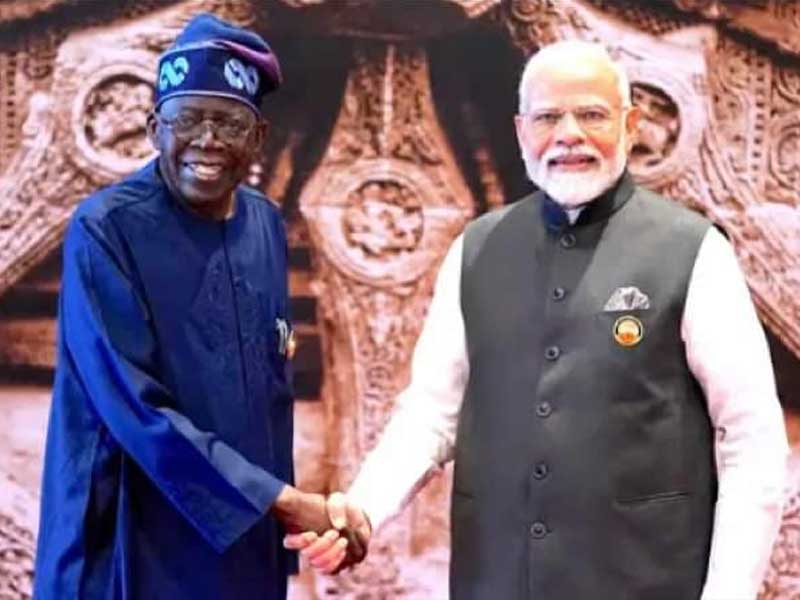
President Bola Ahmed Tinubu and Indian Prime Minister Narendra Modi
Share

President Bola Ahmed Tinubu has congratulated Indian Prime Minister Narendra Modi on the 25th anniversary of his assumption of public office, describing the milestone as a rare achievement in democratic governance.

In a statement issued on Wednesday, October 7, 2026, President Tinubu, on behalf of the government and people of Nigeria, extended warm and fraternal greetings to Modi as he marked 25 years since he first became Chief Minister of Gujarat in 2001.

Tinubu noted that Modi’s public service had continued without interruption, first serving Gujarat for more than 12 years before becoming Prime Minister of India in 2014.

According to the Nigerian President, a quarter-century of continuous leadership in the world’s most populous country reflects the enduring confidence and trust reposed in Modi by the Indian people.

He commended the Indian Prime Minister’s leadership in development, particularly in infrastructure, digital public services, financial inclusion and innovation, noting that his tenure had contributed to India’s emergence as one of the world’s largest and fastest-growing economies.

Tinubu also highlighted the strong strategic relationship between Nigeria and India, recalling Modi’s historic State Visit to Abuja in November 2024, during which Nigeria honoured him with the Grand Commander of the Order of the Niger (GCON).

He said the visit provided fresh momentum for bilateral cooperation in trade and investment, energy, defence and security, health, education and technology.

The President further stressed that Nigeria and India, as fellow democracies and leading voices of the Global South, shared a commitment to building a fairer, more inclusive and representative international order.

Tinubu expressed confidence that the friendship and strategic partnership between both countries would continue to deepen under Modi’s leadership.

He wished the Indian Prime Minister good health, strength and continued success in his service to the people of India.

Continue Reading

International

EU Allocates €2.3m to Combat Cholera Outbreaks in West, Central Africa

Published

on

EU Flag
Share


The European Commission has allocated €2.3 million in emergency humanitarian funding to Nigeria, Cameroon, the Central African Republic (CAR) and Chad to support efforts to contain ongoing cholera outbreaks across the countries.

The funding comes amid a growing cholera burden in Africa, with the World Health Organization (WHO) reporting more than 61,000 cases in the African Region during the first five months of 2026.

Nigeria will receive the largest share of €1.5 million to strengthen the country’s response to the outbreak. The funds will support additional intervention teams, the provision of essential cholera supplies, including treatment kits, and water, sanitation and hygiene interventions.

The EU said the support will also help treat public water points and household water sources, intensify epidemiological surveillance in hard-to-reach areas, strengthen case management and improve risk communication and community sensitisation.

Cameroon will receive €100,000 to support outbreak containment and case management. The funding will provide additional humanitarian personnel, essential medicines, cholera treatment units and oral rehydration points in communities most affected by the outbreak.

In the Central African Republic, €500,000 will be used to scale up cholera case management and vaccination, while strengthening water, sanitation and hygiene interventions. The funds will also support risk communication, community engagement, surveillance, case detection and dignified and safe burials.

Chad will receive €200,000 to help break the chain of cholera transmission through improved access to safe water, sanitation and hygiene, as well as community support for surveillance and case management.

The EU Commissioner for Preparedness and Crisis Management, Hadja Lahbib, said cholera remains a preventable and treatable disease but continues to threaten lives where access to safe water and healthcare is limited.

“Cholera is preventable and treatable. Yet it still threatens lives when people lack something as basic as safe water and healthcare,” Lahbib said.

She added that the emergency funding would enable humanitarian partners to respond quickly, contain outbreaks and protect communities at greatest risk.

Cholera is an acute bacterial infection caused by Vibrio cholerae, which is commonly transmitted through contaminated food or water. Severe cases can result in rapid dehydration and require urgent medical treatment.

The latest EU intervention is aimed at strengthening public health responses, preventing further transmission and protecting vulnerable communities across the four affected countries.

Continue Reading

International

Nigeria, Benin Deepen Defence Cooperation to Combat Cross-Border Security Threats

Published

on

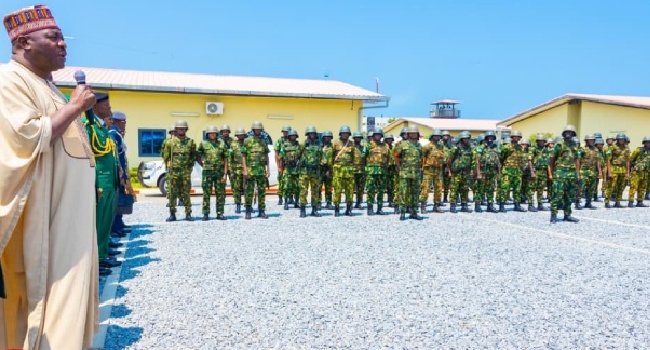
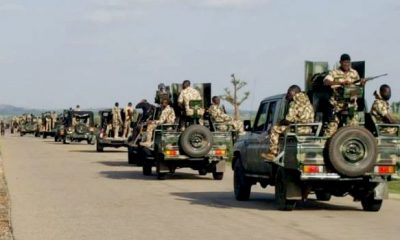
General Musa addressing troops Musa inspects Nigerian Army troops deployed in Togbin, Cotonou, on the Peace Support Mission in the Republic of Benin under Operation ATILEYIN ALAFIA II (Photo by Office of Honourable Minister of Defence)
Share


Nigeria and the Republic of Benin have agreed to strengthen their bilateral defence cooperation and deepen joint efforts to tackle cross-border security threats, terrorism, piracy and other forms of transnational crime across West Africa.

The agreement followed a three-day working visit to Cotonou by Nigeria’s Minister of Defence, General Christopher Musa (Rtd.), at the invitation of his Beninese counterpart, Gildas Agonkan.

During the high-level engagements, both countries discussed measures to harmonise regional security frameworks, enhance intelligence sharing and reinforce military collaboration to safeguard democratic governance, secure shared land borders and strengthen security in the Gulf of Guinea against piracy and maritime crime.

A major outcome of the discussions was the decision to establish seamless, real-time intelligence fusion mechanisms that will enable the armed forces of both countries to track, monitor and neutralise transnational criminal networks and insurgent groups before they carry out attacks.

General Musa reaffirmed Nigeria’s commitment to a zero-tolerance policy against terrorism, stressing the need for closer military cooperation to deny violent extremist groups safe havens within the shared border communities. Nigeria also offered Benin an expanded pursuit range for security personnel operating along the borders to help prevent insurgent infiltration, illegal trafficking and other cross-border crimes.

As part of the visit, the Defence Minister inspected Nigerian Army troops deployed in Togbin, Cotonou, under Operation ATILEYIN ALAFIA II, a Peace Support Mission in the Republic of Benin.

Addressing the troops, General Musa commended their dedication and assured them of the Federal Government’s continued support.

“We are going to partner with the troops of the Republic of Benin to ensure that we stop all those bandits and criminals that are killing people in our countries, so that we can deal with them,” he said.

He explained that one of the key objectives of his visit was to engage with Benin’s Defence Minister to develop coordinated operational strategies aimed at preventing criminal elements from exploiting the porous borders between both countries.

General Musa also conveyed President Bola Ahmed Tinubu’s commitment to improving the welfare of members of the Armed Forces. He assured the troops that the Federal Government was taking concrete steps to provide better welfare packages, equipment and other necessary support to enable them to effectively carry out their duties.

The Nigerian delegation also visited the Centre for Post-Conflict Demining and Explosive Ordnance Disposal Operations, as well as the Glo-Djigbe Industrial Zone. The visits were aimed at promoting local capacity building and supporting the Defence Ministry’s Intelligence-Driven and Technology-Enabled Defence strategy.

Both countries also exchanged ideas on strengthening industrial development, economic cooperation and regional integration in line with the Economic Community of West African States (ECOWAS) protocols and the African Continental Free Trade Area (AfCFTA).

General Musa further held diplomatic consultations with Nigeria’s Ambassador to the Republic of Benin, Mrs. Mopelola Ibrahim, where he reaffirmed President Tinubu’s commitment to military welfare, regional peace and enhanced security cooperation among neighbouring countries.

The Defence Minister has since concluded his official visit and returned to Abuja after reaffirming Nigeria’s commitment to closer defence collaboration with the Republic of Benin in addressing emerging security challenges across the West African sub-region.


Continue Reading