Connect with us

Uncategorized

Democracy Day: Criticise Me, But Never Lose Faith in Nigeria – Tinubu Tells Citizens

Published

on

President Bola Ahmed Tinubu
Share


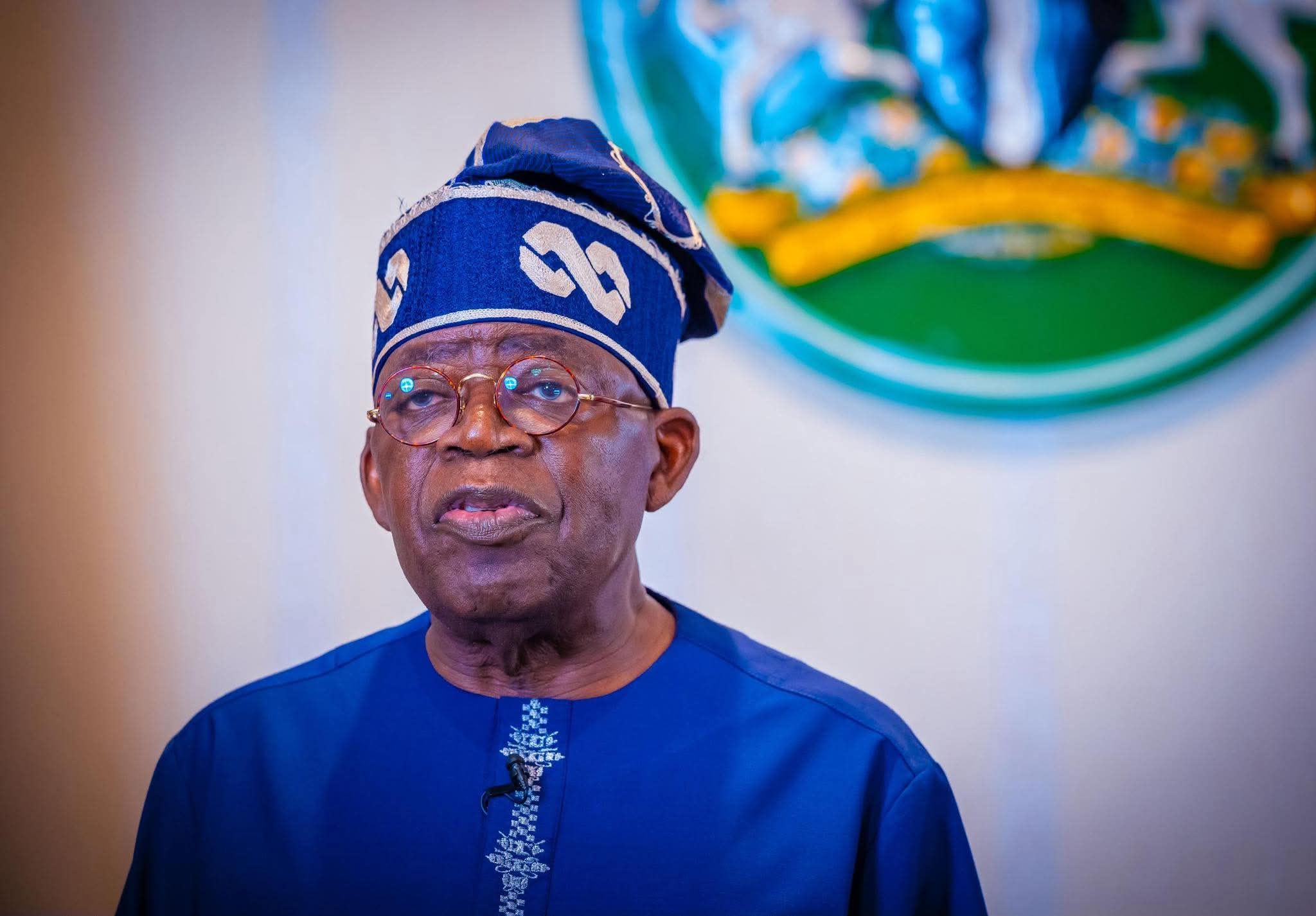
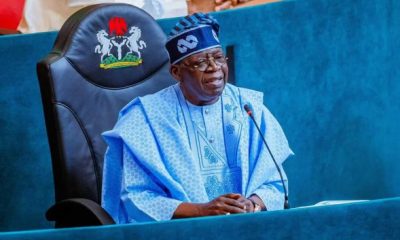
President Bola Ahmed Tinubu has called on Nigerians to continue holding his administration accountable through constructive criticism while maintaining confidence in the nation’s future and democratic institutions.

Speaking in his Democracy Day address on Friday, the President stressed that criticism and disagreement are vital elements of a healthy democracy, but warned that citizens should not allow dissatisfaction with government policies to erode their belief in Nigeria.

“Criticise me, disagree with me, but never stop believing in Nigeria,” Tinubu declared.

The President emphasized that democracy flourishes when leaders are subjected to scrutiny and citizens actively participate in public discourse. He noted that disagreement with government decisions should not translate into hopelessness about the country’s prospects.

Tinubu paid tribute to key democratic institutions, including the National Assembly, the Judiciary, the media, and civil society organisations, describing them as the “guardrails of the republic” whose responsibilities remain crucial to the survival of democracy.

Addressing these institutions, he said, “To our National Assembly, Judiciary, the Press, and Civil Society: you are the guardrails of our republic.”

He added that their role in questioning authority, defending democratic principles, and ensuring accountability remains indispensable to national development.

Ahead of the forthcoming governorship elections in Ekiti and Osun States, the President urged all stakeholders to work together to guarantee free, fair, peaceful, and credible elections.

He specifically called on the Independent National Electoral Commission (INEC), security agencies, political parties, and voters to uphold the integrity of the electoral process.

“I urge INEC, security agencies, and all parties to ensure these polls are peaceful and credible. Democracy fails when citizens doubt the process,” he said.

Tinubu also delivered a message of hope to Nigerian youths, encouraging them to remain committed to the country despite prevailing economic and social challenges.

According to him, the younger generation has a critical role to play in building a stronger and more prosperous Nigeria.

“Nigeria is your home and your future. Build here, code here, work here, and vote here,” the President said.

He further urged young Nigerians not to abandon the country but to contribute actively to solving its challenges and shaping its future.

“Every great nation was built by those who stayed to solve problems, not by those who abandoned ship,” he added.

The President also commended members of the Armed Forces, the Nigeria Police Force, and intelligence agencies for their sacrifices in protecting the country’s territorial integrity and maintaining internal security.

In addition, he expressed appreciation to traditional rulers, religious leaders, and community leaders for their contributions to peacebuilding, conflict resolution, and national unity.

Tinubu acknowledged that government alone cannot achieve the nation’s aspirations and called for greater collaboration among all segments of society.

“The government cannot do it alone,” he said, urging Nigerians to embrace unity, patriotism, and collective responsibility in the quest for national progress.

The Democracy Day message underscored the President’s appeal for continued civic engagement, stronger democratic institutions, peaceful elections, and renewed commitment to nation-building.

Uncategorized

Senate Leader Bamidele to Deliver Lecture on Proactive Lawmaking at NIPSS

Published

on

Share


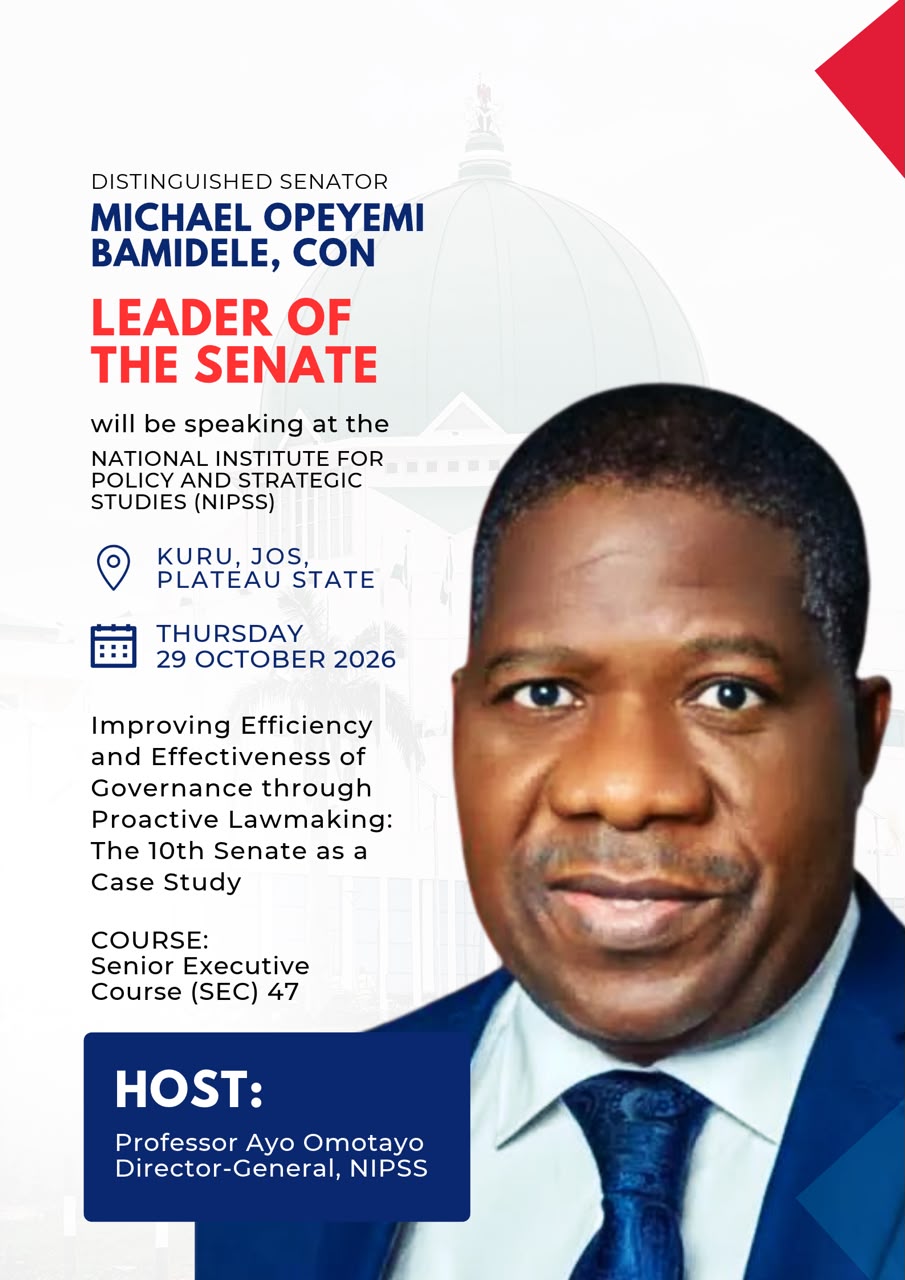
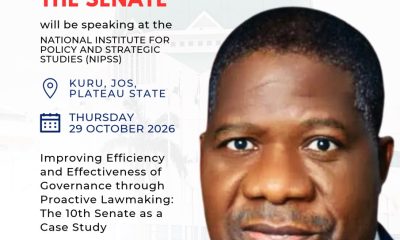
The Leader of the Senate, Senator Michael Opeyemi Bamidele, is scheduled to deliver a lecture at the National Institute for Policy and Strategic Studies (NIPSS), Kuru, Jos, Plateau State, on Thursday, October 29, 2026.


The lecture, titled *“Improving Efficiency and Effectiveness of Governance through Proactive Lawmaking: The 10th Senate as a Case Study,”* is designed for participants of the institute’s Senior Executive Course 47.


Senator Bamidele is expected to draw from his legislative experience and leadership of the 10th Senate to examine how proactive lawmaking can improve governance, strengthen public institutions and promote national development.


The session will also explore the role of effective legislative processes and forward-looking policies in improving public service delivery, strengthening democratic institutions and achieving better governance outcomes.


The Director-General of NIPSS, Professor Ayo Omotayo, will host the engagement, which forms part of the institute’s efforts to expose participants to practical leadership experiences and strategic perspectives on public policy and national development.


The lecture is expected to provide a platform for discussions on the relationship between effective legislation and governance, while highlighting the importance of collaboration between the legislature and strategic national institutions in shaping policies and strengthening Nigeria’s governance framework.

Continue Reading

Uncategorized

GOV OYEBANJI MOURNS AFENIFERE LEADER, FASORANTI

Published

on

Share


Ekiti State Governor, Mr Biodun Oyebanji, has expressed deep condolences over the death of respected elder statesman and Afenifere leader, Chief Reuben Fasoranti, who passed away on Tuesday at the age of 100.


The Governor described his death as a monumental loss to the Yoruba nation and Nigeria, extending his condolences to Afenifere, the people of Ondo State, prominent Yoruba leaders, and the deceased’s family and associates.


In a statement by his Chief Press Secretary, Mr Yinka Oyebode, Governor Oyebanji described Pa Fasoranti as a patriot whose life was marked by selfless service, integrity and an unwavering commitment to the advancement of the Yoruba people and Nigeria.


He said the late Afenifere leader would be remembered for his courage, loyalty and principled stand on truth, justice and the rule of law.


The Governor noted that Pa Fasoranti remained committed to justice, equity, good governance and restructuring throughout his life, adding that his contributions to national affairs reflected his desire for a united, peaceful and prosperous Nigeria.


He said the deceased’s legacy would endure through the values he upheld, the causes he championed and the generations inspired by his commitment to democracy and national development.


Governor Oyebanji urged the children and other family members to be consoled with the fact their father lived a remarkable life of service, and his enduring contributions to society would remain indelible.


“On behalf of the Government and the good people of Ekiti State, I express my heartfelt condolences to the family of our departed leader, Pa Fasoranti. I pray that God will grant Baba eternal rest and give his children and the entire family the fortitude to bear this irreparable loss,” the statement added.

Continue Reading

Uncategorized

Igbalajobi Urges Oyebanji to Prioritise Industrialisation, Youth Development, Technical Education

Published

on

Share


Dr. Muyiwa Igbalajobi, founder of Scholarships Cafe and the Muyiwa Igbalajobi Foundation, and a faculty member at the University of British Columbia (UBC), Canada, has urged Ekiti State Governor, Biodun Oyebanji, to prioritise industrialisation, youth development, inclusive governance and educational reforms in his second term.


Igbalajobi said greater attention to these critical sectors would help accelerate the state’s socio-economic development, create opportunities for young people and strengthen Ekiti’s capacity to compete in an increasingly knowledge-driven economy.


He also called for improvements in the state’s educational system, particularly technical and vocational education, as a means of equipping young people with practical skills required to meet the demands of modern industries and the evolving labour market.


According to him, the governor’s second term presents an opportunity to consolidate the achievements of his first administration while pursuing policies that deliver sustainable economic growth, expand employment opportunities and improve the living standards of residents.


On industrialisation, Igbalajobi stressed the need for policies and investments that would encourage the establishment and growth of industries, attract private-sector investment and promote the development of local enterprises.


He noted that a stronger industrial base could help Ekiti diversify its economy, generate employment for its growing youth population and reduce dependence on government employment.


The university don also emphasised the importance of creating an enabling environment for businesses to thrive, with particular attention to infrastructure, skills development and policies capable of attracting investors to the state.


He maintained that industrial development should be linked to the state’s human capital development strategy to ensure that residents, especially young people, possess the skills required to benefit from emerging economic opportunities.


The education advocate further called for inclusive governance that would ensure that the benefits of government policies and programmes reach all segments of society, irrespective of social or economic background.


He urged the administration to create more opportunities for young people to participate in governance, entrepreneurship, innovation and community development, stressing that youth development should be treated as a central component of the state’s long-term development agenda.


Igbalajobi also advocated a more accessible and responsive educational system that identifies and nurtures talent, removes barriers to academic advancement and provides students with the support needed to achieve their potential.


He called for stronger technical and vocational education, noting that practical skills training would help bridge the gap between classroom learning and the requirements of the workplace.


According to him, technical institutions should be adequately equipped, while their curricula should be aligned with the needs of industries and emerging sectors of the economy.


He stressed the importance of collaboration between the government, educational institutions, private organisations and international partners to expand scholarship opportunities, strengthen mentorship programmes and expose students to global academic and professional opportunities.


Igbalajobi, who founded Scholarships Cafe and the Muyiwa Igbalajobi Foundation to promote educational access and youth empowerment, has also championed mentorship initiatives designed to connect talented Ekiti youths with opportunities for postgraduate education and professional development.


Through initiatives such as the Ekiti 100 Scholar Mentorship Programme, the foundation seeks to guide qualified young people from the state’s 16 local government areas towards fully funded master’s and doctoral opportunities at leading universities worldwide.


The scholar maintained that investments in education and human capital development would be essential to building a productive workforce capable of supporting Ekiti’s industrialisation drive and sustaining economic growth.


He urged the governor to ensure that policies introduced during the second term are backed by effective implementation, measurable outcomes and accountability, so that the impact of government interventions can be felt by ordinary residents.


The call comes as Oyebanji begins his second four-year term following his inauguration on October 16, 2026, with the governor pledging to consolidate the achievements of his first administration and pursue greater economic productivity, innovation and inclusive development.

Continue Reading