Connect with us

Business & Economy

CBN Gives MTN Nigeria, Airtel Africa Approval to Operate Payment Service Bank

Published

on

Airtel and MTN Logo
Share

MTN Nigeria and Airtel Africa Plc have been issued an approval by the Central Bank of Nigeria to operate a payment service bank (PSB) in the country.

This was disclosed on Friday by the two leading telcos in regulatory filings on the Nigerian Exchange Limited (NGX).

PSB operators provide financial services through digital means to low-income earners and people that do not use banks or banking institutions for transactions.

Airtel will operate PSB via its Smartcash Payment Service Bank Limited while MoMo Payment Service Bank Limited will be MTN’s PSB. The essence is to bring more people into the financial inclusion space.

According to Airtel Africa CEO, Segun Ogunsanya, “I am very pleased that Smartcash has been granted an approval in principle to operate a service bank business in Nigeria. We will now work closely with the Central Bank to meet all its conditions to receive the operating licence and commence operations.

“The final operating licence will enable us to expand our digital financial products and reach the millions of Nigerians that do not have access to traditional financial services. I am looking forward to working closely with the Government, the Central Bank and traditional financial institutions to expand financial inclusion and meet the evolving needs of our customers and the economy.”

Company secretary at MTN Nigeria, Uto Ukpanah, said, MTN Nigeria remained optimistic that it would eventually get the PSB licence.

“This is the first step in a long process that would lead to eventual approval. In other words, MTN Nigeria would be required to fulfil a number of conditions, even as ‘the decision to issue a final approval is firmly within the regulatory purview of the CBN’,” the statement reads.

“MTN Nigeria expressed optimism that it would eventually get the PSB license, and reaffirmed its commitment to the financial inclusion agenda of the CBN in Nigeria.”

This initiative would help about 36 percent of the adult population, representing 38 million citizens, who do not have access to financial services in Nigeria.

The two firms would be required to fulfil some conditions before CBN will grant an operating license.


Arise

Continue Reading
Click to comment

Leave a Reply

Your email address will not be published. Required fields are marked *

Business & Economy

FG Dismisses Reports of New Telecoms and Fuel Taxes, Says No Such Plans Under Consideration

Published

on

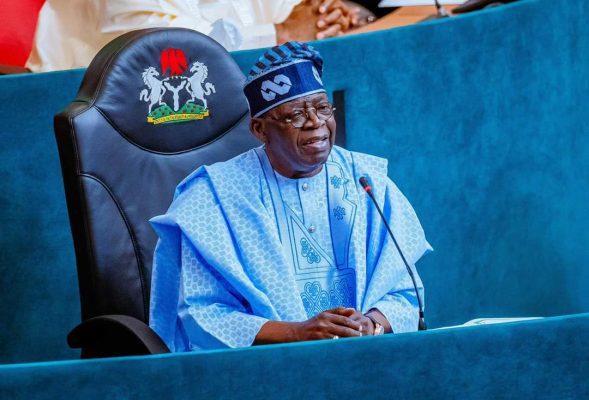
President Bola Ahmed Tinubu
Share


The Federal Government has dismissed reports claiming that it has introduced or is planning to introduce new taxes on telecommunications services and petroleum products.

The clarification came following media reports based on the recent International Monetary Fund (IMF) Article IV Consultation Report on Nigeria. The reports suggested that the IMF recommended extending Value Added Tax (VAT) to fuel products and introducing excise duties on telecommunications services as part of efforts to boost government revenue and fund development projects and social programmes.

However, in a statement issued on Wednesday by the Head of Information and Public Relations Unit of the Federal Ministry of Finance, Efe Ovuakporie, the government said the reports were misleading and did not reflect its current policy position.

According to the ministry, the IMF report merely contains the Fund’s assessment of Nigeria’s economy and recommendations for consideration by government authorities. It stressed that such recommendations are not binding and do not automatically become government policy.

The statement explained that all decisions relating to taxation in Nigeria are made through established constitutional and legislative processes and are guided by the country’s economic priorities and prevailing realities.

The Federal Government also clarified that the existing VAT waiver on petroleum products remains in force and has not been withdrawn.

It further explained that although current legislation provides for a fuel surcharge, such a charge can only be implemented through a ministerial order and official publication in the government gazette. The ministry stated that no such process is currently being considered.

According to the government, the continued suspension of these charges has helped reduce the impact of fluctuations in global energy prices on households and businesses while keeping domestic fuel prices relatively stable.

On telecommunications services, the government noted that the excise duty introduced before 2023 has already been repealed under the new tax laws and is no longer applicable.

The ministry therefore urged Nigerians to disregard reports suggesting that fresh taxes are being planned for either the telecommunications or petroleum sectors, describing such claims as inaccurate.

The government reiterated its commitment to economic reforms aimed at promoting growth, improving revenue collection, and creating a more attractive environment for investment and job creation.

It added that its focus remains on expanding economic activities, blocking revenue leakages, and improving efficiency in public finance management rather than imposing additional tax burdens on citizens.

The statement assured Nigerians that any future tax measures, if necessary, would be officially announced through appropriate government channels and implemented strictly in accordance with the law.

Continue Reading

Business & Economy

NERC Orders DisCos to Compensate Band A Customers for Power Supply Shortfalls

Published

on

Share


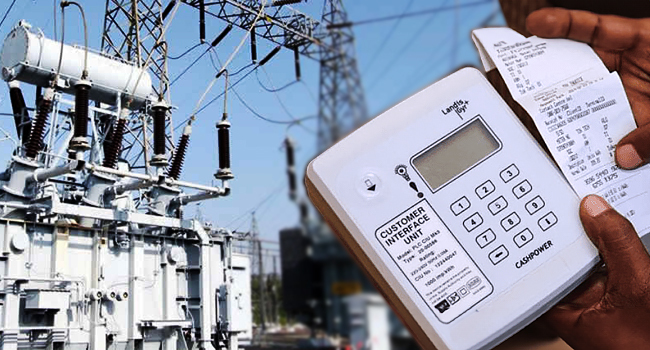
The Nigerian Electricity Regulatory Commission (NERC) has directed electricity distribution companies (DisCos) to compensate eligible Band A customers affected by power supply shortfalls recorded between February and March 2026.

In a public notice issued on Wednesday, the commission said the special compensation scheme became necessary following significant electricity generation deficits across the Nigerian Electricity Supply Industry (NESI), which prevented some DisCos from meeting the minimum service commitments required for Band A customers.

According to NERC, the supply disruptions were largely caused by inadequate gas supply as well as vandalism of critical gas and transmission infrastructure, factors beyond the direct control of the distribution companies.

The regulator explained that Band A customers are entitled to a minimum of 20 hours of electricity supply daily. It noted that where a Band A feeder recorded an average daily supply of between 18 and 20 hours during the affected period, the existing compensation framework under Addendum No. NERC/2024/003 would continue to apply to both Maximum Demand (MD) and Non-Maximum Demand (Non-MD) customers.

However, NERC stated that Band A feeders that received less than 18 hours of electricity supply per day between February and March 2026 would not be downgraded despite failing to meet the service threshold. Instead, customers connected to such feeders would receive special compensation.

Under the approved arrangement, Non-MD customers will receive compensation equivalent to 20 percent of the approved February 2026 energy cap applicable to their feeder. MD customers, on the other hand, will receive compensation equivalent to 20 percent of the average energy billed per MD customer in February 2026.

The commission further directed that prepaid customers should receive their compensation through electricity token credits, while postpaid customers should benefit through direct bill adjustments.

To ensure transparency, NERC instructed DisCos to clearly communicate the value and period of the compensation to affected customers. The regulator also prohibited distribution companies from using the compensation credits to offset any existing customer debts.

Reaffirming its commitment to consumer protection, NERC said it would closely monitor the implementation of the directive and verify compliance across all distribution companies to ensure that eligible customers receive the compensation due to them.

The commission added that the measure is aimed at safeguarding consumer interests while maintaining the stability and sustainability of Nigeria’s electricity market.

Continue Reading

Business & Economy

Nigeria, UK Move to Close £1.2bn Trade Data Gap with Digital Customs Pact

Published

on

UK and Nigeria Flags
Share


Nigeria and the United Kingdom have agreed to deepen customs cooperation through a new digital data-sharing framework aimed at resolving a £1.2 billion discrepancy in bilateral trade figures, a longstanding issue affecting transparency and efficiency between both economies.

The agreement was reached during a high-level meeting in London on March 18, 2026, held on the sidelines of President Bola Tinubu’s state visit under the Nigeria–UK Enhanced Trade and Investment Partnership (ETIP).

According to the Nigeria Customs Service (NCS), the talks brought together Comptroller-General Adewale Adeniyi and Ms. Megan Shaw, Head of International Customs and Border Engagement at His Majesty’s Revenue and Customs (HMRC), with discussions focused on customs modernisation, trade data transparency, and operational collaboration.

At the centre of the engagement is a significant mismatch in trade statistics. Nigeria recorded about £504 million worth of imports from the UK in 2024, while UK data shows exports to Nigeria at approximately £1.7 billion over the same period — leaving a gap of roughly £1.2 billion.

Both sides described the discrepancy as structural and agreed on coordinated measures to address it. Chief among these is the proposed implementation of a pre-arrival data exchange system, which will connect digital customs platforms in both countries to improve data accuracy, strengthen risk management, and enhance compliance monitoring.

Adeniyi emphasised that stronger customs collaboration is vital for economic growth and sustainable trade, noting that customs authorities play a key role in ensuring secure and transparent cross-border trade flows.

The meeting also highlighted advancements in customs technology, with the UK showcasing artificial intelligence-driven tools, digital verification systems, and real-time analytics designed to improve cargo processing, risk assessment, and border security.

In addition to addressing the data gap, both countries agreed on several strategic initiatives, including the development of a Customs Mutual Administrative Assistance Framework, technical cooperation on capacity building, and the establishment of a joint engagement mechanism under ETIP.

The NCS said the outcomes of the meeting would enhance operational efficiency, boost trade facilitation, and support Nigeria’s broader economic reform agenda, positioning the country for improved competitiveness in global trade.

Continue Reading