Connect with us

Business & Economy

Cashless Policy: CBN convinces Senate Panel on N100, 000 Cash Withdrawal Limit

Published

on

CBN Governor, Godwin Emefiele
Share

…. Says policy introduced since 2012

As controversies continue to trail the planned policy of the Central Bank of Nigeria (CBN) to limited cash withdrawal for individuals at N100,000 and Corporate Bodies N500, 000 per week, the bank has  succeeded in convincing the Senate Committee on Banking , Insurance and other Financial Institutions of the need for it.

The policy as disclosed by the Deputy Governor of CBN on Financial System Stability, Mrs Aishat Ahmad was introduced in 2012 during former President Good luck Jonathan ‘s administration and extended to Abuja and six other states in 2013.

The CBN Deputy Governor made the disclosure during screening exercise carried out on her and her counterparts on Corporate Services , Edward Lametek Adamu , for re  – appointments by the Senate Committee on Banking , Insurance and other Financial Institutions .

She said cashless policy being fully implemented by CBN now is not new, as required steps in that direction, was taken in 2012 with Lagos State as pilot scheme and Abuja and Six other states in 2013.

She explained that though full implementation of the policy has not been carried out by CBN since then, but its introduction then, has brought a lot of transformation in the banking and payment system.

” Distinguished Chairman of this committee and members, I ‘m happy for the opportunity given to make presentations on planned N100,000 withdraw limit for individuals and N500, 000 for Corporate Bodies per week , beginning from 9th January , 2023 , in line with cashless  policy introduced in 2012 .

” Based on information available to CBN, the time for full implementation of the policy with proposed limit on cash withdrawals per week is now.

” Required infrastructure for its implementation in terms of financial access point system, mobile money, e – naira etc., are available across the 774 local government councils in the country.

” All fears and worries being expressed by Nigerians on the planned limited cash withdrawal policy are seriously being taken care of as nobody or section of Nigerians, will be left out.

” In the past , banking transactions in Nigeria was limited to Bank Branches alone as the only means , which has now expanded into multiple electronic platforms  as well as geometrical increase in the number of agents from 88,000 to 1.4million “, she said.

She however said that the Apex bank is flexible and will be ready to accommodate opinions that won’t make the policy strainous to any category of Nigerians during implementation.

After her presentation, the Committee chaired by Senator Uba Sani (APC Kaduna Central) , gave the two nominees ‘  take a bow and go treatment ‘ as moved by the Whip of the Senate , Senator Orji Uzor Kalu and seconded by Senator Danjuma Goje .

Chairman of the Committee in his remarks said : ” With presentation made by the Deputy Governor of CBN on Financial System Stability , Aisha Ndanusa Ahmad on the planned limited cash withdrawal , required information on the merits of the policy has been given and will be communicated to the Senate in plenary through our report .

” The two Deputy Governors, having earlier been screened before serving their first tenures, need not to again as unanimously agreed by members of the Committee.

” They should therefore take a bow and go “.

Continue Reading
Click to comment

Leave a Reply

Your email address will not be published. Required fields are marked *

Business & Economy

Tinubu To Present 2027 Budget Before Year-End As FEC Approves Five-Year Development Plan

Published

on

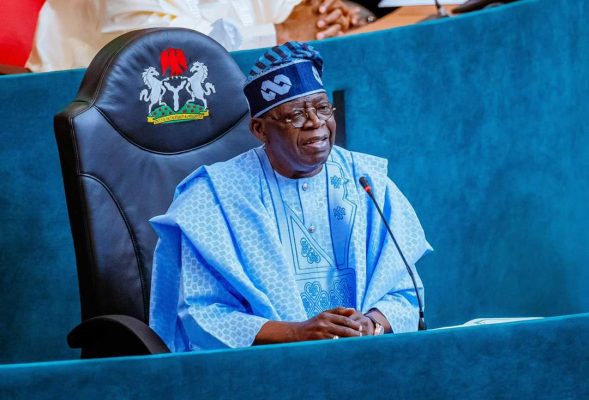
President Bola Ahmed Tinubu
Share


President Bola Tinubu is expected to present the 2027 Appropriation Bill to the National Assembly before the end of 2026, as the Federal Executive Council (FEC) approved the National Development Plan 2026–2030 and new policy measures aimed at strengthening food security and tackling child stunting.

The Minister of State for Budget and Economic Planning, Doris Uzoka-Anite, disclosed this on Wednesday while briefing State House correspondents on the outcomes of the FEC meeting chaired by President Tinubu at the Presidential Villa, Abuja.

Uzoka-Anite also announced the council’s approval of the Revised National Policy on Food and Nutrition 2026, which seeks to establish sustainable financing mechanisms and strengthen collaboration among ministries responsible for agriculture, livestock, health and education, as well as development partners.

The announcements followed the conclusion of the 32nd Nigerian Economic Summit, held in Abuja from October 26 to 28, which focused on key issues affecting the country’s economic development.

Meanwhile, the Minister of Finance and Coordinating Minister of the Economy, Taiwo Oyedele, has clarified that the $21.7 billion borrowing proposal transmitted by President Tinubu to the National Assembly is intended to finance investments in productive assets and infrastructure rather than recurrent expenditure.

Oyedele explained that the proposal represents a multi-year investment programme spanning approximately five years, rather than an immediate drawdown of the entire amount.

According to him, $10.6 billion is earmarked for critical transportation infrastructure, including the Sokoto–Badagry Highway, Lagos–Calabar Coastal Highway and Kano–Kaduna Metro Rail.

He further disclosed that more than $7.9 billion would be sourced from multilateral and bilateral development partners, including $5 billion from the World Bank, at an average interest rate of approximately 2.1 per cent.

The proposed financing package also includes $3.3 billion for state government projects and $1.45 billion for projects in the Federal Capital Territory.

The planned 2027 budget presentation and the approval of the five-year development plan underscore the Federal Government’s efforts to align fiscal planning, infrastructure investment and social development priorities with its broader economic agenda.

Continue Reading

Business & Economy

Tinubu Rules Out Fuel Subsidy Return, Says Nigeria Cannot Go Back to ‘Egypt’

Published

on

President Bola Ahmed Tinubu
Share


President Bola Tinubu has ruled out any return to petrol subsidy, insisting that the removal of the policy was necessary to prevent Nigeria’s economy from sliding into bankruptcy.

The President reiterated his position on Monday during a meeting with members of the City Boy Movement, a youth-driven political and advocacy group, where he defended the economic reforms introduced by his administration.

Tinubu said the government could no longer sustain the financial burden of subsidising petrol, arguing that the country lacked the resources required to continue funding the scheme.

“I came, and I removed the subsidy on my first day. Nigeria would have gone bankrupt; there was nothing left to pay for subsidies,” he said.

Using a biblical and Quranic analogy to underscore his position, the President declared that reversing the policy would amount to returning to an unsustainable economic system.

“When Moses (Musa) left Egypt, the Red Sea parted and gave way. You cannot ask Moses to go back to Egypt. With your energy and support, we will never go back to Egypt,” he stated.

The removal of petrol subsidy, announced during Tinubu’s inauguration on May 29, 2023, marked a major shift in Nigeria’s fiscal policy. The decision significantly increased petrol prices and contributed to mounting pressure on household incomes, transportation costs and businesses.

Petrol prices, which were below ₦200 per litre before the policy change, have since risen substantially, with prices reported at between ₦1,350 and ₦1,405 per litre across major filling stations.

The resulting increase in energy and transportation costs has continued to fuel public concerns over inflation, declining purchasing power and the overall cost of living.

However, the Federal Government has maintained that subsidy removal is critical to reducing fiscal pressure, improving public revenue and creating room for investment in infrastructure and other priority sectors.

Tinubu acknowledged the political contest surrounding the policy, noting that his opponents had promised to restore fuel subsidy. He nevertheless maintained that his administration would not reverse the reform.

Beyond defending the policy, the President urged members of the City Boy Movement to mobilise support for his administration by communicating its achievements and future plans to young Nigerians across campuses, markets and rural communities.

He also encouraged eligible young people to obtain their Permanent Voter Cards (PVCs) and participate in the electoral process.

The debate over fuel subsidy remains a central issue in Nigeria’s economic policy, with the government defending the reform on fiscal sustainability grounds while households and businesses continue to grapple with the effects of higher fuel prices.


Continue Reading

Business & Economy

FG Rules Out Electricity Tariff Hike, Targets 24-Hour Power Supply

Published

on

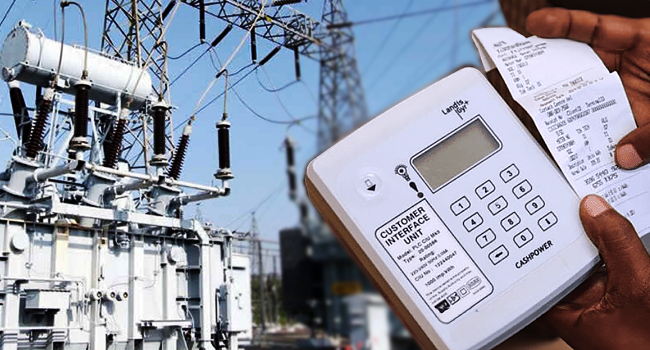
Power Station and Meters
Share


The Federal Government has ruled out any plan to increase electricity tariffs, saying its priority is to improve power supply and ensure reliable electricity across the country.

The Minister of Power, Joseph Tegbe, gave the assurance in Ibadan, Oyo State, on Thursday, amid concerns and speculation about a possible increase in electricity tariffs.

Tegbe spoke during the groundbreaking ceremony for five interconnected mini-grid projects with a combined generation capacity of 17.7 megawatts and a 17.74-megawatt-hour Battery Energy Storage System (BESS).

“I want to say this clearly and without ambiguity: there is no plan to increase electricity tariffs. What we are planning is a power sector that works around the clock. Our commitment is 24/7 power,” the minister said.

He urged Nigerians to disregard reports suggesting an impending tariff hike, stressing that the government was focused on improving electricity generation, transmission and distribution.

The five mini-grid projects are located in Bola, Jiboye, Molade-Adelubi, Ogo Oluwa and Sooko-Elega. They are expected to provide electricity to communities across Akinyele, Ido, Ibadan North, Egbeda and Lagelu Local Government Areas of Oyo State.

According to the minister, the projects are designed to expand electricity access, reduce dependence on petrol and diesel-powered generators, and create a more favourable environment for businesses, investment and job creation.

Tegbe said the Federal Government was also implementing a broader energy strategy aimed at improving electricity supply through designated energy corridors, including the Lagos-Ogun, Abuja-Kaduna-Kano and Benin-Enugu-Port Harcourt corridors.

He added that efforts were underway to strengthen the national grid and upgrade generation and transmission infrastructure across the country’s eastern, western and central corridors.

The minister described the mini-grid initiative as part of President Bola Tinubu’s Renewed Hope Agenda, noting that similar electricity interventions had been implemented in communities across several states with support from the Rural Electrification Agency (REA).

He commended Tinubu for his leadership and acknowledged the contributions of the REA, project developer Paras Energy and Natural Resources Development Limited, the World Bank and the Ibadan Electricity Distribution Company.

Tegbe also recognised the Oyo State Government, traditional rulers and other stakeholders for their roles in facilitating the projects.

The initiative is expected to improve electricity reliability in the beneficiary communities, support local economic activities and reduce energy costs for households and businesses.


Continue Reading