Connect with us

Business & Economy

Buhari approves Timipre Sylva as Head of steering committee on Petroleum Industry Act

Published

on

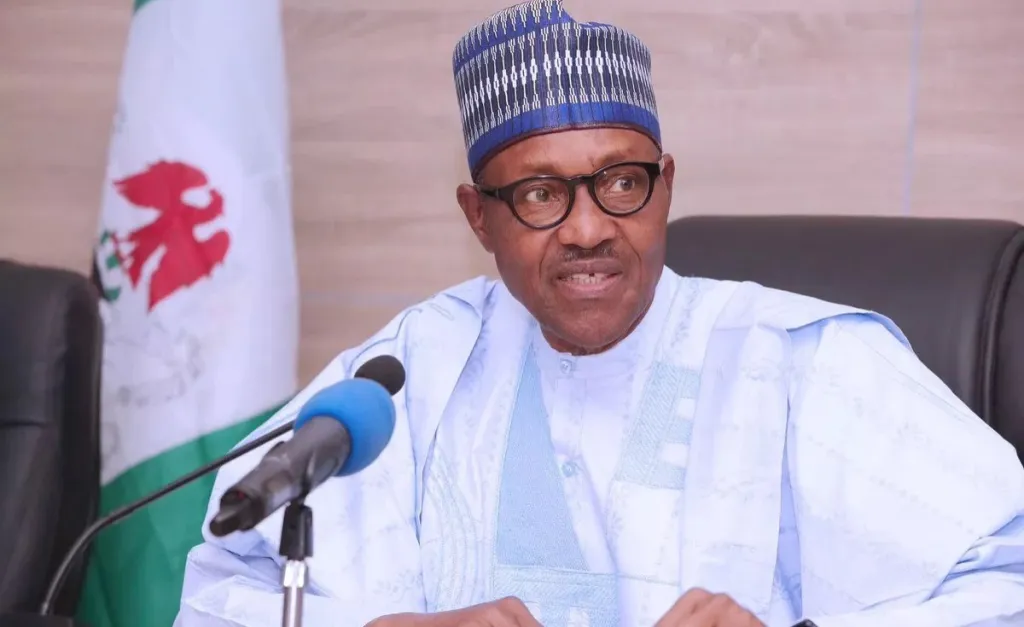
President Muhammadu Buhari
President Muhammad Buhari
Share


President Muhammadu Buhari has approved a steering committee to oversee the process of implementation of the newly signed Petroleum Industry Act (PIA).

The steering committee is headed by the Minister of State, Petroleum Resources, Timipre Sylva.

The president, who announced this while marking the passage the PIA which he signed into law on Aug. 16, said Nigeria lost an estimated 50billion dollars worth of investments in ten years, created by the uncertainty of non-passage of the PIB, lack of progress and stagnation in the petroleum industry.

According to the president, the committee is tasked with the completion of the implementation of this act within 12 months.

He, therefore, directed all relevant Ministries, Departments and Agencies of government to fully cooperate in ensuring the successful and timely implementation of the PIA.

The implementation process to be headed by the Hon Minister of State, Petroleum Resources is hereby tasked with the completion of the implementation of this act within 12 months.  I am therefore directing all relevant Ministries, Departments and Agencies of government to fully cooperate in ensuring the successful and timely implementation of this law.

“To consolidate the commitment of this administration to delivering the value proposition of this law, I have approved an implementation framework commencing immediately to ensure the industry envisaged in the new law begins to take shape.

“The implementation process to be headed by the Minister of State, Petroleum Resources is hereby tasked with the completion of the implementation of this act within 12 months.

“I am therefore directing all relevant Ministries, Departments and Agencies of government to fully cooperate in ensuring the successful and timely implementation of this law,’’ he said.

The president maintained that the signing into law had become necessary in view of the fact that Nigeria runs a Petroleum Industry that is governed largely by laws enacted over 50 years ago such as the principal legislation; the Petroleum Act of 1969 and other obsolete legislations.

According to him, in the past ten years, Nigeria has lost an estimated 50billion dollars worth of investments due to uncertainty created by the non-passage of the PIB.

He said: “We are all aware that Past Administrations have identified the need to further align the industry for global competitiveness, but there was lack of political will to actualize this needed transformation.

“This lack of progress has stagnated the growth of the industry and the prosperity of our economy.

“In the past ten years, Nigeria has lost an estimated 50billion dollars worth of investments due to uncertainty created by the non-passage of the PIB.

“This administration believes that the timely passage of the Petroleum Industry Bill will help our country attract investments across the oil and gas value chain.’’

The president commended the two Chambers of the National Assembly for ensuring the passage of the PIB.

He noted that his signing of the Petroleum industry bill on Aug. 16, 2021 to “Petroleum Industry Act 2021” marked the beginning of the journey towards a competitive and resilient petroleum industry that would attract investments to support the nation economic recovery and growth plan.

According to the president, the PIA creates a regulatory environment that will ensure efficiency and accountability across the oil and gas value chain and reposition NNPC to a commercially driven National Petroleum Company that is accountable to the federation.

“The Act also provides for a direct benefit framework that will enable sustainable development of Host Communities. I appeal to the host communities to look carefully at the contents of the Bill which in the implementation will bring real and lasting benefits to them.

“Furthermore, the act provides for deliberate end to gas flaring which would facilitate the attainment of Nigeria’s Nationally Determined Contributions of the Paris Agreement through a funding mechanism to support gas flare out project in host communities.

“Similarly, it acknowledges global energy transition and made necessary provisions for NNPC to invest in renewable energy,’’ he added.

The president commended the two Chambers of the National Assembly for ensuring the passage of the PIB.

“Let me now commend the leadership of the 9th Assembly for their continued pursuit of our national aspiration and demonstration of mutual harmony with the Executive in the pursuit of a patriotic outcome in the passage of the PIB.

“I also commend the entire team in the executive that worked tirelessly to ensure the delivery of this strategic legislation for our country,’’ he said.

President Buhari also thanked Nigerians and other industry stakeholders for their contributions and support in achieving this historic landmark.

Other members of the implementation committee include: Permanent Secretary, Ministry of Petroleum Resources, Group Managing Director, NNPC, Executive Chairman, FIRS, representative of the Ministry of Justice and representative of the Ministry of Finance, Budget and National Planning.

The Senior Special Assistant to the President on Natural Resources, Olufemi Lijadu, will serve as External Legal Adviser, while the Executive Secretary, Petroleum Technology Development Fund, will serve as Head of the Coordinating Secretariat and the Implementation Working Group.

The primary responsibility of the steering committee shall be to guide the effective and timely implementation of the PIA in the course of transition to the petroleum industry envisaged in the reform programme.

It is also to ensure that the new institutions created have the full capability to deliver on their mandate under the new legislation.

The committee has 12 months duration for the assignment, and periodic updates will be given to Mr President. (NAN)

Continue Reading
Click to comment

Leave a Reply

Your email address will not be published. Required fields are marked *

Business & Economy

Petrol Prices Rise to N1,040/Litre in Lagos, N1,080 in Abuja

Published

on

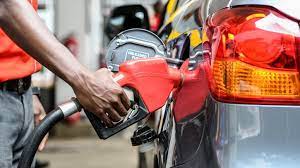
Petrol
Petrol station
Share

The pump price of Premium Motor Spirit (PMS), commonly known as petrol, has increased to as high as N1,040 per litre in Lagos and N1,080 per litre in Abuja, following a recent adjustment by fuel marketers.

The development comes a day after the Dangote Refinery raised its ex-gantry price of petrol to N995 per litre.

Checks on Saturday showed that several retail outlets across Lagos and Abuja had adjusted their prices upward.

At retail outlets operated by Nigerian National Petroleum Company Limited in Ilasa, Apple Junction, and Ago Palace Way in Lagos, petrol was sold at N1,040 per litre, representing an increase of N47 from the previous price of N993 per litre.

Similarly, Emadeb Energy and PM Petroleum filling stations located along the Oshodi/Apapa Expressway were dispensing petrol at N1,040 per litre.

At a Techno Oil Limited retail outlet in Festac Town, the product was priced at N1,050 per litre, while stations operated by MRS Oil Nigeria Plc sold petrol at N1,057 per litre.

In Abuja, petrol was sold at N1,050 per litre at Gegu Oil Nigeria along the Kubwa Expressway, while Empire Energy filling stations dispensed the product at N1,080 per litre.

However, an outlet operated by Ardova Plc sold petrol at N959 per litre.

The latest increase comes amid rising geopolitical tensions in the Middle East, which have contributed to volatility in global crude oil prices.

On Friday, crude oil prices surged to $91 per barrel as the conflict involving the United States, Israel, and Iran continued to escalate across the region.

Continue Reading

Business & Economy

FG Bans Roadside Tax Collections, Orders Dismantling of Checkpoints

Published

on

Coat of Arms
Share

The Federal Government has banned the collection of road taxes through roadside checkpoints and the use of tax stickers nationwide as part of sweeping tax reforms introduced in 2026.

The Joint Revenue Board (JRB) announced that all forms of roadside levies are now illegal, effectively ending a long-standing practice that required motorists to stop at checkpoints to make payments.

In a statement, the Board said the move is aimed at modernising tax administration, eliminating harassment of motorists, and improving transparency in revenue collection.

“This is a major win for motorists and a step toward transparent taxation,” the JRB stated, adding that security agencies have been directed to dismantle illegal checkpoints and ensure full compliance with the new law.

For years, motorists across the country were subjected to multiple levies under different designations, a situation that often created confusion and opened the door to alleged abuse and irregular collections.

Under the new framework, road tax stickers previously issued at state checkpoints are no longer valid, and motorists are not expected to make any payments related to road taxes on highways.

The government said the reform is designed to protect drivers from illegal collections, streamline tax administration under a centralised system, and promote voluntary compliance through a clearer and more accountable structure.

Security and enforcement agencies have been tasked with monitoring implementation to ensure that all roadside collections cease immediately.

Continue Reading

Business & Economy

Ogun to Establish 5,000-Herd Dairy, Cattle Ranches in Ipokia, Yewa South — Abiodun

Published

on

Ogun State logo
Share

Ogun State Governor, Dapo Abiodun, has announced plans to establish what he described as the largest dairy and cattle ranches in Nigeria in Ipokia and Yewa South Local Government Areas of the state, with an initial capacity of 5,000 herds of cattle.

Abiodun made the disclosure on Thursday at the All Progressives Congress (APC) strategic stakeholders’ meeting held in Abeokuta.

He said the projects would be sited in Ogun State at the instance of President Bola Tinubu, adding that construction work would commence soon.

According to the governor, the initiative is part of efforts to strengthen food security, boost local agricultural production, and deepen value chains across the state.

“The biggest dairy and cattle ranches will soon be established in Yewa South and Ipokia Local Government Areas. This is at the instance of Mr. President. These farms will start with 5,000 herds of cattle, and work will begin very soon,” Abiodun said.

The governor commended Tinubu for what he described as bold economic reforms, noting that the policies had stabilised the foreign exchange market, eliminated multiple exchange-rate regimes, and increased Nigeria’s foreign reserves to about $45 billion.

Abiodun also acknowledged what he called the President’s goodwill towards Ogun State, citing federal interventions such as the reconstruction of the Sagamu–Ijebu Ode Road, funding support for the Eba oil discovery, and the resuscitation of the OKLNG project.

“There is nothing I have asked Mr. President for Ogun State that he has not approved,” he said, adding that the President consistently directs investors to the state when they express interest in Nigeria.

The governor said the administration’s performance at the federal level had rekindled hope among Nigerians and strengthened public confidence in the ruling APC.

Highlighting achievements of his administration over the past six years and eight months, Abiodun said the state had recorded progress in education, infrastructure, job creation, youth and women empowerment, healthcare, agriculture, housing, technological innovation, industrial growth, and economic expansion.

He disclosed that over 1,700 kilometres of roads, including major highways, had been constructed across the state, more than 7,000 housing units delivered, and over 400 Primary Healthcare Centres upgraded and equipped.

Abiodun also stated that Ogun State was on the verge of becoming an oil-producing state.

He said the stakeholders’ meeting was convened to review progress and strategise ahead of emerging political challenges, urging party members to remain united as the state approaches another electioneering season.

“As we approach the upcoming congresses, they must unite us, not divide us. A united APC is an unbeatable APC,” he said.

Dignitaries at the meeting included former Governor Olusegun Osoba; Deputy Governor Noimot Salako-Oyedele; Speaker of the Ogun State House of Assembly, Oludaisi Elemide; Senators Solomon Adeola and Shuaib Salisu; and House of Representatives Chief Whip, Ibrahim Isiaka.

Also present were Minister of Communications and Digital Economy, Bosun Tijani; Minister of State for Health, Dr. Isiaka Salako; State APC Chairman, Yemi Sanusi; former deputy governors; lawmakers; local government chairmen; and other party stakeholders.

Continue Reading