Connect with us

Blast Politics

Atiku Supported Rotational Presidency After June 12 Annulment, Says Akume

Published

on

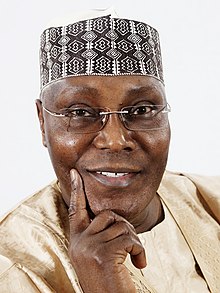
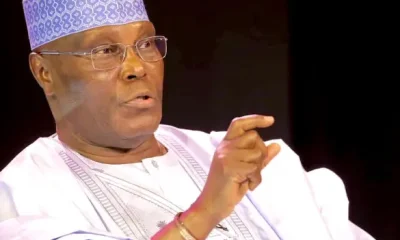
Former Vice President Atiku Abubakar
Share


The Secretary to the Government of the Federation, George Akume, has revealed that former Vice President Atiku Abubakar was among the political leaders who supported the adoption of rotational presidency in Nigeria following the annulment of the June 12, 1993 presidential election.

Akume made the disclosure on Tuesday during a World Press Conference in Abuja as part of activities marking Nigeria’s 27th Democracy Day anniversary. He said the decision to alternate presidential power between the North and South emerged after extensive consultations among leaders of the Peoples Democratic Party in the aftermath of the annulled election won by the late Moshood Kashimawo Olawale Abiola.

According to the SGF, PDP leaders convened in Kaduna under the leadership of the late Solomon Lar and Adamu Ciroma to deliberate on the political crisis triggered by the annulment and to chart a path forward for national unity.

Akume explained that discussions leading to the adoption of rotational presidency were intense, given the sensitivities surrounding the June 12 annulment and its implications for national cohesion.

“It was a tough argument before the issue of rotational presidency was agreed on. At the end, we had to concede. June 12 annulment had complicated the whole thing. It was finally agreed that we’ll be alternating between North and South,” he said.

The SGF noted that Atiku was among the prominent political figures present at the meeting and actively participated in the discussions that culminated in the agreement.

“Atiku was one of the leaders at that meeting, which was convened by Chief Solomon Lar. He was part of that agreement,” Akume stated.

He explained that the power-sharing arrangement was designed to promote inclusiveness, national unity and political stability following the annulment of the election, which remains one of the most significant events in Nigeria’s democratic history.

Reflecting on the significance of June 12, Akume described the annulment as a painful setback to the democratic aspirations of Nigerians, stressing that Abiola won the election convincingly.

“Abiola won that election roundly and squarely. The election was annulled by the military government. It was very painful because the people spoke and they spoke freely. They made their own choice,” he said.

Akume maintained that one of the enduring lessons of the June 12 experience is the supremacy of the people’s will in a democratic system.

“The voice of the people must always be supreme. That’s the beauty of democracy. We prefer the ballot to bullets,” he added.

The SGF also expressed confidence in Nigeria’s democratic institutions, particularly the Independent National Electoral Commission, noting that the country has learned valuable lessons from the events of 1993 and would not permit a repeat of such an annulment.

He urged political actors to respect electoral outcomes and uphold democratic principles, emphasizing that Nigeria’s 27 years of uninterrupted democratic governance demonstrate the nation’s commitment to freedom, the rule of law and peaceful political participation.

According to Akume, democracy remains the most effective system of government because it guarantees freedom of expression and provides citizens with the opportunity to hold leaders accountable without fear of repression.

Continue Reading
Click to comment

Leave a Reply

Your email address will not be published. Required fields are marked *

Blast Politics

Akpabio: No Vacancy in Aso Rock, Tinubu Still in Charge

Published

on

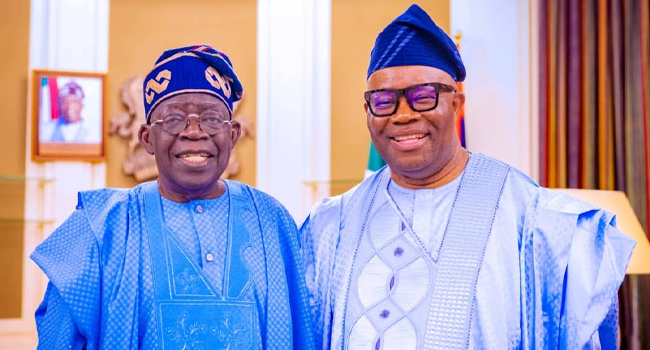
President Bola Tinubu and Senate President Godswill Akpabio
Share


Senate President Godswill Akpabio has dismissed speculation over a leadership vacuum in Nigeria, insisting that President Bola Ahmed Tinubu remains in charge of the country despite his continued stay abroad.

Akpabio spoke on Tuesday in Akwa Ibom State while inaugurating road projects executed by Governor Umo Eno. His comments came amid public debate over Tinubu’s extended working vacation and the simultaneous absence of Vice-President Kashim Shettima, who is attending the United Nations General Assembly in New York.

The Senate President also rejected suggestions that he was currently acting as President, stressing that Tinubu remained in office and continued to direct the affairs of government.

“I am not the acting president, because the president is still in power. The president is on a working leave. So, there’s no absence in Aso Rock,” Akpabio said.

According to him, Tinubu can continue to discharge his responsibilities from abroad through modern communication technology.

“The world has become a global village; you can give instructions from the internet about anything, so why are people complaining?” he said.

Akpabio also cited Tinubu’s recent diplomatic engagements, including his interaction with French President Emmanuel Macron, as evidence that the President remains actively involved in official duties while abroad.

Addressing Tinubu’s absence from the UN General Assembly, Akpabio said Vice-President Shettima had represented Nigeria at the gathering.

He further insisted that there was no vacancy in the presidency, stating that Tinubu remained in control of the country’s affairs.

“Right now, there is no vacancy. Asiwaju Bola Ahmed Tinubu is still in power and is still running the affairs of Nigeria,” he said.

Akpabio’s remarks come amid renewed public and political debate over the constitutional implications of the President’s extended absence from Nigeria, particularly with Shettima also outside the country.

The Presidency had announced that Tinubu’s working vacation, which began on August 30, had been extended by a few days, with his return expected at the weekend.

The development has continued to attract differing political interpretations, with some opposition figures questioning the arrangements for the exercise of presidential powers during the President’s absence. Akpabio, however, maintained that there is no presidential vacancy and that Tinubu remains in charge.

Continue Reading

Blast Politics

Masari: I’ve Never Seen a President With Better Plans Than Tinubu

Published

on

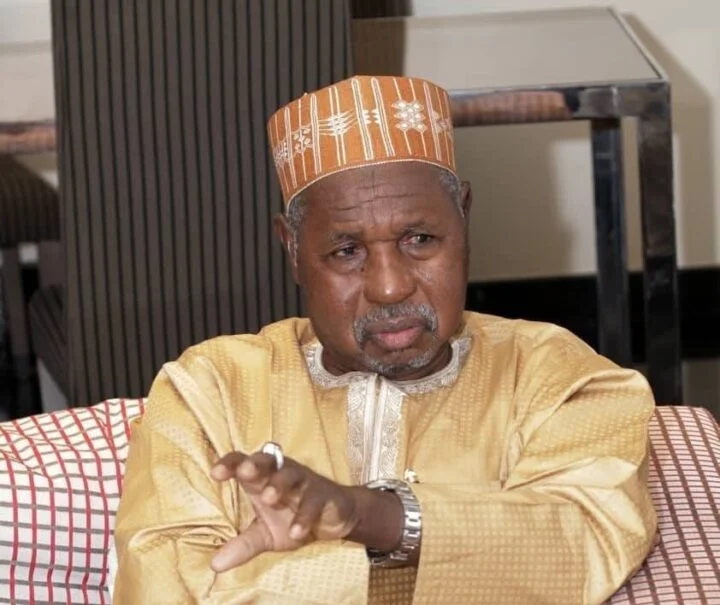
Aminu Masari
Share


Former Speaker of the House of Representatives, Aminu Masari, has said that in his nearly 40 years in politics, he has never seen a Nigerian president with better plans for the country than President Bola Ahmed Tinubu.

Masari made the statement in a video published on Tuesday by HM Arewa, a Hausa-language media group, while addressing a group of women at a recent public function reportedly held in Kaduna.

According to him, he is convinced that Tinubu has a clear plan to move Nigeria forward.

“Even if I were asked to swear, on my age and my political involvement for almost 40 years, I can confidently say I have never seen a president with better plans to make Nigeria great than Bola Ahmed Tinubu,” Masari said.

The former Katsina governor also criticised those who claim that the Tinubu administration has achieved nothing, saying similar criticisms were made against previous governments.

He cited the administrations of former Presidents Olusegun Obasanjo and Goodluck Jonathan, saying both faced accusations of sectionalism and other divisive issues.

Masari said the same pattern was now being repeated against Tinubu.

He also criticised the use of religious and ethnic sentiments in political discussions, questioning attempts to associate particular religions exclusively with specific ethnic groups.

The former governor appealed to women preachers and other influential women to discourage divisive rhetoric, particularly as the 2027 general election approaches.

“Each and every one of you knows how to talk to her husband or children better than anyone else can,” he said, urging them to use their influence to promote peace and unity.

Masari served as Speaker of the House of Representatives from 2003 to 2007 and later governed Katsina State from 2015 to 2023.

In August, he was appointed Deputy Director-General, Parliamentary Mobilisation, of the All Progressives Congress Presidential Campaign Council for Tinubu’s 2027 re-election bid.


Continue Reading

Blast Politics

Obi Challenges UNN: “Release My Academic Records for Public Scrutiny”

Published

on

Peter Obi
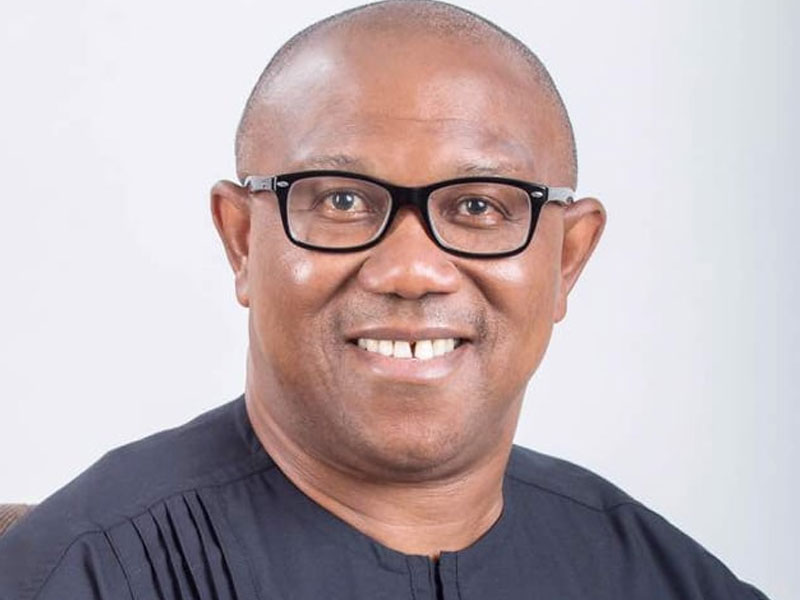
NDC Presidential Candidate, Peter Obi
Share


Presidential candidate of the New Nigeria Development Coalition (NDC), Peter Obi, has challenged the University of Nigeria, Nsukka (UNN), to make his academic records available for public scrutiny, insisting that he has nothing to hide.

Obi made the call in a post on X on Tuesday amid renewed controversy over his educational credentials and ongoing legal proceedings involving the university, the National Youth Service Corps (NYSC) and the West African Examinations Council (WAEC).

The controversy followed three separate suits filed at the Federal High Court in Abuja by Abayomi Arabambi, a former National Publicity Secretary of the Labour Party, over the alleged refusal by the institutions to release documents relating to Obi’s academic qualifications.

Arabambi also alleged discrepancies in the way Obi’s name appeared on documents submitted to the Independent National Electoral Commission (INEC) and educational institutions.

Responding to the development, Obi said he welcomed legitimate scrutiny of his educational background and directed UNN to release his academic certificates, records and other official documents relating to his admission and studies, subject to applicable laws.

He similarly called on other institutions he attended in Nigeria and abroad to make his records available in accordance with established legal procedures.

According to the former Anambra State governor, transparency and accountability must be central to the conduct of anyone seeking to occupy the highest political office in the country.

“As a presidential candidate seeking the trust of Nigerians to lead our country, I welcome legitimate public interest in my background, qualifications, and record,” Obi said.

He added that political leaders should be prepared to subject themselves to scrutiny and demonstrate through their actions that they have nothing to conceal from the people they seek to govern.

Obi also challenged other presidential candidates to make their educational qualifications and relevant records available for public examination.

He argued that such disclosure should not be viewed as an attack but as a means of strengthening public confidence, promoting accountability and restoring Nigerians’ trust in political institutions.

“If we desire a Nigeria founded on transparency, integrity, accountability, and respect for institutions, those values must begin with those who seek to lead it,” he said.


Continue Reading