Connect with us

Communication

NCC CSIRT Discovers ‘Xenomorph’ – Malicious Software That Steal Banking, Other Details On Android Devices

Published

on

NCC Logo
Share

By Ossom Raphael

The Nigerian Communications Commission (NCC) has advised telecom consumers and other Internet users, particularly those using Android-powered devices to use trusted Antivirus solutions and update them regularly to their latest definitions.

This advice comes as the NCC’s Computer Security Incident Response Team (CSIRT) discovered a newly-hatched malicious software that steals users’ banking app login credentials on Android devices.

According to a security advisory from the NCC CSIRT, the malicious software called “Xenomorph”, found to target 56 financial institutions from Europe, has high impact and high vulnerability rate. The main intent of this malware is to steal credentials, combined with the use of SMS and Notification interception to log-in and use potential 2-factor authentication tokens.

A statement by Ikechukwu Adinde, Director, Public Affairs of the NCC said Xenomorph is propagated by an application that was slipped into Google Play store and masquerading as a legitimate application called “Fast Cleaner” ostensibly meant to clear junk, increase device speed and optimize battery. In reality, this app is only a means by which the Xenomorph Trojan could be propagated easily and efficiently.

To avoid early detection or being denied access to the PlayStore, “Fast Cleaner” was disseminated before the malware was placed on the remote server, making it hard for Google to determine that such an app is being used for malicious actions.

Once up and running on a victim’s device, Xenomorph can harvest device information and Short Messaging Service (SMS), intercept notifications and new SMS messages, perform overlay attacks, and prevent users from uninstalling it. The threat also asks for Accessibility Services privileges, which allow it to grant itself further permissions.

The statement further said the malware also steals victims’ banking credentials by overlaying fake login pages on top of legitimate ones. Considering that it can also intercept messages and notifications, it allows its operators to bypass SMS-based two-factor authentication and log into the victims’ accounts without alerting them.

“Xenomorph has been found to target 56 internet banking apps, 28 from Spain, 12 from Italy, 9 from Belgium, and 7 from Portugal, as well as Cryptocurrency wallets and general-purpose applications like emailing services. The Fast Cleaner app has now been removed from the Play Store but not before it garnered 50,000+ downloads,” the CSIRT security advisory asserted.

The Commission also implore consumers and other stakeholders to always update banking applications to their most recent versions.

Continue Reading
Click to comment

Leave a Reply

Your email address will not be published. Required fields are marked *

Communication

FG Deactivates 13.6 Million Social Media Accounts Over ‘Offensive Cont

Published

on

Social Media
Share

In a massive digital clampdown, the Nigerian government has deactivated a staggering 13,597,057 social media accounts across TikTok, Facebook, Instagram, and X, citing “offensive content and violations of the code of practice.”

The bombshell revelation came through the 2024 Code of Practice Compliance Report, jointly issued by the Nigerian Communications Commission (NCC), the National Information Technology Development Agency (NITDA), and the National Broadcasting Commission (NBC).

According to the report, no fewer than 58.9 million offensive posts were deleted from various platforms, while NITDA disclosed it received 754,629 complaints from Nigerian users. Startlingly, 420,439 contents were initially removed but later re-uploaded after appeals.

NITDA spokesperson Hadiza Umar hailed the compliance of global tech giants like Google, Microsoft, and TikTok, describing the mass takedowns as a “giant step towards sanitising Nigeria’s digital space.”

She declared:

“The compliance reports provide valuable insights into platforms’ efforts to protect users in line with the Code of Practice. This is a bold move towards a safer and more transparent online environment for Nigerians.”

With millions of accounts axed and tens of millions of posts wiped out, the government insists this is only the beginning of a sweeping drive to curb digital harm and enforce order in Nigeria’s social media space.


Continue Reading

Communication

Telecommunications workers threaten 3-day warning strike

Published

on

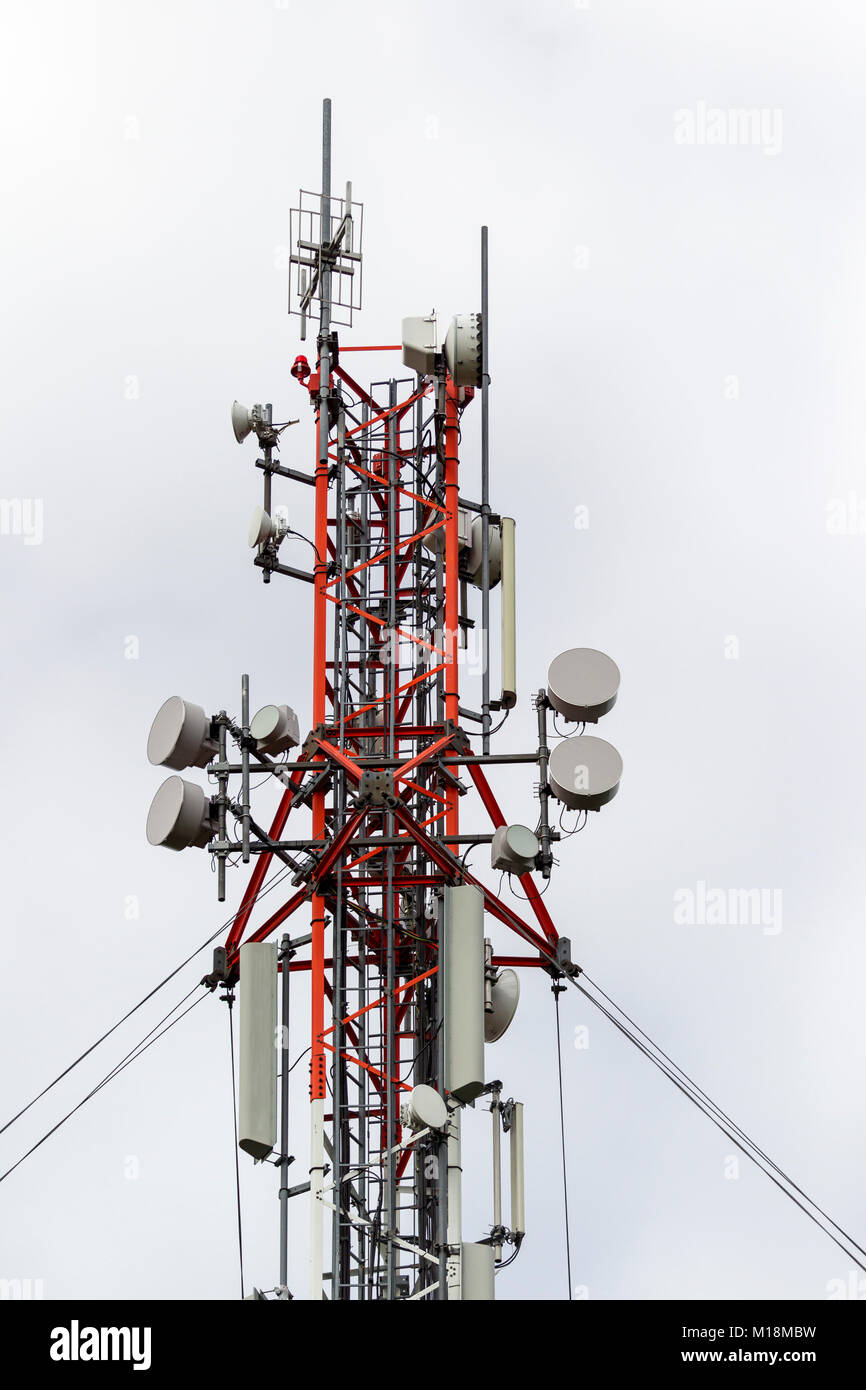
Telecommunications Mast
Share

The Private Telecommunications and Communications Senior Staff Association of Nigeria (PTECSSAN) has issued a three-day warning strike notice to Huawei Technologies Company Limited over alleged anti-labour practices.

Huawei is a global provider of information and communications technology (ICT) infrastructure and smart devices.

The PTECSSAN General Secretary, Okonu Abdullahi, in a letter addressed to the company, said the union has directed the withdrawal of services of its members from projects of the company effective between 12.00 a.m. May 2 and 11.59 p.m. May 4, 2023.

Abdullahi, in the letter made available to newsmen on Sunday, April 30, said the failure of the company to comply with the union’s demands after the warning strike would result in an indefinite strike.

He noted that the strike might cause telecommunications network disruptions as no worker would be available to attend to them.

The PTECSSAN official said: “We were constrained to embark on this industrial action when it became apparent to us that your company is not labour friendly and is not interested in peaceful and amicable resolutions of the concerns of our members.

“For the avoidance of doubt, we shall not be backing down on the warning strike except the following are agreed with the union.

“Immediate recognition of the fundamental right of the employees to freely associate with the union; immediate recognition of the union as negotiating body for the employees on workers welfare.

“Immediate remittance of membership dues into the union’s account as earlier provided; immediate payment of March salaries of some members of the union, among others.

“As we look forward to your company’s granting of our demands, please be assured of our union’s resolve to ensure better working conditions for her members.”

Other demands of the Telecommunications workers include the immediate regularisation of the employment of union members on the Huawei projects and the involvement of the union in the process.

Others are the immediate commencement of appropriate pensions deduction and remittance of same as required by the Pension Act.

“Immediate approval of the National Health Insurance Scheme that covers the employees, their spouses and four of their dependents.

“Immediate enrollment of Union members in the Group Life Insurance as stipulated in the Pension Reform Act 2004, Section 9(3).

“Immediate commencement of negotiation of the Collective Bargaining Agreement (Conditions of Service) for the benefit of union members,” Abdullahi added.

Meanwhile, Huawei has yet to react to the latest development as of the time of filing this report.


Continue Reading

Communication

Nigeria’s telephone users hit 222.6m

Published

on

Mobile Telephone Sets
Share

The National Bureau of Statistics (NBS) has declared that the number of telephone users in Nigeria increased to 222.6 million at the end of 2022.

The 2022 figure showed an increase of 27.1 million telephone users over the 195.5 million subscribers recorded at the end of 2021.

The NBS made the disclosure via its Telecoms Data: Active Voice and Internet per State, Porting and Tariff Information report for the last quarter of 2022, released on Monday, April 24.

The NBS stated that the figure for the last quarter of 2022 represented a 13.87 per cent rise in voice subscriptions on a year-on-year basis.

On a quarter-on-quarter basis, the report showed growth stood at 4.89 per cent.

The NBS also recorded a total of 154.9 million active internet subscribers at the end of 2022 compared to 142 million recoded at the end of 2021.

“This represents a 9.07 per cent increase in active internet subscriptions year-on-year, while on a quarter-on-quarter basis, internet subscription grew by 1.35 per cent,” it stated.

On state-by-state analysis, the report showed that Lagos State had the highest number of active telephone users in 2022 at 26.5 million, followed by Ogun State with 13 million users.

Kano State came third with 12.4 million telephone users.

The report showed that Bayelsa State had the least number of telephone users at 1.6 million subscribers, followed by Ebonyi and Ekiti states with 1.9 million users and two million users, respectively.

It also showed that Lagos State had the highest number of internet users at 18.7 million subscribers, followed by Ogun State with 9.2 million subscribers and Kano State with 8.5 million subscribers.

“On the other hand, Bayelsa recorded the least number of 1.1 million internet users, followed by Ebonyi and Ekiti with 1.3 million and 1.5 million subscribers, respectively,” the NBS added.

The NBS noted that majority of telephone users in Nigeria in 2022 were MTN subscribers.


Continue Reading