Connect with us

Judiciary

Don’t blamed Judiciary for delays in high profile cases – CJN

Published

on

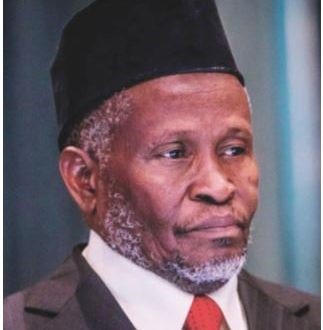
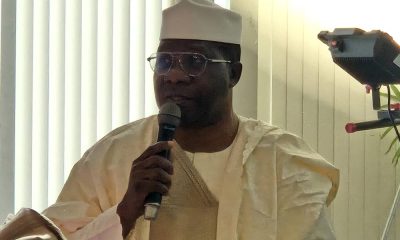
Chief Justice of Nigeria (CJN) Justice Tanko Muhammad
Share

The Chief Justice of Nigeria (CJN) Justice Tanko Muhammad says the judiciary can not be blamed for delays in high profile cases.

The CJN’s position is contained in a statement issued by his Senior Special Assistant on Media on Monday in Abuja.

He said the position of the Minister of Justice and the Attorney-General of the Federation, Abubakar Malami (SAN) that the Judiciary be held responsible for delays in the trial and delivery of judgments in corruption cases involving politically exposed individuals appears to be one-sided.

“The Nigerian Judiciary is not here to lay claims to being perfect but when the political and economic conditions under which it is operating is compared with its counterparts in other climes, it would be adjudged a prize model.

“The Judiciary by its constitutional position does not have a criminal investigations unit or Fraud Detective Squad to detect and investigate criminal involvement of any person, neither does it have a garrison command to fight its cause or enforce its orders and decisions.

“More often than not, the Federal Government’s prosecution sector files more charges than it can prove or provide witnesses, at times as a result the prosecution even fails”.

He said that the Administration of Criminal Justice Act (2015) under reference is infected with sores in some parts, making speeding adjudications impossible in some instances.

“In some instances the high volume of cases, limited number of judges, poor infrastructure or archaic equipment also contribute to the challenges”.

He noted that the federal government had while giving reasons for its under-funding of the Judiciary, on January 26, at the Nigerian Bar Association (NBA) Justice Sector Summit 2022 in Abuja said that the Judiciary has not been transparent in the spending its yearly allocations.

“The Judiciary has refrained from joining issues all this while but to state the facts in line with the budget call circular and ceiling the Federal Government sent to the Judiciary before the beginning of the fiscal year.

”The,Judiciary prepares its budget estimates for capital, overhead and personnel costs according to the ceiling, needs and priority.

“The Judiciary defends its budget before the Senate and House of Representatives Committees on Judiciary at the National Assembly, besides the initial vetting by the Executive.

“It also has an internal mechanism for budget control and implementation. Each Court and judicial body has a budget unit, the accounts department, internal audit, Due Process Unit, as well as Departmental Tenders Board.

“There is also a Due Process Committee at the NJC and the Judicial Tenders Board that award contracts on expenditure above the approval limit of the accounting officers of the Courts and judicial bodies”, he added.

He said the layers of control were established by the Judiciary to ensure transparency, accountability and effective budget implementation.

“Similarly, by virtue of Sections 88 and 89 of the 1999 Constitution, the National Assembly carries out oversight visits to the Judiciary to monitor the implementation of its budget.

“Section 88(2)(b) also mandates the National Assembly to expose corruption, inefficiency or waste in the execution or administration of laws within its legislative competence and in the disbursement or administration of funds appropriated by it.

“The Executive also put in place some mechanism to monitor budget implementation and accountability in the Judiciary through its organs like the office of Accountant General of the Federation and Auditor General of the Federation, and other agencies where the need arises”.

According to him, apart from the internal audit units of the Judiciary, the Federal Audit Department maintains offices in all the courts and judicial bodies that monitor spending in the Judiciary.

“If the Federal Audit raises a query on any transaction and it is not well defended, it sends the report to the Public Accounts Committees of the National Assembly and officials of the Judiciary would be invited to explain themselves.

“The question to ask is, who else should the Judiciary open its account books to, and who among these organs had raised exceptions which were not defended by the Third Arm?
The answer is none.

“One only hopes that these allegations against the Judiciary by the Federal Government is not just a way of giving a dog a bad name so as to hang it”, he concluded.


(NAN)

 

Continue Reading
Click to comment

Leave a Reply

Your email address will not be published. Required fields are marked *

Judiciary

Nnamdi Kanu Opts to Defend Himself as Legal Team Withdraws from Trial

Published

on

Nnamdi-Kanu
Nnamdi Kanu
Share

A dramatic twist unfolded on Thursday at the Federal High Court in Abuja as the detained leader of the Indigenous People of Biafra (IPOB), Nnamdi Kanu, announced that he would represent himself in court following the withdrawal of his entire legal team.

Lead counsel, Chief Kanu Agabi (SAN), informed the court that he and other Senior Advocates had stepped down from the case, stating that Kanu had decided to “take back his case.”

Confirming the development, Kanu told the presiding judge, “I will be representing myself for now. That might change later.” When asked if he wanted the court to assign a lawyer to him, he declined.

Speaking directly before the bench, Kanu argued that the court lacked jurisdiction to continue with the case against him. His submission formed part of an oral argument he personally presented—a rare occurrence in such a high-profile criminal trial.

The development marks a new phase in the long-running case, which has faced multiple adjournments and legal battles since Kanu’s arrest and extradition from Kenya to Nigeria in 2021.

Kanu faces charges bordering on treasonable felony and terrorism-related offences. Legal observers say his decision to conduct his own defence could significantly affect the direction and tempo of the trial in the coming weeks.

Continue Reading

Judiciary

Natasha Files Objections to FG’s Criminal Defamation Suit

Published

on

, Senator Natasha Akpoti-Uduaghan
Senator Natasha Akpoti-Uduaghan
Share

Senator Natasha Akpoti-Uduaghan has filed preliminary objections before the High Court of the Federal Capital Territory and the Federal High Court, contesting criminal defamation charges instituted against her by the Federal Government.

The senator described the case as an abuse of power and a calculated attempt at political persecution, alleging that the charges arose from petitions filed by Senate President Godswill Akpabio and former Kogi State Governor Yahaya Bello.

Her legal team, led by four Senior Advocates of Nigeria—Prof. Roland Otaru, SAN; Dr. E. West-Idahosa, SAN; J.J. Usman, SAN; and M.J. Numa, SAN—argued that the prosecutions are unconstitutional and aimed at silencing opposition voices rather than advancing public interest or national security.

The lawyers tendered exhibits indicating that the senator’s comments were part of legitimate public discourse and media commentary. They further contended that the Attorney-General of the Federation lacks the legal standing to prosecute defamation cases on behalf of private individuals.

According to the defence, defamation is a civil matter and criminalizing it amounts to intimidation, suppression of free speech, and misuse of the justice system.

Senator Akpoti-Uduaghan also accused authorities of selective justice, stating that while her own petitions over threats to her life were ignored, complaints from her political rivals were quickly acted upon. She maintained that this amounts to discriminatory prosecution in violation of Section 42 of the Constitution.

Her lawyers urged the courts to dismiss the cases at the preliminary stage, warning that allowing them to proceed would erode public confidence in the justice system and waste national resources.


Continue Reading

Judiciary

Court Freezes Four Bank Accounts Linked to Ex-NNPC Boss Kyari Over ₦661m Fraud Allegation

Published

on

Mele Kyari
Share

The Federal High Court in Abuja has ordered the temporary freezing of four Jaiz Bank accounts linked to former Group Chief Executive Officer of the Nigerian National Petroleum Company (NNPC) Limited, Mele Kyari, over alleged involvement in a ₦661.4 million fraud.

Justice Emeka Nwite granted the order on Tuesday, August 19, 2025, following an ex-parte motion filed by the Economic and Financial Crimes Commission (EFCC).

EFCC counsel, Ogechi Ujam, told the court that the accounts were under investigation in connection with conspiracy, abuse of office, and money laundering. The anti-graft agency said preliminary findings revealed the accounts, allegedly controlled by Kyari through family members and associates, received suspicious inflows from the NNPC and oil companies.

According to the EFCC, the funds—spread across four Jaiz Bank accounts in the names of Mele Kyari and Guwori Community Development Foundation—were disguised as payments for a book launch and activities of a non-governmental organisation.

The judge held that the application was meritorious and adjourned the matter to September 23 for a report.


Continue Reading