Defence and Security
Chatered Institute of Directors bill scales second reading in Senate
Published
6 years agoon
By
News Editor

A bill seeking to give legal backing to the establishment of the Chatered Institute of Directors of Nigeria scaled second reading during plenary on Tuesday.
The bill was sponsored by the Senate Leader, Yahaya Abdullahi (APC, Kebbi North).
Abdullahi, while leading debate on the bill, said the Institute of Directors of Nigeria which was established 34 years ago in 1983, was incorporated by the Corporate Affairs Commission (CAC), as a non-profit making public company limited by guarantee.
According to him, the Institute’s major objective is to among others things; provide professional training to Directors in the Public and Private Sectors to facilitate effective governance, public accountability and professional efficiency in administering the Public and Private Sectors in Nigeria.
The lawmaker, however, explained that in discharging this enormous role, the Institute needs to secure membership of Global Network of Directors Institute (GNDI), the umbrella body of Institute of Directors in the world with headquarters in Canada and European Federation of Directors.
“The Institute requires to be affiliated with these and other related international organisations with speciality or mandate in provision of capacity development services to Directors worldwide.
“The Institute is currently not a member of the two world most famous bodies in this sector on the ground that is not established by law in Nigeria to qualify as chartered and that is what this Bill seek to do to ensure that it is establish by law to enable it to affiliate with the world organizations in this sector.
“This failure has affected the development of the Institute despite its long functional existence. It has also limited its capacity to participate in international conferences, send its students on exchange of experience visits and a number of benefits that only Chartered Institutes of Directors enjoy.
“The Bill is proposed to make the Nigerian Institute of Directors a Chartered Institute to acquire all the recognitions, benefits and technical support needed to make it effective in provision of capacity development services for Directors in the Private and Public Sectors in Nigeria and the rest of the world”, Abdullahi said.
The lawmaker further explained that the Chartered Institute of Directors of Nigeria bill, when passed and signed into law, would serve as a Regulatory Body for Persons serving as Directors in both Public and Private Sectors.
He added that the body would also be tasked with determining the standards of knowledge and skills to be attained by persons seeking to become Directors; making provision for continuous training and development of the Directors; and ensuring professionalism and the promotion of corporate governance values.
Contributing to the debate, Senator Surajudeen Ajibola Bashiru, underscored the need for the establishment of a body to regulate the activities of Directors in the public and private sector.
He emphasized that giving legal backing through the passage of the bill, besides ensuring viable management of corporate entities in Nigeria, would yield associated benefits from interface with recognized international organizations.
The bill after scaling second reading, was referred by the Senate President, Ahmad Lawan, to the Committee on Establishment and Public Service for further legislative work.
The Committee which is Chaired by Senator Ibrahim Shekarau (APC, Kano Central) is expected to report back to the upper chamber in two weeks.
You may like
Defence and Security
Troops Foil Mass Abduction in Borno, Rescue 119 Hostages, Recover Eight Vehicles
Published
32 minutes agoon
November 8, 2026
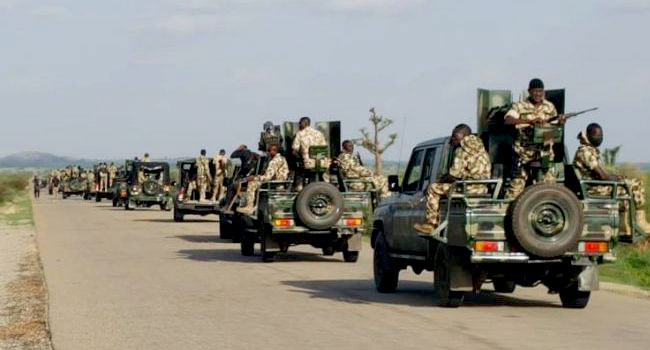
Troops of the Nigerian Army have reportedly foiled a mass abduction attempt by suspected terrorists in Borno State, rescuing 119 civilians, including women and children, and recovering eight vehicles seized during the attack.
The successful operation followed a swift military response to the activities of armed terrorists who barricaded the Dutsen Kura–Bulazarma–Kamuya road, intercepting travellers and abducting civilians.
According to counter-insurgency publication Zagazola Makama, the rescue operation was carried out on Friday by troops of the 135 Special Forces Battalion, operating under the 27 Task Force Brigade, Sector 2, during a routine surveillance mission along the strategic route.
The troops reportedly detected a group of terrorists mounting an illegal roadblock and forcibly abducting motorists and passengers alongside their vehicles.
Following the discovery, the military immediately mobilised the Special Forces Quick Reaction Force (QRF) of the battalion, reinforced by another response team from the headquarters of the 27 Task Force Brigade.
The combined forces advanced through the Mangari–Dora axis, launching a pursuit of the terrorists in a coordinated operation aimed at rescuing the abducted civilians.
Faced with the advancing troops, the terrorists reportedly abandoned their captives and seized vehicles before fleeing the area.
The military operation resulted in the rescue of 119 civilians, comprising 69 men, 35 women and 15 children, while eight vehicles were successfully recovered.
The rescued victims were subsequently reunited with their families.
Meanwhile, during the troops’ withdrawal from the operational area, an Improvised Explosive Device (IED) was discovered around the Bam Buratai Junction–Bula Zarma axis.
An Explosive Ordnance Disposal (EOD) team was immediately deployed to the location, where the suspected explosive device was identified, marked and secured for safe disposal.
The operation highlights the continuing efforts of Nigerian troops to counter terrorist activities, protect vulnerable communities and secure major transportation routes in the North-East.
Military operations remain ongoing across Borno State and other parts of the North-East as security forces intensify efforts to disrupt terrorist movements, prevent abductions and restore safety along vulnerable highways.
Defence and Security
State Police: NASS Targets December 2026 for Final Legislative Process — Bamidele
Published
1 week agoon
October 29, 2026
Senate Leader, Senator Opeyemi Bamidele, says 30 states have endorsed constitutional amendment, insists reform will strengthen community security as he urges lawmakers to measure legislative performance by impact on citizens
The establishment of state police in Nigeria has moved closer to reality, with at least 30 state Houses of Assembly approving the proposed constitutional amendment, Senate Leader, Senator Opeyemi Bamidele, has declared, announcing that the National Assembly is targeting December 2026 to complete the remaining legislative processes and transmit the bill to President Bola Tinubu for assent.
Bamidele, who is also Vice Chairman of the Senate Committee on the Review of the 1999 Constitution, described the development as a historic breakthrough in the country’s efforts to restructure its security architecture, improve intelligence gathering and establish a policing system that responds more effectively to the security needs of local communities.
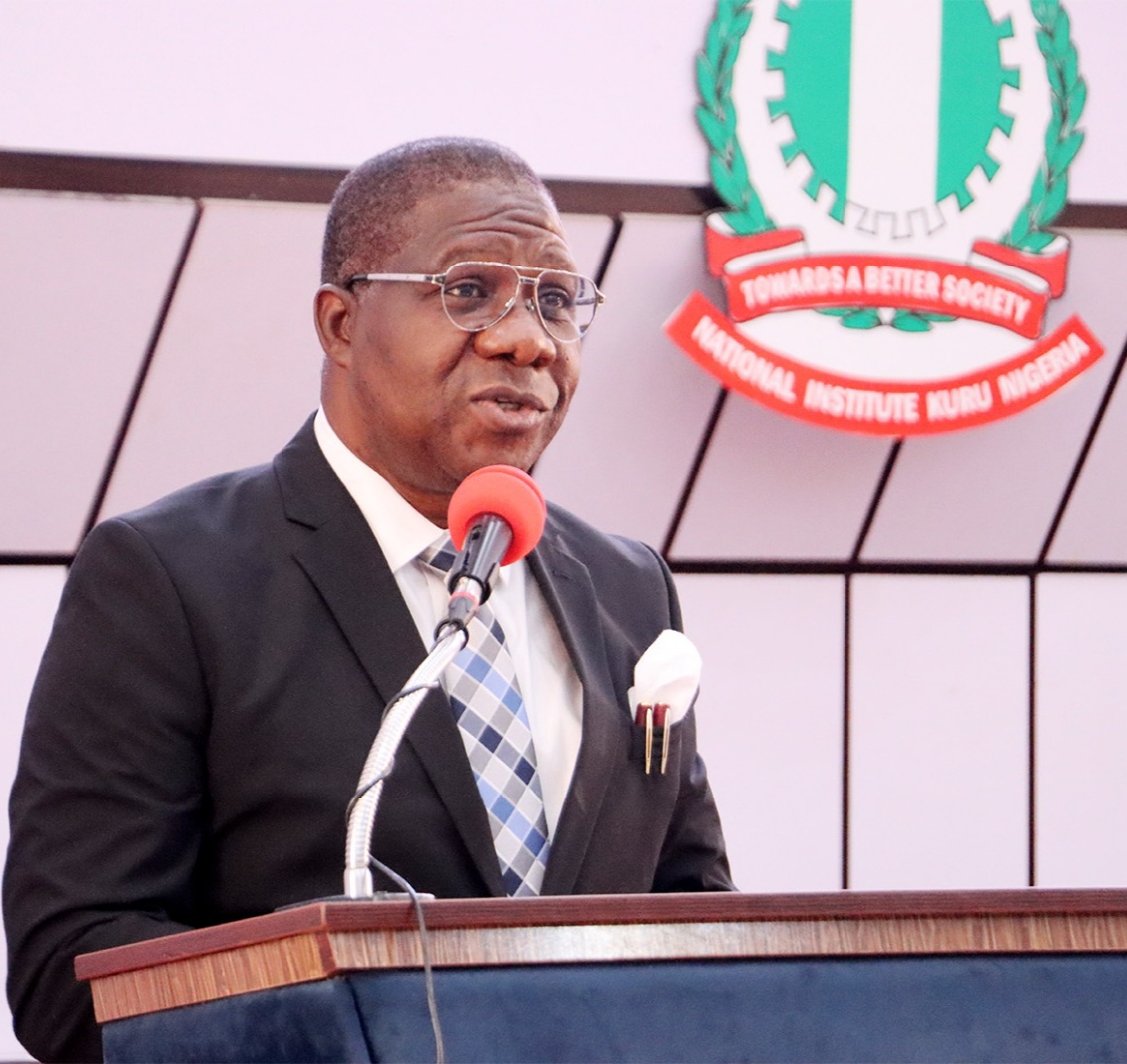
He disclosed this on Thursday while delivering a lecture to participants of Senior Executive Course 48 at the National Institute for Policy and Strategic Studies (NIPSS), Kuru, Jos, Plateau State.
The lecture, titled “Improving the Efficiency and Effectiveness of Governance through Proactive Lawmaking,” examined the role of strategic legislation in strengthening public institutions, improving national security and promoting effective governance.
According to the Senate Leader, the approval of the State Police Constitution Alteration Bill, 2026, by at least 30 state assemblies has satisfied the constitutional requirement for state-level concurrence, paving the way for the National Assembly to complete the next stages of the amendment process.
He explained that Section 9(2) of the 1999 Constitution, as amended, requires the approval of not less than two-thirds of all State Houses of Assembly for a constitutional alteration of this nature.
“We are pleased to inform our constituents across the federation that State Police have moved from rhetoric to reality. We have already received formal reports from the State Houses of Assembly and, as of today, no fewer than 30 states have approved the State Police Constitution Alteration Bill, 2026,” Bamidele said.
He added that the National Assembly was now required to consider and collate the reports submitted by the state assemblies before passing the necessary resolution by a simple majority of members in each chamber.
Once that stage is completed, he said, the bill would be transmitted to the President and Commander-in-Chief for assent.
“We have set a clear timeline for ourselves. We intend to conclude all these legislative stages — consideration of reports, passage of resolution, and transmission for presidential assent — on or before December 2026,” he stated.
Bamidele stressed that the development marked a significant departure from more than 15 years of unsuccessful attempts to establish state police through constitutional reform.
“What this means is that State Police is no longer a campaign promise or a subject of endless debate. It is now a constitutional reality. It means that the security of lives, private property and public assets occupies a prime place in the legislative agenda of the 10th National Assembly,” he said.
He maintained that decentralising policing would enable Nigeria to develop a system better equipped to understand local terrain, communicate in indigenous languages, respond to community-specific security threats and improve accountability to the people.
The Senate Leader, however, clarified that the proposed reform was not designed to weaken the Federal Government or undermine national unity, but to strengthen Nigeria’s federal structure through a more responsive security framework.
According to him, state police would not amount to the creation of state armies, but would provide state-led, community-anchored policing within clearly defined constitutional safeguards, operational standards, oversight mechanisms and human rights protections.
He assured Nigerians that the National Assembly, under the leadership of Senate President Godswill Akpabio, remained committed to completing the legislative process.
“The National Assembly remains committed to delivering on the establishment of State Police. We will not falter until every Nigerian, whether in Kuru, in Iyin-Ekiti, in Gusau or in Yenagoa, can sleep with both eyes closed,” Bamidele said.
10th NASS Prioritises People-Centred Legislation
Beyond security sector reform, Bamidele said the 10th National Assembly had prioritised strategic, people-oriented legislation designed to address critical national challenges and improve the welfare of citizens.
He argued that the effectiveness of a legislature should not be determined merely by the number of bills introduced or passed, but by the tangible difference its interventions make in the lives of Nigerians.
According to him, the National Assembly has enacted several laws addressing education financing, workers’ welfare, taxation, social investment, electoral administration, cybersecurity, investment regulation, insurance and regional development.
Among the legislations he highlighted were the Student Loans (Access to Higher Education) Act, 2024; the Minimum Wage (Amendment) Act, 2024; the four Tax Reform Acts of 2025; and the National Social Investment Programme Act.
Others include the Electoral Act, 2026; the Cybercrimes (Amendment) Act; the Investments and Securities Act, 2025; the Nigerian Insurance Industry Reform Act, 2024; and the laws establishing regional development commissions.
He said these legislative interventions reflected a proactive approach to governance, in which lawmakers anticipate emerging challenges, address institutional weaknesses and establish legal frameworks capable of supporting sustainable development.
Bamidele explained that proactive lawmaking could strengthen national security, drive economic transformation, improve public financial management, enhance electoral credibility and expand opportunities in education, healthcare and technological innovation.
He added that effective legislation could also promote environmental sustainability and improve relations between the different tiers of government.
Good Laws Alone Cannot Guarantee Good Governance
The Senate Leader cautioned that passing legislation was only one component of effective governance, stressing that laws must be properly implemented, adequately funded and regularly evaluated to deliver meaningful outcomes.
He observed that some laws could fail to achieve their objectives when they were disconnected from prevailing realities, inadequately funded or poorly administered.
“Good governance requires good laws. But good laws alone do not guarantee good governance. We require laws that are relevant, evidence-based, implementable, adequately funded, properly administered, effectively monitored, periodically reviewed and ultimately measured by their impact on citizens,” he said.
He therefore urged lawmakers and public institutions to adopt a performance-driven approach that places citizens’ welfare and measurable development outcomes at the centre of legislative activities.
According to him, the true value of lawmaking lies not simply in the passage of bills, but in the extent to which legislation resolves societal problems, strengthens institutions and improves the quality of life of the people.
Bamidele Seeks Stronger NIPSS-NASS Collaboration
Bamidele also called for stronger institutional collaboration between the National Assembly and NIPSS to improve legislative foresight, policy development and strategic decision-making.
He described the institute as a critical national institution with the capacity to bring together expertise from the public service, military, private sector, academia and other strategic sectors.
He noted that the multidisciplinary structure of the Senior Executive Course, which covers policy, strategy, leadership, economics, international relations, security, science and technology, as well as peace and conflict studies, positioned NIPSS to contribute meaningfully to the development of effective legislation.
He encouraged the institute to deepen its engagement with the National Assembly by providing research, policy analysis and strategic insights that could help lawmakers anticipate emerging challenges and develop evidence-based legislative responses.
The lecture was attended by the Chairman of the Senate Committee on Employment, Labour and Productivity, Senator Diket Plang; Chairman of the Senate Committee on Tourism, Senator Pam Dachungyang; Director-General of NIPSS, Professor Ayo Omotayo; and former President of the Nigerian Institution of Estate Surveyors and Valuers, Mr. Adekunle Alonge.
The proposed state police framework remains a major component of Nigeria’s ongoing constitutional review process, with its anticipated completion expected to shape future debates on policing responsibilities, public safety and the country’s broader security architecture.
Defence and Security
State Police Nearer as 30 States Endorse Constitutional Amendment — Akpabio
Published
1 week agoon
October 29, 2026
President of the Senate, Godswill Akpabio, has disclosed that about 30 state Houses of Assembly have endorsed the proposed constitutional amendment to establish state police, expressing optimism that Nigeria could adopt a decentralised policing system within weeks to strengthen the fight against insecurity.
Akpabio made the disclosure on Wednesday in Abuja when he received members of the Arewa Revival Project, a northern youth organisation with membership across the 19 northern states. He said the proposed reform would bring policing closer to communities, improve responses to local security threats and complement existing security structures.
“As I speak with you now, for the first time in the history of Nigeria, it may not take us a month before we have a state police system,” Akpabio said, adding that about 30 states had endorsed the constitutional amendment. His projection comes as the country continues to grapple with security challenges requiring stronger coordination and more effective law enforcement.
The Senate President expressed confidence that Nigeria would overcome its security difficulties, urging the youth to remain hopeful about the country’s future and support efforts to restore peace and stability. He maintained that decentralised policing could enhance the capacity of security agencies to tackle threats within their respective communities.
Akpabio also urged the visiting northern youths to mobilise grassroots support for President Bola Tinubu ahead of the 2027 presidential election, arguing that continuity would allow the administration’s economic and security policies to mature. He credited the government with pursuing economic diversification and tax reforms, while urging young Nigerians to counter what he described as paid social media propaganda against the administration.
He further alleged that some individuals criticising the President and his supporters online were being paid, advising the youths to organise periodic grassroots engagements to explain government policies and address misinformation rather than engage continuously in online exchanges.
Akpabio maintained that the administration needed time to consolidate its policies, expressing confidence that ongoing reforms would contribute to Nigeria’s stability and future development. However, the proposed state police system remains subject to the completion of the constitutional amendment process and the necessary legislative approvals.
Latest News
Why I Dumped Atiku for Tinubu Ahead of 2027 — Former Delta Governor Okowa Opens Up
Share Former Delta State Governor and 2023 vice-presidential candidate of the Peoples Democratic Party (PDP), Senator Ifeanyi Okowa, has explained...
Troops Foil Mass Abduction in Borno, Rescue 119 Hostages, Recover Eight Vehicles
Share Troops of the Nigerian Army have reportedly foiled a mass abduction attempt by suspected terrorists in Borno State, rescuing...
Tinubu Urges Rivers Voters To Use PVCs As Weapon Against Poverty
Share President Bola Tinubu has urged Nigerians, particularly voters in Rivers State, to deploy their Permanent Voter Cards (PVCs) in...

Akpabio, Okpebholo Hail Flamingos After Historic U-17 World Cup Victory
Share President of the Senate, Godswill Akpabio, and Edo State Governor, Monday Okpebholo, have congratulated Nigeria’s U-17 women’s national football...

Infantino Hails Flamingos’ Historic U-17 World Cup Triumph
Share FIFA President Gianni Infantino has congratulated Nigeria’s U-17 women’s national team, the Flamingos, following their historic victory at the...