Connect with us

News

Why we voted for e-transmission of results with conditions – Senate President

Published

on

Senate-President-Lawan
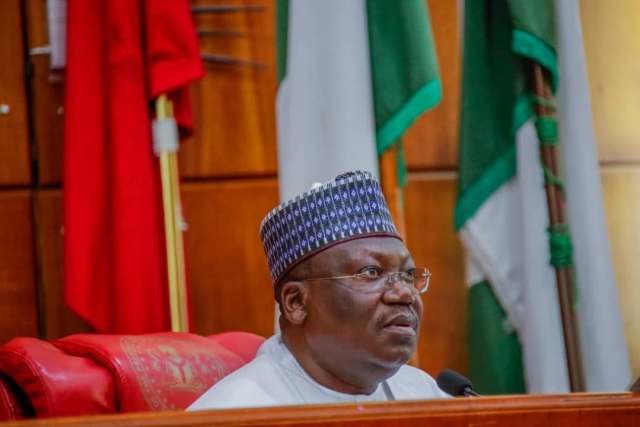
Senate President, Ahmad Lawan
Share

**Says not only APC but some PDP Senators too voted for it

President of the Senate, Ahmad Lawan has advanced reasons to justify the position taken by the Senate on the electronic transmission of election results.

The Senate on Thursday, while considering the Electoral Act 2010 Amendment Bill, voted that “The Commission(INEC) may consider electronic transmission of results, provided the national coverage is adjudged to be adequate and secure by the National Communications Commission (NCC) and approved by the National Assembly.”

Lawan explained that the Upper Chamber voted the way it did in defence of about half of the Nigerian voters whose votes may not be counted with immediate deployment or application of electronic transmission of election results.

The Senate President spoke to journalists at the weekend while on a constituency visit to his Yobe North Senatorial District.

Asked to comment on the passage of the Electoral Act 2010 Amendment Bill, Lawan said: “I’m happy that we have been able to pass the amendment even though some people are complaining of what we have passed in the Senate and probably what the House of Representatives has also passed.

“When the majority of Senators voted against immediate application or deployment of electronic transmission of results from the polling units, to the ward, to the local government, states and federal, they didn’t say they do not believe in electronic transmission (of election results).

“All of us in the Senate, 109 of us, believe that at one point, our electoral process must deploy electronic transmission so that it eases and enhances the electoral process and give it more credibility and integrity.

“But you see, when you have not reached that stage where you could deploy the electronic transmission from every part of the country, then you have to be very careful. And no matter what anybody may say, you cannot have about 50 percent of Nigerian voters not participating or not getting their votes counted in elections and say it doesn’t matter, that we have to start the electronic transmission.

“We know the evils of not transmitting results electronically but compare the evils of electronically transmitting just half of the electoral votes from Nigerians and say you have elected a President with 50 percent only.

“And others have voted but their results or their votes could not be electronically transmitted. This is disenfranchising Nigerians and we are not going to support this kind of thing because essentially, we are supposed to be fair to every part of Nigeria and when we voted, every part of Nigeria voted for and against(the amendment).

“What I mean here is that, you have Senators from northern part of Nigeria who voted for electronic transmission. Maybe that is their belief or their environment is ready for electronic transmission. And you have Senators from southern part of Nigeria who voted against immediate deployment of electronic transmission but they support that the electronic transmission of results should be allowed after certain conditions are met and the conditions are simple: The National Communication Commission(NCC) had provided the technical information that only NCC could give – that only about 50 percent of the Nigerian environment, the polling units, in the country could possibly have their results electronically transmitted.

“So what happens to the other 50 percent. So we believe that all of us in the Senate were aiming at the same target but chose to go through different routes and that is why in my concluded remarks in the Senate after the debate and voting, I said there was no Victor, no Vanquish because we all meant well.

“And for those Nigerians who still feel that the electronic transmission should have just been allowed to take effect, I said well, this is how democracy works. Democracy is to allow those minority views to be expressed and democracy provides that the majority views will always prevail.”

The Senate President faulted some media reports that insinuated that only the APC Senators voted against immediate application of the electronic transmission of results.

He said the votes cast on either sides of the subject matter cut across party lines and regional divides.

“In this respect, it was not just APC. I have seen it reported in the media that only APC Senators voted against the immediate deployment of electronic transmission.

“There are PDP Senators who voted against that but it appears that some people want to target at APC Senators. There were PDP Senators who voted against immediate deployment. I’m using the word ‘immediate’ with an emphasis.

“Nobody said don’t use electronic transmission at all. You use it when we reach there and only NCC can give you information. That is the main reason why, in the Senate version, clause 52(3), there is that provision to contact the NCC because INEC will not know until they go to NCC.

“So NCC will be the only institution to give that information because they are competent and it’s within their jurisdiction. And we say the National Assembly should approve of it.

“It is not when they want to do transmission that they will have to go to National Assembly that we want to do transmission. No. That once NCC has told INEC is now ready. INEC should come to the National Assembly with the NCC and say we are now ready.

“There is no way any National Assembly, not even this Ninth National Assembly will deny INEC the use of electronic transmission as part of our electoral process when we are ready for it,” Lawan said.

The Senate President said it was wrong to conclude that Senators who voted for electronic transmission with conditions did not like the results transmitted electronically.

“I want to take this opportunity to debunk that insinuation or outright castigation of Senators that voted against immediate deployment of electronic transmission that they don’t like electronic transmission. It is not true.

“Even though I didn’t vote. But I believe that what my colleagues did is binding on all of us in the Senate. 28 against 52…l believe that what we have done requires that the Senate and the House will each constitute a conference committee. What we call harmonisation for the two sides. When we harmonise, then we will send it to Mr President,” Lawan said.

Continue Reading
Click to comment

Leave a Reply

Your email address will not be published. Required fields are marked *

News

Bamidele Urges Lagos, Southwest States to Establish Regional Investment Compact

Published

on

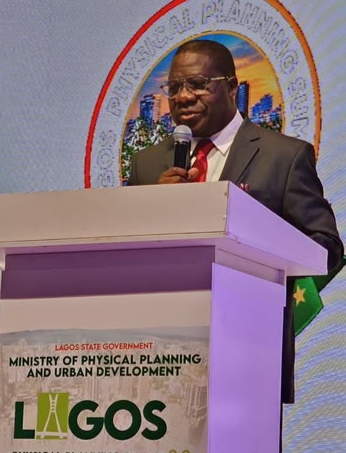
Senate Leader, Senator Michael Opeyemi Bamidele
Share


The Leader of the Senate, Senator Opeyemi Bamidele, has called on the Lagos State Government and other Southwest states to establish a regional development and investment compact to accelerate infrastructure development, economic integration and regional prosperity.

Bamidele made the call on Thursday while delivering a keynote address at the Lagos Physical Planning Summit held at Eko Hotel and Suites, Victoria Island, Lagos, where he proposed a Lagos-Southwest Spatial Development and Investment Compact.

He said Lagos could not secure its long-term prosperity through isolated state planning, stressing that its economy was deeply interconnected with neighbouring states through labour markets, housing, agriculture, manufacturing, transportation, trade and environmental systems.

According to him, the proposed compact would provide a framework for coordinating cross-border infrastructure, developing regional economic corridors, strengthening environmental resilience and mobilising investments in projects that benefit multiple states.

Bamidele urged the Lagos State Government to move beyond treating physical planning as a routine governmental activity and embrace it as a coordinated system for delivering economic value, social welfare, environmental sustainability and regional prosperity.

He explained that achieving this transition would require a change in mindset, stronger institutions, reorganisation of investment priorities and closer alignment between development plans and implementation.

The Senate Leader proposed a collaborative framework involving Lagos, Ogun, Oyo, Osun, Ondo and Ekiti states, alongside relevant federal institutions, planning authorities, infrastructure agencies, private-sector operators, professional bodies and development partners.

He said the framework should prioritise regional transportation networks, complementary economic corridors, cross-border urban planning, environmental resilience and investment mobilisation.

Bamidele also urged Lagos to leverage the emerging digital revolution by expanding broadband infrastructure, smart-city technology, digital services, innovation hubs and technology-driven enterprises, while equipping its workforce with the digital skills required to compete in a changing economy.

He maintained that the future of Lagos would depend not only on the quality of its development plans but also on the determination with which they were financed, coordinated and implemented.

“We must connect physical planning to economic development, infrastructure investment to measurable public benefits, digital innovation to effective governance, and state-level priorities to regional cooperation,” he said.

Bamidele further emphasised the need for capable institutions, predictable regulations, transparent financing, responsible investment and sustained collaboration among governments, the private sector, professional institutions, communities and development partners.

He expressed confidence that a coordinated Lagos-Southwest development framework would strengthen regional economic integration, unlock investment opportunities and promote sustainable development across the six states.


Continue Reading

News

Tinubu Mourns Fasoranti, Says Nigeria Has Lost a Great Statesman

Published

on

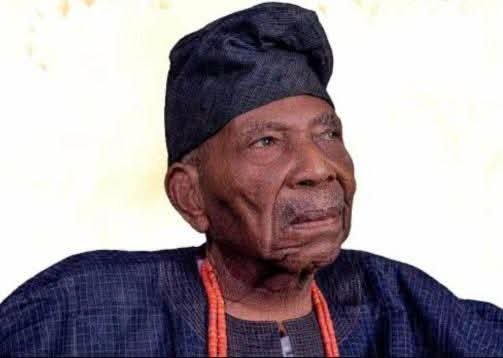
Pa Reuben Fasoranti
Share


President Bola Ahmed Tinubu has expressed deep sadness over the death of Pa Reuben Famuyide Fasoranti, the revered Afenifere leader, who died at the age of 100.

Tinubu, in a condolence message issued by the State House on Tuesday, October 20, 2026, described the late Yoruba leader as an icon of integrity, a patriot and one of the foremost figures in the progressive political tradition associated with the late Chief Obafemi Awolowo.

The President extended his condolences to the Fasoranti family, the people of Akure Kingdom, the Ondo State Government and people, the South-West region and members of Afenifere.

He said Fasoranti’s century-long life exemplified integrity, discipline, selflessness and an unwavering commitment to the advancement of the Yoruba people and the unity and progress of Nigeria.

Tinubu recalled the deceased’s contributions as an educationist and school principal, his service as Commissioner for Finance in the old Ondo State, and his leadership of Afenifere, noting that he remained committed to true federalism and social justice.

According to the President, Fasoranti also made significant sacrifices in the struggle for democracy in Nigeria, sometimes at the risk of his life.

He lamented that the country would miss the elder statesman’s wisdom, moral authority and fatherly counsel, particularly at a time when his guidance was greatly needed.

Tinubu also recalled celebrating Fasoranti’s 100th birthday on May 11, 2026, describing the milestone as an opportunity to celebrate not merely longevity but a lasting legacy of honour and service.

The President further recounted his visit to Fasoranti’s residence in Akure in 2022 to inform him of his intention to contest the presidency.

According to Tinubu, the Afenifere leader prayed for him and expressed confidence that he would become President during his lifetime, a prayer he said was answered.

“I had hoped Papa would also be around with us for my second term to witness the full dawn of economic growth and prosperity in the land,” Tinubu said.

Despite the loss, the President urged Nigerians to give thanks for Fasoranti’s long life of service and fulfilment.

He prayed for the peaceful repose of the deceased’s soul and asked God to comfort his family and all those mourning his passing.

“May his gentle soul rest in perfect peace,” the President added.


Continue Reading

News

Presidency Dismisses Makinde’s ₦250bn-Per-State NLNG Windfall Claim, Cites ₦33.68trn Revenue Gap

Published

on

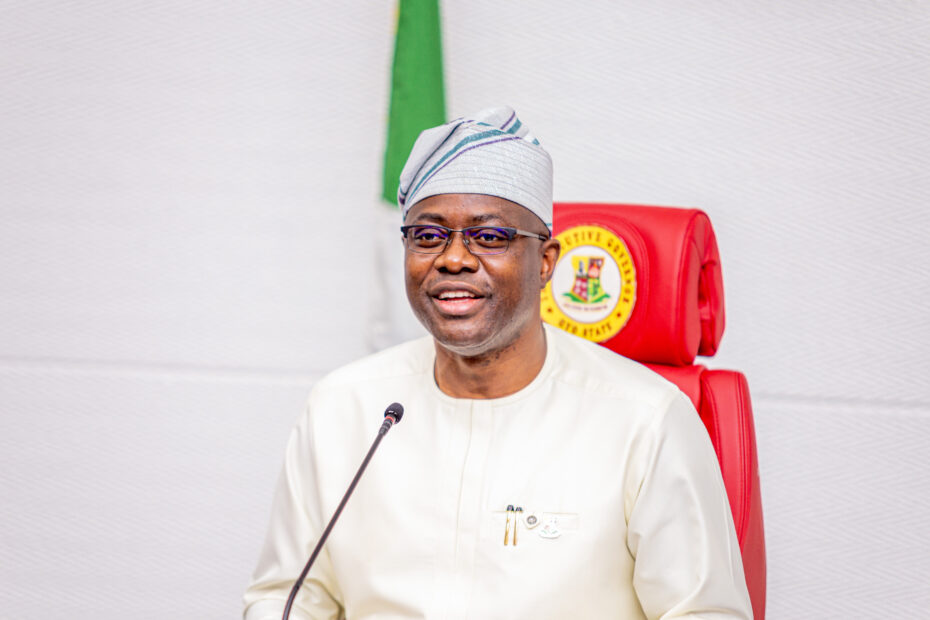
Oyo State Governor, Seyi Makinde
Share


The Presidency has dismissed claims by Oyo State Governor Seyi Makinde that the Federal Government is withholding ₦250 billion in Nigeria LNG Limited (NLNG) dividend windfall meant for each state, describing the allegation as false and inconsistent with the country’s revenue-sharing framework.

Governor Makinde made the claim on Friday at the 2027 Budget Stakeholders’ Consultative Engagement held at the Olola Ogunlana Hall, International Conference Centre, University of Ibadan, alleging that the funds would not be released until after the 2027 general elections.

The governor, who is also the presidential candidate of the Allied Peoples Movement (APM), said Oyo State had identified projects that could boost its economy but would be unable to proceed as planned if the expected funds remained unavailable.

“Each state was supposed to get ₦250 billion. We had already identified projects that would expand Oyo State’s economy. But they have now said the money will not be paid until after the election,” Makinde said.

However, presidential spokesman Bayo Onanuga, in a statement on Sunday, rejected the allegation, arguing that the figures cited by the governor did not align with the scale of NLNG’s dividend payments or the statutory revenue-sharing formula.

Onanuga explained that distributing ₦250 billion to each of Nigeria’s 36 states would require a total of ₦9 trillion, excluding the Federal Government, the Federal Capital Territory and the 774 local government areas.

Under the Federation Account Allocation Committee (FAAC) revenue-sharing formula, states receive 26.72 per cent of distributable Federation Account revenue. According to the presidential spokesman, generating ₦9 trillion for the states from NLNG dividends alone would require total dividend payments exceeding ₦33.68 trillion, equivalent to approximately $25 billion, in a single declaration.

The Presidency maintained that NLNG had never paid $25 billion in dividends to the Federation Account in a single payout.

Providing historical context, Onanuga said NLNG had paid approximately $21.5 billion in dividends to the Federation over the past 25 years, with less than $3 billion realised since President Bola Tinubu assumed office.

He argued that the claim of a single dividend payout large enough to fund ₦250 billion for every state was inconsistent with the company’s historical dividend record.

The presidential spokesman also criticised Makinde’s public comments on federal revenue allocations, urging the governor to exercise restraint and present verifiable facts in his political engagements.

While acknowledging Makinde’s right to pursue his presidential ambition, the Presidency urged him to avoid what it described as false claims and disinformation during his campaign.

It also called on Nigerians to disregard the allegation, insisting that it could mislead the public and create unnecessary tension between citizens and the Federal Government.

The controversy has brought renewed attention to the scale of NLNG dividend receipts, the distribution of Federation Account revenue and the financing expectations of state governments as preparations for the 2027 elections gather momentum.


Continue Reading