Connect with us

Crime

NDLEA Busts Mexican Drug Kingpin, Dismantles Industrial-Scale Meth Lab in Ebonyi

Published

on

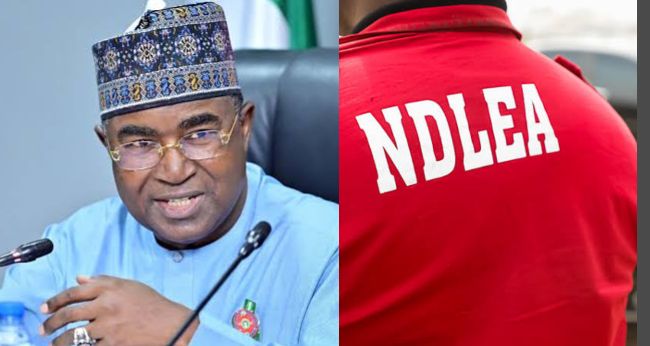
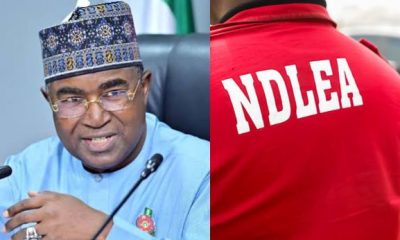
Chairman and Chief Executive Officer of the NDLEA, Brig. Gen. Mohamed Marwa (Rtd)
Share


The National Drug Law Enforcement Agency (NDLEA) has arrested a suspected Mexican drug kingpin, Arturo Carrera Loaiza, allegedly linked to a network of transnational drug cartels seeking to establish methamphetamine laboratories in Nigeria.

The arrest, according to the agency, came as operatives dismantled another industrial-scale methamphetamine laboratory and recovered hundreds of kilogrammes of precursor chemicals, laboratory equipment and other materials used in the illicit production of the drug.

Chairman and Chief Executive Officer of the NDLEA, Brig. Gen. Mohamed Marwa (Rtd), who disclosed the development in Lagos on Tuesday, vowed that Nigeria would not be allowed to become a safe haven for international drug syndicates.

Marwa, represented at the briefing by the agency’s Director of Media and Advocacy, Femi Babafemi, said the latest breakthrough followed months of intelligence gathering and painstaking investigation into a wider transnational network behind a series of clandestine drug laboratories uncovered in different parts of the country.

The NDLEA boss recalled that on May 16, 2026, operatives arrested three Mexican nationals and seven Nigerian collaborators at a forest hideout in Ogun State.

A month later, on June 17, another Mexican national and four Nigerian collaborators were arrested at a clandestine methamphetamine laboratory concealed in a forested area of Tapa village, Ibarapa North Local Government Area of Oyo State.

Field tests conducted at the Oyo facility confirmed the presence of large quantities of methamphetamine and precursor chemicals.

Investigations by the agency’s Special Operations Unit subsequently established that the 56-year-old Mexican methamphetamine expert arrested in Oyo State had allegedly been recruited into Nigeria by a Mexican drug kingpin.

Working with international partners, investigators obtained a photograph of the suspected kingpin, who the arrested Mexican national positively identified as the person who recruited him and facilitated his movement into Nigeria.

Further intelligence indicated that the suspected kingpin entered Nigeria on June 10, 2026, alongside another Mexican national.

The investigation eventually led operatives to Arturo Carrera Loaiza, who was arrested on August 19, 2026, while allegedly attempting to flee Nigeria through the Lagos airport.

During interrogation, Loaiza reportedly claimed that he was invited into Nigeria by a Nigerian contact identified only as “Henry” under the pretext of establishing a restaurant business.

He also denied knowledge of methamphetamine production or any involvement with the clandestine laboratory in Tapa village.

However, the NDLEA said forensic evidence obtained during the investigation contradicted his claims.

According to the agency, investigators recovered photographs showing Loaiza dressed in a blue laboratory coat and standing among equipment consistent with methamphetamine production.

Analysis of location metadata embedded in the photographs reportedly led investigators to a property under construction at Isiata Ugoni Okposi in Ebonyi State.

On August 30, NDLEA operatives raided the Ebonyi property, which was linked to one John Samuel Ivo Okike.

Interviews with individuals found at the site, including the site engineer and caretaker, reportedly revealed the existence of a suspicious temporary structure erected over the septic tank area at the rear of the property, as well as persistent strong chemical odours coming from the premises.

A CCTV memory card recovered from the property provided what the agency described as a major breakthrough.

Forensic analysis of the footage allegedly showed a foreign national wearing a blue laboratory coat, matching the appearance of Loaiza in the photographs earlier recovered by investigators.

The footage also reportedly captured repeated appearances by Okike.

More significantly, the NDLEA said CCTV footage showed chemicals and laboratory equipment being moved from the property at about 9:00 p.m. on August 21, with Okike allegedly directing the operation alongside other individuals.

Acting on intelligence from a confidential source, NDLEA operatives subsequently traced the relocated materials to an isolated house in a neighbouring community, where they were allegedly being kept by one Nwanja Obasi.

A raid on the location led to the recovery of a substantial cache of chemicals, laboratory equipment and paraphernalia allegedly connected to methamphetamine production.

Among the items recovered were a dehydrator containing a white cloth sieve with loose methamphetamine embedded in it, three additional empty dehydrators, 442.8kg of acetone, 37.1kg of toluene, 20kg of an acetone/bromobenzene mixture, 1.7kg of ethanol, 5.1kg of chloride salt, 31.5kg of hydrochloric acid, 200kg of P2B and 1kg of tartaric acid.

Other items recovered included condensing units, condenser heads, a condenser, a fabricated reaction pot, an access pump, weighing scales, mixers, drums, gas burners, gloves and a blue laboratory coat reportedly matching the one seen in the CCTV footage.

The agency said the recovered materials, CCTV footage, forensic findings and eyewitness accounts had significantly strengthened the case against individuals allegedly connected to the network.

Marwa warned that the NDLEA would intensify its efforts to prevent international drug cartels from using Nigeria as a base for illicit drug production.

“Nigeria will not be allowed to become a haven for transnational drug cartels seeking to relocate their laboratories from other jurisdictions into our forests and rural communities,” Marwa said.

He added that the arrest of Loaiza and the dismantling of the Ebonyi facility, coming after similar operations in Ogun and Oyo States, demonstrated the growing intelligence and forensic capabilities of the NDLEA.

Marwa commended operatives of the Special Operations Unit, Strike Force, Forensics and the Oyo, Ogun and Ebonyi State Commands for what he described as their professionalism, courage and diligence.

He further vowed that the agency would continue to follow every lead until the wider network, including its financiers and local collaborators, was identified and brought to justice.

The NDLEA also urged residents, particularly those living in rural and forested communities, to report suspicious activities, unusual chemical odours and unfamiliar structures that could be connected to clandestine drug operations.

Members of the public can contact the agency through its toll-free line 080010203040 or email info@ndlea.gov.ng.

Continue Reading
Click to comment

Leave a Reply

Your email address will not be published. Required fields are marked *

Business & Economy

How Fraudsters’ Deepfake ads used Elon Musk, Johann Rupert to Swindle South African Investors of $61.5 million

Published

on

Share

For adopting deepfake digital ads to swindle unsuspecting investors, South Africa’s Financial Sector Conduct Authority, FSCA, has fined online trading platform Banxso R2 billion ($123 million). And its four directors were handed 30-year industry bans after a year-long investigation concluded the company used deepfake advertisements featuring billionaires Johann Rupert and Elon Musk to steal approximately R1 billion ($61.5 million) from South African investors.

The FSCA detailed the scheme in its 2026 Regulatory Actions report, describing it one of the most significant enforcement actions against digitally enabled financial fraud in South African history.

The deepfake advertisements showed Rupert and Musk, two of the most recognizable business figures in the world, falsely promising investors profits of up to R300,000 ($18,450) a month from an initial investment of R4,700 ($289). The offering was branded as “Immediate Matrix.” Individuals who responded to the advertisements were systematically redirected to Banxso representatives and encouraged to trade primarily in contracts for difference, complex high-risk derivative instruments the FSCA regards as unsuitable for most retail investors.

Banxso and its representatives have consistently denied being behind the advertisements, claiming the firm was itself a victim of hacking. The FSCA launched its investigation in March 2024 after receiving information about the deepfake campaign and concluded that Banxso was directly or indirectly involved in, or at minimum materially benefited from, the dissemination of the deceptive material.

The investigation found that misleading information, including promises of unrealistic returns, was provided to prospective clients to undermine their ability to make informed decisions. Client funds were not placed with legitimate liquidity providers but were instead controlled internally by Banxso, commingled, transferred between non-designated accounts and rendered difficult to trace. The FSCA found that client funds were misappropriated and used for personal and business expenses.

The enforcement actions that followed reflected what the FSCA described as the scale, seriousness and systemic nature of the misconduct. Banxso owner Harel Adam Sekler, Warwick David Sneider, Manuel de Andrade and Mohammed Bux each received 30-year debarments. Henry James Simpson received a 10-year debarment. The R2 billion ($123 million) fine was imposed on Banxso, Sekler and Sneider jointly, with additional fines of R16 million ($984,000) on Banxso, R20 million ($1.23 million) on De Andrade, R10 million ($615,000) on Bux and R5 million ($307,500) on Simpson. Banxso’s financial services provider license was withdrawn.

The FSCA has referred its findings and supporting evidence to the Directorate for Priority Crime Investigation, known as the Hawks, to support potential criminal proceedings.

The legal battle is far from over. In September 2025, Banxso and its key individuals applied to the Financial Services Tribunal for reconsideration of the license withdrawal. The Tribunal dismissed the applications in December. In February 2026, the five Banxso representatives lodged fresh applications for reconsideration of the debarments and administrative penalties. That matter remains pending.

According to reports, the Western Cape High Court ruled that Banxso’s business model was illegal, triggering liquidation proceedings. Those proceedings are currently stalled following a legal challenge by Flamingo Clearing House, a company also owned by Sekler that served as Banxso’s CFD liquidity provider and was identified as a key player in the scheme.

The case represents the clearest illustration yet of how artificial intelligence-generated deepfake technology is being weaponized in South Africa’s financial markets, using the faces and reputations of the country’s most prominent billionaires to manufacture credibility for fraudulent investment offerings.

The intelligence satisfies curiosity. The paid briefings satisfy strategy.

Every Monday, Elite subscribers receive an Investor Memo breaking down the deal, the structure and the positioning behind the week’s most consequential African wealth story – the kind of analysis that doesn’t appear anywhere else.

Twice a month, a Wealth Intelligence brief profiles a single billionaire’s holdings, cash flows and expansion pipeline in detail no public source matches.

Continue Reading

Crime

101-Year-Old Great-Grandmother Arrested For Selling Cannabis in Ogun, NDLEA Nabs N4.4BN ‘Loud’ in Lagos Ports

Published

on

Share

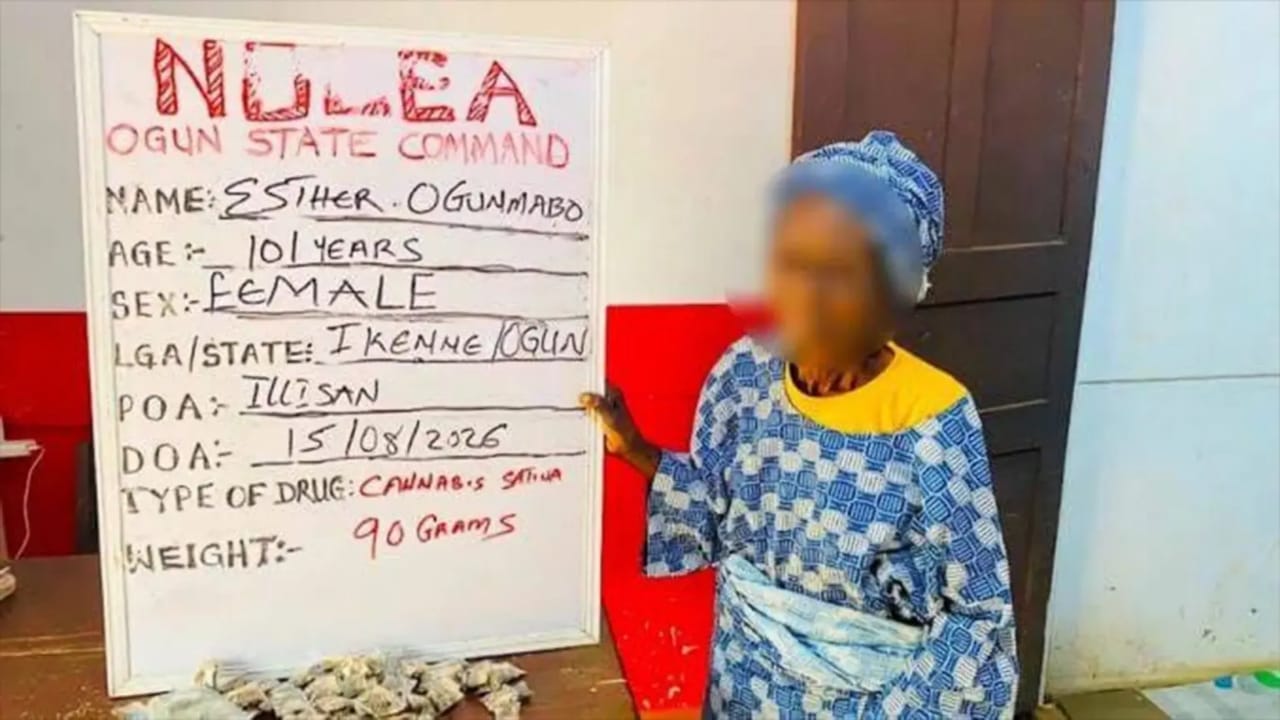
Operatives of the National Drug Law Enforcement Agency, NDLEA, have arrested a 101-year-old great-grandmother, Esther Ogunmabo, for allegedly dealing in cannabis in Ilisan, Ogun State, even as the agency intercepted more than 1.49 tonnes of “Loud” worth over N4.4 billion at Lagos ports.

The arrest and seizures were disclosed in a statement issued on Sunday as part of the agency’s latest nationwide crackdown.

Ogunmabo was arrested on August 15, 2026, with 90 grammes of skunk, a strain of cannabis.
According to the NDLEA, she admitted selling the substance in small quantities.

The centenarian reportedly told investigators that she resorted to drug dealing after a fire destroyed her provisions shop. She also disclosed that her daughter, who lives in Lagos, supplied her with cannabis every four days.

Following the arrest, NDLEA Chairman, Brig. Gen. Mohamed Buba Marwa (retd.), directed that Ogunmabo be granted bail and subjected to counselling because of her advanced age. Her daughter was subsequently arrested.

In a separate operation in Akwa Ibom State, NDLEA operatives intercepted a wooden boat allegedly heading towards fishing settlements in Cameroon. Three suspects were arrested with about 42.622 kilogrammes of illicit drugs.

The seizure included about 42.06kg of skunk, alongside other quantities of cannabis and 20 grammes of cocaine concealed inside a large wrap of edible cassava fufu.

The agency also announced what it described as its first seizure of illicit drugs shipped from Thailand through Nigeria’s maritime corridor.

Two containers containing cannabis indica, popularly known as “Loud,” were intercepted at the Apapa and Lekki ports in Lagos.
One container, declared to contain dry fish, rice, vehicle spare parts, turmeric soap and inverter batteries, was found to contain 1,090.5kg of the illicit substance.
A second container yielded another 400kg, bringing the combined quantity to more than 1.49 tonnes with an estimated street value exceeding N4.4bn.

The NDLEA said its operatives also recovered methamphetamine, skunk, opioids and other illicit substances during intelligence-led operations across Seme in Lagos State, Akwa Ibom, Ondo, Oyo, Kwara, Kano, Abia and the Federal Capital Territory.

The agency said the operations highlight the increasingly varied methods allegedly used by traffickers to move narcotics, including concealing cocaine in food items and disguising large consignments in containers declared as legitimate goods.

The NDLEA said it would continue to intensify operations against drug trafficking networks across the country, targeting both street-level dealers and larger supply chains involved in importing and distributing illicit substances.

Continue Reading

Crime

EFCC Arraigns Two for Alleged Unlawful Supply of Bank Access Codes: One pleads guilty, 2nd pleads not guilty

Published

on

Share

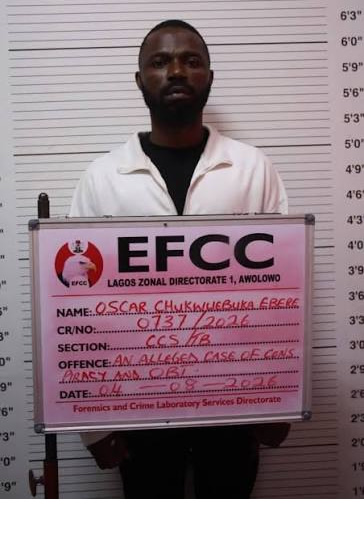
The Lagos Zonal Directorate 1 of the Economic and Financial Crimes Commission (EFCC) on Wednesday, August 19, 2026, arraigned Gideon Bakpa Aghogho and Oscar Ebere Chukwuebuka before Justice F.N. Ogazi of the Federal High Court sitting in Ikoyi, Lagos,  for  alleged unlawful supply of bank access credentials.

The defendants were arraigned alongside one Scott, who is currently at large, on an eight-count charge bordering on the unlawful supply of access credentials to a bank database.

The offences are contrary to Sections 27 and 28(1)(b) of the Cybercrimes (Prohibition, Prevention, Etc.) Act, 2015, as amended in 2024.

One of the counts reads: “That you, GIDEON BAKPA AGHOGHO, OSCAR EBERE CHUKWUEBUKA, along with an individual identified as SCOTT (at large), conspired unlawfully between 24th and 26th July 2026 in Lagos, within the jurisdiction of this Honourable Court, by supplying for use the access code of GIDEON BAKPA AGHOGHO to the FCMB system using the local Administrative Credential (ITSD), which is capable of allowing access to the FCMB Virtual Center Platform, with the intention of committing an offence, and you thereby committed an offence contrary to Sections 27 and 28(1)(b) of the Cybercrimes (Prohibition, Prevention, Etc.) Act, 2015, as amended in 2024, and punishable under Section 28(2) of the same Act.”

Another count alleged that Aghogho, between April and May 2025 in Lagos, knowingly and without authority disclosed access credentials, including the bank’s server IP and domain credentials, to gain access to FCMB’s database in exchange for $15,000.

The first defendant pleaded not guilty to the charges, while the second defendant pleaded guilty when the charges were read to them.

Following the first defendant’s plea, prosecution counsel, Bilkisu Buhari, asked the court for a date to commence trial and prayed that he be remanded in a correctional facility.

In respect of the second defendant, the prosecution sought to review the facts of the case against him following his guilty plea.

Justice Ogazi subsequently adjourned the matter until August 27, 2026, for a review of the facts and other proceedings. The judge also ordered that the defendants be remanded at a Correctional centre.

Continue Reading