Education
Gov. Ododo Challenges TETFund to Turn Research into Solutions, Hails Ocholi for North Central Education Forum
Published
3 hours agoon
Kogi State Governor, Alhaji Ahmed Usman Ododo, FCA, has challenged the Tertiary Education Trust Fund (TETFund) to deepen its investment in research and innovation capable of producing practical solutions to Nigeria’s developmental challenges, declaring that the future of the nation’s economy depends largely on the strength of its educational institutions.
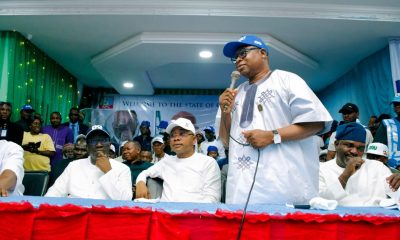
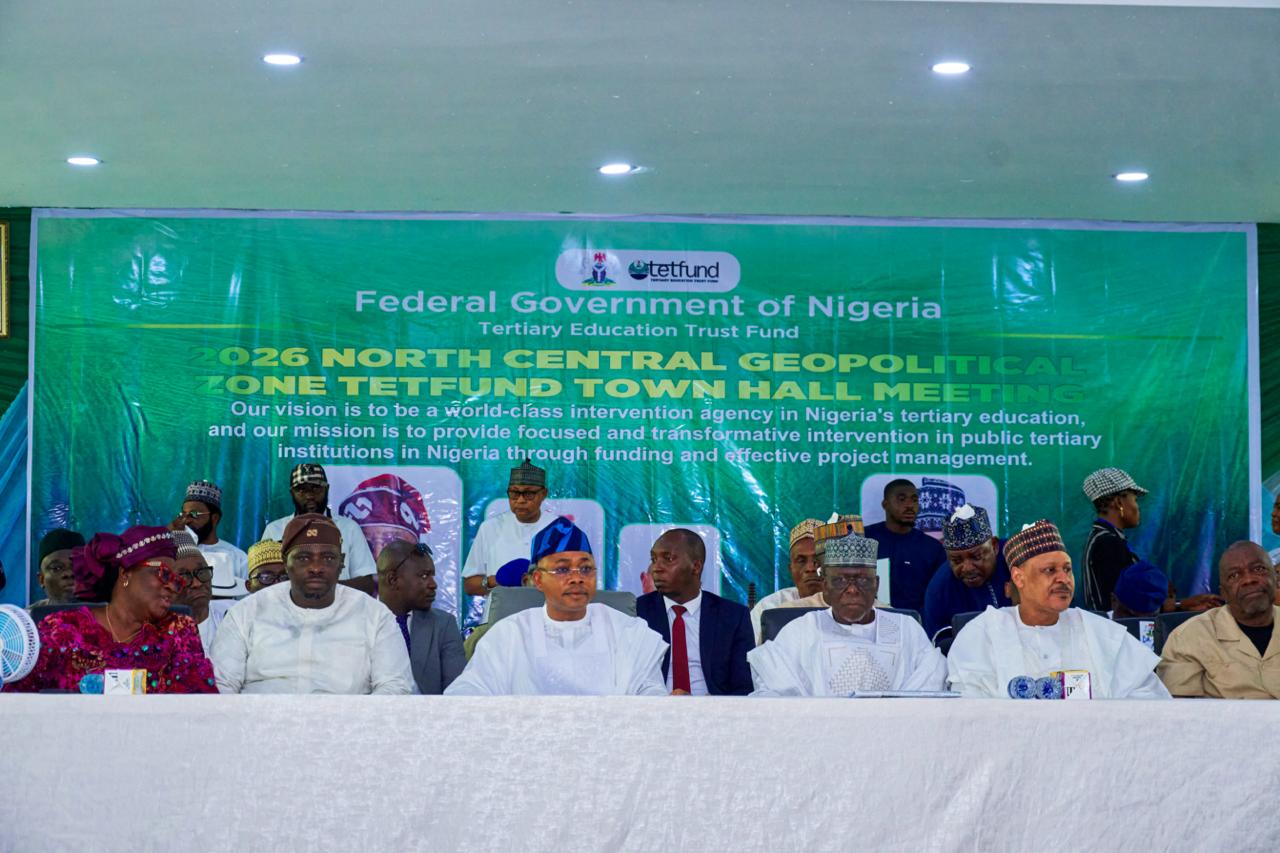
Governor Ododo stated this on Thursday at the 2026 TETFund North Central Stakeholders’ Town Hall Meeting held at the Glass House of the Kogi State Government House, Lokoja, with the theme, “The Renewed Hope Agenda of President Bola Ahmed Tinubu, GCFR, and Its Impact on Tertiary Institutions in North Central Nigeria.”
The Governor, who served as Chief Host, described education as the foundation upon which prosperous societies are built, stressing that investment in the sector remains one of the most enduring investments any nation can make. According to him, “Every prosperous nation is first built in the classroom before it is built in the marketplace.” He said education develops the human mind, unlocks innovation and prepares citizens to solve contemporary challenges.
Ododo particularly urged TETFund to devote greater resources to research in agriculture, mining, healthcare, manufacturing, artificial intelligence, renewable energy and security. He said tertiary institutions must move beyond theoretical research and become solution centres capable of providing governments and industries with ideas that can translate the North Central’s agricultural, mineral and human resources into food security, industrial growth, employment and sustainable prosperity.
The Governor commended President Bola Ahmed Tinubu for strengthening TETFund under the Renewed Hope Agenda, noting that the Federal Government’s commitment demonstrates an understanding that education is not merely a social service but a strategic investment in national development. He also praised TETFund for its interventions in infrastructure, research, academic staff development and institutional capacity building, assuring that Kogi State would continue to provide an enabling environment for programmes that strengthen teaching, research, innovation and skills development.
Governor Ododo specially congratulated Dr. Abdulrahman Hassan Ocholi, the TETFund Board of Trustees Member representing the North Central Zone, for initiating the stakeholders’ Town Hall shortly after his appointment. He described the initiative as a demonstration of purposeful leadership, accountability and genuine commitment to tertiary education, noting that bringing together Vice Chancellors, Rectors, Provosts, education commissioners, students, traditional rulers and other stakeholders would help produce practical solutions to the challenges confronting the sector. He said no single institution or individual could provide all the answers, stressing that progress requires collaboration.
In his welcome address, Dr. Ocholi said the meeting was designed to provide a strategic platform for dialogue, accountability and collaboration among TETFund, beneficiary institutions, governments, students and host communities. He highlighted interventions under the Renewed Hope Agenda, including academic staff development, innovation and entrepreneurship hubs, research, digital transformation, postgraduate scholarships, infrastructure, robotics and coding facilities, artificial intelligence laboratories and renewable energy projects.
The stakeholders subsequently endorsed President Tinubu for a second term, citing his interventions and reforms in education, and also endorsed Governor Ododo for a second term while supporting APC governorship candidates across the North Central Zone.
The forum appointed Governor Ododo as Patron of the Group, resolved to commence peaceful grassroots mobilisation, commended the Federal Government’s support for TETFund and NELFUND, and called for increased funding for TETFund. Votes of confidence were also passed in SGF Senator George Akume, Minister of Education Dr. Tunji Alausa, Minister of Information Mohammed Idris, TETFund Chairman Rt. Hon. Aminu Bello Masari and Executive Secretary Arc. Sonny St. Echono.
You may like
-
Tetfund Opens Portal for Concept-note Submissions Starting August 31, 2026
-
ASUU Warns TETFund: Your Discriminatory Policy Against Some Varsities is Direct Violation of TETFund Act 2011
-
More Funds for NELFUND As Tinubu Redirects EFCC-recovered Funds, Unclaimed Dividends to Loan Body
-
Ododo, Okpebholo Rally Kogi, Edo Indigenes in Osun Behind APC Candidate
-
NELFUND Has Enabled Thousands of Students Access University Education — Jim Ovia
Education
Tetfund Opens Portal for Concept-note Submissions Starting August 31, 2026
Published
2 days agoon
September 1, 2026
–FG Increases TETFund research Grants from N64.2 bn to N10 bn
_FG begins payment of salary arrears owed staff of Unity Schs
The Tertiary Education Trust fund tetfund has announced the opening of its portal for concept-note submissions on Monday, August 31, 2026, with a submission deadline of October 15, 2026.
The Federal Government has approved N10 billion for the 2026 Grant Cycle of the Tertiary Education Trust Fund (TETFund) National Research Fund (NRF), representing a 64.2 per cent increase over the N6.09 billion committed to 174 research projects in the 2025 cycle.
TETFund disclosed this in its 2026 NRF Grant Cycle Call for Concept Notes, signed by its Executive Secretary, Arc. Sonny Echono.
According to Echono, the increased funding aims to strengthen research and boost the capacity of Nigerian researchers.
It stressed that “there will be no extension” when the October deadline expires.
The Fund said the N10 billion would support research across 30 prioritised thematic areas, grouped under Humanities and Social Sciences; Science, Engineering, Technology and Innovation; and Cross-Cutting research areas.
According to the Fund, access to the grant would begin with Principal Investigators (PIs) submitting concept notes, with only applicants whose projects are deemed fundable proceeding to the full proposal stage.
It said lecturers in public tertiary institutions in Nigeria were eligible to apply, while multidisciplinary and interdisciplinary research involving scholars from different disciplines would be encouraged.
“The PI must be institution-based, with the PI’s institution regarded as the Coordinating Institution and guarantor of proper application of the funds for the project.
“Thereafter, the successful proposals for the award of grant will be presented to the Board of Trustees of TETFund for approval and disbursement of funds,” it said.
The Fund added that the PI must be institution-based, with the PI’s institution serving as the coordinating institution and guarantor of the proper application of funds.
The application process, TETFund explained, would be conducted entirely online through the NRF portal.
It stressed that all submitted concept notes would be evaluated by the National Research Fund Screening and Monitoring Committee (NRFS&MC), after which successful PIs would be invited to develop and submit full proposals.
Relatedly, the Federal Government has resumed the payment of three years’ outstanding salary arrears owed to teachers and education officers in the Federal Unity Colleges.
More than 2,000 affected workers began receiving the payments on August 28, 2026, following years of waiting for the government to clear the backlog.
The affected employees were among those recruited into the Federal Government Unity Colleges between 2019 and 2021, whose salaries subsequently accumulated into arrears.
Recall that the Nigerian government had commenced payment of the arrears in November 2025.
The development comes three years after the affected teachers protested at the Federal Ministry of Education, demanding payment of their outstanding salaries after several appeals to the government allegedly went unacknowledged.
However, a credible source at the Office of the Accountant-General of the Federation confirmed that the payments had resumed, saying bank alerts had started reaching the accounts of the affected workers.
Education
FG Stops Overseas Scholarships, Channels Funds to Nigerian Institutions
Published
7 days agoon
August 27, 2026
The Federal Government is reviewing its foreign scholarship and bilateral education arrangements as part of efforts to eliminate unnecessary expenditure and redirect public resources towards strengthening Nigerian tertiary institutions, the Minister of Education, Dr Tunji Alausa, has said.
Alausa said the government could no longer justify spending scarce public funds to send students abroad to study programmes that are already available in Nigerian universities, polytechnics and colleges of education.
The minister disclosed this while explaining the rationale behind the Federal Government’s decision to review its overseas scholarship arrangements, stressing that the policy was driven by the need to build domestic capacity and ensure better value for public expenditure.
He recalled that shortly after assuming office, he was presented with a proposal involving about 100,000 Nigerian students travelling to Morocco to study courses taught in English, including mass communication and journalism.
According to him, the proposal raised serious concerns because the courses were already available in Nigeria, while the students would have had to spend their first year learning French before commencing their programmes.
Alausa said, “Number one, we have all those courses in Nigeria. And yet, number two, they were going to spend the first year learning French before they started the programme.”
He added that the cost of supporting such students abroad could not be justified when Nigeria had developed considerable capacity in its tertiary institutions over the years.
“And number three, in the position of a few million to support this in Nigeria, we support thousands of them,” he said.
The minister said the government therefore concluded that continuing the arrangement in its previous form would amount to an inefficient use of public resources.
“So the Bilateral Education Agreement was not making sense, again, to us in government. It was a way to waste government funds,” Alausa said.
He added, “And this President will not waste any public funds.”
The latest position builds on the Federal Government’s earlier decision to discontinue government-funded BEA scholarships while retaining support for students already enrolled under the previous arrangements.
The Federal Government has clarified that existing beneficiaries of the bilateral scholarship programme would not be abandoned and would continue to receive support until the completion of their studies, while new government-funded awards under the arrangement were discontinued following a review of the programme.
The policy does not amount to a blanket ban on Nigerians receiving scholarships from foreign governments.
Foreign governments willing to sponsor Nigerian students can continue to offer such opportunities, but the Federal Government intends to be more selective about committing Nigerian public funds to overseas education.
Alausa similarly explained that foreign countries willing to continue sponsoring Nigerian students could do so without necessarily requiring financial support from the Nigerian government.
The minister said the circumstances that justified sending large numbers of Nigerian students abroad decades ago had changed considerably.
“When those programmes were set up 20 years ago, they were meant to get students to go to the government colleges where we did not have capacity.
“But in the last 20 years, we’ve built a number of capacities in the tertiary institutions — universities, polytechnics and colleges,” he added.
The scholarship review comes amid broader reforms by the Federal Ministry of Education aimed at repositioning Nigeria’s education system under President Bola Ahmed Tinubu’s Renewed Hope Agenda.
The reforms have focused increasingly on strengthening domestic tertiary institutions, expanding technical and vocational education and training, improving digital education, promoting research and innovation, and making education more responsive to the needs of the economy.
The Federal Government has also intensified efforts to strengthen technical and vocational education and training, with emphasis on modernising curricula, developing industry-relevant skills and improving the capacity of institutions to produce graduates who can contribute directly to economic development.
Alausa has repeatedly argued that education spending must produce measurable outcomes, particularly given the country’s competing development needs and limited public resources.
The push to retain more education spending within Nigeria also reflects the government’s broader objective of strengthening local institutions rather than relying excessively on overseas opportunities.
Alausa said the government’s approach was not simply about withdrawing foreign scholarships but ensuring that public resources were deployed where they would have the greatest impact.
He cited an instance involving scholarship beneficiaries who were expected to study abroad but were instead studying in Nigerian universities, saying such situations further demonstrated the need to review the system.
“So we have to start with Nigerians,” the minister said.
The Federal Government has simultaneously been strengthening domestic student support mechanisms, including scholarships and bursaries for Nigerian students and the Nigerian Education Loan Fund, which provides financial support to students in tertiary institutions.
Alausa said the government’s broader objective was to create a tertiary education system capable of producing the skills, research and innovations required for national development.
He recently inaugurated the Tertiary Institution National Gallery Prize Committee to recognise outstanding academic research and innovation, particularly research with potential for commercialisation and industrial application.
“We want undergraduate researchers to see a clear pathway from academic research to industrial application, enterprise, innovation, and national development,” he said.
The minister said Nigeria could no longer afford to measure the success of its education system simply by the number of certificates awarded.
“The most successful nations of the 21st century will not necessarily be those endowed with greater natural resources. They will be those that can systematically transform knowledge into solutions, research and intellectual capital into economic and industrial value,” Alausa said.
Education
CLE Bans Five Law Students From Bar Final Exam For 10 Years
Published
1 week agoon
August 24, 2026
The Council of Legal Education (CLE) has barred five law students from taking the Bar Final Examination for 10 years over examination malpractice.
The decision was taken at the council’s third-quarter hybrid meeting held on August 13, 2026, at the Nigerian Law School headquarters in Bwari, Abuja.
In a statement, the council’s Secretary and Director of Administration, Aderonke Osho, said the decision followed a review of cases of examination misconduct recorded during the December 2025 Bar Final Examination.
The council approved the report of its Examination Misconduct Committee and found five candidates guilty of malpractice.
The affected candidates were subsequently disqualified and banned from sitting the Bar Final Examination for 10 years.
The meeting also considered various academic, regulatory and administrative matters concerning legal education and the administration of the Nigerian Law School.
In April, the council reported that 1,067 out of 7,602 candidates failed the 2025 Bar Final Examination, while 212 candidates obtained first-class honours and 1,216 earned second-class upper.
For the 2026 Bar Final resit held in May, 983 out of 1,955 candidates failed, representing 50.3 percent. Only 883 candidates passed, giving a pass rate of 45.3 percent.
The Bar Final Examination is the qualifying examination for law graduates who complete the required vocational training at the Nigerian Law School before they can be called to the Nigerian Bar.
Latest News
Uber Exits Nigeria After 12 Years, Cites Changing Business Priorities
ShareGlobal ride-hailing giant Uber has ended its ride-hailing operations in Nigeria, bringing its 12-year presence in the country to a...
Kogi Information Perm Sec Pledges Support for NUJ Chapel, Urges Journalists to Uphold Trust
ShareThe newly appointed Permanent Secretary, Kogi State Ministry of Information and Communications, Mr. Awulu Tijani David, has pledged his full...
Gov. Ododo Challenges TETFund to Turn Research into Solutions, Hails Ocholi for North Central Education Forum
ShareKogi State Governor, Alhaji Ahmed Usman Ododo, FCA, has challenged the Tertiary Education Trust Fund (TETFund) to deepen its investment...
NLC Requests More Crude For Refineries, Rejecst Petrol Price Hike
ShareThe latest increase in the price of Premium Motor Spirit, popularly known as petrol, has been rejected by the Nigeria...
2 Abuja Doctors, 2 Others Arrested Over Organ Harvesting in Abuja
ShareTwo medical doctors and two other suspects have been arrested in Abuja for organ harvesting by the Nigerian Police Force...