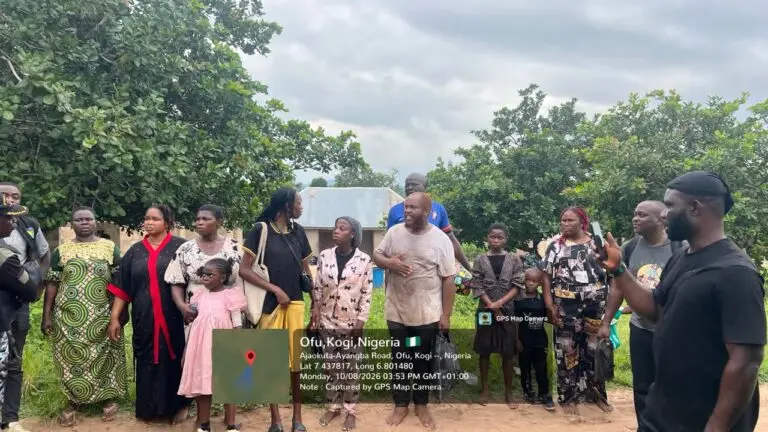
The Oyo State Police Command has recorded a significant breakthrough in its investigation into the abduction of schoolchildren and teachers in Ahoro-Esiele, Oriire Local Government Area of the state, with the arrest of six suspected informants, couriers and collaborators linked to the kidnapping syndicate.
However, security authorities have confirmed that the principal bandits responsible for carrying out the attack remain at large, continuing to evade security forces operating within the forests surrounding the Old Oyo National Park.
According to official security reports, the suspects were identified and apprehended following extensive telephone surveillance and intelligence gathering that traced communications between the kidnappers and their local collaborators.
Suspects Served as Informants and Logistics Providers
Investigators disclosed that the arrested individuals were not members of the core kidnapping gang but played critical support roles by facilitating communication, movement of funds and logistical operations for the bandits.
Among those arrested are Babangida Buhari Awalu and Kabiru Aliyu, both commercial motorcycle operators popularly known as Okada riders. Security agencies said the duo functioned as couriers for the syndicate and were apprehended in the Ojoo area of Ibadan while allegedly attempting to retrieve ransom proceeds on behalf of the kidnappers.
Further investigations led to the arrest of Adewuyi Sunday, Ayanwola Gbenga, and Rafiu Abdulmajeed, who are believed to have assisted the criminal network by providing logistical support and facilitating financial transactions. The suspects reportedly hail from communities in Gbugbu, Kwara State, and Ago-Are in Oyo State.
Another suspect, Adeleye Ayomide, a university student, was tracked and arrested by military personnel after security operatives allegedly discovered a mobile phone belonging to one of the abducted victims in his possession. Investigators also traced electronic ransom demands sent to parents and guardians of the victims to a device linked to him.
Security agencies have declined to disclose the precise residential addresses of the suspects, citing ongoing investigations, prosecution procedures and security concerns.
Phone Intercepts Expose Local Collaboration
The arrests followed the interception of several telephone conversations made during and after the abduction.
According to the Oyo State Police Command, the intercepted communications revealed how local informants allegedly guided the kidnappers through difficult forest routes and provided real-time intelligence to help them evade military and police operations within the expansive Old Oyo National Park.
Security sources disclosed that some of the conversations contained detailed directions on movement routes, security checkpoints and escape paths, highlighting the level of collaboration between the forest-based bandits and their local accomplices.
Bandits Exploit Technology to Avoid Detection
Despite the breakthroughs, authorities acknowledged that tracking the core members of the kidnapping gang has proven difficult.
Officials from the Ministry of Communications, Innovation and Digital Economy explained that the criminals have adopted sophisticated communication methods designed to defeat conventional tracking systems.
Although Nigeria’s National Identification Number (NIN)-SIM linkage policy was introduced to improve traceability and curb criminal activities, investigators said the kidnappers deploy advanced call-routing techniques and portable network-masking devices that reroute communications through multiple remote telecommunications towers.
The technology effectively conceals their actual locations and makes it difficult for security agencies to pinpoint their exact coordinates during operations.
Security experts say the growing use of such tools by criminal networks presents a new challenge for law enforcement agencies battling kidnapping, terrorism and organized crime across the country.
Ransom Funds Traced Through Banking Channels
Investigators also uncovered a financial network allegedly used by the kidnappers to receive, distribute and conceal ransom payments.
Security reports indicate that ransom proceeds and electronic extortion payments linked to communications traced to Adeleye Ayomide were routed through an account with Wema Bank.
Authorities further discovered that funds were transferred through accounts belonging to Adewuyi Sunday, Ayanwola Gbenga and Rafiu Abdulmajeed. These accounts allegedly served as temporary collection and distribution channels before cash was delivered to bandits operating within the forest.
The financial trail is now being examined by investigators seeking to identify additional members of the criminal network and establish the full scope of the syndicate’s operations.
CBN, Anti-Graft Agencies Freeze Accounts
As part of ongoing efforts to dismantle the network, the affected accounts have reportedly been flagged and frozen by financial regulators and anti-corruption agencies.
Investigators are analysing transaction records to determine the movement of ransom funds, identify additional beneficiaries and uncover any wider criminal connections.
Security officials expressed optimism that the financial intelligence obtained from the frozen accounts could lead to further arrests and eventually expose the leadership structure of the kidnapping syndicate.
Search for Main Kidnappers Continues
While authorities describe the arrests as a major breakthrough, they stress that the operation remains ongoing.
Security forces continue to conduct coordinated ground and intelligence-led operations in forest corridors around Old Oyo National Park in an effort to locate and apprehend the principal kidnappers.
Officials maintain that the dismantling of the syndicate’s support network is expected to weaken the group’s operational capacity and improve the chances of capturing the armed bandits who orchestrated the school abduction.
The Ahoro-Esiele school kidnapping sparked widespread concern across Oyo State and renewed calls for stronger security measures to protect schools and rural communities from increasingly sophisticated criminal networks.