Connect with us

Parliamentary News

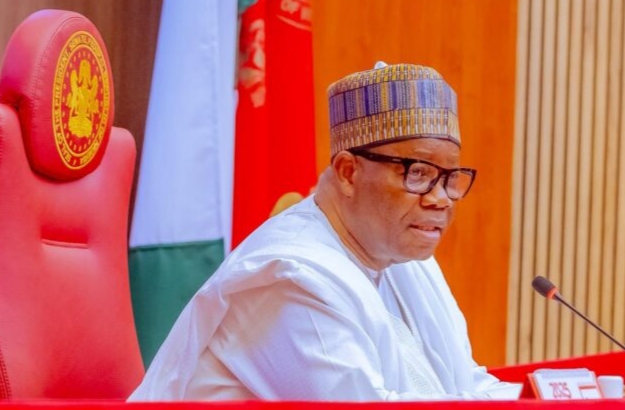
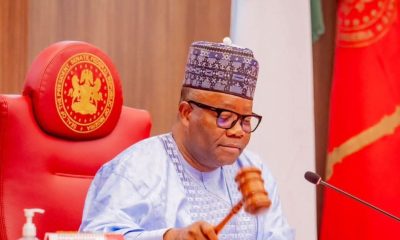
Akpabio Reassures Senators After Primary Election Setbacks, Urges Unity Amid Political Tensions and Rising Security Concerns

Published

on

Senate President Godswill Akpabio
Share


Senate President, Godswill Akpabio, has moved to calm growing concerns among serving lawmakers who suffered defeats during their respective party primaries, assuring them that efforts are underway to mitigate the political consequences of the recent electoral exercises.

Speaking on Tuesday during the resumption of plenary after a three-week legislative recess and the Eid-el-Kabir holiday, Akpabio acknowledged the mixed fortunes recorded by politicians during the primary elections but expressed optimism that many affected senators would not be left politically stranded.

Addressing his colleagues at the Senate chamber, the Senate President congratulated political parties that had successfully concluded their primaries as well as aspirants who emerged victorious and secured tickets for the forthcoming elections. He, however, recognized that the process inevitably produced both winners and losers.

“I know that there will always be victories and disappointments,” Akpabio stated, noting that electoral contests are an integral part of democratic politics.

In what appeared to be a message of reassurance to senators who failed to secure renomination tickets, Akpabio disclosed that the Senate leadership was actively engaging in efforts aimed at reducing the fallout from the primary election outcomes.

“And in this Senate, we are promised that we will have very few disappointments. And I do know that the Senate Leader and the leadership of the Senate are working very hard towards that,” he said.

Although he did not provide details on the nature of the interventions being pursued, the remarks have sparked speculation about possible political negotiations and reconciliatory measures being explored within the ruling party and the National Assembly leadership.

Fourteen APC Senators Affected

Akpabio’s comments come against the backdrop of significant losses recorded by several serving senators during the recently concluded primaries of the ruling All Progressives Congress (APC).

Reports indicate that no fewer than fourteen serving APC senators failed to secure their party’s tickets across various states, creating uncertainty about their political futures ahead of the next general elections.

The development has generated concerns within political circles, especially among lawmakers who believe internal party dynamics and power struggles may have influenced the outcomes of the primaries.

One of the most notable reactions came from Ned Nwoko, who recently alleged that senior APC leaders, including former national chairman Abdullahi Ganduje, had assured him of an automatic ticket before he defected to the ruling party.

Nwoko’s claims added another dimension to ongoing debates surrounding the transparency and fairness of the primary election process.

Warning Against Political Defections

Despite the setbacks experienced by some lawmakers, Akpabio adopted a light-hearted tone while cautioning senators against abandoning their political parties in frustration.

His remarks come as several lawmakers who lost out during the primaries have already begun seeking alternative political platforms.

Among those who have reportedly left the APC following the primary elections are Shehu Buba and Garba Maidoki.

The Senate President nevertheless emphasized that political competition and electoral outcomes should be viewed as part of the democratic process rather than grounds for division.

According to him, while individual politicians may experience either success or disappointment, democracy ultimately remains the biggest beneficiary whenever credible electoral contests are conducted.

Security Concerns Take Centre Stage

Beyond partisan politics, Akpabio devoted part of his address to pressing national security issues, particularly the recent abduction of schoolchildren and teachers in Oyo State.

Describing the incident as a grave attack on the nation’s collective conscience, he condemned the kidnapping and called for intensified efforts to secure the release of the victims.

The Senate President characterized the abduction as “an assault on our collective humanity,” stressing that attacks on educational institutions threaten not only the safety of citizens but also the future of the nation.

He also warned politicians and political aspirants against exploiting national tragedies for political gain, insisting that security challenges should unite rather than divide Nigerians.

“At moments such as these, there is a temptation to divide, to accuse, and to seek advantage from tragedy. Politicians and aspirants must resist that temptation for such cheap publicity,” he cautioned.

Call for Stronger Security Measures

Akpabio further urged members of the National Assembly to continue supporting legislative and policy measures aimed at strengthening the country’s security architecture.

He emphasized the need for decisive action against banditry, kidnapping, and other violent crimes threatening communities across the country.

“Let us continue to support every lawful and necessary measure to strengthen security, protect our schools, safeguard our communities, and ensure that every bandit faces the full weight of justice,” he said.

His remarks underscore growing concerns over insecurity in several parts of Nigeria and highlight the Senate’s intention to prioritize security-related interventions alongside ongoing political developments.

As lawmakers settle back into legislative activities, attention is expected to remain focused on both the political repercussions of the primary elections and the urgent need to address escalating security challenges confronting the nation.

Parliamentary News

Senate Panel, SEDC Clash Over N16.6bn Allocation as Lawmakers Query N153m Abuja Office, N2.5bn Contract Provision

Published

on

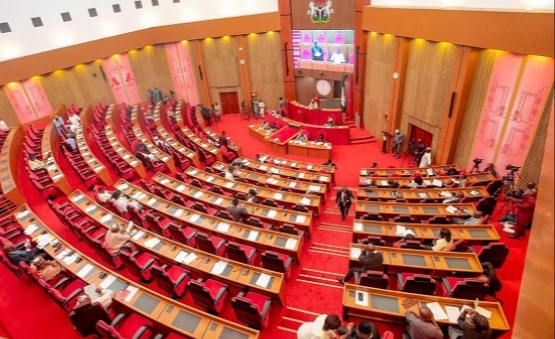
Senate in Session
Senate in Session
Share


The Senate Committee on the South East Development Commission (SEDC) and the management of the commission engaged in a heated exchange on Tuesday over the utilisation of N16.6 billion released to the agency, with lawmakers raising concerns over several expenditure items, including N153 million spent on an Abuja liaison office and a N2.5 billion provision listed as “implied expenditure.”

The disagreement unfolded during an investigative hearing convened by the Senate Committee on SEDC, chaired by Senator Orji Uzor Kalu, as part of its oversight responsibilities.

At the centre of the scrutiny was the commission’s financial report presented by the Managing Director of the SEDC, Mark Okoye, and other senior officials of the agency.

Lawmakers Demand Accountability

Members of the committee questioned how funds released to the commission had been utilised since the agency received its allocation in December 2025.

Senator Kalu disclosed that records available to the committee indicated that only about N13 billion remained from the N16.6 billion released to the commission, suggesting that approximately N3.6 billion had either been spent or committed.

Expressing dissatisfaction with the financial report submitted by the commission, Kalu described the document as inadequate and unacceptable, insisting that every expenditure must be fully justified.

The committee particularly queried the reported N153 million expenditure on an Abuja liaison office, with lawmakers arguing that the amount appeared excessive for the facility being occupied by the commission.

Other committee members, including Senator Enyinnaya Abaribe, Senator Victor Umeh and Senator Austin Akobundu, also challenged aspects of the report and demanded detailed explanations for several expenditure items.

The lawmakers maintained that as a newly established intervention agency, the SEDC must uphold the highest standards of transparency and accountability in managing public resources.

SEDC Defends Financial Decisions

Responding to the concerns, Okoye defended the commission’s spending pattern, insisting that all expenditures were lawful and aimed at building the institutional capacity of the agency while advancing developmental projects across the South-East region.

He explained that the commission had deliberately adopted a cautious financial strategy to avoid creating liabilities that could exceed available cash resources.

According to him, budgetary provisions should not be mistaken for actual cash available for spending, stressing that contract awards must be tied to funds that have been released rather than total budget estimates.

Okoye argued that awarding contracts based solely on approved budgets without corresponding cash backing could result in abandoned projects, financial deficits and unfunded obligations.

The SEDC chief said the commission’s approach was designed to ensure that projects are implemented within available resources while maintaining fiscal discipline.

Senate Orders Submission of Documents

Despite the explanations offered by the commission, the committee remained unsatisfied and directed the SEDC to submit comprehensive documentation detailing all expenditures and commitments.

The lawmakers requested procurement records, payment schedules, contract documents and other supporting financial records to enable the committee conduct a thorough review of the commission’s financial activities.

Senator Kalu subsequently directed the commission to provide all requested documents on or before June 23, after which the committee would determine the date for a subsequent appearance by the agency.

Commission Clarifies N153m Office Expenditure

Following the hearing, the SEDC issued a statement providing further clarification on the disputed expenditure items.

The commission explained that the N153 million cited by lawmakers was not solely for rent but covered the establishment and operation of its Abuja liaison office located at the Congress Building on Mississippi Street in Maitama, Abuja.

According to the agency, the office occupies the basement, ground floor and boardroom sections of the building under a duly executed lease agreement.

The commission stated that the expenditure includes rent, utility services, operational costs and office fit-out works carried out from February 2025 to date.

N2.5bn Yet to Be Disbursed, Says SEDC

The SEDC also addressed questions surrounding the N2.5 billion listed as “implied expenditure.”

According to the commission, the amount relates to a contract approved for the rehabilitation of its headquarters in Enugu and was awarded in compliance with the provisions of the Public Procurement Act.

The agency clarified that the funds have not been released to any contractor and remain in its accounts.

It explained that the amount was reflected as a financial commitment tied to an approved project rather than an actual disbursement.

Commitment to Transparency

The commission further stated that expenditures recorded so far were connected to institutional establishment, project development, stakeholder consultations, regional development programmes and other foundational activities necessary for the operation of the newly created agency.

Reaffirming its commitment to accountability, the SEDC pledged full cooperation with the Senate’s oversight process and assured lawmakers that all requested financial records and supporting documents would be submitted within the stipulated timeline.

The development sets the stage for further legislative scrutiny of the commission’s finances as the Senate seeks detailed explanations on how public funds allocated to the South East Development Commission have been managed since its establishment.

Continue Reading

Parliamentary News

Senate Reverses Controversial Rule Amendment on Leadership Elections

Published

on

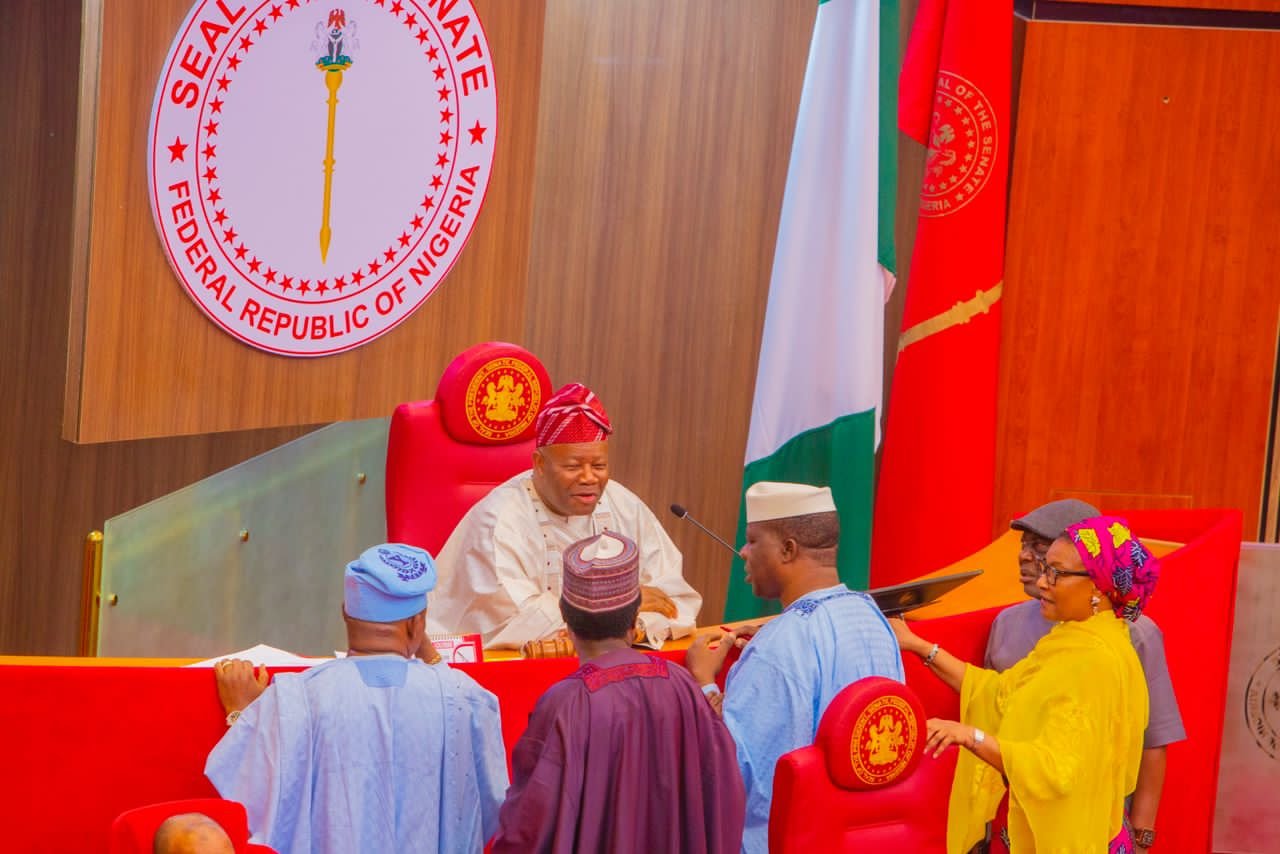
Senate in Session
Share


The Senate has reversed its recent amendment to the Standing Orders that sought to restrict participation in the election of Senate leaders to only senators who had already taken the Oath of Office and Allegiance.

The decision, taken during plenary on Thursday, effectively restores the previous procedure and allows all duly elected senators to participate in the election of presiding officers in the 11th National Assembly.

The motion for the reversal was moved by the Senate Leader, Opeyemi Bamidele, who explained that the amendment approved two days earlier could create constitutional conflicts and unnecessary political tension if allowed to stand.

According to Bamidele, further legislative and constitutional reviews showed that the amendment to Section 2, Subsection 2, and Section 3, Subsection 1 of the Senate Standing Orders might contradict constitutional provisions governing the rights and status of elected lawmakers.

The Senate subsequently adopted the motion and officially reversed the changes.

The plenary session was presided over by the Deputy Senate President, Jibrin Barau.

Before the reversal, the amended rules had stated that only senators-elect who had taken the oath contained in the Seventh Schedule of the Constitution would be permitted to participate in Senate proceedings, including voting for the offices of Senate President and Deputy Senate President.

The amendment had generated debate and political tension within the chamber, with some lawmakers expressing concern that the rule could be used to limit participation in future leadership contests, including the race for Senate President in 2027.

During Thursday’s sitting, Adams Oshiomhole raised a point of order to clarify his earlier remarks made during Wednesday’s proceedings. Oshiomhole insisted that lawmakers should not be prevented from expressing their opinions on issues before the Senate.

However, the Deputy Senate President ruled him out of order, stating that the matter had already been resolved following the reversal of the amendment.

Bamidele also reminded senators that concerns regarding Senate procedures should be presented through substantive motions in line with parliamentary rules.

He further cautioned Oshiomhole against what he described as unnecessary “drama” on the Senate floor, referencing the exchanges that occurred during the previous day’s plenary session.

The reversal is expected to ease tensions within the Red Chamber and preserve broader participation in future leadership elections of the Senate.

Continue Reading

Parliamentary News

Senate Delegation Holds Emergency Meeting with Tinubu Over Urgent National Issues

Published

on

President Bola Ahmed Tinubu in a handshake with Senate Leader, Opeyemi Bamidele during the visit.
Share

A high-level delegation of the Nigerian Senate on Wednesday, April 22, 2026, held an emergency strategic meeting with President Bola Ahmed Tinubu at the Presidential Villa in Abuja, shortly after adjourning plenary.

The meeting, which took place less than two hours after the Senate concluded its session, followed a resolution reached during a closed-door executive sitting of lawmakers earlier in the day.

Leading the delegation was Senate President Godswill Akpabio. He was accompanied by Deputy Senate President Jibrin Barau, Senate Leader Opeyemi Bamidele, and Senate Minority Leader Abba Moro.

Other senators present at the meeting included Danjuma Goje, Abdul Ningi, Adamu Aliero, and Orji Uzor Kalu.

Sources within the National Assembly described the engagement as critical, noting that it was convened to address pressing national concerns requiring immediate attention at the highest level of government.

While details of the deliberations were not made public, officials confirmed that discussions centred on matters of urgent national importance.

The lawmakers and the President were said to have taken far-reaching decisions aimed at safeguarding the overall interest of the country.

The urgency and duration of the meeting underscore the gravity of the issues considered, with indications that key policy actions or government decisions may follow in the coming days.

Continue Reading