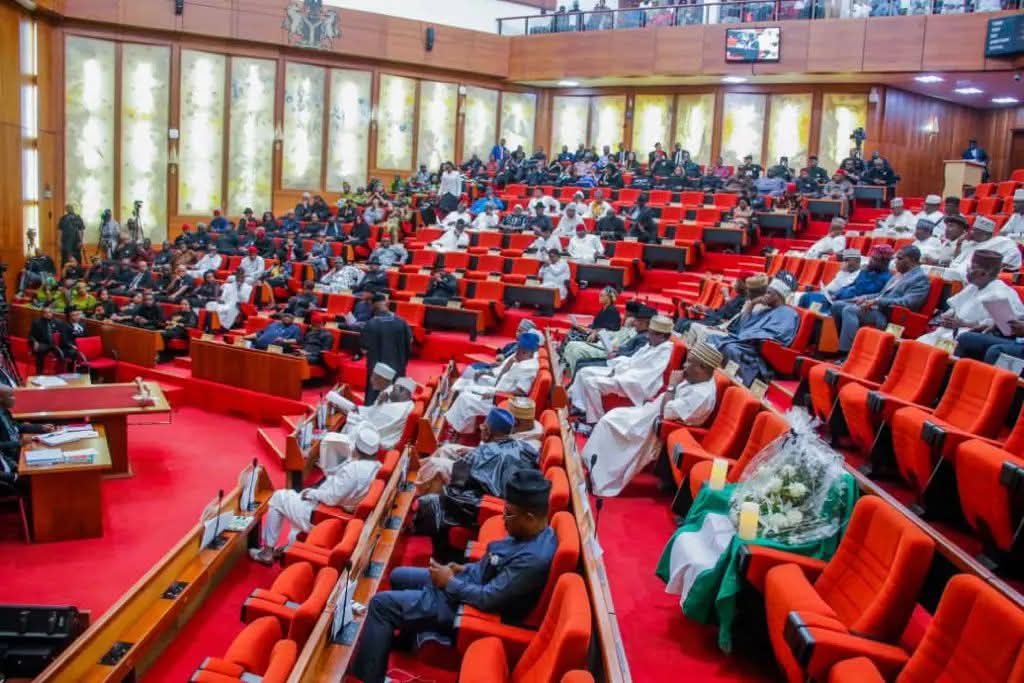
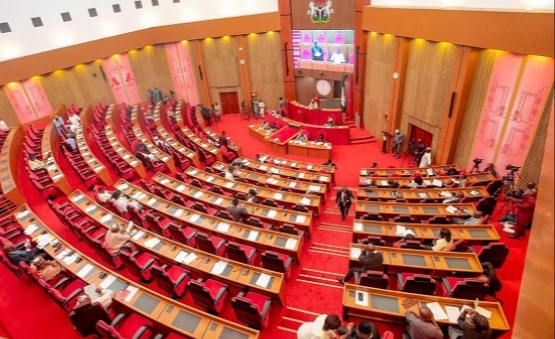
The Senate on Thursday confirmed the nomination of Professor Abayomi Sunday Fasina, former Vice-Chancellor of the Federal University Oye-Ekiti (FUOYE), as a Non-Career Ambassador of the Federal Republic of Nigeria, despite a heated debate over allegations of sexual misconduct previously levelled against him.
The confirmation followed the presentation and adoption of the report of the Senate Committee on Foreign Affairs, which recommended Fasina’s nomination after screening him and reviewing petitions submitted both in support of and against his appointment.
Presenting the committee’s report on behalf of its Chairman, Senator Sani Bello, Senator Simon Lalong (Plateau South) said the committee found no legal or constitutional grounds to reject the nominee.
According to Lalong, the committee carefully considered the petitions challenging Fasina’s nomination and noted that the allegations had already been investigated by the FUOYE Governing Council, the Nigeria Police Force and the Department of State Services (DSS).
He stated that all the relevant authorities cleared the nominee after finding the allegations to be unsubstantiated.
“The committee received petitions against the nominee as well as counter-petitions supporting his nomination. The accusations were investigated by competent authorities, including the University Governing Council and the Nigerian Police, which found the allegations to be false,” Lalong told the Senate.
He added that Fasina also received security clearance from the DSS and the police, while his record of service in academia further strengthened the committee’s recommendation.
“The committee had no doubt in recommending Professor Abayomi Sunday Fasina for confirmation as a Non-Career Ambassador of the Federal Republic of Nigeria,” he said.
However, the recommendation sparked strong opposition from some senators during plenary.
Senator Adams Oshiomhole (Edo North) urged the Senate to suspend consideration of the nomination until all allegations against Fasina were conclusively resolved by the courts.
While acknowledging the constitutional principle of presumption of innocence, Oshiomhole argued that confirming the nominee amid such allegations could undermine public confidence and send the wrong message, particularly to women.
“I am aware, and it is public knowledge, that this gentleman has been accused by two women. Nobody is saying he is guilty; he deserves to be presumed innocent until proven guilty. But, as a matter of sensitivity, I believe the Senate should allow him to clear himself before the courts before endorsing him,” Oshiomhole said.
Senator Cyril Fasuyi (Ekiti North), who represents the constituency where FUOYE is located and also serves on the Foreign Affairs Committee, also expressed reservations about the nomination.
Fasuyi said he was familiar with the controversy surrounding the case and insisted that justice had not been served.
“I know about this case. I also know about the woman involved. She did not get justice. This is a very sensitive issue that we cannot simply sweep under the carpet,” he said.
He subsequently called for further investigation by the Senate Committee on Rules and Business before any final decision on the nomination.
Responding to the concerns, Senator Lalong maintained that the committee had not been presented with any documentary evidence showing that Fasina was standing trial before any court.
He argued that allegations alone could not serve as sufficient grounds for rejecting a nominee who had been cleared by the relevant investigative authorities.
“It is not every allegation that will stop the proceedings of the Senate. Until a court of competent jurisdiction delivers judgment, an allegation does not amount to guilt. If a court eventually convicts him, appropriate action can then be taken,” he said.
Senate President Godswill Akpabio also defended the committee’s recommendation, stressing that the Senate was constitutionally bound by the principle of presumption of innocence enshrined in Section 36(5) of the 1999 Constitution.
Akpabio noted that the complainant at the centre of the allegations neither appeared before the committee nor submitted any evidence during the screening process.
“The report before us states that the nominee is highly qualified, articulate and recommended for confirmation. A man is presumed innocent until the contrary is proved. We cannot fail to discharge our constitutional responsibility merely because allegations have been made against him,” the Senate President said.
Supporting the committee’s recommendation, Senator Abdul Ningi (Bauchi Central) cautioned lawmakers against turning the Senate into a forum for determining matters beyond its constitutional mandate.
He explained that the responsibility of the screening committee was limited to assessing a nominee’s qualifications, competence and whether the individual had any criminal conviction, rather than adjudicating on unresolved allegations.
“The committee is not constitutionally empowered to investigate personal allegations outside its mandate. Matters of that nature remain within the jurisdiction of the courts and relevant investigative agencies,” Ningi stated.
As deliberations continued, Senator Fasuyi attempted to withdraw his signature from the committee’s report, but Akpabio ruled that such a move could not be made during plenary.
The Senate President advised him to follow the appropriate parliamentary procedure by presenting an affidavit when the Votes and Proceedings are considered.
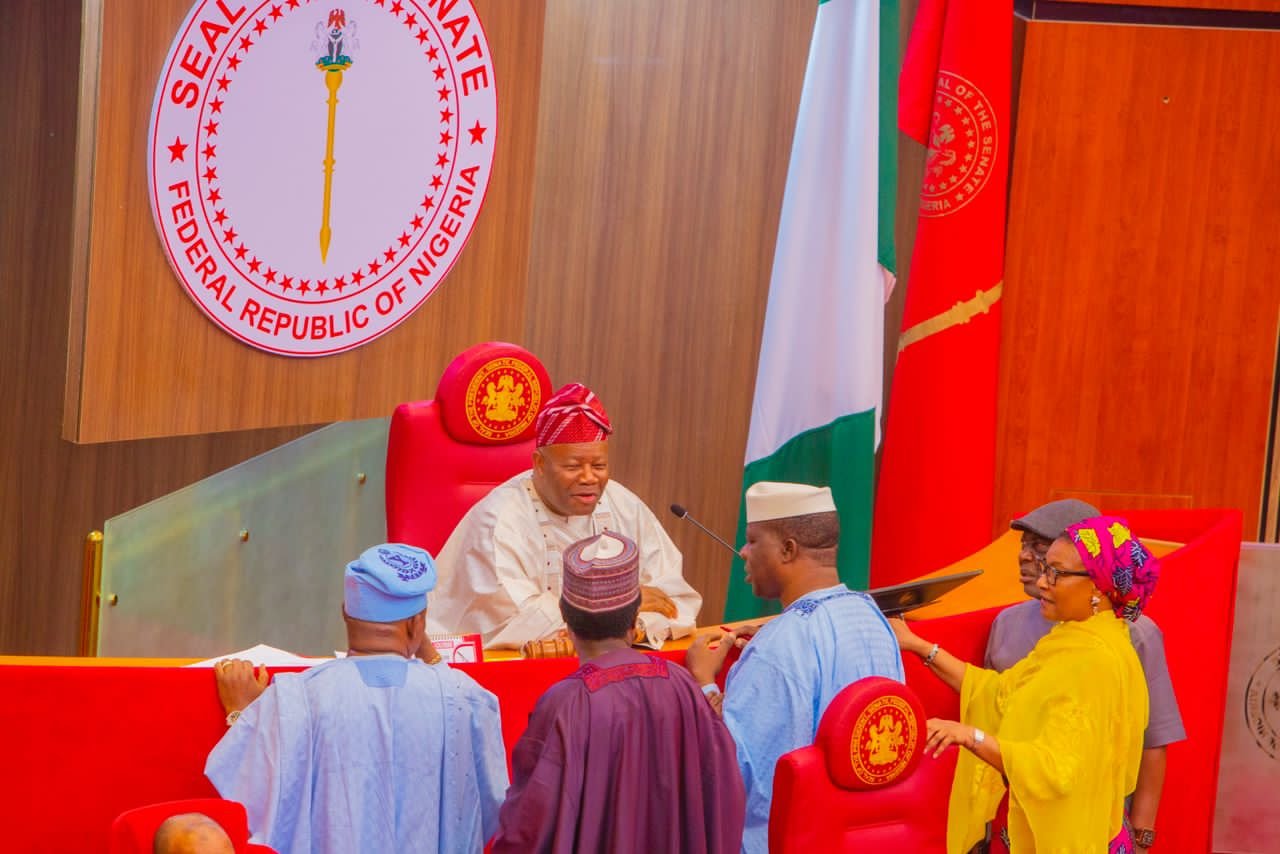
Following the debate, Akpabio put the committee’s recommendation to a voice vote.
Although the initial response from lawmakers appeared divided, the Senate President ruled that the “ayes” had carried the motion. After repeating the vote, he again declared that the majority supported the confirmation.
He thereafter announced that the Senate had approved the nomination of Professor Abayomi Sunday Fasina as a Non-Career Ambassador and High Commissioner of the Federal Republic of Nigeria.