Connect with us

Business & Economy

Ogun to Establish 5,000-Herd Dairy, Cattle Ranches in Ipokia, Yewa South — Abiodun

Published

on

Ogun State logo
Share

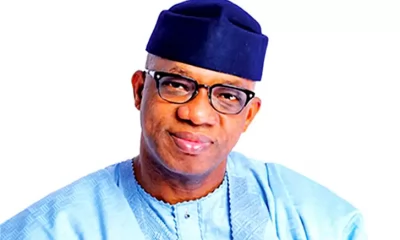
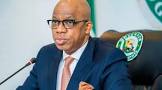
Ogun State Governor, Dapo Abiodun, has announced plans to establish what he described as the largest dairy and cattle ranches in Nigeria in Ipokia and Yewa South Local Government Areas of the state, with an initial capacity of 5,000 herds of cattle.

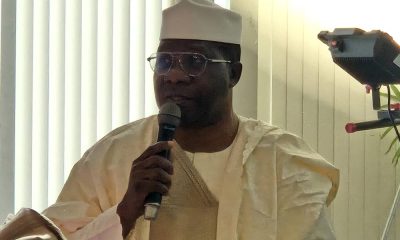
Abiodun made the disclosure on Thursday at the All Progressives Congress (APC) strategic stakeholders’ meeting held in Abeokuta.

He said the projects would be sited in Ogun State at the instance of President Bola Tinubu, adding that construction work would commence soon.

According to the governor, the initiative is part of efforts to strengthen food security, boost local agricultural production, and deepen value chains across the state.

“The biggest dairy and cattle ranches will soon be established in Yewa South and Ipokia Local Government Areas. This is at the instance of Mr. President. These farms will start with 5,000 herds of cattle, and work will begin very soon,” Abiodun said.

The governor commended Tinubu for what he described as bold economic reforms, noting that the policies had stabilised the foreign exchange market, eliminated multiple exchange-rate regimes, and increased Nigeria’s foreign reserves to about $45 billion.

Abiodun also acknowledged what he called the President’s goodwill towards Ogun State, citing federal interventions such as the reconstruction of the Sagamu–Ijebu Ode Road, funding support for the Eba oil discovery, and the resuscitation of the OKLNG project.

“There is nothing I have asked Mr. President for Ogun State that he has not approved,” he said, adding that the President consistently directs investors to the state when they express interest in Nigeria.

The governor said the administration’s performance at the federal level had rekindled hope among Nigerians and strengthened public confidence in the ruling APC.

Highlighting achievements of his administration over the past six years and eight months, Abiodun said the state had recorded progress in education, infrastructure, job creation, youth and women empowerment, healthcare, agriculture, housing, technological innovation, industrial growth, and economic expansion.

He disclosed that over 1,700 kilometres of roads, including major highways, had been constructed across the state, more than 7,000 housing units delivered, and over 400 Primary Healthcare Centres upgraded and equipped.

Abiodun also stated that Ogun State was on the verge of becoming an oil-producing state.

He said the stakeholders’ meeting was convened to review progress and strategise ahead of emerging political challenges, urging party members to remain united as the state approaches another electioneering season.

“As we approach the upcoming congresses, they must unite us, not divide us. A united APC is an unbeatable APC,” he said.

Dignitaries at the meeting included former Governor Olusegun Osoba; Deputy Governor Noimot Salako-Oyedele; Speaker of the Ogun State House of Assembly, Oludaisi Elemide; Senators Solomon Adeola and Shuaib Salisu; and House of Representatives Chief Whip, Ibrahim Isiaka.

Also present were Minister of Communications and Digital Economy, Bosun Tijani; Minister of State for Health, Dr. Isiaka Salako; State APC Chairman, Yemi Sanusi; former deputy governors; lawmakers; local government chairmen; and other party stakeholders.

Business & Economy

Nigeria, UK Move to Close £1.2bn Trade Data Gap with Digital Customs Pact

Published

on

UK and Nigeria Flags
Share


Nigeria and the United Kingdom have agreed to deepen customs cooperation through a new digital data-sharing framework aimed at resolving a £1.2 billion discrepancy in bilateral trade figures, a longstanding issue affecting transparency and efficiency between both economies.

The agreement was reached during a high-level meeting in London on March 18, 2026, held on the sidelines of President Bola Tinubu’s state visit under the Nigeria–UK Enhanced Trade and Investment Partnership (ETIP).

According to the Nigeria Customs Service (NCS), the talks brought together Comptroller-General Adewale Adeniyi and Ms. Megan Shaw, Head of International Customs and Border Engagement at His Majesty’s Revenue and Customs (HMRC), with discussions focused on customs modernisation, trade data transparency, and operational collaboration.

At the centre of the engagement is a significant mismatch in trade statistics. Nigeria recorded about £504 million worth of imports from the UK in 2024, while UK data shows exports to Nigeria at approximately £1.7 billion over the same period — leaving a gap of roughly £1.2 billion.

Both sides described the discrepancy as structural and agreed on coordinated measures to address it. Chief among these is the proposed implementation of a pre-arrival data exchange system, which will connect digital customs platforms in both countries to improve data accuracy, strengthen risk management, and enhance compliance monitoring.

Adeniyi emphasised that stronger customs collaboration is vital for economic growth and sustainable trade, noting that customs authorities play a key role in ensuring secure and transparent cross-border trade flows.

The meeting also highlighted advancements in customs technology, with the UK showcasing artificial intelligence-driven tools, digital verification systems, and real-time analytics designed to improve cargo processing, risk assessment, and border security.

In addition to addressing the data gap, both countries agreed on several strategic initiatives, including the development of a Customs Mutual Administrative Assistance Framework, technical cooperation on capacity building, and the establishment of a joint engagement mechanism under ETIP.

The NCS said the outcomes of the meeting would enhance operational efficiency, boost trade facilitation, and support Nigeria’s broader economic reform agenda, positioning the country for improved competitiveness in global trade.

Continue Reading

Business & Economy

Nigeria’s “Shockproof” Economy: Cardoso Signals New Era of Stability to London Investors

Published

on

CBN Governor, Yemi Cardoso
Share

Central Bank of Nigeria (CBN) Governor Olayemi Cardoso issued a bullish assessment of the nation’s financial health yesterday, declaring that aggressive institutional reforms and disciplined monetary policy have built a “stronger capacity” to withstand global economic volatility.

Speaking at the Africa Capital Forum—held on the sidelines of President Bola Ahmed Tinubu’s state visit to the United Kingdom—Cardoso painted a picture of a Nigerian economy transitioning from a period of emergency stabilization to one of sustained investment.

A Fortress Against Volatility

The Governor’s address focused heavily on the “de-risking” of the Nigerian financial system. By emphasizing a shift toward a predictable policy framework, Cardoso aimed to reassure international stakeholders that the days of opaque, discretionary decision-making are ending.

“We are reviewing our policies with a view to developing meaningful policies and establishing a predictable policy framework to minimise discretion,” Cardoso stated, noting that consistency is the primary tool for reducing investor uncertainty.

The Governor highlighted several critical milestones achieved under the current administration’s reform agenda:

Banking Recapitalization: The CBN reported that over 30 banks have already met new capital requirements.

Notably, 28% of the newly raised funds originated from foreign investors—a metric Cardoso cited as a clear vote of international confidence.

FX Transparency: A new foreign exchange manual has been deployed, stripping away previous restrictions to boost liquidity and simplify operations for multinational businesses.

Remittance Surge: Increased diaspora remittances have bolstered foreign exchange reserves, providing a crucial buffer against external shocks.

Fiscal-Monetary Synergy: In a departure from previous friction, Cardoso noted that the inclusion of fiscal authorities on the CBN Board and the Monetary Policy Committee (MPC) has synchronized the nation’s broader economic strategy.

The Digital Frontier: “Vision for Nigeria”

Looking ahead, the Governor announced the completion of a new Payments System Vision. This initiative aims to cement Nigeria’s status as the continental leader in digital payments and cross-border transactions, specifically targeting the removal of regulatory hurdles for the nation’s burgeoning fintech sector.


Continue Reading

Business & Economy

Tinubu Swears in Taiwo Oyedele as Minister of State for Finance

Published

on

President Bola Ahmed Tinubu and Taiwo Oyedele
Share

President Bola Ahmed Tinubu on Monday swore in Taiwo Oyedele as Minister of State for Finance, praising his experience, dedication, and professionalism in public service.

Speaking shortly after the brief ceremony at the Presidential Villa in Abuja, the president described the appointment as a vote of confidence in Oyedele’s competence and commitment to national development.

Tinubu commended the new minister for his role in coordinating the work of the Presidential Committee on Fiscal Policy and Tax Reforms, noting that his expertise and deep knowledge of tax policy had been instrumental in shaping reforms aimed at simplifying Nigeria’s tax system, expanding the revenue base, and improving the business environment.

“We are very proud of your knowledge, your simplicity, ambition, and excellence,” the president said, while also acknowledging the support of Oyedele’s wife, whom he praised for standing by him despite the demands of public service.

Tinubu said Oyedele’s dedication, patience, and determination to serve the country made him well suited for the role, adding that the position carries significant responsibility at a time when Nigeria is pursuing economic stability and growth.

According to the president, the new minister’s efforts in reforming Nigeria’s tax framework have helped address policies he described as outdated and inconsistent with progressive economic thinking.

Oyedele, who hails from Ikaram in Akoko area of Ondo State, is an economist, accountant, and public policy expert.

He obtained a Higher National Diploma in Accountancy and Finance from Yaba College of Technology and later earned a Bachelor of Science degree in Applied Accounting from Oxford Brookes University.

He has also completed executive education programmes at London School of Economics, Yale University, Gordon Institute of Business Science, and Harvard Kennedy School.

Before his appointment, Oyedele spent 22 years at PricewaterhouseCoopers, where he joined in 2001 and rose to become Fiscal Policy Partner and Africa Tax Leader.

He also serves as a professor at Babcock University in Ogun State and as a visiting scholar at Lagos Business School.

Continue Reading