Connect with us

Defence and Security

Tinubu Declares National Security Emergency, Orders Massive Recruitment into Armed Forces and Police

Published

on

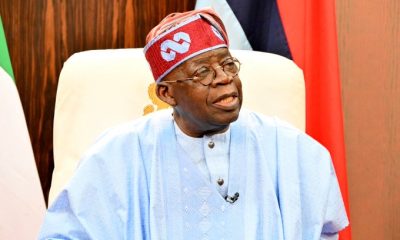
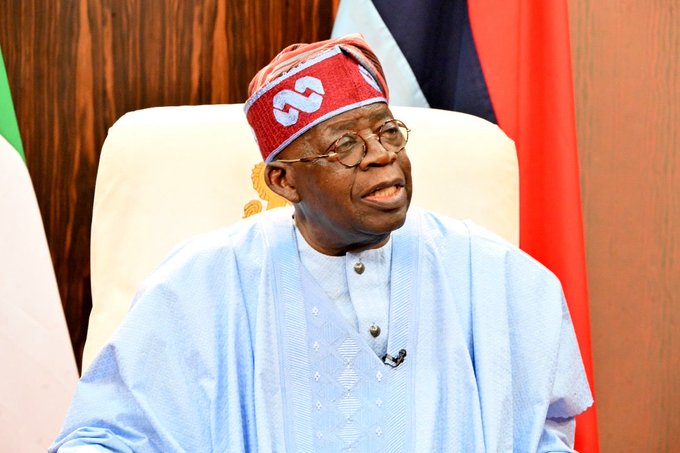
President Bola Ahmed Tinubu
Share

President Bola Ahmed Tinubu on Wednesday declared a nationwide security emergency in response to escalating security challenges across the country, directing the Armed Forces and the Nigeria Police Force to immediately begin large-scale recruitment to bolster national security operations.

In a statement issued from the State House, the President announced that the police have been authorised to recruit an additional 20,000 officers—raising their total recruitment figure to 50,000. He also approved the use of National Youth Service Corps (NYSC) camps as temporary training depots to fast-track capacity building, alongside previously approved upgrades to police training facilities nationwide.

Tinubu further directed that police officers withdrawn from VIP protection duties undergo urgent retraining before deployment to areas facing heightened security threats.

The President also empowered the Department of State Services (DSS) to immediately deploy trained forest guards to dislodge terrorists and bandits operating in forests across the country. He authorised the agency to recruit additional personnel to strengthen forest surveillance and nationwide counter-terrorism efforts.

“This is a national emergency, and we are responding by deploying more boots on the ground,” Tinubu said, urging Nigerians to support security agencies through vigilance and cooperation.

The President commended the military, police, and intelligence community for the recent rescue of 24 abducted schoolgirls in Kebbi State and 38 abducted worshippers in Kwara State. He reaffirmed the government’s commitment to securing the release of remaining abducted students in Niger State and others still in captivity.

Tinubu paid tribute to troops who have lost their lives, including Brigadier-General Musa Uba, describing their sacrifice as the ultimate expression of service to the nation.

He also called on state governments to strengthen local security initiatives and encouraged the National Assembly to begin reviewing laws to allow states that require state police formations to establish them.

Addressing recurrent conflicts between herders and farmers, the President urged herder associations to embrace ranching through the newly established Federal Ministry of Livestock, and to end open grazing while surrendering illegal weapons.

Tinubu advised states to avoid siting boarding schools in insecure remote locations and urged religious centres—churches and mosques alike—to engage security agencies for enhanced protection where necessary.

He extended condolences to families affected by recent attacks in Kebbi, Borno, Zamfara, Niger, Yobe, and Kwara States, assuring that the government will not tolerate terrorism or banditry.

“Those who want to test our resolve should never mistake our restraint for weakness,” he warned.

Calling for unity and resilience, Tinubu urged Nigerians to remain calm, vigilant, and collaborative with security authorities.

“Together we shall win,” he said.

The statement was signed by President Bola Ahmed Tinubu, GCFR, President and Commander-in-Chief of the Armed Forces of the Federal Republic of Nigeria, dated November 26, 2025.


Defence and Security

TINUBU SWEARS IN GEN. CHRISTOPHER MUSA AS DEFENCE MINISTER

Published

on

President Bola Ahmed Tinubu, New Minister of Defence, General Christopher Musa and others dignitaries at the Oath taking ceremony in Abuja
Share

President Asiwaju Bola Ahmed Tinubu on Thursday swore in retired General Christopher Gwabin Musa as Nigeria’s Minister of Defence at the Presidential Villa, Abuja.

Musa’s appointment follows the resignation of former Defence Minister Mohammed Badaru Abubakar on December 1. His nomination was sent to the Senate on Tuesday and swiftly confirmed.

Born in Sokoto in 1967, Musa was commissioned into the Nigerian Army in 1991. He served as Chief of Defence Staff from 2023 until his retirement in October 2025, during which he promoted stronger cooperation among the armed forces.

With his swearing-in, Musa is expected to immediately take charge as the Tinubu administration intensifies security reforms and seeks to consolidate recent gains toward lasting peace nationwide.

Dignitaries at the ceremony included Senate President Godswill Akpabio, Senate Leader Opeyemi Bamidele, Information Minister Mohammed Idris, National Security Adviser Nuhu Ribadu, and senior military chiefs. Also present were Musa’s wife, Lilian Oghogho Musa; Bishop Matthew Hassan Kukah; and retired Justice Kumai Bayang Akaahs.

Continue Reading

Defence and Security

Senate Confirms Former Defence Chief Christopher Musa as Minister

Published

on

General Christopher Musa Rtd
Share

The Senate has confirmed General Christopher Musa (rtd), the immediate past Chief of Defence Staff, as Nigeria’s new Minister of Defence.

Musa’s nomination was approved on Wednesday after a screening session in which senators examined his military credentials and asked questions on national security challenges.

Addressing the lawmakers, Musa pledged commitment to diligent service and emphasised collaboration in tackling insecurity.

“The challenges we are facing are Nigerian challenges, not just for the armed forces or security agencies,” he said. “We will win if we work together as a team.”

He highlighted gaps in security operations and called for a unified national database to support intelligence gathering. Musa also urged stronger roles for local governments and the judicial system.

Rejecting ransom payments to kidnappers and terrorists, he warned that negotiation only emboldens criminals. “They use the money to buy more arms,” he noted.

Responding to claims of religious targeting in violence across the country, Musa said terrorism affects all citizens. “We must stop the killings. Nigerians should not be killed. We must unite,” he stated.

Senate President Godswill Akpabio praised Musa’s performance during the screening, describing him as the most thorough nominee since 1999. He encouraged the new minister to immediately visit defence industry facilities.

Musa’s nomination was subsequently approved through a unanimous voice vote.

Continue Reading

Defence and Security

Senate Backs Death Penalty for Kidnapping, Moves to Redefine Crime as Terrorism

Published

on

Senate in Session
Senate in Session
Share

In a decisive move to stem rising insecurity, the Senate has approved key amendments to the 2022 Terrorism (Prevention and Prohibition) Act, prescribing the death penalty for kidnappers and anyone who aids kidnapping operations.

During Wednesday’s plenary, senators across political lines overwhelmingly supported the bill sponsored by the Leader of the Senate, Senator Opeyemi Bamidele. The amendment seeks to classify kidnapping, hostage-taking, and related offences as acts of terrorism, granting law enforcement broader powers to dismantle criminal networks.

The bill has now been referred to the Committees on Judiciary, Human Rights and Legal Matters, National Security and Intelligence, and Interior for further scrutiny, with instructions to report back within two weeks.

Presenting the proposal, Bamidele said kidnapping had evolved from sporadic activity into organised violence affecting all regions of the country. He argued that the severity and scale of the crime now bear the hallmarks of terrorism, warranting the strongest punishment.

> “Kidnapping has instilled fear in communities, disrupted economic activities, ruined families, and claimed countless innocent lives,” he declared. “Our legal framework must reflect the magnitude of this threat.”

The amendment prescribes capital punishment not only for perpetrators but also for financiers, informants, logistics suppliers, harbourers, and anyone who knowingly supports kidnapping operations. Attempt, conspiracy, or incitement would attract the same penalty.

The Senate leader explained that reclassification under terrorism laws would enable intelligence-led operations, asset tracing, inter-agency cooperation, and disruption of funding channels.

Backing the proposal, Senator Adams Oshiomhole dismissed existing deradicalisation programmes as ineffective, arguing that some offenders return to crime after release.

> “Even Scriptures acknowledge that those who kill cannot be allowed to continue living,” Oshiomhole said. “If convicted for terrorism, the penalty should be death.”

Senator Orji Uzor Kalu lamented the suffering inflicted on Nigerians, citing cases of widows, traumatised families and victims of sexual assault.

> “Everyone involved in this criminal enterprise must face consequences,” he maintained.

Minority Leader Senator Abba Moro described kidnapping as a business venture for criminals and endorsed the bill as a necessary measure to deter offenders.

Also speaking, Senator Victor Umeh condemned the killing of victims after ransom payment and called for sanctions against facilitators, including complicit financial institutions.

The Senate President, Godswill Akpabio, welcomed the bipartisan support and mandated the lead committee to expedite consultations and present recommendations at a public hearing.

The proposed amendment marks one of the strongest legislative responses to Nigeria’s worsening kidnapping crisis, signalling a toughened stance on national security and criminal justice.

Continue Reading