Connect with us

Foreign

Nigerian-Born Water Fasan Honored with 2025 Canadian Airports Council Award 

Published

on

Nigerian-Born Water Fasan Honored with 2025 Canadian Airports Council Award
Share

 By Friday I. Ejilogo

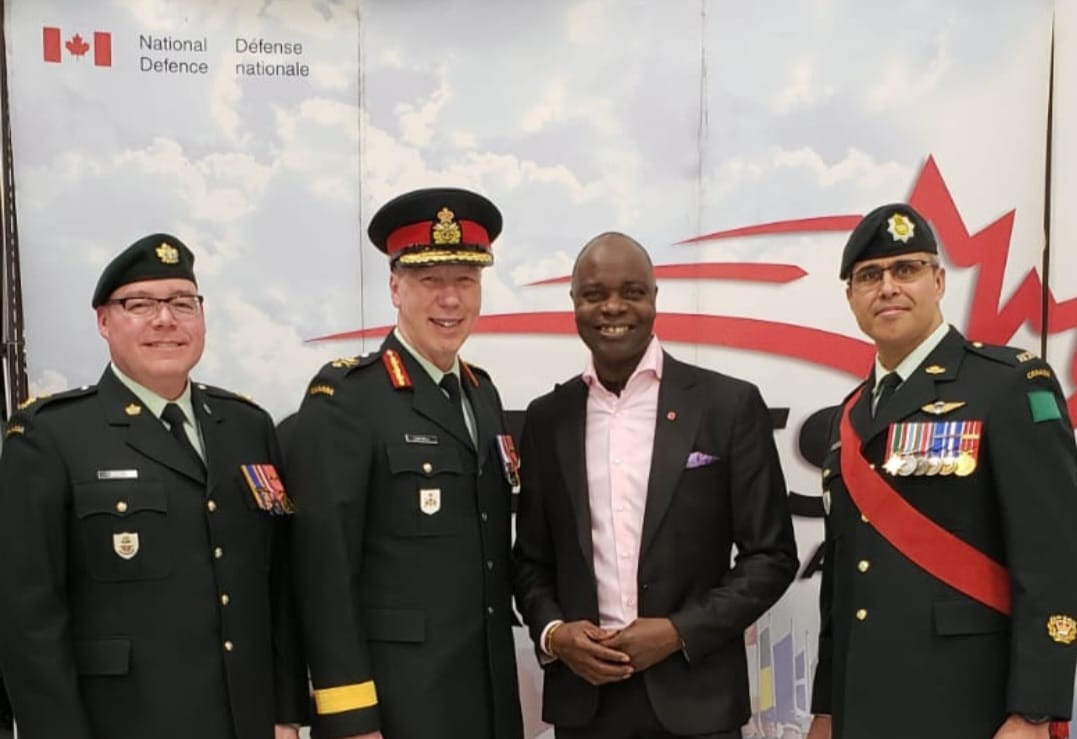
Water Fasan, a Nigerian-born pharmacist turned security specialist, has been awarded the prestigious 2025 Canadian Airports Council (CAC) National Recognition Award for his outstanding performance as a Security Specialist and Access Control Officer at Toronto Pearson International Airport. Employed by ASP Security Services Limited in Mississauga, Ontario, since July 2022, Fasan stood out among 52,000 airport workers and 80 nominees to become the first African-Canadian Nigerian to receive this honor.

Recognized for his calm demeanor, approachability, and exceptional customer service, Fasan has been a vital presence at Canada’s busiest airport. His ability to de-escalate potential challenges and foster a positive environment has earned him widespread admiration.

During the award presentation, CAC President Monette Pasher highlighted the significance of the recognition: “Today, we celebrate the dedication of airport workers across Canada. With over 200,000 employees supporting 150 million passengers in 2025, we honor individuals like Water Fasan who make air travel safe and seamless.” Pasher noted that the award coincides with Airport Workers Day, a national initiative to celebrate the aviation workforce and its critical role in Canada’s economy and communities.

Expressing his gratitude, Fasan said, “I’m deeply honored to share this milestone with my colleagues who give their all every day. This award is not just a personal achievement but a historic moment for Nigeria, Africa, and every immigrant writing their story. It reflects the hard work and teamwork that define our industry.”

Fasan, one of nine recipients at the 16th Canadian Airports Ceremony, began his career in Nigeria as a pharmacy technician at Cosmos Pharmacy under the mentorship of Mr. Azubike Okwor, former President of the Pharmaceutical Society of Nigeria and the first Black recipient of a Fellowship in the pharmaceutical industry. Okwor’s guidance instilled in Fasan values of excellence, discipline, and community service.

After seeking opportunities in Israel, Fasan immigrated to Canada in 2010, where he transitioned into private security. He earned multiple certifications and worked with respected firms like RBG Security Inc., eventually rising to Operations Supervisor at Hudson’s Bay and Saks Fifth Avenue. There, his commitment to excellence earned him the Best Customer Service of All Time award.

In 2019, Fasan entered the aviation industry with Menzies Aviation, later leading teams at AAS and serving as Acting Manager at Dexterra. His contributions have made him a recognized figure at Toronto Pearson, where his story and image are prominently featured as a symbol of dedication.

Fasan’s historic achievement as a Security Specialist with ASP Security underscores his remarkable journey and serves as an inspiration to airport workers and immigrants worldwide.

  • Ejilogo is an Abuja-based freelance journalist and book editor

Continue Reading
Click to comment

Leave a Reply

Your email address will not be published. Required fields are marked *

Foreign

US Forces Strike Iranian Rocket Launchers Near Strait of Hormuz

Published

on

Share

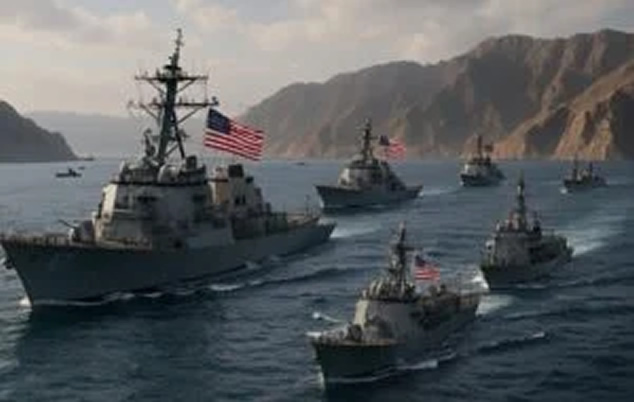
U.S. forces have carried out a fresh strike against Iranian military targets near the Strait of Hormuz, marking the first known American military action against Iran in about a month, according to U.S. officials and reports from multiple outlets.

A U.S. official said American forces struck two Iranian rocket launchers on Larak Island, located near the strategic waterway, after Iran’s Islamic Revolutionary Guard Corps (IRGC) was observed preparing to launch rockets carrying sea mines into the Strait of Hormuz.

The operation represents a significant escalation after a period of relative calm following the U.S. military’s previous campaign in the region. Axios reported that President Donald Trump had paused the U.S. military campaign in late July, making Sunday’s operation the first known U.S. strike inside Iran since then.

The U.S. military’s latest action comes days after American forces said they had completed clearing sea mines from the Strait of Hormuz’s main international shipping route.

The waterway is one of the world’s most strategically important maritime passages, carrying a major share of global oil and gas shipments. Washington has repeatedly warned Iran against attempting to disrupt commercial shipping or deploy additional mines.

According to the U.S. official cited by AP, IRGC forces were seen preparing to launch rockets equipped with sea mines into the strait when the American strike was carried out.

The official said U.S. forces would continue monitoring the area and remain prepared to protect the movement of commercial shipping.

Iranian semi-official media outlets reported explosions near Larak Island on Sunday.

Reuters reported that Iran’s Fars news agency said an explosion was heard near the island but initially reported that its cause was unknown. Reuters subsequently reported that the U.S. had struck two launchers on the island, citing a U.S. official.

See also Ukraine’s Elite Drone Pilots Face Battlefield-Style Training Challenges
Iran’s Revolutionary Guards later acknowledged that the island had been attacked.

According to Reuters, the IRGC said the U.S. attack killed and wounded several Iranian fighters and civilians, although it did not provide a precise casualty figure. The Guards also vowed to retaliate against the United States.

The latest strike comes amid continuing tensions between Washington and Tehran over control of the Strait of Hormuz and the security of international shipping.

The U.S. has said its military operations are aimed at keeping the waterway open and preventing threats to commercial vessels. Iran, meanwhile, has repeatedly warned that it will respond to attacks on its territory.

The latest exchange therefore raises concerns that the fragile lull in direct U.S.-Iran military action could be ending.

For now, the full extent of the damage from Sunday’s strike and the exact number of casualties remain unclear.

Continue Reading

Foreign

Trump Turns to Economic Warfare Against Iran as Military Escalation Remains on the Table

Published

on

Share

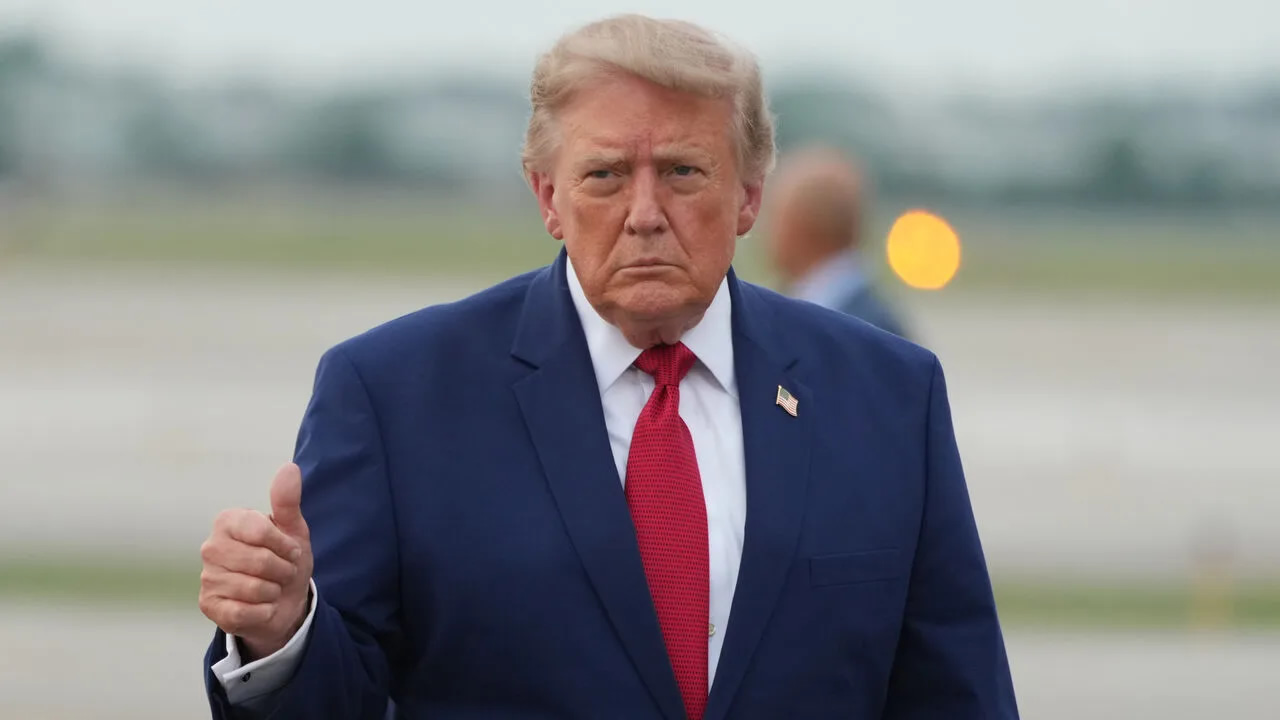
U.S. President Donald Trump is preparing to intensify economic pressure on Iran as efforts to end the conflict and resolve the standoff over the Strait of Hormuz remain uncertain.

Trump said Friday that he wanted to hit Iran hard economically, while Treasury Secretary Scott Bessent warned that Washington would announce measures of unprecedented scale as early as next week. The administration has already imposed extensive sanctions and is maintaining a naval blockade aimed at restricting Iran’s trade and oil revenues.


What options does Trump have?

1. Tighten sanctions on Iranian oil

One of Washington’s most powerful tools is further targeting Iran’s oil industry, the country’s principal source of foreign currency. The US can sanction companies, banks, shipping firms and vessels involved in purchasing or transporting Iranian crude.

Washington could also intensify so-called secondary sanctions against foreign businesses and countries that continue buying Iranian oil. Such measures could make it more difficult for Tehran to sell its crude and collect payments.

2. Target Iran’s financial network

The administration can expand restrictions on Iranian banks and financial institutions, making it harder for Tehran to access international banking systems and move money overseas.

The US could also pursue companies and individuals accused of helping Iran circumvent existing sanctions.

3. Intensify the naval blockade

Washington has already threatened to maintain its naval blockade of Iran indefinitely. The blockade is designed to restrict the movement of goods through Iranian ports and put further pressure on the country’s economy.

Bessent said the next phase could combine greater economic isolation with continued restrictions on shipping in and out of Iranian ports.

But this option carries significant risks because the Strait of Hormuz is a crucial global energy route. Roughly one-fifth of the world’s oil supply normally passes through the waterway, meaning prolonged disruption could push energy prices higher worldwide.

4. Increase pressure on countries trading with Iran

Washington could also expand penalties against countries and companies that continue doing business with Tehran.

China is particularly important because it has been a major buyer of Iranian oil. Previous US sanctions have targeted businesses involved in Iran’s oil trade, including Chinese companies and vessels accused of facilitating shipments.

5. Use economic pressure alongside diplomacy

Trump could maintain sanctions and the blockade while keeping negotiations open. This would allow Washington to use Iran’s worsening economic conditions as leverage while avoiding an immediate return to a broader military offensive.

Trump has recently indicated that economic pressure is an important part of his strategy, while negotiations involving Iran and regional intermediaries remain uncertain.

The central question is whether economic pressure can force Tehran to make the concessions Washington wants.

Iran has lived under US sanctions for decades and has developed networks for circumventing restrictions. Analysts also warn that sanctions can take time to produce results, while a blockade can create immediate consequences for global energy markets.

The pressure campaign is already contributing to volatility in oil prices. Brent crude rose to about $88.52 a barrel on August 14 as fears over tanker attacks and the continuing blockade increased concerns about global supplies.

For Trump, the dilemma is therefore straightforward but difficult: increase the economic pain on Iran without triggering an even wider regional conflict or a new surge in energy prices.

With Washington promising measures that Bessent says will be unlike previous economic isolation campaigns, the coming weeks could determine whether Trump’s economic strategy brings Tehran back to the negotiating table, or deepens the confrontation.

Continue Reading

Foreign

US Withdraws Last Carrier From Western Pacific Amid Iran War

Published

on

Share

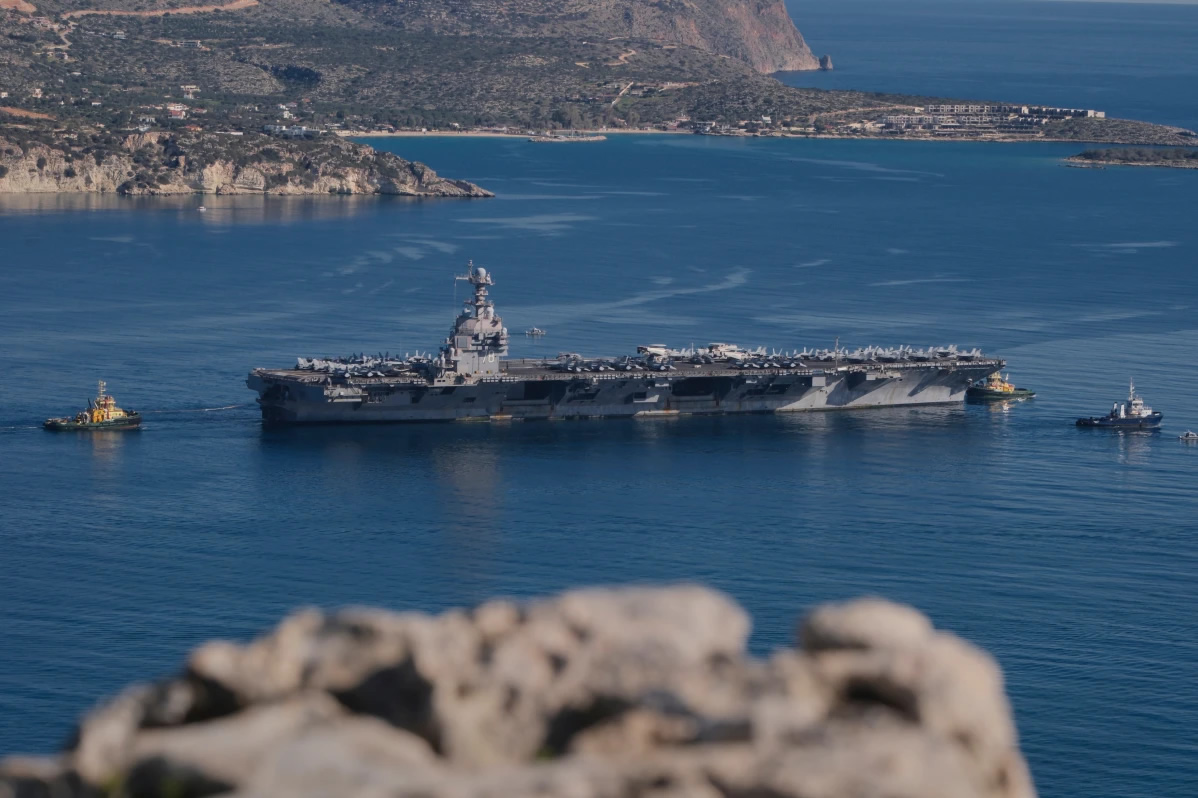
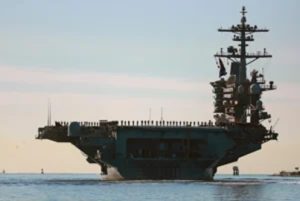
The United States is temporarily leaving the western Pacific without an aircraft carrier after the USS George Washington was ordered to leave the region for the Middle East, where it is expected to replace the heavily deployed USS Abraham Lincoln.

The move comes as President Donald Trump’s administration continues to devote significant military resources to its ongoing conflict with Iran, placing additional pressure on the US Navy’s carrier fleet.

The George Washington is expected to relieve the Abraham Lincoln, which has been deployed in the Middle East for an extended period supporting US military operations against Iran. The Lincoln’s deployment was extended beyond its originally planned return date as the conflict continued.

The redeployment means the western Pacific could temporarily have no US aircraft carrier, although American officials could deploy another carrier to the region in the coming months.
The development has raised concerns among some US allies in Asia, particularly as China continues to expand its military activities and assertiveness in the region. Analysts say Beijing could view the temporary absence of an American carrier as an opportunity to strengthen its influence and test US commitments to its Indo-Pacific partners.

Greg Poling of the Center for Strategic and International Studies said the administration had previously described the Pacific as a major strategic priority, but argued that the current deployment pattern was moving in the opposite direction.

The carrier rotation also highlights growing pressure on US naval forces. The Abraham Lincoln has spent months at sea, with reports raising concerns about crew fatigue, supply shortages and mental-health challenges. US Defense Secretary Pete Hegseth has rejected claims that conditions aboard the ship have been seriously deteriorating, saying reports have been misrepresented.

The US has also maintained a naval blockade around Iranian ports as part of its broader pressure campaign against Tehran. Hegseth said the Navy could sustain the blockade indefinitely by rotating ships in and out of the region.

For Washington, the latest deployment reflects the difficult balance between maintaining its military presence in the Indo-Pacific and meeting the demands of the Iran conflict. For China and US allies across Asia, the temporary carrier gap could become an important test of America’s long-term strategic priorities.

Continue Reading