Connect with us

Business & Economy

Bamidele Canvasses Legislative Measures to Stem Naira Devaluation

Published

on

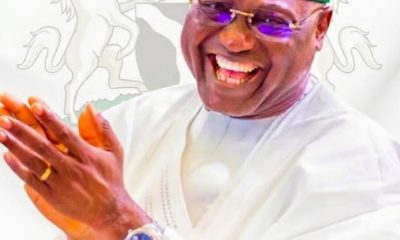
Senate Leader, Senator Michael Opeyemi Bamidele
Share


●Recommends regular executive, legislative forum to further synergise on development agenda

The Leader of the Senate, Senator Michael Opeyemi Bamidele, Friday, challenged federal lawmakers to come up with creative legislative frameworks and provide robust oversight support that could guarantee the appreciation and stability of Naira.

Bamidele, also, recommended regular parleys between federal lawmakers and all members of the Federal Executive Council as one of the measures that should be adopted to integrate the eight-point agenda of President Bola Ahmed Tinubu with the programmes of the 10th National Assembly.

He canvassed these positions at a two-day retreat for all senators of the Federal Republic of Nigeria at Ikot Ekpene, Akwa Ibom State under the theme, fiscal policy and tax reforms in Nigeria.

Organised by the National Institute of Legislative and Democratic Studies, the retreat was designed to build the capacity of the senators to enact pro-people legislations that could promote enduring peace; guarantee sustainable development and deepen peaceful co-existence, among Nigerians.

At the retreat were the President of the Senate, Senator Godswill Akpabio; Speaker, House of Representatives, Hon. Tajudeen Abbas; Deputy President of the Senate, Senator Barau Jibrin; Minister of Finance and Coordinating Minister of Economy, Mr. Wale Edun and other members of the Federal Executive Council.

Concerned about the weakening of Naira, the senate leader canvassed appropriate legislative frameworks and oversight support for the implementation of responsive fiscal and monetary policy with a view to rescuing the economy from regression.

He explained that both chambers of the National Assembly “are under obligations to stem the recurring decimal of Naira devaluation and promote economic stability. This entails appropriate legislative framework and oversight support for the implementation of responsive fiscal and monetary policy measures.

“Henceforth, developing appropriate legislative frameworks is central to ensuring macroeconomic stability with focus on managing inflation, addressing high interest rates as well as foreign exchange deficit,” the senate Leader observed in his paper presentation.

Bamidele equally highlighted diverse antidotes to socio-economic challenges currently confronting the federation, recommending first the urgent review of the Land Use Act, 1979 to redress the current land tenure system and give Nigerians more access to arable farmland nationwide.

He observed that ensuring more access to arable farmland would boost agricultural production exponentially and guarantee food security nationwide because most Nigerians, especially those in the rural communities, were predominantly farmers.

He emphasised the need to prioritise the Small Towns and Village Recovery and Development Bill in order to restore economic fairness to the rural communities in the scheme of national revenue allocations as well as the provision of rural infrastructure.

He added that the initiative would obviously stem the alarming rate of rural–urban drift and the attendant urban population explosion, urban criminality, environmental degradation and huge gap between available resources and demands in the cities.

He explained that effective implementation of the poverty alleviation programme “is fundamental to promoting peace, harmony and sustainable democracy in Nigeria where over 70 percent of the nation’s population is reportedly living below poverty line.

“To reduce the increasing inequality between the poor and rich, we urgently need to strengthen the National Directorate of Employment through the amendment of relevant legislations that will create limitless opportunities for our teeming jobless populations.

“We are also under obligations not just to overhaul our National Poverty Eradication Programme and National Economic Reform Plan, but also back them up with adequate funding to provide social safety nets for the poor and the vulnerable across the federation.”

Pointing out the alarming rate of corruption in the public space, Bamidele warned that the federation should prepare for mass action from the downtrodden, which might manifest in the form of protests.

As a matter of national security, the senate leader tasked the National Assembly to work out preventive measures to address corrupt practices rather than emphasising antidotes to cure them.

Bamidele also challenged the federal government to discourage selective treatment, executive lawlessness, high handedness, and political persecution of perceived enemies in the fight against corruption.

Also, at the retreat, Bamidele called for a joint retreat between the executive and legislature in order to work out modalities to integrate Tinubu’s eight-point agenda with the programmes of the National Assembly.

He explained that the proposed retreat would provide opportunity for all chairmen of standing committees in the Senate and House Committees to sit with ministers and their permanent secretaries to synergise on the approaches to implementing the eight-point agenda of the Tinubu administration.

 

Business & Economy

Tinubu Tables ₦58.18trn 2026 Budget, Projects Sustained Economic Stability

Published

on

President Bola Ahmed Tinubu
Share

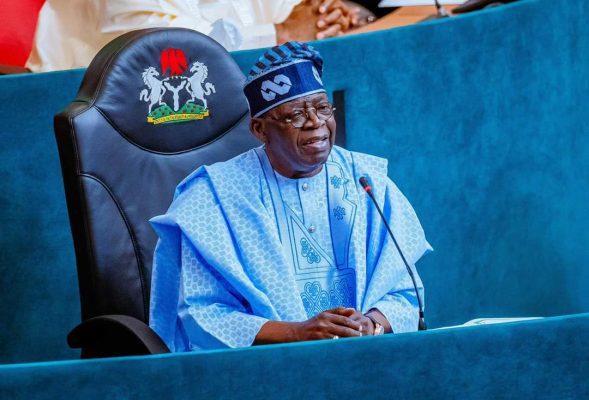
President Bola Tinubu on Friday presented a ₦58.18 trillion 2026 Appropriation Bill to a joint session of the National Assembly of Nigeria, declaring that Nigeria’s economy is showing measurable signs of stabilisation following years of structural pressure.

Tagged “Budget of Consolidation, Renewed Resilience and Shared Prosperity,” the 2026 fiscal plan is aimed at locking in recent macroeconomic gains while translating economic recovery into improved living standards for citizens.

According to the President, Nigeria’s economy expanded by 3.98 per cent in Q3 2025, while inflation moderated significantly, falling to 14.45 per cent in November 2025 from 24.23 per cent in March 2025.

“With stabilising food and energy prices, tighter monetary conditions, and improving supply responses, we expect the disinflationary trend to persist into 2026, barring major supply shocks,” Tinubu said during the presentation on December 19, 2025.

The President highlighted additional positive indicators, including improved crude oil production, rising non-oil revenues, renewed investor confidence, and external reserves climbing to a seven-year high of approximately $47 billion.

Under the proposal, the Federal Government projects ₦34.33 trillion in revenue against planned expenditure of ₦58.18 trillion, resulting in a budget deficit of ₦23.85 trillion, equivalent to 4.28 per cent of GDP. Tinubu emphasised that the fiscal framework is built on realism, prudence, and growth-driven assumptions.

He further assured lawmakers of tighter discipline in budget implementation, stressing that fiscal spending in 2026 would be more outcome-focused.

“Every naira spent or borrowed must deliver measurable public value,” the President said.

Continue Reading

Business & Economy

CBN Governor Reassures U.S. Investors on Nigeria’s Economic Reforms, Stability

Published

on

CBN Governor, Yemi Cardoso
Share

The Governor of the Central Bank of Nigeria (CBN), Mr. Olayemi Cardoso, has reassured United States investors of Nigeria’s commitment to macroeconomic stability and market-driven reforms, amid global economic uncertainty.

Cardoso gave the assurance during high-level engagements with U.S. business leaders and institutional investors in Washington, D.C., including the U.S.–Nigeria Executive Business Roundtable.

Speaking at the forum, the CBN governor said Nigeria remains focused on rules-based economic management, transparent markets, and predictable policy frameworks to restore investor confidence and drive sustainable economic growth.

He highlighted recent reforms in the foreign exchange market, the adoption of orthodox monetary policy measures, ongoing banking sector reforms, and the modernisation of the payments system. According to him, the reforms are aimed at stabilising the economy and supporting private-sector-led development.

The roundtable, convened by the U.S. Chamber of Commerce’s U.S.-Africa Business Center, focused on macroeconomic stabilisation, regulatory clarity, and opportunities to scale bankable projects across key sectors of the Nigerian economy. Discussions also emphasised efforts to deepen commercial and investment ties between Nigeria and the United States.

Commenting on the outcome of the engagement, President of the U.S.-Africa Business Center, Ms. Kendra Gaither, said investors are increasingly prioritising policy credibility and consistency.

She noted that clarity of rules, credible reforms, and disciplined economic management are critical factors driving investor interest, adding that Nigeria’s evolving message of discipline and opportunity is important in a global economy seeking stability and predictability.

Continue Reading

Business & Economy

Tinubu Welcomes Nigeria’s Removal from FATF Grey List, Pledges Continued Financial Reforms

Published

on

President Bola Tinubu
President Bola Ahmed Tinubu
Share

President Bola Ahmed Tinubu has welcomed the removal of Nigeria from the Financial Action Task Force (FATF) grey list, describing it as a major milestone in the nation’s economic reform and global credibility drive.

The FATF, the world’s foremost body for combating money laundering, terrorist financing, and proliferation financing, announced Nigeria’s delisting on Friday at its plenary session in Paris, France.

The decision formally removes Nigeria from the list of countries under increased monitoring, following the nation’s successful completion of its FATF Action Plan after over two years of sustained reforms and inter-agency coordination.

In a statement issued by his Special Adviser on Information and Strategy, Bayo Onanuga, President Tinubu said the development reflects Nigeria’s progress in strengthening its Anti-Money Laundering and Counter-Financing of Terrorism (AML/CFT) framework.

“Rather than treat our placement on the grey list in 2023 as a setback, we saw it as a call to action,” the President said. “This delisting is a strategic victory for our economy and a renewed vote of confidence in Nigeria’s financial governance.”

The President credited the achievement to far-reaching legal, institutional, and operational reforms implemented under his administration through the Nigerian Financial Intelligence Unit (NFIU), in collaboration with the Attorney-General of the Federation, the Minister of Finance and Coordinating Minister of the Economy, and other key ministries.

Tinubu commended the Director/CEO of the NFIU, Ms. Hafsat Abubakar Bakari, and her team for their diligence and professionalism, as well as the contributions of several ministries, agencies, and private sector representatives who participated in the National Task Force on AML/CFT.

He also acknowledged the support of international partners including France, Germany, the United Kingdom, the United States, the United Nations, and the European Commission, for their technical assistance throughout Nigeria’s reform process.

President Tinubu assured that his administration will sustain and deepen the reforms that led to the country’s delisting.

“This is not just a technical accomplishment,” he said. “It marks the beginning of a new chapter in our financial reform agenda as we continue building a system Nigerians and the world can trust.”

Continue Reading