Connect with us

Business & Economy

Cash Withdrawal Limit Will Be Flexible —Emefiele

Published

on

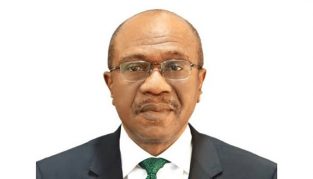
Governor of the Central Bank of Nigeria, CBN, Godwin Emefiele
Share

Governor of the Central Bank of Nigeria, CBN, Godwin Emefiele has said that the newly-introduced policy on cash withdrawal limit was not meant to hurt anybody but to strengthen the nation’s economy.

The CBN governor, who stated this while speaking with State House correspondents after meeting behind closed-doors with President Muhammadu Buhari in Daura, Katsina State, assured that the apex bank will not be rigid on the policy following criticism from the Senate, business experts and some stakeholders.

Recall that the CBN had, on Tuesday, unveiled a revised cash withdrawal limit with a maximum of N100,000 cash withdrawal per week for individuals and N500,000 cash per week for corporate bodies.

But the Senate faulted the bank on the grounds of timing, arguing that it might worsen the tight economic environment.

Besides, stakeholders have expressed worry about the possibility of implementing hitch-free cash withdrawal limits in communities with ‘blind spots or poor network connectivity.’

However, the CBN governor explained that more and more countries that are embracing digitization have gone into cashless and that this policy not targeted at anybody.

Emefiele, who said he visited Daura to greet Mr. President and to brief him about what is happening in Central Bank and the economy, revealed that President Buhari was very happy “and said we should carry on our work, no need to fear, no need to bother about anybody.”

He said that the new policy of the apex bank is for the good and development of the Nigerian economy, adding “we can only continue to appeal to Nigerians to please see this policy the way we have presented it.”

Responding to the objection of the Senate, he said, “Well, the Senate of the Federal Republic is the National Assembly.

“They are legislative arm of the government and from time to time we brief them about what is happening and about our policies and I’m aware that they have asked for some briefings and we will brief them.

“But I think it’s important for me to say that the cashless policy started in 2012.

“But almost three to four occasions we had to step down the policy because we felt that there is a need for us to prepare ourselves and deepen our payment system infrastructure in Nigeria.

“Between 2012 and now 2022, almost about 10 years, we believe that a lot of electronic channels have been put in place that will aid people in conducting banking and financial service transactions in Nigeria.

“We heard about people talk about some of the people in the rural areas and the truth is that even online banking; as I was coming out to Daura, I saw a kiosk that has super agent today.

“It’s because of the way we felt that there was a need for us to deepen the payment system infrastructure.

“We have 1.4 million super agents that are all over different parts of the country, all local governments, and all villages in this country.

“And I have told my colleagues, some of their names are already on the CBN website and we will publish all the names of all the super agents.

“And having super agent which is different from the banks which is different from microfinance banks, which is different from other financial institutions.

“Having 1.4 million of them is as good as having 1.4 million banking points where people can conduct services.

“We think, Nigeria as a big country, the biggest economy in Africa that we need to leapfrog into the cashless economy.

“We cannot continue to allow a situation where over 85 per cent of the cash that is in circulation is outside the bank. More and more countries that are embracing digitisation have gone into cashless.”

“We will be reviewing from time to time how this is working because I cannot say that we are going to be rigid.

“But it is not to say that we will reverse, it is not to say that we will change the timing, but whether it is about tricking some amount to be a little bit higher or a little bit lower, and all the rest of them.

“We will do so because we are humans, we want to make sure that we are make life good for our people.

“We do not want to make life difficult for them. So there is no need for anybody to worry, the central bank is monitoring what is happening and I can assure everyone that we are up and alive to our responsibilities and we will do what is right for Nigeria and Nigerians.

“We do not want to make life difficult for them. So there is no need for anybody to worry, the central bank is monitoring what is happening and I can assure everyone that we are up and alive to our responsibilities and we will do what is right for Nigeria and Nigerians.”

“I can only just assured you that it will go round, let us just be calm, luckily the old currency continued to be legal tender till January 31, 2023.

“So, I want to crack a joke, both the painted (new notes) and unpainted (old notes) will operate concurrently as a legal tender.

“But by January 31, the unpainted one will not be useful you again, so please take it to your bank as quickly as possible,” he added.

 

Business & Economy

Market Patronage Declines as Rising Prices Hit Ekiti Traders

Published

on

Share


Traders in Ekiti State have appealed to governments at all levels to take urgent steps to address the rising cost of goods and ease the economic burden on citizens.


Our correspondent, Oluwaseun Adebolu, who visited Market places in Ado-Ekiti to assess the situation, said that many traders called for increased government support to improve business activities and enhance the welfare of residents.


The traders commended the Ekiti State Government for its efforts to promote local businesses but stressed that additional interventions targeted at traders and families would further improve their standard of living.


They expressed concern over the persistent increase in the prices of goods and commodities, attributing the trend to high transportation costs and the impact of the removal of fuel subsidy on the economy.


According to the traders, many essential items that were once affordable have become increasingly expensive, making it difficult for both traders and consumers to cope with current economic realities.


They also noted a shift in consumers’ buying habits, explaining that many customers now prefer shopping in markets closer to their homes to reduce transportation costs.


The traders further lamented a decline in market patronage, saying sales have dropped significantly compared to previous years due to reduced purchasing power.


They urged the government, relevant agencies, and other stakeholders to introduce measures such as palliatives, soft loans, and transportation subsidies for traders to cushion the effects of the economic hardship and stimulate commercial activities across markets in the state.

Continue Reading

Business & Economy

FG Dismisses Reports of New Telecoms and Fuel Taxes, Says No Such Plans Under Consideration

Published

on

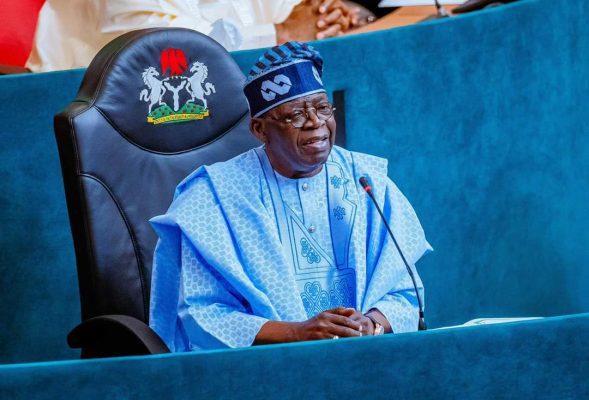
President Bola Ahmed Tinubu
Share


The Federal Government has dismissed reports claiming that it has introduced or is planning to introduce new taxes on telecommunications services and petroleum products.

The clarification came following media reports based on the recent International Monetary Fund (IMF) Article IV Consultation Report on Nigeria. The reports suggested that the IMF recommended extending Value Added Tax (VAT) to fuel products and introducing excise duties on telecommunications services as part of efforts to boost government revenue and fund development projects and social programmes.

However, in a statement issued on Wednesday by the Head of Information and Public Relations Unit of the Federal Ministry of Finance, Efe Ovuakporie, the government said the reports were misleading and did not reflect its current policy position.

According to the ministry, the IMF report merely contains the Fund’s assessment of Nigeria’s economy and recommendations for consideration by government authorities. It stressed that such recommendations are not binding and do not automatically become government policy.

The statement explained that all decisions relating to taxation in Nigeria are made through established constitutional and legislative processes and are guided by the country’s economic priorities and prevailing realities.

The Federal Government also clarified that the existing VAT waiver on petroleum products remains in force and has not been withdrawn.

It further explained that although current legislation provides for a fuel surcharge, such a charge can only be implemented through a ministerial order and official publication in the government gazette. The ministry stated that no such process is currently being considered.

According to the government, the continued suspension of these charges has helped reduce the impact of fluctuations in global energy prices on households and businesses while keeping domestic fuel prices relatively stable.

On telecommunications services, the government noted that the excise duty introduced before 2023 has already been repealed under the new tax laws and is no longer applicable.

The ministry therefore urged Nigerians to disregard reports suggesting that fresh taxes are being planned for either the telecommunications or petroleum sectors, describing such claims as inaccurate.

The government reiterated its commitment to economic reforms aimed at promoting growth, improving revenue collection, and creating a more attractive environment for investment and job creation.

It added that its focus remains on expanding economic activities, blocking revenue leakages, and improving efficiency in public finance management rather than imposing additional tax burdens on citizens.

The statement assured Nigerians that any future tax measures, if necessary, would be officially announced through appropriate government channels and implemented strictly in accordance with the law.

Continue Reading

Business & Economy

NERC Orders DisCos to Compensate Band A Customers for Power Supply Shortfalls

Published

on

Share


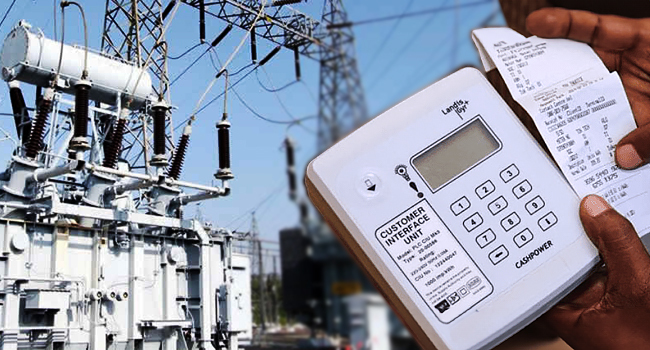
The Nigerian Electricity Regulatory Commission (NERC) has directed electricity distribution companies (DisCos) to compensate eligible Band A customers affected by power supply shortfalls recorded between February and March 2026.

In a public notice issued on Wednesday, the commission said the special compensation scheme became necessary following significant electricity generation deficits across the Nigerian Electricity Supply Industry (NESI), which prevented some DisCos from meeting the minimum service commitments required for Band A customers.

According to NERC, the supply disruptions were largely caused by inadequate gas supply as well as vandalism of critical gas and transmission infrastructure, factors beyond the direct control of the distribution companies.

The regulator explained that Band A customers are entitled to a minimum of 20 hours of electricity supply daily. It noted that where a Band A feeder recorded an average daily supply of between 18 and 20 hours during the affected period, the existing compensation framework under Addendum No. NERC/2024/003 would continue to apply to both Maximum Demand (MD) and Non-Maximum Demand (Non-MD) customers.

However, NERC stated that Band A feeders that received less than 18 hours of electricity supply per day between February and March 2026 would not be downgraded despite failing to meet the service threshold. Instead, customers connected to such feeders would receive special compensation.

Under the approved arrangement, Non-MD customers will receive compensation equivalent to 20 percent of the approved February 2026 energy cap applicable to their feeder. MD customers, on the other hand, will receive compensation equivalent to 20 percent of the average energy billed per MD customer in February 2026.

The commission further directed that prepaid customers should receive their compensation through electricity token credits, while postpaid customers should benefit through direct bill adjustments.

To ensure transparency, NERC instructed DisCos to clearly communicate the value and period of the compensation to affected customers. The regulator also prohibited distribution companies from using the compensation credits to offset any existing customer debts.

Reaffirming its commitment to consumer protection, NERC said it would closely monitor the implementation of the directive and verify compliance across all distribution companies to ensure that eligible customers receive the compensation due to them.

The commission added that the measure is aimed at safeguarding consumer interests while maintaining the stability and sustainability of Nigeria’s electricity market.

Continue Reading